


Utuado does not give itself away easily. The roads tighten into switchbacks, the fog drops without warning, and the best spots almost never have big signs. Over multiple trips, I have hiked its canyons, floated its rivers, sipped coffee on family farms, watched parrots in the forest, and burned a morning on one outing I would not book again. This guide pulls only from those personal experiences in and around Utuado, organized by what they actually felt like on the ground rather than what looks good in a brochure.
Get the latest updates straight to your inbox!
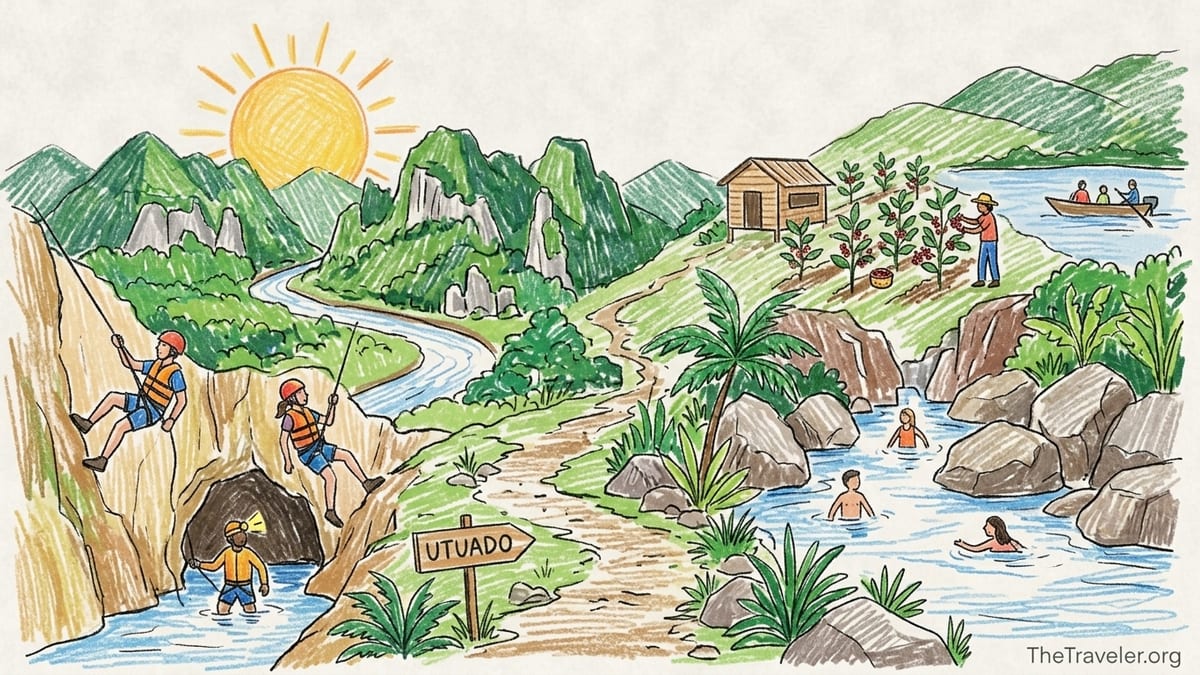
Tanamá River Adventures: Cave, River and Rappelling Day
My defining Utuado day started with Tanamá River Adventures, the long-running local operator based in Barrio Caguana. Their base sits off the rural road network above the Tanamá canyon, and it feels more like arriving at a farm than a commercial attraction. I booked directly through their official online system a few weeks in advance, paying about 120 US dollars per person for a full-day river, cave and rappelling tour in October 2025. Payment was taken at the time of booking, and confirmation arrived by email with driving directions, a list of what to bring and a clear statement that this is a guided adventure, not a casual river swim.
Check in that morning was set for 8:15 a.m., with the group rolling out on foot by about 8:45 a.m. The tour ran just over six hours, including the hike in and out, time in the river and caves, and a simple picnic lunch packed by the company. The physical effort is real: there are steep, muddy descents, ladder sections into the canyon, wading against the current, and a technical rappel of roughly 30 meters. Anyone comfortable with moderate to strenuous day hikes who is steady on wet rock will be fine, but this is not an ideal pick for travelers with knee issues or anyone uncomfortable in enclosed spaces.
The guiding is where the day really stood out. Our lead guide grew up in Utuado and alternated between geology, river safety briefings and stories about how local communities use and protect the canyon. A second guide moved through the group to check harnesses, help with footing on slippery boulders, and keep quieter guests engaged. Group size was capped at nine people plus the two guides, which meant moves like the rappel never felt rushed. Helmets, headlamps, life vests and harnesses were all supplied and in good condition, and there was a clear pre-tour briefing about weather cancellations and river levels before anyone started down the trail.
Conditions the day I went were mostly sunny with scattered clouds and a brief rain shower that never developed into a storm. The river carried a light chocolate color from previous rain but remained well within safe levels, and the guides checked water height and flow at each entry point. Parking was informal but easy: a gravel area on the property near the check-in structure, with staff directing cars into order. Because of the combination of safety culture, time in the cool river, and the unforgettable experience of emerging from a dim cave into full Caribbean light, this is an adventure I would absolutely repeat and still recommend first to any active traveler heading for Utuado.
Cañón Blanco on the Río Caonillas: Wild Canyon Morning
After hearing about Cañón Blanco for years, I finally carved out a dry-season morning to go. The canyon cuts along the Río Caonillas in Utuado’s interior, where pale rock walls and sculpted boulders create one of the most dramatic river corridors on the island. I based myself overnight in Utuado town and drove in just after sunrise in February 2026, aiming to arrive by 7:30 a.m. while the light was still soft and the air cool. The final approach involves narrow local roads and short steep grades, so I was glad to have a compact SUV with decent clearance rather than a low sedan.
This was an unguided visit, coordinated with a local host who provided directions and current safety advice but did not accompany us. There was no admission fee or formal booking channel involved, only a private parking area on a friend’s property for about 5 US dollars in cash. From there, a rough riverside trail and frequent rock hopping led us into the heart of the canyon. The total outing lasted roughly four hours, with about two and a half hours of actual hiking and scrambling plus long pauses to swim in calm pools and sit in the shade. Conditions were ideal: blue skies, no recent heavy rain, and a river level low enough that crossings were mid-calf to knee height for an adult.
Physically, Cañón Blanco demanded more balance than raw fitness. The route we followed never turned into a technical climb, but almost nothing was flat. Expect slick rock surfaces, uneven footing and sections where you choose between wading through cool current or edging along narrow ledges. I visited with a friend who hikes regularly and we both agreed that anyone with limited mobility, small children, or a fear of slipping on wet rock should consider either going with a responsible local guide or choosing a tamer river spot. Because this is a natural area without lifeguards or on-site rescue, good judgment and a weather eye on the sky matter more here than almost anywhere else in Utuado.
Parking for us was secure on that private lot near the river access, with room for only a handful of vehicles. There were no bathrooms, trash bins or vendors of any kind, so we carried out all of our waste and packed our own food and water. I would happily repeat this outing, but only under similarly favorable conditions and again with an early start, both to avoid crowds and to be well out of the riverbed long before any chance of afternoon storms.
Café Gran Batey: Coffee, Family and a Slow Afternoon
Café Gran Batey, in the Caguana area of Utuado, was the most relaxed thing I did on these trips and the experience I recommend to anyone who loves coffee or wants a quieter counterpart to the canyon and river adventures. I visited on a weekday morning in March 2025, arranging the tour first by phone and then reconfirming by messaging with the family. At the time, they were charging 15 US dollars per adult for a combined plantation walk, processing explanation and tasting, payable in cash on arrival at the small on-site shop.
The tour started a little after 10:00 a.m. and lasted almost two hours, though some of that was unstructured conversation. Our small group of six followed one of the family members into the rows of coffee trees, pausing to pick ripe cherries and talk about how hurricanes and changing rainfall patterns have pushed the farm to replant and adjust. Back under the shade of the drying racks and machinery shed, we talked through the steps of washing, drying and roasting before sitting down on the terrace with freshly brewed coffee and a plate of simple local cookies.
Compared with adventure days, the physical effort here was minimal: you walk a short dirt path with a few gentle inclines, stand during some explanations, then sit with your tasting. The real value is in how personal it feels. My questions about pruning, pickers’ pay and how the farm connects to the broader Utuado community were met with thoughtful, candid answers rather than rehearsed marketing lines. Parking was along a gravel driveway near the farmhouse, with enough room for several cars and clear signs about where to leave your vehicle without blocking access.
It happened to be overcast on the morning I visited, with a soft mountain drizzle that only added to the quiet of the farm. There were covered areas for the talk and tasting, so the light rain never interfered with the visit. I left with a bag of beans and the feeling of having been received as a guest rather than processed as a tourist, and this is one experience I would rearrange a future itinerary to repeat.
Río Abajo State Forest: Birding and Karst Trails
For all its rivers and canyons, one of the most quietly impressive parts of Utuado is the section of Río Abajo State Forest that stretches between Utuado and Arecibo. I devoted a full morning here on a cool January 2026 day, entering from the Utuado side with my own rental car. There was no entrance fee on that visit, though a small voluntary donation box near the forest office encouraged contributions to trail maintenance. I did not book a guide, choosing instead to follow one of the marked loop trails recommended by a ranger on duty.
The ranger suggested an early start for bird activity and road conditions, so I arrived around 7:00 a.m. after a pre-dawn drive from town. Mist still hung between the limestone ridges and the call of Puerto Rican parrots echoed intermittently through the canopy. Over the next three hours I alternated between walking slow, relatively short loop trails and standing quietly in clearings to scan for movement. I carried binoculars and a field guide and managed to see several endemic species, including Puerto Rican woodpeckers and todies, as well as parrot silhouettes in flight.
In terms of physical effort, Río Abajo sat comfortably in the moderate range. The trails I used undulated gently over karst hills, with short climbs, occasional muddy patches and some rock protrusions underfoot, but nothing that felt exposed or technical. I wore lightweight hiking shoes and was grateful for the grip. Weather in January leaned cool for the tropics, with temperatures in the low 70s Fahrenheit, high humidity and a mix of sun and clouds. A brief shower passed through late in the morning, which the dense canopy mostly absorbed.
Parking near the ranger station was straightforward: a simple gravel area with space for roughly a dozen vehicles. There were basic restroom facilities but no food vendors, so I brought my own snacks and water. Although I enjoy self-guided birding, I did notice a small guided group with a local naturalist and would consider hiring one on a future visit to deepen the experience and increase chances of parrot sightings. Even without a guide, though, the combination of birds, forest quiet and glimpses of the surrounding karst countryside made Río Abajo a place I would gladly return to, particularly on another cool season morning.
Lago Dos Bocas: Lunch by Boat and an Honest Disappointment
Not every highly recommended activity lives up to the anticipation. My least satisfying Utuado outing took place on Lago Dos Bocas, the man-made lake east of town where local boats have long shuttled visitors to small restaurants tucked along the shore. I headed there on a Sunday in April 2024, planning a relaxed midday excursion rather than an adrenaline rush. The idea was to park near the dock, catch one of the passenger boats out to a lakeside restaurant, have lunch, and ride back in the early afternoon.
Reality proved more complicated. There was no clear centralized schedule posted when I arrived a little before 11:30 a.m., and the informal system of boats and restaurants meant long waits without reliable information. Parking near the dock was chaotic, with cars squeezed into every available corner and no attendants managing the flow. I eventually found a space along the roadside, a short uphill walk from the embarkation point. After nearly an hour of waiting under a strengthening sun, with no firm indication of when our group might be called, the novelty faded. When we finally boarded a small boat, the ride itself across the lake was scenic but brief, and by the time we sat down to lunch, we were already thinking about the uncertain queue for the return.
The weather that day was clear and hot, with little shade at the dock area and reflected glare off the lake. The whole outing, from arrival at the parking area to return to the car, ran close to four hours, but only about an hour of that felt enjoyable. The rest was dominated by waiting, crowd noise and the low-level stress of not wanting to be stranded if boats filled up or schedules shifted without announcement. For travelers who love unstructured, chatty afternoons and do not mind heat or ambiguity, this could still feel like a pleasant slice of local life. For me, it was the one Utuado-area experience I would not repeat, especially with so many more rewarding options a short drive away.
In fairness, I did appreciate the lake views and glimpses of the surrounding mountains, and the restaurant we chose served a solid plate of mofongo with stewed meat at reasonable prices. But if I had that day back, I would have booked another river hike, returned to Cañón Blanco, or simply lingered longer over coffee in Caguana.
Research-Only Alternatives I Have Not Yet Done
There are a few well-known Utuado-area experiences that I have researched in detail but have not yet completed myself, so I do not present them as firsthand recommendations. Instead, I offer them here as starting points for your own planning and verification. The Caguana Indigenous Ceremonial Park, for example, is one of Puerto Rico’s most important Taíno archaeological sites, located not far from Café Gran Batey. Official and traveler reports describe preserved ceremonial plazas, carved stones and a small interpretation center, but my visits to Caguana so far have been limited to passing the area and conversations with locals, not a full on-site tour.
Similarly, several other operators run Tanamá-area adventures that emphasize tubing or shorter hikes rather than the longer, rappel-focused day I did with Tanamá River Adventures. I have read recent accounts and studied their booking platforms, but I have not personally tested their safety culture, guide quality or exact routes. The same holds for specific horseback riding experiences in the Utuado countryside, which local guesthouses sometimes help arrange. Until I have ridden with a given stable, evaluated how they treat their horses, and experienced their trail choices in person, I cannot responsibly recommend one by name.
These research-only ideas underscore a broader point: Utuado rewards travelers who verify details close to their travel dates. Road conditions can shift, river levels change quickly after rain, and small family operations occasionally pause or adjust tours. Use these mentions as prompts for your own up-to-date checks rather than as endorsements.
The Takeaway
Across multiple visits, Utuado has proven to be a place where effort is rewarded. The most memorable days began early, required honest physical engagement, and depended on local knowledge, whether from professional guides on the Tanamá or from families like those at Café Gran Batey. The quieter hours, like birding in Río Abajo or talking coffee in Caguana while mist rolled over the hills, gave shape and context to the more dramatic river and canyon scenes.
If you arrive expecting roadside photo stops and effortless viewpoints, Utuado may frustrate you in the way Lago Dos Bocas frustrated me. Roads are narrow, weather can shift quickly, and many of the best corners of this landscape still function more for residents than for visitors. On the other hand, if you are willing to book structured adventures, start early, accept some mud and sweat, and sit down for unhurried conversations over coffee, the municipality opens up layers that no quick drive-through can reveal.
Looking ahead, my own priority list for a return trip is clear. I will happily book Tanamá River Adventures again for their mix of safety and immersion, carve out another clear morning for Cañón Blanco, spend more time in Río Abajo with a dedicated bird guide, and call ahead to the family at Café Gran Batey for another slow, fragrant walk through the trees. Utuado may never be the easiest destination on the island, but for travelers willing to engage with it on its own terms, it becomes one of the most rewarding.
FAQ
Q1. Is Tanamá River Adventures suitable for beginners or non-athletic travelers?
Based on my full-day tour, Tanamá River Adventures requires at least a moderate level of fitness and comfort on uneven, slippery terrain. Beginners to rappelling and caving are welcome, but you should be able to handle a few hours of hiking, moving through water and climbing short, steep sections with the help of guides.
Q2. How far in advance should I book Tanamá River Adventures?
I booked my October 2025 tour a few weeks in advance and the group still filled. Because tours are scheduled departures that typically leave in the morning and may have minimum or maximum group sizes, I recommend reserving at least two to three weeks ahead for high season or weekend dates.
Q3. Can I visit Cañón Blanco without a guide?
I visited Cañón Blanco without a guide, relying on detailed local directions and a private parking arrangement, and had a safe, rewarding day under ideal dry conditions. However, the terrain and river can be risky, so if you are unfamiliar with the area, uncomfortable route finding on slick rock, or visiting during a wetter period, hiring a responsible local guide is the safer choice.
Q4. What should I wear and bring for a Cañón Blanco outing?
On my February 2026 visit I wore light hiking shoes with good grip, quick-drying clothes and carried a small backpack with water, snacks, sunscreen and a dry bag for electronics. There were no services on-site, so everything from drinking water to a basic first-aid kit had to come with me and leave with me.
Q5. Do I need a reservation for Café Gran Batey?
When I visited Café Gran Batey in March 2025, tours were small and family-run, and I arranged my visit directly with them in advance rather than showing up unannounced. I strongly suggest calling or messaging ahead to confirm tour times, current prices and availability before driving out.
Q6. Is Río Abajo State Forest worth visiting without a birding guide?
I explored Río Abajo on my own using suggestions from a ranger and still found it very rewarding, especially in the early morning when bird activity was high. A guide would probably increase the number and variety of species seen, but independent travelers who enjoy quiet trails and are patient observers can still have an excellent experience.
Q7. Why would you not repeat the Lago Dos Bocas boat and lunch outing?
On my April 2024 visit, unclear boat schedules, long waits in the sun, crowded dock conditions and parking stress outweighed the short, pleasant boat ride and decent lakeside lunch. With limited days in Utuado, I would rather invest time in river, canyon, forest or coffee experiences that feel more organized and rewarding.
Q8. What kind of vehicle is best for getting around Utuado?
For my trips, a compact SUV with good brakes and reasonable clearance felt like the sweet spot for handling steep, narrow mountain roads and occasional rough driveway entrances. While standard cars can reach many places in good weather, a slightly higher vehicle adds a margin of comfort and safety on Utuado’s back roads.
Q9. How does weather affect Utuado activities?
Weather plays a big role: heavy rain can quickly raise river levels, make canyon rocks dangerously slick and turn dirt roads muddy. I plan river and canyon days, like Tanamá or Cañón Blanco, during dry windows and lean on overcast or drizzly days for coffee farm visits and forest birding, always checking local conditions shortly before heading out.
Q10. Is Utuado a good base for a multi-day stay or better as a day trip?
From my experience, Utuado rewards at least a couple of nights, especially if you want to combine Tanamá adventures, a Cañón Blanco morning, a coffee farm visit and a forest walk without rushing. The distances are short but the roads and the depth of each experience make a slower, multi-day approach far more satisfying than a single hurried day trip.