


Utuado sits in the green heart of Puerto Rico, all misty mountains, carved river canyons, coffee fincas and Taíno heritage. From San Juan, it is close enough for a long day trip, yet complex enough that poor planning can turn that day into a frustrating blur of driving, closed gates and rushed meals. This guide walks you through whether the drive is worth it for you, and exactly what you can reasonably fit into one day without turning your vacation into an endurance test.
Get the latest updates straight to your inbox!
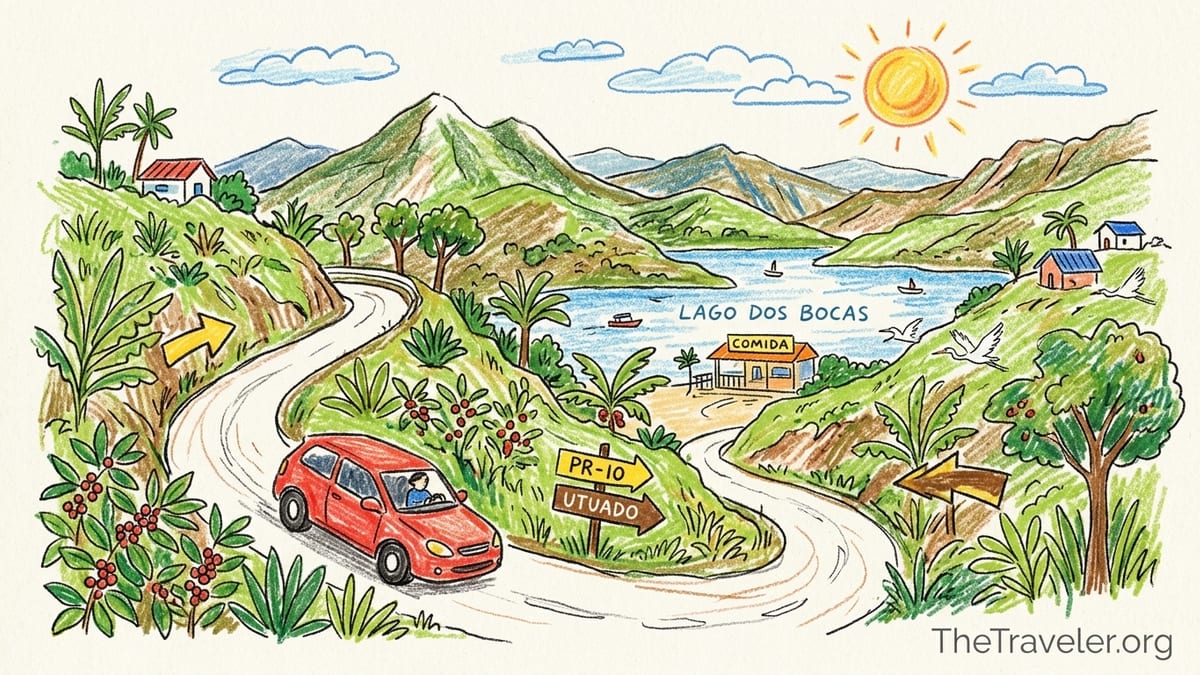
Understanding the Drive From San Juan to Utuado
The basic promise you will see in official tourism copy is that Utuado sits about one and a half hours from San Juan by car. In real life, most visitors should plan on roughly two hours in each direction once you factor in city traffic leaving the San Juan metro, slower speeds in the mountains, and short stops for fuel or restrooms. That is already close to four hours in the car before you make any detours to trailheads, coffee farms or lakeside docks.
The most common route from San Juan uses PR-22 west and then PR-10 south into the Cordillera Central. PR-10 is a major interior highway and in generally good condition, but the final approach into Utuado and then out to places like Caguana, Cañón Blanco or Lago Dos Bocas means leaving the highway for narrow, winding mountain roads. These smaller roads are paved but often steep, with blind curves and local drivers who know every bend by heart, so you should not assume mainland highway speeds.
Recent travelers report that a compact or mid-size car is usually better than a large SUV for these interior routes because lanes are tight and parking areas at trailheads or docks can be small. Clearance is not usually the limiting factor so much as confidence with curves and passing on narrow sections. If you are uncomfortable with long mountain drives, this is a key sign that an overnight near Utuado may be a better fit than a same-day return to San Juan.
Because there is no practical way to avoid mountain driving to reach Utuado, time your departure carefully. Leaving San Juan between 6:00 and 7:00 a.m. often lets you beat heavier metro traffic, puts you in the Utuado area around 8:30 to 9:00 a.m., and gives you a full set of daylight hours. Leaving after 9:00 a.m. shortens your usable day and increases the odds you will be navigating curves back toward the coast in full darkness.
Why Utuado Is Easy To Plan Badly
On a map, Utuado’s marquee spots look deceptively close: the Caguana Indigenous Ceremonial Park, the Tanamá River canyon, Cañón Blanco, the Río Abajo State Forest and Lago Dos Bocas all sit within the same general region. In practice, each is reached by its own network of local roads, with limited signage, varying conditions and different operating hours or tour schedules. Trying to collect them all in a single day creates an itinerary that looks efficient on paper and feels exhausting in reality.
A common planning mistake is to treat Utuado like a compact town center where you can walk between cafés, heritage sites and river viewpoints. In reality, most experiences are spread across rural communities. For example, driving from Caguana out to a Tanamá river tour base, then to a viewpoint over Cañón Blanco, then over to the docks at Lago Dos Bocas can mean multiple 20 to 40 minute segments with no quick through-route. Each side trip adds not only minutes but also decision points for navigation, parking and weather checks.
Another trap is underestimating how long a guided Tanamá adventure really lasts when you include check-in, gearing up, safety briefings, hiking in to the canyon and then getting back out. Operators describe their tours in hours, not minutes, and some of the more immersive options can easily occupy the heart of the day. If you stack that on top of a morning at Caguana and then try to “just swing by” Dos Bocas for dinner, you may find yourself abandoning plans halfway through or white-knuckling the drive back to San Juan in the dark after a very late meal.
Finally, many of Utuado’s draws are outdoors and weather dependent. Rivers can run high and muddy after heavy rain, fog can limit canyon views and some rural businesses decide day by day whether to open. That means building a “greatest hits” checklist is far less effective than designing a flexible plan around one anchor experience and one compatible backup, with enough slack to pivot if conditions change.
The One-Anchor Rule: How To Build a Realistic Day Trip
The simplest way to avoid overcommitting is to design your Utuado day around one clear anchor experience. An anchor is the activity that sets your schedule and justifies the drive: a Tanamá River adventure, a deep visit to Caguana, a long coffee farm tour or a long, slow meal at a lakeside restaurant reached by boat on Lago Dos Bocas. Everything else is optional and must be realistically compatible with that anchor in location, timing and energy level.
For many travelers, a Tanamá river tour is the obvious anchor. Outfitters based near Utuado offer guided experiences that can include river tubing, body rafting, short rappels, cave sections or canyon hikes. Tour descriptions often list total durations of about four to six hours once you factor in arrival, gear fitting and debrief, and they typically require you to meet at a set time in the morning. If you choose this as your anchor, you should expect it to take up the core of your day and treat any additional stop as a short, low-effort bonus such as an early dinner in Utuado town or at a restaurant on the way back to the highway.
Other visitors find that heritage or landscape visual storytelling is more important than adrenaline. For them, the Caguana Indigenous Ceremonial Park can be the anchor. Allow at least one and a half to two hours here to slowly walk the ball courts, study petroglyphs and watch the small site museum film without rushing. Paired with an unhurried coffee experience at a nearby finca, that makes for a rewarding but gentler day that still layers pre-Columbian, colonial and contemporary mountain life into one narrative.
A third potential anchor is the classic boat supported meal on Lago Dos Bocas. Some restaurants now operate their own small boats to shuttle guests across the reservoir, typically for a modest per-person fee. To make this your anchor, choose a mid-afternoon lunch or early dinner seating that keeps you off the water after dusk, call ahead before leaving San Juan to confirm exact hours and boat operations for that day, and resist the temptation to pack a long hike or river swim session immediately beforehand.
Smart Pairings: What Actually Works in One Day
Once you have chosen an anchor, the question becomes what, if anything, to pair with it. The most realistic combinations work either because they share a corridor or because their time demands are naturally complementary. A classic example is Caguana plus a coffee farm visit. Both are daylight, land based activities without fixed group departure times. You can visit Caguana first, then head to a pre-booked late morning or early afternoon tour at a nearby finca, followed by a relaxed meal before your return drive.
Another workable pairing is a Tanamá adventure plus an early dinner. Many river tours finish by mid or late afternoon. If you structure your day as “drive from San Juan, meet guide, full Tanamá experience, shower and change, then sit down for a hearty mountain meal,” you create a sense of narrative closure without compressing too many destinations. In this model, your secondary experience is not another attraction but the chance to linger over mofongo or fresh-caught fish while replaying the day’s canyon moments.
A more ambitious but still feasible combination is Caguana plus Cañón Blanco, if and only if routing and weather are on your side. This can work when road conditions are good, river levels are moderate, and you are comfortable with some additional winding-road driving for the payoff of wide canyon views and pale rock formations. To keep the day sane, you would visit Caguana soon after opening, then continue toward viewpoints or accessible sections of Cañón Blanco, build in generous buffer time, and commit to skipping Dos Bocas or Río Abajo entirely.
What does not work is stacking Caguana, a full Tanamá tour, Cañón Blanco, Río Abajo Forest and Dos Bocas into a single day. On the map, the drive times might appear barely manageable. In practice, you would spend your entire day glancing at your watch, trimming each stop short, and then driving mountain curves long after sunset. Utuado rewards travelers who choose depth over breadth. If you feel you absolutely must visit three or more of these areas, that is a strong sign you should plan at least one overnight in the region.
Practical Timing: Hours, Meals, Weather and Weekends
Good timing starts with your departure from San Juan. Aim to leave early enough that you arrive in the Utuado area by mid-morning. This is especially important for visits to Caguana, which operates with specific daily hours and may close on certain days, and for Tanamá tours, which often set fixed morning meeting times. If an outfitter tells you to be at the rendezvous point by 8:30 or 9:00 a.m., build in an extra 30 minutes for unexpected slowdowns on PR-10 or the last local segment.
Meal planning is equally important. Portions are generous at many mountain restaurants and comedores, but they may not run on urban schedules. In Utuado town, you will find simple options near the plaza and along PR-10, but in more rural sectors choices can be limited or seasonal. Around Lago Dos Bocas, some lakeside restaurants now advertise specific opening days and require phone confirmation for boat transfers. A realistic day trip plan includes where you will have breakfast, a likely lunch window and a target time for either an early dinner in the mountains or a later dinner back on the coast after most of the driving is done.
Weather and river conditions are crucial if your anchor involves water. Tanamá and other rivers in the region respond quickly to heavy rain, which can raise water levels and increase current speed. Guides may modify routes, shorten tours or cancel departures on safety grounds. A smart strategy is to check forecasts for Utuado itself, not just San Juan, on the evening before and early the morning of your trip, then confirm with your operator by phone or message before you commit to the mountain drive.
Weekends, especially Saturdays and Sundays, can play quite differently from weekdays. On the plus side, more rural restaurants, kiosks and boat based eateries tend to open on weekends, and you are more likely to find lively atmospheres at places like Lago Dos Bocas. On the downside, popular riverside pullouts, miradors and boat docks can be significantly busier with local families. For a one day trip, that means extra time budgeted for parking and service, and a careful eye on your goal of beginning the return drive to San Juan well before full dark, ideally by late afternoon in winter months.
Who Should Attempt Utuado as a Day Trip
Not every traveler is wired for a three to four hour round trip drive plus rural navigation in a single day, but some are absolutely suited to it. Self drivers who enjoy being behind the wheel, are comfortable with curvy roads, and already have experience driving in hilly or mountainous regions will often find the journey itself part of the adventure. For them, a well planned anchor plus one secondary stop can feel satisfying rather than rushed.
Active travelers who specifically want a long Tanamá activity and view everything else as secondary are also good candidates. If your mindset is “this canyon tour is my main goal in Puerto Rico,” then treating Utuado as a long day built almost entirely around that experience makes sense. In that scenario, you accept the early alarm, the intense mid day activity and the relatively simple evening on the drive back as the trade-off for avoiding a hotel change.
Photographers who are disciplined about shot lists and timing might also make a day trip work, especially if they are targeting golden light at one location rather than chasing ten different vantage points. For instance, a photographer might plan a morning at Caguana with its stone alignments and mountain backdrops, then an afternoon at a single Cañón Blanco overlook, being realistic that they will not have time to fully scout every possible angle in between.
Finally, travelers who have a tightly packed island itinerary and cannot justify moving hotels for one night, but who still want a taste of the central mountains, may accept the trade-offs of a day trip. For them, a simple pairing such as Caguana plus a coffee farm or Tanamá plus dinner may offer enough of Utuado’s character to feel worthwhile, even if it leaves some experiences for a future visit.
Who Is Better Off Staying Overnight
On the other side of the equation are travelers who would almost certainly enjoy Utuado more by sleeping at least one night in or near the region. Anyone booking a long or technically demanding Tanamá activity falls into this category. If you are looking at full day canyon adventures that include multiple rappels, extended hikes or combined caving and river segments, waking up nearby and not facing an immediate two hour drive at the end of the day can make the experience significantly more enjoyable.
Photographers chasing specific light conditions over Cañón Blanco, Dos Bocas or rural coffee fincas should also consider an overnight. Dawn and dusk are the most evocative times in the central mountains, with low clouds rising from the rivers and soft side light on the ridges. Those windows do not line up well with a same day round trip from San Juan unless you are willing to drive mountain roads in full darkness at one end or the other. A local overnight lets you reach trailheads and viewpoints at calm, uncrowded hours.
Travelers who simply dislike long driving days, or who know that curvy roads trigger motion sickness for themselves or their companions, are prime candidates for an overnight as well. Spreading Utuado across two days turns four hours of driving into two comfortable one to two hour segments wrapped around relaxed exploration. It also lowers the stakes if heavy rain forces a change of plans. Instead of watching your only Utuado day wash out, you gain the flexibility to swap activities across two dates.
Finally, anyone who dreams of combining coffee, heritage and river scenery without rushing should think seriously about booking a night. A two day structure might unfold as Caguana and a coffee farm on day one, then Cañón Blanco viewpoints and a leisurely meal at a Dos Bocas restaurant on day two. That rhythm is far kinder than sprinting from site to site, and it allows conversations with guides, waitstaff and local residents to become part of the experience rather than something you are too rushed to enjoy.
Day Trip vs Overnight: Making Your Decision
To decide whether Utuado is worth tackling as a day trip from San Juan, start by counting your true non negotiables. If you can identify exactly one anchor experience that justifies the drive, and you are content with at most one compatible secondary stop, then a well planned day trip is viable. Build your schedule backward from that anchor’s hours or meeting time, leave San Juan early, and commit to turning back toward the coast in daylight even if a tempting unplanned stop appears on the map.
If, however, you find yourself wanting to string together Tanamá, Caguana, Cañón Blanco, Lago Dos Bocas, a coffee tour and a stroll through Río Abajo, then Utuado is no longer a day trip. It is a compact mountain region that deserves at least one night of your itinerary. In that case, look for local guesthouses or mountain lodges, accept that cell service can be patchy in some valleys, and lean into a slower, more immersive rural pace that stands in contrast to San Juan and the coastal towns.
Risk tolerance also matters. If you are traveling in the wettest months, or during a period with repeated storms in the forecast, an overnight gives you built in weather flexibility and reduces the odds that river conditions or landslide related detours will derail your only day. If you are traveling in a drier season with stable forecasts and you already have early departures and longer drives elsewhere on your trip, then Utuado can fit as a single concentrated outing.
Ultimately, the central question is not just “Is Utuado worth the drive?” Almost everyone who visits thoughtfully says yes. The more precise question is, “Is Utuado worth four or more hours of driving in a single day for the specific way I like to travel?” If your honest answer includes words like rush, squeeze or checklist, lean toward an overnight. If your answer feels like focus, anchor and depth, then a carefully structured day trip can deliver exactly what you hope to find in Puerto Rico’s green interior.
FAQ
Q1. How long does it really take to drive from San Juan to Utuado?
Most travelers should plan on roughly two hours each way, including leaving the San Juan metro, driving PR-22 and PR-10, and navigating the last mountain segments.
Q2. Can I visit Caguana, do a Tanamá tour and see Cañón Blanco in one day?
Trying to do all three in a single day is not realistic for most visitors and leads to rushed visits and after dark driving on mountain roads.
Q3. What is the best simple day trip itinerary from San Juan to Utuado?
Two of the most realistic options are Caguana plus a pre booked coffee farm visit, or a Tanamá river adventure paired with an early dinner before returning to San Juan.
Q4. Do I need a 4x4 or SUV to drive around Utuado?
For most main routes and typical trailhead access, a compact or mid size car is sufficient, and its smaller size can actually be easier on narrow, winding roads.
Q5. Is it safe to drive back to San Juan from Utuado after dark?
The main highways are lit and widely used, but many visitors prefer to finish the curviest interior sections of the drive in daylight for comfort and visibility.
Q6. How far in advance should I book a Tanamá river tour?
It is wise to reserve at least a few days ahead in high season, then reconfirm the exact meeting time and weather conditions the day before your planned visit.
Q7. Are Dos Bocas lake restaurants open every day for boat transfers?
No, many operate limited days and may adjust hours or boat service; it is important to call directly on the morning of your visit before committing to the drive.
Q8. Is Utuado a good day trip for families with younger children?
Families who enjoy road trips and nature stops can have a good experience, but the long drive and curvy roads can be tiring for kids who dislike extended car time.
Q9. When is it better to stay overnight in Utuado instead of day tripping?
If you want a long Tanamá activity, sunrise or sunset photography, or a relaxed mix of coffee, heritage and river scenery, an overnight stay generally works better.
Q10. What time should I leave San Juan if I am doing a Utuado day trip?
Leaving between 6:00 and 7:00 a.m. usually provides enough time to reach Utuado by mid-morning, enjoy your anchor experience and begin the return drive before dark.