


The Arno River is the quiet star of Tuscany. It reflects the palaces of Florence and the pastel houses of Pisa, catches the last light of day in its currents, and offers some of the region’s most atmospheric moments when the sun turns the water to gold. To enjoy that golden light without jostling for space on a bridge or lungarno, timing matters just as much as location. Here is how to plan your season, your dates, and even your exact hour on the Arno for luminous views and fewer crowds.
Get the latest updates straight to your inbox!
Understanding Golden Hour on the Arno
Golden hour is the brief window just after sunrise and just before sunset when the sun sits low in the sky and light becomes warm and soft. In Florence, golden hour typically starts around 30 to 60 minutes after sunrise and again roughly 45 to 60 minutes before sunset, according to recent astronomy-based calculators for the city. In peak summer in June, that can mean an evening golden hour running roughly from 7.45 pm to 8.45 pm, while in October it might fall closer to 6 pm to 7 pm.
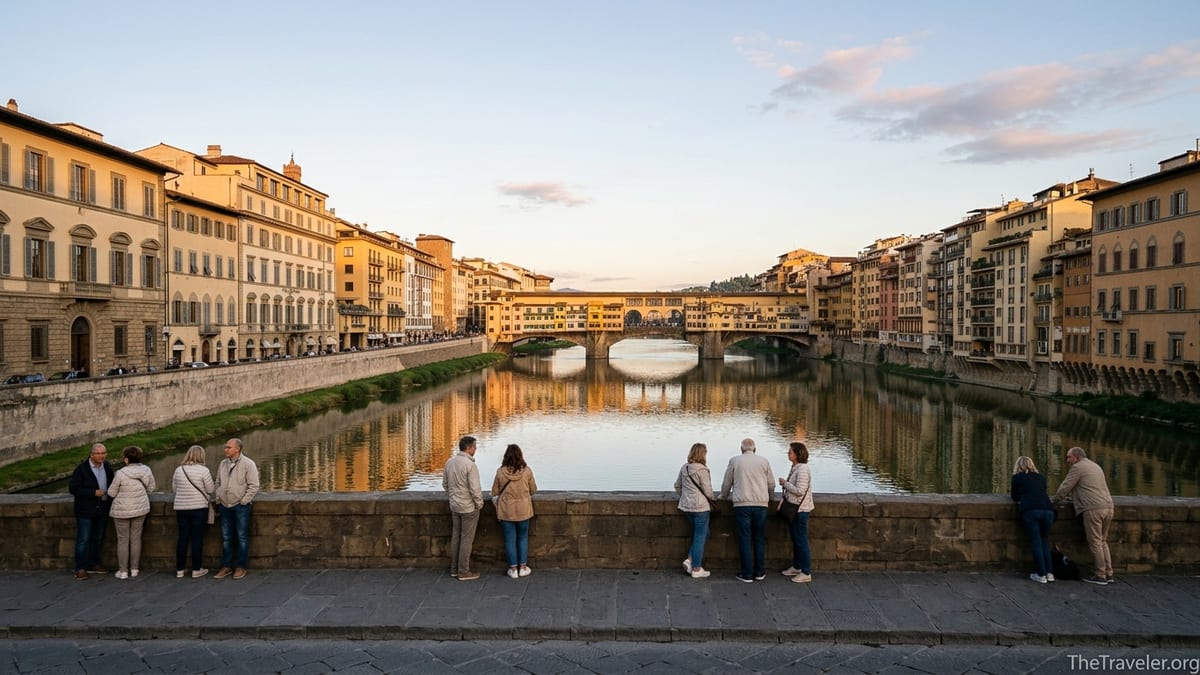
The Arno is particularly responsive to this light. The river surface picks up streaks of amber and pink, while the stone facades of Renaissance palaces and medieval towers along the banks deepen from pale beige to honey. From the arches of Ponte Vecchio to the pastel houses lining Pisa’s Lungarno Galilei, this change in light can make the difference between a flat, bright scene and something that feels cinematic yet real.
For photographers, this is the time when harsh reflections off the water soften and long shadows add depth to images. Even a simple phone camera benefits. Point it from Lungarno Torrigiani toward Ponte Vecchio at sunset and you will see silhouettes sharpen, sky colors intensify, and the river become a leading line through your frame. Casual visitors may not know the term “golden hour,” but they feel its effect when they suddenly stop walking and reach for their camera.
Because golden hour is short, going in with a rough idea of sunrise and sunset times on your dates is essential. If you are visiting Florence in late June, for example, sunset hovers close to 8.50 pm. In early November, it can be closer to 5 pm. Pisa, only about 85 kilometers away, shares almost identical timings, so one quick check will cover both cities.
Choosing the Best Season for Light and Space
The Arno rewards patient travelers. While it can be beautiful at any time of year, the experience of walking its banks changes dramatically with the seasons. Florence’s main tourism peaks still cluster in late spring and especially summer, with June through early September drawing cruise groups, bus tours, and weekend city breakers. During those weeks you will feel the congestion on and around Ponte Vecchio in the evening, when visitors flood in to watch the sun drop behind the hills west of the city.
For softer light and more breathing room along the river, the most balanced months are usually late March to early May and late September through October. In late April you might see locals commuting by bike along the lungarni at 7 am in a sweater and light scarf, while tour groups only start to appear after 9 or 10 am. In early October, temperatures often sit in the comfortable 60s Fahrenheit in the evening, and by 7 pm you can often find space along the parapet of Ponte Santa Trinita to rest a tripod or simply lean your elbows without fighting for a gap.
Winter along the Arno can be a surprise. From December through February, daylight hours are shorter, but sunrise can be as late as 7.45 or even 8 am, which makes early-morning golden light more accessible to non-early risers. Crowds drop considerably on the river itself, even if museums remain busy on weekends. A photographer staying near Piazza della Signoria in January might reach the Ponte alle Grazie in a 10-minute walk at 8.15 am and find only a handful of locals out walking dogs beneath a pale orange sky.
Summer still has its charms, particularly in the long evenings of June when the city’s stone glows for hours. However, plan for heavier crowds and higher temperatures. On a Saturday in July it is common to see the sidewalks around Ponte Vecchio packed from late afternoon until long after sunset, and restaurant terraces along Lungarno degli Acciaiuoli work through multiple fully booked seatings. If summer is your only option, the strategies in the next sections will help you carve out quieter moments.
Florence: Best Spots and Times Along the Arno
In Florence, the Arno is inseparable from the city’s image. The most photographed perspectives cluster between Ponte alle Grazie and Ponte alla Carraia, where the river is framed by palazzi and the iconic span of Ponte Vecchio. To capture golden light with manageable crowds, think in terms of specific bridges, river walks, and timings rather than a generic “sunset on the Arno.”
Ponte Santa Trinita is the classic choice for looking back toward Ponte Vecchio in the evening. The bridge’s elegant elliptical arches and open views make it a favorite among both locals and visiting photographers. Arrive here in September around 6.15 pm, when sunset is still roughly an hour away, and you can usually find a spot by the central balustrade to watch the jewelry shops of Ponte Vecchio start to glow. By the time the sun finally slips behind the hills, casual sunset watchers will have gathered, but you will already have your vantage point.
For a less crowded angle, try the south bank paths such as Lungarno Torrigiani. From here, looking north, you see the Uffizi, Palazzo Vecchio’s tower, and the line of buildings reflected in the water. In late October, around 5.30 pm, you may find joggers, couples, and a few photographers, but not the dense crush you get on Ponte Vecchio itself. A traveler staying near the Oltrarno quarter might stroll down side streets from Piazza Santo Spirito and be on the river in five minutes, with enough quiet to hear church bells over the muted city traffic.
Morning along the Arno in Florence has a very different rhythm. Between 7 and 8 am in spring, the river paths are busy with runners and commuters rather than tourist groups. Golden light comes from the opposite direction, lighting up the eastern facades. If you walk the stretch from Ponte alle Grazie toward Piazzale Michelangelo’s ramp around 7.30 am in April, you may find isolated patches of mist still clinging to the water and only a few people stopping to take photos.
Pisa: Quieter Golden Light on the Lower Arno
Downstream in Pisa, the Arno broadens and slows, lined with ochre, cream, and terracotta buildings that catch evening light in long horizontal bands. Many day-trippers head straight from the station to the Leaning Tower and back, often leaving the riverfront relatively calm, particularly outside of festivals. This makes Pisa a smart choice if you want golden reflections without Florence-level crowds.
The main riverside promenades, collectively known as the lungarni, offer several excellent golden-hour viewpoints. Lungarno Galilei on the south bank and Lungarno Mediceo on the north form a kind of outdoor gallery of noble palaces, churches, and university buildings. Local tourism guides note that most organized tours and groups leave Pisa by late afternoon, and from around 4 pm onward on weekdays the embankments quickly become more relaxed. If you time your visit in May and head to Lungarno Galilei at 7 pm, you may have long stretches of riverside almost to yourself, aside from cyclists and a few locals out for a passeggiata.
Golden hour is also a good time to see the delicate church of Santa Maria della Spina, which sits almost at water level on Lungarno Gambacorti. In the warm side light of a late September sunset, its white marble carvings pick up subtle rose and gold tones. Unlike the crowded lawns of Piazza dei Miracoli, you can often wander around the church’s exterior here with minimal interruption, especially if you visit on a Monday or Tuesday when weekend visitors have gone home.
Pisa does have spikes in riverside crowds, particularly in June during the Luminara di San Ranieri, when thousands of candles illuminate palaces and bridges along the Arno. On that evening the riverfront is intentionally busy and festive rather than tranquil. If your goal is meditative golden light rather than a citywide celebration, avoid that date and nearby weekends and aim for an ordinary weekday evening instead.
Month-by-Month Timing Tips
Because sunrise and sunset shift significantly over the year, planning your visit month by month can help you choose a combination of light, temperature, and crowd level that suits your travel style. In March, for example, Florence sees sunrise around 6.30 to 7 am and sunset between roughly 6 and 7.30 pm as the month progresses. The air can be crisp in the mornings, yet the first café terraces along the river start to set out their outdoor tables.
By June, days are at their longest. Around the solstice, Florence’s sunrise hovers near 5.30 am and sunset close to 8.50 pm. This offers generous opportunities for golden light on both ends of the day, but the evening window attracts more people. If you are willing to be up early, you could watch the sun rise from Ponte alle Grazie at 5.45 am in late June with only a few fellow photographers, then return that evening to see how different the river feels with crowds enjoying the long twilight.
September and October are often the sweet spot for many travelers. In mid-September, golden hour in Florence tends to fall around 6.30 to 7.30 pm, which fits easily between an afternoon museum visit and a later dinner reservation. By mid-October, sunset slides earlier, closer to 6.30 pm, and some recent trip reports from visitors describe noticeably thinner crowds along the river compared with the intense summer shoulder-to-shoulder conditions.
In winter months like December and January, sunset can be as early as 4.30 to 5 pm. While this limits daylight hours for sightseeing, it can be an advantage if you want golden light without staying out late or waking before dawn. Imagine checking into a small hotel near Florence’s San Niccolò district at 3 pm on a January afternoon, then walking five minutes to the Arno to watch gilded light on the river before heading to an early dinner by 6 pm.
Daily Strategies to Avoid Crowds
Whatever the season, daily patterns of movement in Florence and Pisa follow certain rhythms that you can use to your advantage. Tour buses and group excursions typically cluster their main activities between about 10 am and 4 pm. That means early mornings and the last 90 minutes before sunset are usually less congested along the river. In Florence, for instance, Ponte Vecchio might feel packed at 3 pm any time from April through October, while at 8 am or 9 pm on a weekday you may be able to cross it without stopping every few steps.
If you are staying within walking distance of the Arno, consider planning your day around two short riverside windows rather than just one sunset visit. For example, in late May you might start with a 7 am stroll along Lungarno degli Archibusieri, when shop shutters are still down and delivery vans share the roads with only a few pedestrians. You then spend midday in museums or shaded streets, returning to the river at 8 pm when the sun lowers and day-trippers have dispersed back to their buses or trains.
In Pisa, a common pattern is for crowds to peak around the Leaning Tower from late morning through early afternoon, while the riverfront remains comparatively calm. If you are taking a day trip from Florence, you could flip the standard routine. Arrive in Pisa by 8.30 or 9 am, walk the quiet lungarni in the slanting morning light, and only then head inland to the tower complex as tour buses begin to arrive. After lunch and sights, you might return to the river for an early-evening passeggiata before boarding a return train.
Weekdays generally yield fewer riverside crowds than Saturdays and Sundays, especially outside high summer. A Tuesday in March on Lungarno Torrigiani will feel very different from a Saturday in June on Ponte Santa Trinita. Public holidays, festivals, and major events such as Florence’s Calcio Storico in June can also affect crowd levels near the river, especially when parades or fireworks use the Arno as a focal point.
Practical Tips for Photographers and Casual Viewers
Whether you are an experienced photographer or simply looking for a memorable moment by the water, a few practical choices can make your time on the Arno smoother. First, arrive earlier than you think you need to. If sunset is at 8.30 pm, plan to be in position by 7.45 pm to watch the light evolve. The ten minutes just before and after official sunset often produce the richest colors in the sky and on the water, particularly in summer when atmospheric haze warms the horizon.
Second, move a little away from the most iconic spots. In Florence, just a single bridge upstream or downstream from Ponte Vecchio can dramatically change your experience. Setting up on Ponte alla Carraia or along Lungarno Vespucci, for instance, still gives you reflections of historic buildings but with more elbow room and a better chance to capture long exposures of traffic trails after dark if you bring a small tripod.
Third, be prepared for changeable weather, particularly in shoulder seasons. A cloudy afternoon in April can suddenly open to a clear gap at the horizon just before sunset, creating a brief but spectacular golden glow. Carrying a compact travel umbrella and a light waterproof jacket means you can wait out a passing shower on the riverbank rather than abandoning your viewpoint. On hot afternoons in July or August, consider watching the light from a shaded café terrace on the Oltrarno side, nursing a spritz or espresso while you wait for the sun to drop.
Finally, remember that golden light is not only about photography. Many visitors find their strongest memory of the Arno is simply pausing during a walk, hearing church bells echo off the water, or watching rowers glide past in the shimmering distance. Giving yourself unscheduled time near the river, especially at the edges of the day, creates space for these unplanned moments.
The Takeaway
To enjoy the Arno River in its best light and with fewer crowds, think in layers: season, month, day, and hour. Broadly, late March to May and late September to October offer the most forgiving mix of warm tones, comfortable temperatures, and manageable visitor numbers in both Florence and Pisa. Within those seasons, weekdays and early mornings or late evenings along the lungarni will usually reward you with quieter paths and more space on the bridges.
Armed with approximate sunrise and sunset times for your travel dates, you can then pick specific spots: Ponte Santa Trinita at sunset, Lungarno Torrigiani or Lungarno Vespucci for reflective facades, or Pisa’s Lungarno Galilei for softer crowds and a wide sky. Arriving even 30 minutes before golden hour transforms the experience from a rushed photo stop into an unhurried riverside ritual.
In the end, the Arno is less about a single viewpoint and more about a stretch of water that links hill towns, cities, and the sea. By paying attention to light and timing, you can step briefly out of the busiest flows of tourism and into the quieter rhythm that locals still find along its banks.
FAQ
Q1. What is the best month to visit the Arno River in Florence for golden light and fewer crowds?
For most travelers, late April, May, late September, and October strike the best balance. You still get warm golden light and comfortable temperatures, but the most intense summer tourist surge has not yet begun in spring or has eased off by autumn, especially on weekday mornings and evenings.
Q2. At what time is golden hour on the Arno in summer?
In June and early July, golden hour in Florence and Pisa usually falls roughly between 7.45 pm and 8.45 pm, with sunset itself close to 8.45 or 8.50 pm around the solstice. Exact times vary by date, so checking a sunrise and sunset calendar for your specific days is essential.
Q3. Is sunrise or sunset better on the Arno River for photography?
Both can be beautiful, but they offer different moods. Sunset typically brings warmer colors and more activity on the river, along with heavier crowds on popular bridges. Sunrise tends to be quieter, with softer pastel tones and far fewer people, making it ideal if you prefer calm scenes and unobstructed viewpoints.
Q4. Which bridge in Florence gives the best golden-hour view of the Arno?
Ponte Santa Trinita is a favorite because it offers a clear view of Ponte Vecchio framed by the river in both directions. For fewer people, consider Ponte alle Grazie at sunrise or Ponte alla Carraia at sunset, where you can still capture striking reflections and long perspectives with more space around you.
Q5. Are the Arno riverbanks in Pisa less crowded than in Florence?
Yes, generally the lungarni in Pisa are quieter than Florence’s central riverfront, particularly on weekday evenings outside major events. Many visitors come to Pisa only for the Leaning Tower area, which means the Arno embankments can feel almost local, especially in shoulder seasons and after most tour groups have left for the day.
Q6. How early should I arrive before sunset to get a good spot on the Arno?
Arriving about 45 to 60 minutes before sunset is usually enough, even in busier months. This gives you time to find a comfortable position on a bridge or parapet, watch the light change, and adjust your framing without rushing. On peak summer weekends near Ponte Vecchio, adding another 15 minutes can help.
Q7. What should I wear for an evening golden-hour walk along the Arno?
In spring and autumn, plan for layers. Evenings can feel cool on the river, so a light sweater or jacket over a shirt is often enough. In summer, breathable fabrics, a hat, and comfortable walking shoes help with residual heat from the stone embankments, while winter evenings call for a warm coat, scarf, and gloves, especially when standing still to watch the light.
Q8. Can I enjoy golden hour on the Arno without being a serious photographer?
Absolutely. Many visitors simply walk the lungarni, sit on a bench, or have a drink on a terrace while the light softens. Even a phone camera can capture the shift in color on the water and buildings. The key is slowing down, choosing a spot that feels comfortable, and giving yourself time to watch the change rather than rushing through.
Q9. Is winter a good time to see the Arno River with fewer crowds?
Yes. From December to February, you will typically find lower crowd levels along the river, especially outside holiday periods. Days are shorter and temperatures cooler, but golden hour occurs at more convenient times, often in late afternoon. With a warm coat, winter can offer a peaceful, almost local-feeling experience on the Arno.
Q10. Are there any events that make the Arno especially crowded at golden hour?
In Florence, events such as Calcio Storico in June or major public celebrations can draw additional people to central areas, though the river itself is not always the main focus. In Pisa, the Luminara di San Ranieri in June transforms the Arno into a centerpiece lined with candles and crowds. If your goal is quiet golden light rather than festivities, it is best to avoid these specific dates or enjoy the river very early or very late on those days.