


Copenhagen is compact, stylish and disarmingly relaxed, which makes it one of Europe’s easiest capitals to visit. At the same time, it is also one of the continent’s more expensive cities, so smart planning before you land at Copenhagen Airport can make a big difference to your budget and your experience. From choosing the right neighborhood and understanding the transport system to knowing what things really cost on the ground, here is what you should know about Copenhagen before you plan your Denmark trip.
Get the latest updates straight to your inbox!
How Copenhagen Fits Into a Denmark Itinerary
For many visitors, Copenhagen is both the gateway to Denmark and the place where they spend most of their time. Copenhagen Airport sits roughly 8 kilometers south of the city center, and a direct metro line connects the terminal to downtown stations in about 15 minutes, so it is very easy to arrive, check in and start sightseeing on the same day you land. Many travelers build a three or four day Copenhagen stay into a longer itinerary that might include Odense and Aarhus on Jutland, or a quick hop over the Öresund Bridge to Malmö in Sweden.
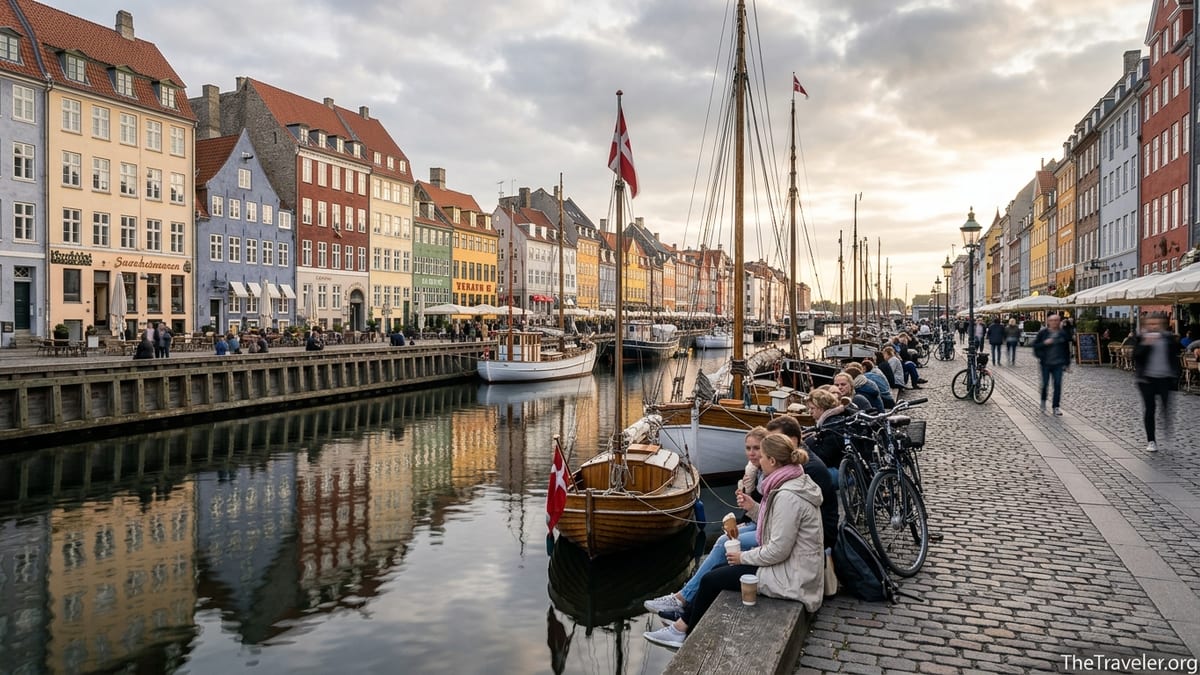
Copenhagen also works well as a long weekend city break. A common pattern is to arrive Friday afternoon, take the metro from the airport to Kongens Nytorv or Nørreport, check into a hotel in Indre By (the inner city) or Vesterbro, and spend Saturday exploring Nyhavn, Christianshavn, and Tivoli Gardens before flying back Sunday night. Because the historic center is so walkable and public transport is integrated, you can see a lot of the city’s highlights in a short stay without renting a car.
If you are planning a wider Denmark itinerary, think about Copenhagen as the place for food, design, museums and urban culture, while smaller cities such as Roskilde and Helsingør can supply Viking history and castles. For example, you might spend two full days in Copenhagen, then use a third day for a simple train day trip to Kronborg Castle in Helsingør or the Viking Ship Museum in Roskilde, returning to your base in the city by evening.
Because Copenhagen is the major transport hub for the country, most intercity trains and long-distance buses start or end at Copenhagen Central Station. That makes it practical to plan your Denmark trip around a single hotel in the capital for at least part of your journey, even if you are exploring further afield.
Best Time to Visit and What the Weather Really Feels Like
Copenhagen has a temperate maritime climate with mild, often wet winters and pleasantly cool summers. Winter temperatures frequently hover around freezing, and short daylight hours in December and January can surprise visitors: you may only get around seven hours of usable daylight, with dusk setting in before 4 pm. That said, Christmas markets and Tivoli’s winter opening give the city a cosy, candlelit atmosphere that some travelers specifically seek out.
Most first-time visitors find late May through early September the most enjoyable window. In July, daytime highs are typically in the low 20s Celsius (around 70 Fahrenheit), and it stays light well into the evening, which is perfect for canal-side walks in Nyhavn or picnics in King’s Garden. You should still pack a light waterproof jacket, as showers roll through regularly, and even in midsummer the wind off the harbor can make it feel cooler, particularly if you are planning to rent a bicycle.
Spring and autumn can be excellent value if you are flexible. A trip in late April might mean tulips in the parks, fewer cruise ships in port and slightly lower hotel rates than peak summer. In October, you can still enjoy outdoor cafés on mild days, then move indoors to wine bars in Vesterbro when the temperature drops. Just be aware that some smaller coastal towns outside Copenhagen start to wind down their tourist services after late August.
Whenever you travel, Copenhagen’s climate rewards layers. A typical day in June may start with a cool, grey morning where you want a sweater and light jacket, change to bright sunshine by lunchtime where short sleeves feel comfortable, then turn breezy again as you sit by the water in Christianshavn in the evening. Packing a compact umbrella and a scarf is usually more useful than bringing heavy winter gear, unless you are visiting in midwinter.
Where to Stay: Neighborhoods That Match Your Style
Copenhagen is small enough that you can walk or ride a bike between many neighborhoods, but where you sleep still shapes your experience. The inner city, known as Indre By, is the obvious first choice for first-timers who want to be close to Nyhavn, the Strøget shopping streets and major museums. A mid-range hotel close to Kongens Nytorv or Nørreport will usually put you within a 10 to 15 minute walk of many major sights and within a few steps of the metro. Prices here are among the highest in the city, and rooms can be compact, but the convenience is hard to beat.
Vesterbro, just west of Central Station, has transformed from a red-light area into one of Copenhagen’s most fashionable districts. You will find boutique hotels and guesthouses near the Meatpacking District, with its cluster of bars and restaurants. Travelers often choose Vesterbro for the combination of nightlife, easy access to Tivoli Gardens, and shorter walks to the main train station if they plan day trips. A realistic example: a design-focused mid-range hotel room here might cost in the range of 1200 to 1800 Danish kroner per night in summer, depending on how early you book and what is happening in the city.
Nørrebro and Østerbro are residential districts with a more local feel. In Nørrebro, along streets like Jægersborggade and around Assistens Cemetery, you will find independent cafés, natural wine bars and second-hand shops that draw younger visitors. Østerbro is calmer and more family-oriented, with leafy streets and easy access to the waterfront. Staying in either neighborhood can slightly lower your accommodation costs while still keeping you within a short metro or bus ride of the center. Many travelers choose a short-term rental or smaller hotel in these areas if they are staying four nights or more.
If you are arriving late or leaving early, Amager and the newer districts such as Ørestad can also be practical. These modern neighborhoods sit on the same island as the airport and are linked by the M1 and M2 metro lines. An airport hotel one stop from the terminal can make sense if your flight leaves before 7 am, though you will trade some city atmosphere for convenience.
Arriving in Copenhagen: Airports, Trains and Getting Into Town
Most international visitors arrive via Copenhagen Airport, known as CPH or Kastrup. The airport is modern, compact and well signposted, and clearing passport control is usually straightforward, although queues can form at peak times. After baggage claim in Terminal 3, you walk directly into an arrivals hall where you will find ATMs, a 7-Eleven, and clear signs pointing to trains and the metro. You do not need to go outside to reach public transport.
The simplest way into the city center is the M2 metro line, which runs from the airport to central stations such as Kongens Nytorv and Nørreport roughly every few minutes during the day. The journey into town typically takes around 15 minutes. You buy a ticket from the red ticket machines just before the escalators down to the metro platforms. A single ticket that covers the three zones between the airport and the center is commonly priced in the range of the mid-30s Danish kroner, and it is valid for around 90 minutes, which also allows transfers to buses and trains inside the same zones.
Alternatively, you can take a regional train from the platforms beneath Terminal 3 to Copenhagen Central Station. This is often the better choice if your hotel is near Tivoli Gardens, the Meatpacking District or the main station area, because you arrive right in the middle of that district. Travel time is also around 15 minutes. As with the metro, you must buy your ticket before boarding; inspectors do regular checks and fines for traveling without a valid ticket are high compared with the ticket price.
Taxis are readily available directly outside the arrivals area, and a typical ride to the inner city usually costs a few hundred Danish kroner, depending on traffic and time of day. Many drivers accept major credit cards. Because the metro and trains are so fast and frequent, most budget-conscious travelers and even many business visitors prefer public transport, but if you arrive late at night, have bulky luggage or are traveling as a family of four, the cost difference can narrow and a taxi may be worth the convenience.
Getting Around: Public Transport, Bikes and Walking
Copenhagen’s public transport network integrates metro, S-trains, regional trains and buses on a unified ticket system in the greater city area. That means the single ticket you buy at the airport can cover a metro ride into town and then a bus to your hotel, as long as you travel within the validity time and fare zones. There are also time-based passes, such as 24 or 72 hour tickets that give unlimited travel in the main city zones, which are popular with visitors staying for a weekend.
Many tourists consider a city travel pass or the Copenhagen Card, which includes both unlimited public transport in the capital region and free entry to a large number of attractions. For example, a 24 hour version of the Copenhagen Card typically costs in the region of six hundred Danish kroner for an adult and includes the airport connection, metro, buses and S-trains plus admission to major sights such as Rosenborg Castle, the National Museum and the Designmuseum. If you are planning to visit several paid museums and take at least a couple of longer journeys, the math often works in your favor.
Bicycles are a defining feature of Copenhagen life, and the city’s separated bike lanes make cycling genuinely practical for visitors. Many hotels offer rental bikes, and dedicated rental shops will often provide sturdy city bikes with lights and locks for a daily fee that is comparable to a couple of short taxi rides. A common pattern is to take public transport from the airport to your accommodation, drop your bags, then rent bikes in Vesterbro or Nørrebro to explore the lakes, the harbor baths and Freetown Christiania at your own pace.
The central areas are also very walkable. You can easily spend a day on foot doing a loop from City Hall Square to Tivoli Gardens, across to Nyhavn, along the harbor to the Little Mermaid statue, and back through Kastellet fortress and the shopping streets. Keep in mind that many streets are cobblestoned, so comfortable footwear matters more than fashion. Crossing streets is straightforward, but be aware of bicycles: always look both ways for cyclists before stepping off the curb, especially at intersections where bike lanes run between the sidewalk and the road.
Costs, Cash and Paying Like a Local
Copenhagen has a well-earned reputation as an expensive city, especially when it comes to accommodation, eating out and alcohol. A simple sit-down lunch of a couple of open-faced smørrebrød sandwiches and a drink in a casual café might easily cost the equivalent of 120 to 180 Danish kroner per person. A coffee from a specialty café in Nørrebro or the inner city commonly falls in the range of 35 to 50 kroner, similar to prices in other Nordic capitals. Dinners at mid-range restaurants, including popular New Nordic bistros, often start around 250 to 350 kroner per person before drinks.
On the other hand, there are many ways to keep costs manageable. Supermarkets such as Netto, Føtex and Irma, as well as 7-Eleven outlets near metro stations, sell reasonably priced sandwiches, pastries and salads that you can turn into picnic meals for a fraction of restaurant prices. Food halls like Torvehallerne near Nørreport offer everything from gourmet open sandwiches to budget-friendly bowls of ramen, allowing groups with different budgets to eat together. Public drinking fountains and the general safety of the tap water mean you can refill a reusable bottle instead of buying bottled water.
Denmark is an overwhelmingly cashless society, and Copenhagen is no exception. Almost everywhere you go, from high-end restaurants and museum ticket desks down to hot-dog stands and small bakeries, will accept major credit and debit cards, often via tap-to-pay terminals. It is entirely possible to spend several days in the city without ever handling Danish banknotes. That said, having a small amount of cash on hand, perhaps withdrawn from an ATM on arrival, can be useful in case you encounter a card terminal issue or want to tip in a very small venue.
Prices in Copenhagen include sales tax in the displayed amount, so the price you see on the shelf or menu is what you pay. Tipping is not obligatory, and service charges are usually built into restaurant bills. Locals might round up a bill or leave a small extra amount for exceptional service, but leaving 10 to 15 percent as in North America is not the norm. In taxis, it is common to simply round up to the nearest 10 kroner.
Copenhagen’s Food, Drink and Daily Rhythm
Copenhagen is one of Europe’s major food cities, with everything from internationally recognized fine dining restaurants to informal street food markets. While world-famous venues that have defined New Nordic cuisine can book out months in advance and command very high prices, visitors can experience the same focus on seasonal, local ingredients in more accessible spots. For instance, smart-casual bistros in Vesterbro, Nørrebro and the city center often offer multi-course menus centered on vegetables, seafood and foraged ingredients at a price point that, while not cheap, is more manageable for a special night out.
For more everyday meals, Copenhageners often head to food halls and street food clusters along the harbor. Reffen, a large street food market built from shipping containers on Refshaleøen, brings together stalls serving everything from organic burgers to vegan wraps and global comfort food, with communal seating that overlooks the water. Torvehallerne, closer to the center, mixes produce stalls and delis with open sandwich counters and coffee bars, making it a convenient stop in between museum visits.
Cafés are central to daily life. It is entirely normal to linger over a single coffee and a cinnamon bun while working on a laptop in a café in Nørrebro or Frederiksberg for an hour or more. Many places offer plant-based milk by default, and filter coffee is as common as espresso. If you prefer alcohol, craft beer bars and natural wine spots are easy to find, especially in Vesterbro and the Meatpacking District, where repurposed industrial buildings now house buzzing evening venues.
The daily rhythm may feel earlier than in some southern European capitals. Many locals eat dinner between 6 and 8 pm, and smaller restaurants may close their kitchens by 10 pm on weeknights. Bars and clubs in Kødbyen and the inner city do stay open late, particularly on Fridays and Saturdays, but you should not assume that you can find full meals after 10 or 11 pm everywhere. Booking tables ahead for popular spots, especially on weekends and during peak travel months, is wise.
Culture, Etiquette and Safety Basics
Copenhagen is generally a safe city with low violent crime rates compared with many large capitals. Petty theft can still occur, especially in crowded areas around Central Station, Nyhavn and large events, so basic travel precautions are sensible: keep your phone in a zipped pocket, secure your bag in cafés and avoid leaving belongings unattended on restaurant terraces. Walking at night in most central neighborhoods is common and considered safe by locals, including along the harbor promenades.
Danish social norms often strike visitors as reserved but polite. People typically speak in low voices on public transport, and it is customary to wait for passengers to exit a metro carriage before boarding. Queueing is generally respected. Almost all Danes you are likely to encounter in the service industry speak excellent English, so there is no expectation that visitors know Danish, but making a small effort with basic words such as “tak” for thank you is always appreciated.
Cycling etiquette is important if you decide to join locals on two wheels. You ride in the direction of traffic on the bike lanes, use hand signals to indicate turns or stops and avoid blocking lanes when you are checking a map or taking a photo. On shared pavements, cyclists expect pedestrians to stay on designated walking areas, so pay attention to painted lane markings. If you are unsure, it is perfectly acceptable to get off and walk your bike across a complex intersection.
Dress codes are relaxed. Even in higher-end restaurants, you will see people in smart casual clothing rather than formal attire. Practical, weather-appropriate layers and comfortable shoes will help you fit in more than dressy outfits. If you are visiting churches or religious sites, basic respect in the form of covered shoulders and calm behavior is sufficient.
The Takeaway
Thinking through the realities of Copenhagen before you book flights and hotels can transform an expensive, rushed city break into a smooth and rewarding part of your Denmark journey. Understanding that you can step from your plane onto a metro and be at Kongens Nytorv or Nørreport in about 15 minutes, choosing a neighborhood that matches your style and budget, and knowing that tap water is safe and contactless payments are the norm all remove friction from your first days.
Copenhagen rewards slow exploration as much as checklist sightseeing. Planning for a mix of classic sights such as Nyhavn and Tivoli Gardens, local neighborhoods like Nørrebro and Vesterbro, and at least one day trip by train gives you a more rounded view of Denmark without complicated logistics. Combine that with realistic expectations on prices, weather and cultural norms, and the city becomes an inviting, manageable base for experiencing the rest of the country.
FAQ
Q1. How many days do I need in Copenhagen before seeing the rest of Denmark?
Most first-time visitors find that three full days in Copenhagen is enough to see the main sights at a relaxed pace and fit in one day trip, such as a visit to Helsingør or Roskilde. If you are combining the city with several other Danish destinations, two full days can work if you focus on a few key areas like Nyhavn, Christianshavn and Tivoli Gardens.
Q2. Is the Copenhagen Card worth it for a short visit?
The Copenhagen Card can be good value if you plan to use public transport frequently and visit several paid attractions. For example, if you use it for your airport transfers, ride the metro and S-trains each day, and visit big-ticket sights such as Rosenborg Castle, the National Museum and a harbor cruise, the combined individual ticket prices often add up to more than the card’s cost.
Q3. Do I need cash in Copenhagen or can I rely on cards?
You can rely on cards for almost everything in Copenhagen. Supermarkets, cafés, restaurants, museum ticket desks and even small kiosks normally accept major credit and debit cards as well as contactless payments. Carrying a small amount of Danish kroner can be helpful for peace of mind, but many visitors spend several days without using cash at all.
Q4. How hard is it to get from Copenhagen Airport to the city center?
It is very straightforward. From Terminal 3, you follow signs to the metro or the train platforms inside the airport building. Trains and metro services run frequently throughout the day, and the ride to central stations such as Nørreport or Copenhagen Central typically takes about 15 minutes on a single ticket that also covers transfers within the city zones.
Q5. Is Copenhagen safe to walk around at night?
Copenhagen is generally considered safe, and it is common to see people walking or cycling at night in central districts such as Indre By, Vesterbro and Nørrebro. As in any city, you should stay aware of your surroundings, keep valuables secure and avoid poorly lit, deserted areas, but most travelers feel comfortable moving around after dark, especially along main streets and the harbor promenades.
Q6. What should I pack for a trip to Copenhagen in summer?
For a summer visit, pack light layers rather than very warm clothing. A waterproof jacket, a sweater, comfortable walking shoes and perhaps a scarf are more useful than heavy coats. Even in July, evenings by the water can feel cool, and rain showers are common, so clothing that you can quickly add or remove as the weather changes will serve you well.
Q7. Do locals speak English, or do I need Danish?
Most locals you encounter in hotels, restaurants, shops and public transport speak excellent English, and they are used to helping visitors. There is no expectation that you speak Danish, although learning a few simple words such as “hej” for hello and “tak” for thank you is a friendly gesture that many Danes appreciate.
Q8. Is it realistic to get around by bike as a tourist?
Yes. Copenhagen is designed for cycling, with dedicated bike lanes, clear signage and a cycling culture that makes it feel normal rather than risky. Many hotels and rental shops offer sturdy city bikes, and you can comfortably ride between neighborhoods such as Vesterbro, Nørrebro, Christianshavn and the city center. Just remember to follow local cycling rules, use hand signals and stay aware of other riders.
Q9. How expensive is eating out compared with other European cities?
Eating out in Copenhagen is generally more expensive than in many parts of southern or eastern Europe and broadly comparable to other Nordic capitals. A coffee in a specialty café might cost the equivalent of several euros, and a casual sit-down dinner at a mid-range restaurant can easily reach a few hundred Danish kroner per person before drinks. Balancing restaurant meals with picnics and food hall visits is a common strategy for keeping costs under control.
Q10. Is Copenhagen a good base for seeing the rest of Denmark?
Copenhagen works very well as a base because it is the country’s main transport hub. Frequent trains and buses from Copenhagen Central Station connect you to cities such as Odense and Aarhus, as well as to regional destinations like Roskilde and Helsingør. Many visitors book one accommodation in Copenhagen for several nights and then take simple day trips by train to explore castles, Viking history and coastal towns without changing hotels.