


Svartifoss and the wider Skaftafell area of Vatnajökull National Park are open throughout the year, but the experience changes dramatically with the seasons. Trail conditions, daylight, weather, and available services can shift from one month to the next, especially in south east Iceland’s variable climate. Anyone planning a stop at Svartifoss, particularly winter visitors, should check the latest information from Vatnajökull National Park, Icelandic road and weather services, and local safety advisories shortly before their trip.
Get the latest updates straight to your inbox!
Understanding Seasons, Weather and Trail Conditions at Svartifoss
Svartifoss sits in Skaftafell, a lowland oasis of birch scrub and glacial views in the southern section of Vatnajökull National Park. The short but sometimes steep hike to the waterfall leaves directly from the main Skaftafell visitor area, where a year round visitor center and campground serve as the hub for trails and tours. Although the routes are well marked, conditions underfoot can feel very different in July than in February.
South east Iceland has a cool maritime climate with relatively mild temperatures for the latitude but frequent rain, wind and rapid changes. Around Skaftafell, summer daytime temperatures are often in the high single digits to low teens Celsius, while winter averages hover close to freezing, with colder spells always possible. The key seasonal difference for visitors is not just temperature but daylight and precipitation type: rain on the trails in summer, versus sleet, snow and refrozen ice patches in winter.
Daylight hours also vary sharply over the year. Around late June, Iceland enjoys close to 21 hours of daylight, with only a brief twilight at night. By contrast, in late December there are roughly 4 to 5 hours of true daylight nationally, and south coast locations such as Skaftafell see very short hiking windows. From April into September there is enough light for long walking days, while November to February require more precise timing of hikes, especially for travelers driving long Ring Road segments to or from Skaftafell the same day.
These patterns influence both how long you will spend on the Svartifoss trail and how demanding it feels. In summer a dry, mostly snow free path usually allows steady progress at a relaxed pace. In late autumn or winter, sections of compacted snow, mud or ice can slow most hikers, particularly on steeper slopes and metal walkways. It is prudent to plan extra time in cold season for slower, more deliberate walking, and to base your expectations on the latest official route descriptions rather than generic timing estimates.
Summer at Svartifoss: Green Slopes and Long Days
Summer, roughly June through August, is the easiest and most popular time to visit Svartifoss. Trails are generally clear of snow, river crossings are bridged and the surrounding slopes are bright green with low birch trees and moss. Average high temperatures in coastal south Iceland in July and August are often around 12 to 14 degrees Celsius, though days can feel warmer in shelter and cooler in wind or rain. Rain showers are common, but full winter conditions are rare on the Svartifoss route during this period.
The decisive advantage of summer is daylight. Near the June solstice, sunrise and sunset on Iceland’s south coast are separated by roughly 20 to 21 hours, and even when the sun sets the sky remains in usable twilight for much of the night. For Svartifoss this means broad flexibility in timing your hike. You can comfortably walk early or late and still have enough light to navigate the trail, which particularly benefits photographers seeking softer light outside the middle of the day.
On the ground, the main summer challenge is not terrain but crowds. Svartifoss is one of Skaftafell’s signature short hikes and one of the most famous waterfalls on the south coast. In July and early August, tour buses and self drive travelers often arrive in the late morning and early afternoon. The main viewpoint platforms can feel busy during these hours, and tripods may be harder to set up without other visitors in frame. Those who prefer a quieter experience should consider starting very early in the morning or walking later in the evening, when many day trippers have moved on along Route 1.
Summer is also the core operating season for services around Skaftafell. The campground is open year round, but in summer more of its zones and facilities tend to be available. The visitor center operates with extended hours, and seasonal food trucks, simple restaurants or cafés often set up near the parking and service area. Many guided glacier hikes, boat trips on nearby glacial lagoons and other excursions run multiple departures per day in high season, which makes it straightforward to combine a Svartifoss walk with another activity in the same 24 hours.
Spring and Autumn Shoulder Seasons: Changeable but Rewarding
Spring and autumn, broadly April to May and September to October, can be excellent times to hike to Svartifoss, but they are also more variable than high summer. In late April and May, snow on the lower Svartifoss trail usually recedes, although shaded sections and higher connecting routes can still hold icy patches after cold nights. In September and October, early cold snaps may bring fresh snow or sleet, especially later in the season, and heavy rain can leave parts of the path muddy and slippery.
Daylight in the shoulder months is generally sufficient for flexible day trips without the near nonstop brightness of midsummer. In April and early May, south coast locations enjoy well over 12 hours of daylight, and by September days are still long enough for hiking combined with several hours of driving. Only by late October does the window shrink noticeably, and even then you typically have several hours of usable light to work with on either side of midday. For Ring Road travelers, this balance of light and darkness can feel comfortable for both hiking and driving.
Trail conditions in the shoulder seasons demand a bit more attention than in summer. After wet spells, steep gravel or soil sections can become slick, and in early spring or late autumn overnight freezes can turn puddles and compacted mud into ice. This does not necessarily make the hike difficult for most walkers, but it does warrant more careful foot placement and perhaps light traction aids on days when staff or recent reports mention ice on the paths. Overall hiking time for an average visitor may be similar to summer in good conditions, but on colder or wetter days it is wise to allow additional time for a slower pace.
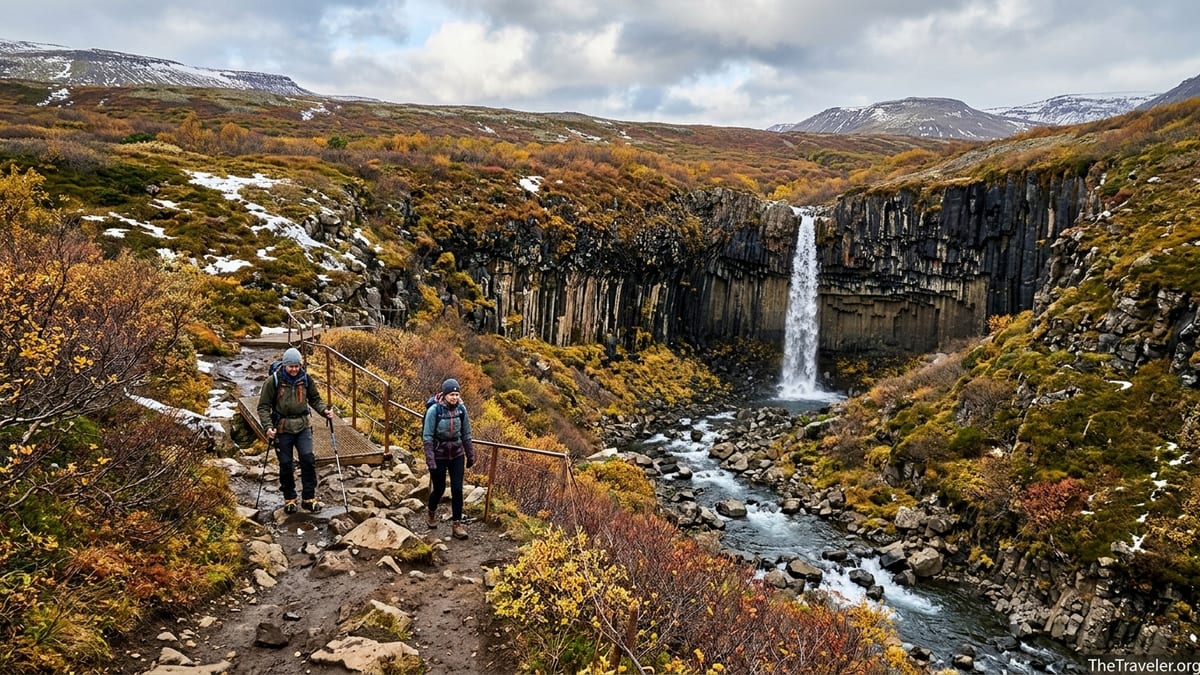
Visitor numbers in April, May, late September and October are typically below the July and August peak, though still significant compared with winter. You can expect a noticeable mid day rush, particularly from tour coaches, but crowding at the viewpoints tends to ease more quickly in the morning and toward late afternoon. Photographers who enjoy autumn color may particularly appreciate late September and early October, when the low birch and ground vegetation around the canyon turn yellow and rust brown, giving a very different palette than the lush greens of July.
Winter at Svartifoss: Snow, Ice and Dramatic Light
Winter at Svartifoss, roughly November through March, offers a starkly different atmosphere, with snow dusting the basalt columns and low angled light cutting across the valley. It is also the period when hikers must be most cautious. National and regional climate data for south Iceland show average winter temperatures hovering around freezing, which means repeated cycles of thaw and refreeze on the trails. Snowfalls, sleet and strong winds are also more common, and storms can temporarily close roads or make driving to Skaftafell hazardous.
The Svartifoss path in winter is often covered in snow, compacted snow or ice, particularly on the steeper sections and the metal grid walkways that appear on parts of the route. Local advice from guides and recent visitor reports commonly recommend traction aids such as microspikes for winter hiking in areas like Skaftafell, both to reduce the risk of slipping and to increase comfort. Before any winter visit the latest messaging from Vatnajökull National Park, Icelandic road authorities and weather services should be reviewed to confirm whether trails are open, what equipment is advised and whether storms or high winds are expected.
Daylight is the main limiting factor. Around late December, the south coast has only about four to five hours of true daylight, with gradual gains in January and February. In practice, this means winter visitors need to plan Svartifoss as a focused outing during the brightest part of the day. If you are driving a long section of the Ring Road before or after the hike, build in generous margins so that most or all of your driving occurs in daylight and you are not rushing on potentially icy roads at dusk.
On the trail itself, allow noticeably more time than you would in summer. Even fit hikers tend to move more slowly on icy or uneven snow surfaces, and stopping to put on or adjust traction devices, tighten layers and navigate around slippery spots all add minutes. The experience can be deeply rewarding, with frozen cascades, quiet paths and a good chance of solitude away from midday, but it is not a simple stroll. Winter newcomers and anyone uncomfortable on snow or ice should consider joining a local guided outing in Skaftafell or adjusting plans if national park advice recommends avoiding the trail due to conditions.
Photography Considerations: Light, Direction and Seasonal Mood
Svartifoss is a relatively small waterfall by Icelandic standards, but it is one of the country’s most photographed because of its dramatic amphitheater of dark hexagonal basalt columns. The falls drop from a notch in the cliff into a rocky stream that flows away from the main viewpoints. The primary platform faces roughly north, which means the sun’s path across the southern sky changes how the scene is lit between winter and summer.
In summer, the high sun can strike the falls from a relatively steep angle during midday, often creating strong contrast between bright white water and deep shadowed basalt. Photographers who prefer soft, even light will find early morning, late evening or overcast conditions more forgiving. The dark basalt tends to photograph well under diffuse cloud, which preserves texture without blowing out highlights, while the surrounding slopes glow green. Long daylight hours allow ample flexibility to time your visit around such conditions, and on bright nights near the solstice you can even experiment with very late evening light when visitor numbers drop.
In autumn and winter, the sun sits lower in the sky and stays closer to the horizon, especially around December and January. This produces longer shadows and warm, oblique light when skies are clear, which can make the basalt columns and any snow or frost on them appear more sculpted. Short days mean narrower windows for this kind of light, so planning around the day’s specific sunrise and sunset times becomes important. The presence of snow also changes the scene’s tonal balance: the bright foreground snow and streambed can reflect light back into the canyon, softening shadows but making exposure more delicate.
Spring brings a mix of lingering snow patches, bare rock and emerging greenery, while late September and early October wrap the canyon in yellow and brown foliage from the low birch and shrubs. Each season offers distinct color palettes and textures for images. Throughout the year, photographers should be prepared for wind driven spray, which can coat lenses, and for fast changing clouds that alternately brighten and flatten the scene. Neutral density filters and a sturdy tripod help capture silky water effects on calmer days, but in winter especially you may need to balance artistic goals with safety on icy viewing platforms.
Crowds, Timing Within the Day and the Ring Road Context
Skaftafell lies close to Iceland’s Route 1, making Svartifoss a popular stop on south coast and Ring Road itineraries. Many travelers visit on a one night stay between Vík and Höfn or as part of a longer loop around Vatnajökull’s outlet glaciers. As a result, the busiest times at the waterfall roughly correspond to when buses and self drive visitors converge during late morning and afternoon, particularly in June, July and August.
To experience a quieter Svartifoss, timing is key. In summer, early morning departures from the campground or nearby accommodation can reach the falls before most tour groups. Late evening hikes can also be peaceful thanks to extended daylight, provided you are comfortable walking back in softer, lower light. In the shoulder seasons, mornings and later afternoons can still offer relative calm, though you will be working with a more conventional day length. In winter, safety considerations around daylight and ice take precedence, but even then the earliest practical window after sunrise is often less crowded than midday.
Because most visitors are traveling longer distances along the Ring Road, it is helpful to place Svartifoss within your broader day. On a classic south coast itinerary, travelers might drive from Vík to Skaftafell, hike to Svartifoss and perhaps a nearby glacier viewpoint, then continue toward Jökulsárlón and Höfn. In summer this can be done at a relaxed pace with breaks and photo stops. In winter, short days and slower driving conditions may make it more realistic to limit yourself to Skaftafell and one additional stop, or to stay overnight nearby instead of trying to cover multiple long legs in a single day.
Regardless of season, parking at Skaftafell is concentrated around the main visitor area, and during peak summer midday periods spaces can fill. Arriving earlier or later in the day reduces stress and gives more flexibility. The compact design of the trail network also means that even when the campground and parking are busy, you can often find quieter moments by lingering at intermediate viewpoints, stream crossings or alternate angles near the waterfall instead of remaining only on the main platform.
Facilities, Campground and Seasonal Services in Skaftafell
Skaftafell’s core infrastructure operates year round, but many services vary by season. The official visitor center, Skaftafellsstofa, is open through the year and provides information on current trail conditions, weather, safety, and available tours. Opening hours, however, are typically longer in summer and shorter in the off season, so winter and shoulder season travelers should verify daily schedules in advance and not assume late evening access.
The Skaftafell campground, located beside the main visitor area, is listed as operating all year. In practice, different camping zones and facilities may open or close depending on conditions and demand. Some vehicle fields and tent meadows are seasonal, while certain hard surfaced areas remain available even in winter. Showers and toilet blocks are provided and are generally included in the camping fee, but exact arrangements, renovation work or temporary closures can change by year, so campers should confirm on arrival which facilities are currently in use.
Food and retail options within Skaftafell itself are most reliable in the main summer season. During June, July and August you can often count on a small shop or café near the visitor hub, as well as food trucks or simple restaurants that cater to the steady flow of visitors. Outside these months, many of these outlets close or operate reduced hours, and there may be days when only basic snacks at the visitor center are available. Travelers staying at the campground in the shoulder or winter seasons should arrive with sufficient groceries and not depend on late opening or full hot meal service on site.
Guided activities, such as glacier walks on Skaftafellsjökull or nearby outlets, ice cave tours and interpretive hikes, tend to be concentrated in the main visitor season and in specific parts of winter when ice caves are stable. However, exact operating calendars depend on safety assessments, conditions on the glaciers and demand. Anyone hoping to tie a Svartifoss walk into a same day guided glacier tour or boat trip on a glacial lagoon should check availability carefully for their specific dates and be prepared for weather related cancellations or time changes.
Choosing Your Season: Matching Conditions to Travel Style
Deciding when to visit Svartifoss comes down to your priorities and comfort level with changing conditions. Casual hikers who want straightforward trail conditions, long days and the greatest selection of services usually do best in summer, particularly late June through August. At this time the paths are most likely to be clear of snow and ice, weather is comparatively mild, and the long daylight makes it easier to drive, hike and enjoy viewpoints without rushing. The trade off is heavier crowds and higher overall visitor numbers along the entire south coast.
Travelers who value slightly quieter trails, cooler temperatures and seasonal color might gravitate toward the shoulder months of late May, September or early October. These periods still offer generous daylight and relatively accessible paths but with fewer tour buses than in the core summer school holiday weeks. You must, however, be more flexible about weather: a week of sunshine can give near perfect conditions, while a string of storms can make trails muddy and driving more tiring.
Photographers and winter enthusiasts who seek snow, low angled light and potentially fewer people on the trail may prefer the true winter months from November to March. This choice demands the highest level of preparation. Short days, icy surfaces and rapidly changing weather all add complexity, and national and local guidance must be taken seriously. Microspikes or similar traction devices, warm layered clothing, and conservative driving plans become essential. When conditions align, the reward is a uniquely atmospheric view of Svartifoss framed by snow and ice, with dramatic light in the middle of the day and, on clear nights away from lights, the possibility of northern lights over the surrounding peaks.
Whatever your season, the key to a safe and enjoyable visit is staying informed. In the days before your hike, consult Iceland’s national weather service, the road administration’s condition reports and Vatnajökull National Park’s latest updates on Skaftafell trails and facilities. Adjust your plans if strong winds, heavy precipitation or warnings are issued, especially outside summer. By pairing realistic expectations with up to date information, Svartifoss can be a highlight of any south Iceland itinerary, whether you see it under midnight sun, autumn skies or winter snow.