


Antigua Guatemala is a small colonial city in the central highlands of Guatemala, not the Caribbean island of Antigua. Set in a valley at about 1,530 meters above sea level and ringed by volcanoes, it is the historic capital of the Sacatepéquez department and a UNESCO World Heritage city known for its cobbled streets, ruined convents and pastel facades. For many North American and European visitors it is the safest, most walkable and most comfortable introduction to Guatemalan culture, language and food, as well as an easy base for exploring the surrounding highlands.
Get the latest updates straight to your inbox!
Is Antigua Right for Your Trip?
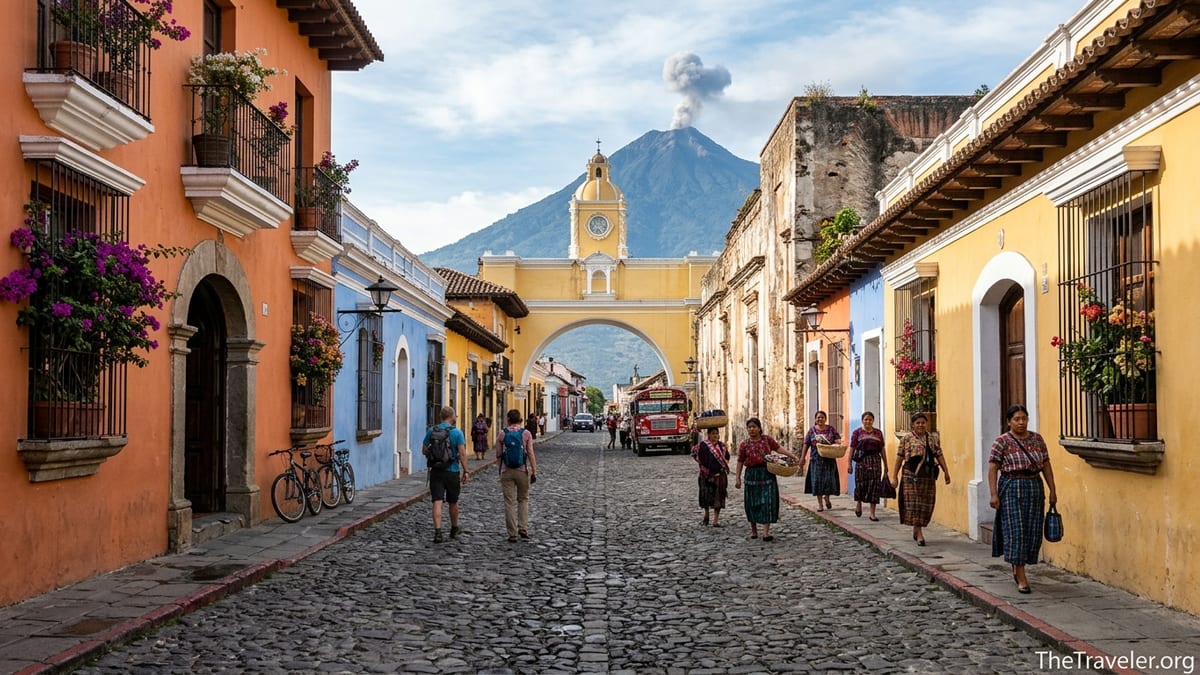
Antigua suits travelers who care about history, architecture and everyday culture more than beaches. The historic center is compact, atmospheric and easy to explore on foot, with low-rise colonial buildings, church ruins and leafy plazas backed by the cones of Agua, Fuego and Acatenango volcanoes. It works especially well for first-time visitors to Guatemala who prefer a small, manageable city with good tourism infrastructure, as well as for repeat travelers who want to slow down and dig deeper into local life.
The city has long attracted Spanish-language students, remote workers and digital nomads who stay for weeks or months. Reliable fiber connections are common in mid-range and upscale hotels and rentals, and there is a well-established café culture that makes it easy to combine work and exploration. Families who are comfortable basing in a city rather than at a beach resort often find Antigua a gentle way to introduce children to Central America, thanks to walkability, accessible day trips and a broad range of dining options.
By contrast, Antigua is not ideal for travelers seeking a Caribbean-style all-inclusive stay. There is no beach, and the nearest Pacific coast resorts are several hours away by road. Nightlife exists but is modest compared with regional party hubs, and local regulations and community expectations keep the historic center relatively calm at night. Visitors looking for large resort complexes, swim-up bars and packaged entertainment might be disappointed here, and would be better off treating Antigua as a short cultural stop rather than a full holiday base.
Antigua does, however, serve many different travel styles within its urban limits and nearby villages. Boutique hotels, restored convents, simple guesthouses and a growing number of design-forward rentals cater to a range of budgets. Combined with established tour operators, Spanish schools and a concentration of cafes, chocolaterías and craft markets, the city can anchor everything from an intensive language course to an active volcano-hiking trip.
Understanding Antigua’s Setting and How Long to Stay
Antigua lies about 37 kilometers west of Guatemala City, in a highland valley at around 1,530 meters. It is the capital of the Sacatepéquez department and of the surrounding municipality, and was once the colonial capital of a much larger region of Central America. Its elevated setting means daytime temperatures are usually pleasantly warm rather than hot, and evenings can feel cool enough for a light jacket, especially in the dry season from November to February. Travelers sensitive to altitude generally cope well here, although those arriving straight from sea level may feel the thinner air during steep walks.
For a first look, a 2 to 3 day stay lets you see the historic center, visit at least one ruin or former convent, climb to a viewpoint such as Cerro de la Cruz and enjoy a coffee farm or chocolate experience. This works well if Antigua is one stop in a longer Guatemala itinerary that also includes Lake Atitlán, Tikal or the Pacific coast. With careful planning, you can also fit in a half-day village visit or a short hike, but the pace will be brisk.
If you plan to use Antigua as a base, a 5 to 7 day stay is more realistic. That allows time for an overnight Acatenango or Pacaya volcano hike, a full-day coffee tour or mountain-bike outing, and slow exploration of nearby villages such as San Juan del Obispo or Santa María de Jesús. Many visitors also slot in a day trip to Lake Atitlán, although it makes for a long day on the road. One week centered on Antigua typically offers a good balance between urban exploring, active excursions and rest.
Longer stays of two weeks or more are common among Spanish students and remote workers. Language schools operate multi-week programs, often including homestays with local families. Renting an apartment or long-stay room in a guesthouse can reduce daily costs, though it is important to confirm internet speeds, noise levels and house rules before committing.
Top Things To Do in and Around Antigua
Antigua’s main attraction is the city itself. Walking the historic grid of streets around the central park reveals pastel facades, tiled roofs and a mixture of restored buildings and romantic ruins. The Parque Central acts as the social heart, framed by the Catedral de San José and the Palacio de los Capitanes Generales. Just a few blocks away, the iconic Santa Catalina Arch offers classic photographs with Volcán Agua rising behind it on clear days.
Several church and convent ruins give a sense of Antigua’s former grandeur and its long history of earthquakes. Frequently visited sites include the ruined cloisters of former convents, atmospheric courtyards with fallen columns and gardens among crumbled stone. Access conditions and opening hours can change for conservation work, so it is wise to confirm current information with the local tourism office or your hotel on arrival.
For views over the city and valley, Cerro de la Cruz is the classic lookout. A paved path and steps lead up the hillside to a cross and viewing platform directly north of the center. In recent years local authorities have maintained a security presence on the main route during daylight hours, and visiting earlier in the day is generally recommended. Weather shifts quickly in the highlands, so clear-morning visits often yield better views than late afternoon.
Beyond the center, organized visits to nearby coffee farms are a staple activity. Many fincas offer half-day tours explaining the growing, harvesting and roasting process, usually ending with tastings of highland Arabica coffee. Chocolate workshops introduce visitors to cacao processing and often let you grind and flavor your own chocolate to take away. Handicraft markets and workshops, both in town and in neighboring villages, highlight textiles, jade and wood carving, with prices and quality varying widely.
Volcano Hikes, Villages and Day Trips
The volcanic ring around Antigua offers some of the most memorable experiences in the region, though they require preparation and reputable guides. The overnight Acatenango trek is one of Central America’s signature hikes, with camps set high on the volcano’s slopes facing neighboring Volcán Fuego. When conditions permit, trekkers often watch Fuego’s frequent eruptions from camp after dark. Guiding companies usually include transport, camping gear and meals, and prices vary but are generally in the mid-range bracket for Guatemala. Weather, trail conditions and local security can change, so it is important to book with a licensed operator, check recent reviews and ask about current safety guidance at the time of travel.
Pacaya, closer to Guatemala City, is another popular volcano excursion. Many Antigua-based agencies run half-day hikes that involve a vehicle transfer to the national park trailhead, an ascent with local guides and time near lava fields or cooled rock formations, depending on current volcanic activity. Regulations on access and the exact viewpoints open to visitors adjust in response to safety assessments from authorities, so expect some variation between visits and seasons.
Several highland villages within a short drive of Antigua offer quieter streets, local markets and views back toward the city. Santa María de Jesús, perched around 10 kilometers away on the slopes of Volcán Agua, preserves a more traditional feel and cooler climate. Other nearby communities such as Ciudad Vieja, San Juan del Obispo and San Antonio Aguas Calientes are known for colonial history, small plazas and textile weaving traditions. Many visitors join guided excursions that combine two or three villages with short walks or tastings at small producers.
Antigua can also be a jumping-off point for longer day trips. Organized tours and shuttle services connect the city with Lake Atitlán, though a same-day return can feel rushed due to winding mountain roads and traffic. Some visitors use Antigua as an arrival base, then move onward to Atitlán, the Pacific coast or Guatemala City, looping back through Antigua before departure.
Holy Week, Festivals and When to Visit
Antigua’s most famous period is Holy Week, or Semana Santa, when elaborate processions fill the cobbled streets. The city’s Holy Week has been recognized nationally and internationally as a major cultural event, with alfombra carpets of colored sawdust and flowers laid down for hours or days before being swept away beneath float-bearers. The season extends well beyond the official week, with Lenten processions on Sundays leading up to Palm Sunday.
In 2027, key Semana Santa dates in Antigua are anchored around Palm Sunday on 21 March, Good Friday on 26 March and Easter Sunday on 28 March. The municipality and national authorities typically release detailed procession schedules, street closures and crowd-management plans closer to the season. Recent years have seen security programs involving hundreds of police and emergency personnel in Antigua and other major procession cities, along with temporary pedestrianization of key streets and designated routes for processions and emergency access.
For visitors, Holy Week brings an intense mix of beauty and logistical challenges. Accommodation prices rise sharply, with many hotels, guesthouses and homestays requiring multiple-night minimum stays and advance deposits. Central streets near major churches can be closed to vehicles for long stretches, and it is normal to walk longer distances between hotels, viewpoints and restaurants. Anyone wishing to witness the main Good Friday processions at close range should be comfortable with dense crowds, extended time on their feet and the possibility of slow or circuitous movement through the center.
Outside Holy Week and major festivals such as Independence Day in September or local patron-saint celebrations, Antigua feels calmer and more spacious. The dry season from roughly November to April brings sunnier skies and clearer volcano views, along with higher visitor numbers and prices in December, January, Easter and around Christmas and New Year. The rainy season, generally May to October, sees more afternoon showers and lush surrounding hills, as well as somewhat lower hotel rates and fewer crowds. Short, heavy downpours are common rather than all-day rain, so mornings often remain good for walking, viewpoints and tours.
Getting From Guatemala City Airport to Antigua
Most travelers arrive in Antigua via La Aurora International Airport in Guatemala City. The road distance is roughly 37 kilometers, but journey times vary significantly with traffic, weather and road conditions. In light traffic, especially late at night, the drive can take about 45 minutes to one hour. At peak times, or when there are accidents or roadworks, it can extend to 90 minutes or more, and some travelers report even longer journeys if congestion is severe. It is best to think in terms of ranges rather than a guaranteed fixed time.
Shared tourist shuttles are a common and relatively economical option. Several well-known operators and local agencies run scheduled vans between the airport, central Guatemala City hotels and Antigua, grouping passengers whose flights arrive within a similar window. These shuttles typically deliver passengers directly to major hotels or central drop-off points in Antigua. They can take longer than a private car because of multiple stops, but they offer a degree of security and predictability valued by solo travelers, especially at conventional arrival times during the day.
Private transfers arranged through hotels or reputable tour companies provide door-to-door service and direct routing. Prices are higher than shared shuttles but can be reasonable for couples or small groups sharing the cost. Several operators quote in US dollars and can accept card or online payment in advance. Travelers arriving late at night often prefer pre-booked private transfers so that a named driver is waiting with a sign in the arrivals area. While some visitors use app-based ride services or airport taxis, these can be subject to last-minute cancellations or surge pricing, and availability may vary by time of day and any current security or traffic measures.
Public buses exist but are not generally recommended for newly arrived visitors with luggage, especially after dark, due to complex routes and varying safety standards. Whatever option you choose, allow generous time to reach the airport on departure, particularly for early-morning flights when queues at check-in and security can lengthen and traffic into Guatemala City is heavy. Check current advice from your accommodation shortly before travel, as roadworks, demonstrations and national security operations occasionally affect the main highway between the capital and Antigua.
Where to Stay: Neighborhoods and Lodging Styles
Antigua’s historic center is relatively small, and most visitors stay within or just outside the colonial grid of streets. The blocks around Parque Central offer maximum convenience: you are within a short walk of major churches, museums, restaurants and many tour agencies. The trade-off is more noise, especially on weekends and during festivals, when music and street life can continue late into the evening. Central hotels and guesthouses often occupy beautifully restored buildings with internal courtyards, but room windows may open onto shared patios rather than quiet back streets.
Streets a few blocks away from the central park, particularly toward the eastern and southern edges of the historic core, tend to be quieter while remaining easily walkable. These areas often appeal to repeat visitors, families and remote workers who value sleep and a more residential feel over being right on the main square. Moving further out to the city’s fringes or nearby hills brings larger properties, some with extensive gardens and volcano views, and a more retreat-like atmosphere. These can be attractive for honeymooners and higher-end travelers, although distances to restaurants and tour departure points increase.
The lodging mix in Antigua is diverse. There are historic hotels housed in former convents or colonial mansions, mid-range boutique properties with a handful of carefully designed rooms, simple guesthouses and hostels catering to backpackers, and a growing segment of upscale boutique resorts on the outskirts. Recent hotel round-ups and booking platforms show a wide spread of nightly rates, with basic dorm beds often starting around the budget level, solid mid-range doubles typically in the moderate range, and upscale suites and villas considerably higher. Prices spike for Holy Week, Christmas and popular festival weekends, and quoted rates may or may not include Guatemala’s combined 22 percent tax on hotel stays, so it is important to read the small print.
Before booking, travelers should check that properties are currently operating, read recent guest reviews for comments on noise, cleanliness and service, and confirm key facilities such as Wi-Fi reliability, parking, breakfast options and heating for cooler months. Solo travelers may prefer centrally located properties with 24-hour reception and security staff, while families might prioritize quieter streets and rooms that open onto secure courtyards where children can play.
Costs, Money, Food and Drink
Antigua is not the cheapest destination in Central America, but it remains affordable compared with many North American and European cities. Recent travel budget analyses suggest that a tight-budget traveler who stays in a dorm or basic guesthouse, eats at local comedores and street stalls and limits paid excursions can often get by on roughly the equivalent of 30 to 50 US dollars per day. Mid-range visitors who choose boutique hotels, sit-down restaurant meals and one or two organized tours might spend closer to 80 to 150 dollars per day. Luxury travelers staying in high-end properties and organizing private guides, spa treatments and fine dining can spend significantly more.
Guatemalan quetzales are the standard currency for everyday purchases such as markets, local eateries, buses and tuk-tuks, while many hotels, tour operators and some higher-end restaurants quote rates in US dollars and accept major credit cards. ATMs are widely available in the historic center, including inside or near banks and shopping courtyards, although it is prudent to use machines in secure, well-lit locations and avoid withdrawing large sums at once. International card blocks and occasional network outages can occur, so carrying a backup card and some reserve cash is wise.
Tipping norms are moderate. Some restaurants add a service charge to the bill; where they do not, leaving around 10 percent for satisfactory service is customary. Small tips are appreciated for hotel porters, guides and drivers, with exact amounts varying by length and complexity of service. Street vendors and market stallholders do not expect tips, but rounding up small amounts is common.
The food scene in Antigua is one of its quiet highlights. Traditional Guatemalan comedores serve set lunches with soup, a main dish and tortillas at modest prices, while street snacks near churches and markets might include tostadas, rellenitos, tamales or grilled meats. At the same time, the city hosts modern cafés and specialty coffee bars that showcase highland beans, as well as bakeries, vegetarian spots and a growing number of international restaurants. Local markets supply fresh fruit, vegetables and prepared foods, particularly around the main mercado area west of the center. As always, travelers should assess cleanliness, follow their own comfort levels regarding street food and drink bottled or treated water.
Safety and Practicalities
Antigua is generally regarded as one of Guatemala’s more tourist-friendly and manageable cities, but it is still important to take routine precautions. Petty theft such as bag-snatching and pickpocketing can occur in crowded markets, on busy streets and around major events, especially during Holy Week when the city fills with visitors. Keeping valuables out of sight, using hotel safes where provided and avoiding displaying expensive jewelry or electronics in busy public areas reduces risk.
National and international travel advisories for Guatemala, including those from the United States, Canada and the United Kingdom, frequently note higher crime levels in some parts of the country and occasional episodes of unrest, protests or roadblocks. These advisories are updated periodically, and conditions can change over time. Before travel, it is sensible to check the latest guidance for Guatemala and for Sacatepéquez specifically, paying attention to notes on demonstrations, national security operations and road safety. On the ground, hotels, language schools and reputable tour operators are valuable sources of up-to-date local information.
Within Antigua, walking during daylight and in the early evening is the norm, and many visitors feel comfortable moving around the central grid of streets. Late at night, especially after bars close or during quieter weekdays, most local residents and long-term visitors prefer to use registered taxis or trusted ride services for longer distances, even within town. When moving between Antigua and other regions, it is wise to travel in daylight where possible, use established shuttle companies and avoid carrying large amounts of cash or visibly valuable items.
Antigua’s altitude and strong sun can catch visitors unprepared. Hydration, sunscreen and hats are important, particularly on volcano hikes and during long processions in Holy Week. Earthquakes and volcanic activity are a fact of life in the region; accommodations and tour operators are accustomed to local safety protocols, but travelers should familiarize themselves with basic emergency procedures and follow any instructions from authorities if an event occurs.
Sample Itineraries and Planning Checklist
For a two-day visit focused on highlights, arrive in Antigua from the airport and settle into a centrally located hotel or guesthouse. Spend the first afternoon exploring Parque Central, the cathedral and nearby streets, then wander toward the Santa Catalina Arch and enjoy a café or courtyard restaurant. On the second day, walk up to Cerro de la Cruz in the morning for views, visit at least one major ruin or convent and take a short coffee or chocolate experience in the afternoon before an evening stroll.
A four-day stay gives time to add a fuller set of experiences. Combine the first two days of city exploration with a half-day coffee farm visit and a guided tour of several ruins. Dedicate one day to a nearby village circuit, visiting one or two communities for markets, viewpoints or small museums. Depending on fitness and interests, you might instead choose a half-day Pacaya volcano outing or a more relaxed day of gallery-hopping, handicraft shopping and café time.
With one week centered on Antigua, you can blend urban immersion with highland adventure. Devote several days to churches, ruins, markets, food and coffee culture, then schedule an overnight Acatenango trek with a reputable operator for one night, plus a recovery day afterward. Add a day trip to Lake Atitlán or an additional village and hiking day in the surrounding hills. This rhythm allows for rest between demanding activities while still making the most of the region.
By the time you finish planning, you should be able to answer a few key questions. Does Antigua, as a highland colonial city, fit your priorities more than a beach resort or larger capital? How many days can you allocate, and do you want to include a volcano hike or a long day trip to the lake or coast? Which season suits you best, balancing dry-weather clarity against rainy-season greenery and lower prices? Would you rather stay amid the bustle near the central park, or in a quieter fringe street or hillside retreat? Clarifying these points will help you turn Antigua from a name on a map into a rewarding base for your Guatemalan journey.