


The Yucatán Peninsula is one of Mexico’s most compelling regions, stretching from the resort coast of Cancún and Tulum to the haciendas and cenotes around Mérida and Valladolid. Yet the experience you have in this corner of the Caribbean can change dramatically depending on when you go. Temperatures, rain, sargassum seaweed, cenote conditions, whale shark encounters, crowds and prices all follow distinct seasonal patterns. This guide breaks those patterns down so you can match your travel dates to the kind of trip you want, whether that is cooler winter exploring, affordable off-season escapes or a summer focused on marine life.
Get the latest updates straight to your inbox!
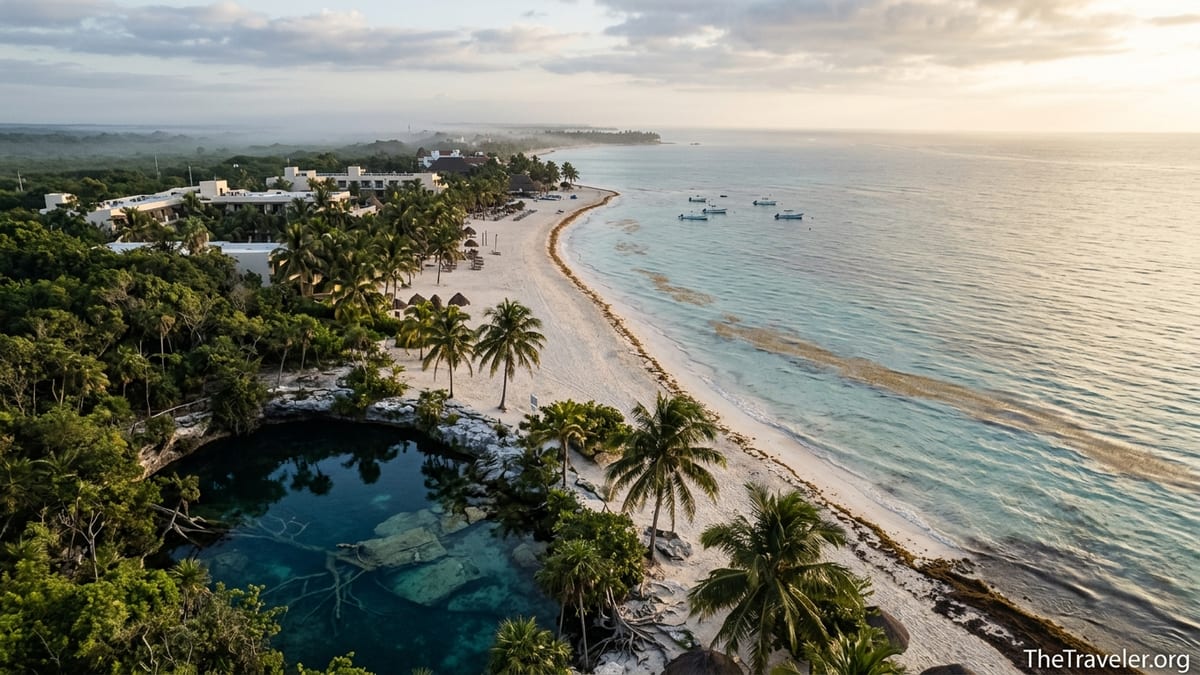
Understanding Yucatán’s Seasons: Dry, Rainy and Hurricane Periods
The Yucatán Peninsula has a tropical climate with warm temperatures year-round, but it still has a clear rhythm. Broadly, the dry season runs from about late November through April, with April typically one of the driest months on the Caribbean coast. The rainy season starts to ramp up in May and usually lasts into October, when afternoon downpours and higher humidity are common. Within that pattern sits the Atlantic hurricane season, officially June 1 to November 30, with the highest risk typically from August through October for Quintana Roo and Yucatán states.
In practical terms, that means a January visit to Cancún or Playa del Carmen often feels pleasantly warm and relatively dry, with daytime highs around the low 80s Fahrenheit. By contrast, an August trip can be hotter and stickier, with higher chances of heavy showers or tropical storms, particularly along the Caribbean coast. Inland cities like Mérida and Valladolid tend to be even hotter than the coast because they lack the sea breeze, so a mid-afternoon walk around Mérida’s Plaza Grande in May will usually feel significantly more intense than a morning stroll in February.
Hurricane risk does not have to be a reason to stay away, but it should affect your planning. For example, if you book a Tulum beach hotel for the second half of September, you might want fully flexible rates and comprehensive travel insurance that covers weather disruption. In contrast, a trip in early February carries far less storm risk, and many visitors feel comfortable locking in nonrefundable hotel deals during that period.
Best Weather for Exploring and Cenotes: December to March
For comfortable exploring, most travelers find the sweet spot runs from December through March. Daytime temperatures are warm but not extreme, humidity is lower and rainfall is usually modest. This is when walking around archaeological sites like Chichén Itzá, Uxmal or Ek’ Balam is more manageable, especially if you arrive early in the morning. Standing at the base of El Castillo pyramid in January or February, the air often feels crisp compared with the heavy heat that settles over the site in late spring and summer.
Cenotes, the freshwater sinkholes that dot the peninsula, are technically a year-round attraction because their water temperature changes only slightly across seasons. However, cooler air during winter and early spring means the water can feel brisk when you first get in. In practice, many visitors find a mid-afternoon dip in February at cenotes near Valladolid, such as Cenote X’kekén or Cenote Samulá, perfectly refreshing after a morning at Chichén Itzá. In summer, those same cenotes become a welcome escape from oppressive heat, though walking to and from parking areas and climbing stairs can be more taxing when temperatures push well into the 90s Fahrenheit.
One advantage of winter for cenote enthusiasts is water clarity and comfort around the sites. Because this is the dry period, many cenotes can be less affected by runoff from heavy rains. Trails are less muddy, and cave ceilings drip less. If you are planning cave dives in cenotes around Tulum or Puerto Aventuras, local operators often describe December through March as especially reliable for visibility, though exact conditions vary by site and recent weather.
The Trade-Offs of Winter: Crowds and Higher Prices
The same conditions that make December to March attractive also draw the most visitors. On the Caribbean coast, this is peak season, particularly during the Christmas and New Year holidays, late December to early January, and around Easter and spring break in March or early April. In places like Cancún’s Hotel Zone or Tulum’s beachfront, you can expect higher room rates, busier beaches and more competition for cenote and ruins tours during those windows.
To give a sense of the difference, a mid-range all-inclusive resort near Playa del Carmen that sells rooms in early September at relatively moderate rates can see prices climb significantly for the week between Christmas and New Year. Smaller boutique hotels in Tulum or Isla Mujeres may sell out months in advance for late December and early January. Rental cars booked at Cancún International Airport often cost noticeably more in February than in early May or late September, and popular cenotes near major highways start to feel busy by mid-morning.
You can still enjoy the advantages of winter weather while easing the impact on your budget and sanity by targeting the shoulders of peak dates. Mid-January after the holiday rush, late February outside of major school breaks, and the first half of December (before Christmas) often bring a good balance of comfortable weather, lower or at least more moderate rates and more space on the beach. For example, spending the first week of December in Puerto Morelos or Akumal often means warm, mostly dry days but without the packed feel of late December.
Spring Shoulder Season: Ideal for Cenotes, Lower Prices and Some Sargassum Risk
From late March through May, the peninsula transitions into hotter, more humid conditions. At the same time, international demand dips once Easter and spring break pass, especially in late April and early May. This can be a rewarding window if you want lower hotel prices and still-acceptable weather, with the caveat that heat increases noticeably as you move into May, particularly inland.
For cenote-focused trips, April and early May can be excellent. Cenotes retain their cool temperatures, turning them into natural air conditioners when midday heat builds. It is common for travelers staying in Valladolid or Tulum in April to structure days around a morning at a less shaded site such as Coba or Muyil followed by long swims and shaded relaxation at nearby cenotes in the afternoon. Fewer international visitors also mean you have a better shot at enjoying semi-famous spots like Cenote Azul or Gran Cenote with smaller crowds if you arrive early.
Sargassum, the floating seaweed that periodically accumulates on Caribbean beaches, often begins to appear in more significant amounts in late spring. Recent monitoring suggests that along the Riviera Maya, heavier sargassum seasons frequently run from about April or May through late summer, though exact timing and intensity vary each year. That means a stay in Tulum in late April might see only light seaweed that hotel staff can clear quickly, while the same hotel in June could be working constantly to keep beaches usable if a strong sargassum year is underway.
If you plan a spring trip and care a lot about beach aesthetics, it is worth choosing properties that actively manage sargassum and possibly focusing on areas less exposed to the main currents. Some travelers shift a portion of their stay to the north coast of Yucatán, in places like Progreso or Celestún, or to the island of Holbox, which are sometimes less affected than the open Caribbean side, though they can still see seaweed depending on conditions.
Summer: Whale Sharks, Bioluminescence and Peak Heat
Summer on the Yucatán Peninsula is hot and humid, with frequent afternoon thunderstorms along the Caribbean coast and a greater chance of tropical systems. Yet it is also the time when one of the region’s most spectacular wildlife experiences occurs. The Caribbean whale shark season, centered off Holbox and Isla Mujeres, typically runs from around mid-June to mid-September, with many operators focusing on the core months of July and August for the highest probability of sightings. Tours depart from Isla Holbox, Isla Mujeres and also from Cancún and Playa del Carmen, shuttling guests by boat to offshore feeding areas where whale sharks gather.
For a traveler, this means that a visit to Holbox in late July can combine sunrise swims off relatively quiet sandbanks with a dedicated whale shark excursion on a calm morning. Many tour companies limit the number of swimmers in the water at once and require life jackets, and reputable operators brief guests on how to avoid disturbing the animals. Because seas can be choppier on some days, especially during active weather, building flexibility into your schedule is wise. Spending three or four nights near the departure point gives you room to reschedule a canceled tour due to wind or storms.
Summer is also when bioluminescence can be especially visible in some shallow bays around Holbox and other protected areas, particularly on dark, moonless nights. After a hot day, many travelers book late-evening kayak or paddleboard outings where microscopic organisms light up when disturbed, giving the water a soft electric glow. These tours are weather dependent but can be a memorable complement to daytime cenote and beach activities.
The trade-offs are heat, humidity and the heightened risk of both sargassum and storms. Walking around Mérida’s historic center in August often requires early starts, long midday breaks in air-conditioned cafes or museums, and evening strolls once the sun drops. Along the Riviera Maya, that same month can bring thick bands of sargassum to beaches, with some stretches nearly unusable for swimming on bad days. If your heart is set on clear turquoise water and perfect white sand, summer is more of a gamble than winter.
Hurricane Season and Sargassum Strategies: August to October
From August through October, the Yucatán Peninsula sits at the height of both Atlantic hurricane season and, in many years, significant sargassum accumulation. While only a small fraction of tropical systems make direct landfall, the broader region can be affected by heavy rains, strong winds or rough seas that disrupt ferry schedules to islands like Cozumel, Isla Mujeres or Holbox. It is not unusual, for example, for Holbox ferry crossings to pause for several hours or more in September due to high winds, causing ripple effects for travelers catching flights from Cancún.
On the Riviera Maya, recent years have seen particularly heavy sargassum landings in late summer and early autumn, especially around Playa del Carmen and Tulum. Local and federal authorities increasingly deploy barriers and cleanup crews, but the volumes can still overwhelm efforts, and the seaweed may emit a sulfurous smell as it decomposes. In practice, that means someone who booked a beachfront hotel in Tulum for mid-September might wake to a shoreline piled with brown seaweed and cloudy water, with tractors and workers operating most of the morning.
Despite these challenges, some travelers intentionally choose this period for lower prices and quieter resorts, especially if they are flexible with plans or prioritize cenotes and inland culture over beach time. If you do the same, consider splitting your trip: a few days on the Caribbean coast followed by several nights inland in Valladolid or Mérida, where your enjoyment is less tied to beach conditions. This way, a stretch of stormy or seaweed-heavy days does not derail the entire holiday.
Practical strategies include booking accommodations with generous change policies, checking travel insurance fine print for hurricane and weather-related coverage, and monitoring local weather and sargassum forecasts in the weeks before you depart. Some travelers also keep a short list of inland alternatives, such as moving from Tulum to Bacalar’s lagoon, or from Playa del Carmen to Valladolid, if beach conditions become particularly poor during their stay.
Festivals, Culture and Price Patterns Through the Year
While weather and natural phenomena may shape your timing, cultural events and price trends also play a major role. Winter is high season across much of the peninsula, not only for North American and European holidaymakers but also for domestic tourism. Christmas, New Year and the weeks around them see particularly intense demand in Cancún, Riviera Maya and increasingly in Mérida, which has become a popular city-break destination thanks to its colonial architecture and dining scene.
Spring brings Holy Week and Easter, when Mexican families travel in large numbers. Popular beaches, cenotes near major highways, and towns like Valladolid and Bacalar fill up noticeably, and hotel prices in those specific weeks can jump even if the surrounding dates are quieter. If you want to avoid the heaviest crowds but still enjoy pleasant weather, you may prefer late February, early March before Easter, or late April after school holidays end.
In late October and early November, the peninsula celebrates Hanal Pixan, the local Day of the Dead traditions. Mérida hosts a well-known Festival de las Ánimas, including an evening procession known as the Paseo de las Ánimas leading to the main cemetery, along with altars, concerts and food events. Travelers often plan entire trips around these dates, combining the festivities with day trips to cenotes or archaeological sites. While demand does rise in Mérida and nearby towns, the atmosphere is more cultural than resort-focused, and inland prices can still be more moderate than Caribbean beachfront rates at the same time.
Throughout the year, you will notice that coastal resorts and major tourist towns such as Cancún, Playa del Carmen and Tulum tend to follow global holiday patterns, while inland destinations like Mérida, Valladolid, Izamal and the smaller hacienda regions have calmer but still noticeable peaks on Mexican long weekends and national holidays. Budget-conscious travelers often design itineraries that put the most expensive coastal nights in shoulder periods and spend peak-season dates inland, where a charming guesthouse or restored hacienda might cost less than a basic room on the beach.
FAQ
Q1. What is the overall best month to visit the Yucatán Peninsula?
There is no single perfect month, but many travelers find late January, February and early March ideal because temperatures are pleasant, rain is relatively low and hurricane risk is minimal, though prices and crowds can be higher along the Caribbean coast.
Q2. When is the best time to visit if I want to swim in cenotes and avoid extreme heat?
For cenote-focused trips with milder air temperatures, aim for December through March, or early April. Water stays cool year-round, but hiking to and from cenotes and climbing stairs is more comfortable in these months than in the peak heat of May to August.
Q3. Which months have the highest risk of hurricanes on the Yucatán Peninsula?
The official Atlantic hurricane season runs from June 1 to November 30, with the highest risk usually from August through October. Direct hits are rare, but heavy rain and stormy seas can still affect travel plans during this period.
Q4. When is sargassum seaweed most likely to affect beaches in Cancún, Playa del Carmen and Tulum?
Patterns vary year by year, but heavier sargassum arrivals along the Riviera Maya often occur from about April or May through late summer, sometimes extending into early autumn. Conditions can change from week to week, so it is wise to check recent reports close to your travel dates.
Q5. What is the best time of year for whale shark tours near Holbox or Isla Mujeres?
The whale shark season in this part of Mexico generally runs from mid-June to mid-September, with July and August often considered peak months for sightings. Tours are weather dependent, so staying several days near your chosen departure point gives you more flexibility.
Q6. Are winter months too crowded to enjoy the Yucatán Peninsula?
December through March, especially the Christmas, New Year and Easter periods, are busy on the Caribbean coast. However, you can still have a relaxed trip by avoiding peak holiday weeks, staying in smaller towns like Puerto Morelos or Akumal, and spending part of your time inland in places like Mérida or Valladolid.
Q7. When are hotel prices generally lowest in the Yucatán Peninsula?
Prices tend to be lowest during late summer and early autumn, roughly from late August through October, because of heat, higher rain chances, hurricane risk and potential sargassum. Late April, early May and early December can also offer better value while still delivering good weather.
Q8. If I visit during hurricane season, how should I plan?
If you travel between June and November, especially August to October, consider flexible bookings, comprehensive travel insurance that covers weather disruptions, and an itinerary that can pivot inland if coastal conditions deteriorate. Keep an eye on official forecasts in the weeks before you depart.
Q9. What is a good time to combine cultural festivals with beach or cenote time?
Late October and early November are excellent for combining Hanal Pixan and Day of the Dead events in Mérida and surrounding towns with visits to cenotes and archaeological sites. Early December can also be appealing, with some cities hosting cultural festivals and the Caribbean coast still relatively quiet before the holiday rush.
Q10. Is it worth visiting in the hottest months if I am sensitive to heat?
If you are very heat sensitive, you may find May through September challenging, especially inland. If you must travel then, consider staying near the coast for sea breezes, planning outdoor activities early and late in the day, relying on cenotes for cooling off, and choosing accommodations with strong air conditioning and shaded common areas.