


Timanfaya National Park shares Lanzarote’s famously mild, dry subtropical climate, but conditions on its exposed lava fields often feel more extreme. The dark volcanic surface absorbs heat, there is almost no natural shade and the area is frequently windy, so temperatures and sunshine that seem modest on paper can feel much harsher in the park. Understanding how weather, crowds and light change through the year and through the day will help you time your visit for comfort, shorter queues and better photographs.
Get the latest updates straight to your inbox!
Climate basics: what the numbers say and how it really feels
For planning purposes, the best reference for Timanfaya’s climate is the long term data from César Manrique Lanzarote Airport, roughly 20 to 30 minutes’ drive away on the east coast. Recent 1991 to 2020 normals show average daytime highs around the low 20s Celsius in winter and the high 20s in late summer, with nights usually in the mid teens in winter and low 20s in August and September. Rainfall is low and concentrated between about November and February, and the island enjoys around 3,000 hours of sunshine per year, which translates to roughly 6 to 10 hours of bright sun per day depending on the season.
Converted to more familiar figures, winter daytime temperatures typically sit near 20 to 22 degrees Celsius, about the high 60s to low 70s Fahrenheit. In August and September, average daytime highs are usually in the 28 to 30 degrees Celsius range, in the low to mid 80s Fahrenheit, although individual hot days can climb higher. Rainfall in the core summer months is often negligible, while a typical winter month sees only a few days with showers rather than prolonged rain.
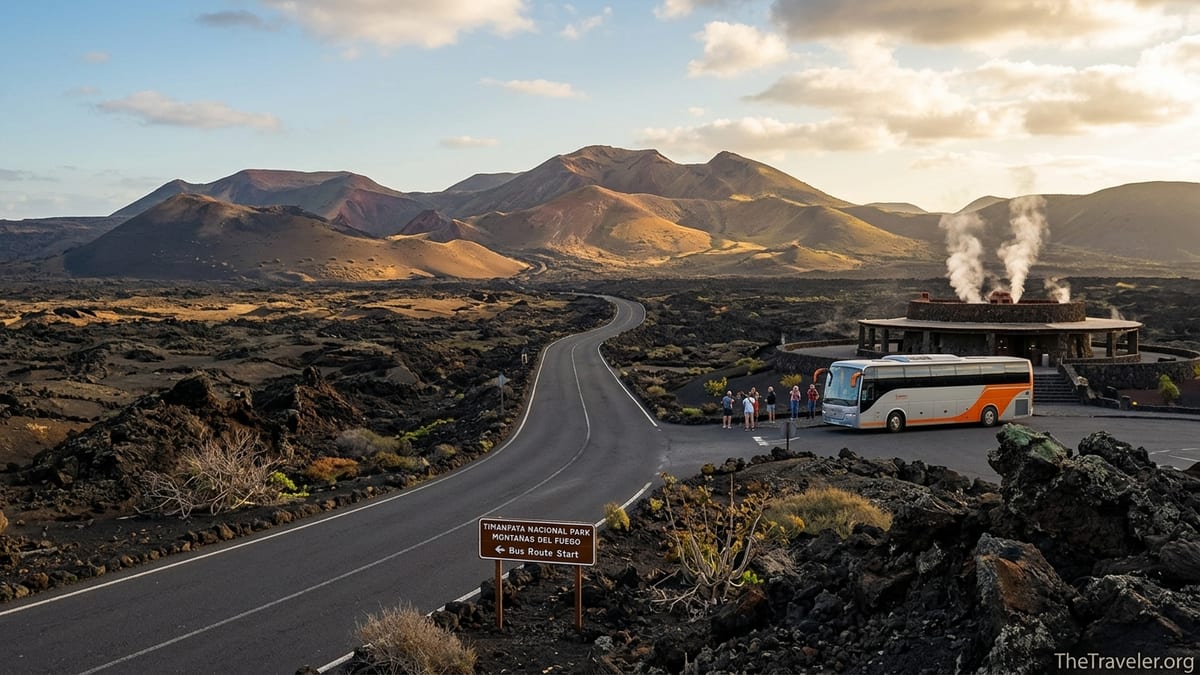
Because Timanfaya is an open expanse of dark, rocky lava with minimal vegetation, these numbers understate how the environment feels. The black rock and ash reflect little light and instead store and radiate heat, so the ground surface around Montañas del Fuego can feel several degrees warmer than the air. The combination of strong sun, heat radiating from the lava and dry air quickly leads to dehydration if you are not prepared, even on seemingly mild winter days.
Wind is another defining feature. Lanzarote lies in the path of the northeast trade winds, so breezes are common year round and can be strong, especially from late spring to early autumn. In Timanfaya the wind can be welcome when temperatures are high, but it also increases evaporation and can make conditions feel raw in winter, particularly in the early morning or late afternoon when the sun is lower.
Seasonal overview: weather, sunshine and rainfall
Using Lanzarote Airport climate normals as a guide, you can think about the year in four broad seasons. From December to February, average daytime highs are usually around 20 to 22 degrees Celsius, nights near 14 to 15 degrees and sunshine averages about 6 to 7 hours per day. This is also the wettest time, although “wet” on Lanzarote often means a handful of short showers across the month rather than continuous rain.
Spring, from March to May, brings a noticeable increase in sunshine and gradually rising temperatures. By May, daytime highs often reach 24 to 25 degrees Celsius with around 8 to 9 hours of sunshine per day and very little rain. Sea breezes and the persistent trade winds keep conditions feeling comparatively fresh, though inside the park the lava still amplifies heat in the middle of the day.
Summer and early autumn, roughly June through September, are warm to hot and very dry. Typical daytime highs rise from the mid 20s Celsius in June to around 28 to 30 degrees in August and stay close to that into September. Sunshine averages often exceed 9 or 10 hours per day with almost no rainfall. The combination of intense sun, high UV levels and the radiant heat from dark rock make the central hours of the day uncomfortable for many visitors, particularly in still or hazy conditions.
Late autumn, from October into November, is a transition period. Temperatures fall back into the mid 20s Celsius by day and high teens at night, while sunshine remains plentiful and the first more regular showers return, especially in November. For most travellers, this shoulder season offers a comfortable balance of warmth and light without the peak summer extremes.
Wind, calima and days when plans should be flexible
Persistent trade winds mean that Timanfaya often feels breezier than coastal resorts sheltered by buildings and vegetation. In summer, that wind is usually a relief, but on cooler winter days it can make the exposed viewpoints near the restaurant at Montañas del Fuego feel several degrees colder. Lightweight windproof layers are valuable year round, especially if you plan to be out early or close to closing time.
A more disruptive factor is calima, a weather pattern where hot, very dry air and dust are carried from the Sahara over the Canary Islands. During calima episodes, skies turn hazy, visibility drops and temperatures and apparent heat can spike. Air quality declines because of elevated fine dust particles. In recent years regional authorities have repeatedly issued pre alert declarations and public health advisories for Lanzarote and neighbouring islands when dust levels and temperatures were forecast to rise sharply.
In late 2024 and again in 2026, for example, the Canary Islands government activated pre alert status for calima episodes that particularly affected Lanzarote and Fuerteventura, warning of reduced visibility and high concentrations of dust and advising residents and visitors to limit outdoor activity, especially strenuous exercise. Island councils have, on some occasions, recommended suspending outdoor events or closing certain public facilities on the worst days. While Timanfaya National Park itself is not automatically closed under every pre alert, such advisories are a clear sign that visiting in the central hours of the day may be uncomfortable for many, particularly children, older travellers or anyone with respiratory conditions.
When a calima is forecast, skies are often dull and brownish rather than clear blue, and long views across the volcanoes can be significantly muted. For photographers and hikers, these are days to be flexible. Consider shifting your visit to an earlier or later day in your itinerary if possible, or aim for the earliest time slot in the morning when temperatures are a little lower and visibility may be marginally better before dust builds through the day.
Visitor patterns through the year and how far ahead to book
Timanfaya is one of Lanzarote’s headline attractions, and visitor numbers track wider European holiday patterns. The busiest periods are usually Christmas and New Year, Easter weeks, July and August school holidays, and UK and other European half terms in February and October. During these peak periods, queues for the Montañas del Fuego entrance can build from mid morning and may extend back along the access road by late morning and early afternoon, especially on days when several tour coaches arrive close together.
In these peak seasons, independent visitors arriving by rental car who turn up around 11:00 or shortly after lunch often face the longest waiting times, sometimes 45 minutes or more to reach the parking and bus boarding area. Tour operators usually reserve blocks of tickets and time slots, so their passengers board more predictably, but congestion on the access road still affects overall flow. To minimise stress, it is sensible to allow a generous buffer in your schedule if you are fitting Timanfaya into a single day of wider island sightseeing at these times of year.
Outside the main holiday peaks, crowds remain substantial because Lanzarote is a year round destination, but daily patterns are smoother and queues often shorten. From mid January to early March, late April to early June and much of November, you will still encounter bus groups and steady private car traffic but with fewer pronounced surges. On many days in these shoulder periods, arriving near opening time or after about 14:30 significantly reduces the likelihood of long queues, and you may be able to drive straight into the parking area.
The booking picture depends on what you hope to do. Standard access to Montañas del Fuego and the internal Volcano Route bus tour is usually sold on the day at the park entrance. In normal shoulder or low season weeks, you can often decide to visit a day or even hours in advance. By contrast, the ranger led Tremesana guided walk, which is the only regular walking route inside the heart of the national park, operates with very small groups and limited departures. The official reservation system typically opens dates about 30 days ahead, and current guidance and recent traveller experience suggest that places on popular days can be snapped up quickly, so it is prudent to book as soon as your preferred date becomes available.
Time of day: opening hours, queues and light
Montañas del Fuego, the main visitor area with the restaurant, geothermal demonstrations and departure point for the Volcano Route buses, generally opens in the morning and closes in the late afternoon to early evening, with last entry for the bus circuit well before sunset. Exact hours vary slightly by season and should always be checked shortly before you travel, but a typical pattern is opening around 9:00 and last admission to the route in the mid to late afternoon. There is no public access to the internal Volcano Route at night or at dawn, and visitors are not allowed to drive or walk the road independently outside the official buses.
Daily crowd patterns are relatively consistent. Near opening time, especially within the first hour, queues at the entrance usually move quickly and parking near the facilities is easier. From around 10:30 to 13:30 coach traffic increases, and this is when queues often lengthen both at the gate and for the buses themselves. After about 14:30 or 15:00, arrivals often taper off, and many organised tours have already passed through, leading to calmer conditions in late afternoon as long as you arrive well before last entry.
From the perspective of comfort, in summer the early morning window from opening until roughly 10:30 usually offers the most pleasant temperatures and slightly gentler light. By late morning the combination of full sun, reflective lava and minimal shade can feel severe, particularly in July and August. In winter, the middle of the day is physically comfortable but also when light is hardest and queues can be longest. Late afternoon, particularly from about two hours after solar noon until an hour before the last buses, gives softer, warmer light across the volcanoes and, on many days, noticeably shorter waiting times.
It is important to remember that if you aim for a late visit you must check both the park closing and the latest boarding time for the internal buses. Arriving too close to last entry may mean you are admitted to the parking area but cannot board a bus if the final departures are already full or have left. For a relaxed experience, build in at least a one to two hour window before the last scheduled bus when planning an afternoon visit.
Photography conditions: seasons and golden hours
Timanfaya is visually striking in almost any weather, but the combination of dark lava, pale ash slopes and often hazy skies means that light quality matters. In the middle of a clear day, especially from late spring to early autumn, the intense overhead sun flattens contrast and produces deep, hard shadows, while heat shimmer can soften distant details. Calima episodes further reduce clarity, muting colours and limiting long distance views.
The best overall conditions for photography usually occur in the shoulder seasons of late autumn and early spring, when the sun sits a little lower in the sky even at midday and the air is often clearer. Within each day, the closest thing to golden hour light accessible to standard visitors is typically the first hour or two after opening or the final 60 to 90 minutes before the last bus departures. At these times, sunlight cuts across the landscape at a lower angle, textures in the lava fields stand out and colours appear warmer without the harsh contrast of midday.
Actual sunrise and sunset inside the core of the park fall outside visitor hours. You cannot independently drive, cycle or walk the internal Volcano Route for dawn or dusk shots, and after closing the access road is controlled. Early risers seeking sunrise light over volcanic scenery need to look to accessible viewpoints outside the national park boundary in the surrounding volcanic landscapes rather than within the Montañas del Fuego loop itself.
Photographers should also consider seasonal sun direction. In winter the sun tracks lower across the southern sky, throwing long shadows and highlighting ridges and craters even during late morning. In summer, with the sun higher for longer, early mornings and later afternoons become especially valuable. A polarising filter can help cut glare from pale ash and haze, while a lens hood is useful to manage flare when shooting toward the sun over the barren terrain.
Tailoring your visit: families, sensitive travellers and motion sickness
Families with young children are often most comfortable in the cooler hours and quieter seasons. From roughly November to early May, mid morning visits can be pleasant provided you bring hats, sunscreen and water, but in peak summer it is usually better to aim firmly for the first buses of the day or a mid to late afternoon slot. Long queues in hot sun are particularly wearing for small children, so aligning your arrival with opening time helps minimise time spent standing on tarmac.
The internal Volcano Route bus tour involves winding roads across uneven, undulating lava fields. Travellers prone to motion sickness may find some sections challenging, especially when buses are full and ventilation is limited on hot days. To reduce discomfort, try to board early so you can choose a seat near the front or over the wheels, where movement feels less pronounced. Cooler times of day, typically the first departures in the morning or later in the afternoon, are also when buses may be marginally less crowded, particularly outside the main holiday weeks.
Anyone sensitive to heat or with respiratory issues should build extra flexibility into their plans. Calima episodes and heat waves can elevate apparent temperatures and worsen air quality, and official advisories sometimes recommend that vulnerable people avoid prolonged outdoor activity. On such days it may be wise to postpone a visit, shorten your time in exposed viewpoints or focus on the visitor centre at Mancha Blanca, which offers indoor exhibits about the park and can be combined with a shorter time at Montañas del Fuego.
Regardless of season, basic precautions significantly improve comfort. Closed footwear is strongly recommended on the uneven, sharp lava surfaces, even if you only plan to walk short distances from the bus to viewpoints. High SPF sunscreen, hats with brims and at least one litre of water per person for a standard visit help counter the combined effects of strong UV, dry air and the radiant heat of the volcanic terrain.
Putting it together: ideal months, daily windows and last checks
For travellers who can choose any time of year, the months that usually offer the best balance of comfortable temperatures, manageable crowds and good visibility are late October to early December and March to early May. During these windows, daytime highs in the low to mid 20s Celsius are common, sunshine is abundant and the main European school holidays either have not yet begun or have recently ended, which moderates visitor numbers and queue lengths without sacrificing the island’s bright, dry weather.
If you are committed to high summer dates in July or August, focus your planning more on the time of day than the exact day. Aim to arrive at Montañas del Fuego at or close to opening, ideally being in the first wave of buses, or plan for a late afternoon visit starting at least two hours before last entry. In winter, when temperatures are milder, you have more freedom to visit mid morning or early afternoon, but queues still tend to peak around the middle of the day, especially over Christmas, New Year and Easter, so early starts remain advantageous.
For shoulder and low season travel, a broadly similar daily pattern applies, but you can often be a little more relaxed. In March, April, November and early December, a visit starting between 9:00 and 10:30 or after about 14:30 usually strikes a good compromise between comfort, crowds and light. If you hope to include the Tremesana guided walk, set a reminder to check the official booking system roughly 30 days before your preferred date and secure a place as soon as reservations open, especially for holiday periods.
A day or two before your visit, make a few final checks. First, consult a reliable weather forecast for Lanzarote, including any mention of heat advisories, strong wind warnings or dust episodes. Second, check for any calima or heat alerts or temporary changes to opening hours announced by regional authorities or the park’s managing body, as these can affect visitor comfort and in rare cases park operations. Finally, confirm the current opening hours and last entry times for Montañas del Fuego and the Volcano Route buses, and adjust your planned arrival so you enjoy Timanfaya’s extraordinary landscape in conditions that match your priorities for comfort, crowds and photography.