


Floating or finning through Silfra fissure in Þingvellir National Park is one of Iceland’s most distinctive water experiences: a drift through crystal clear glacial spring water between the North American and Eurasian tectonic plates. If you are already mapping out an Iceland itinerary and wondering whether to snorkel or dive this famous crack in the earth’s crust, it helps to understand what Silfra is, how tours work in practice, who they suit best, and how to book responsibly under current rules.
Get the latest updates straight to your inbox!
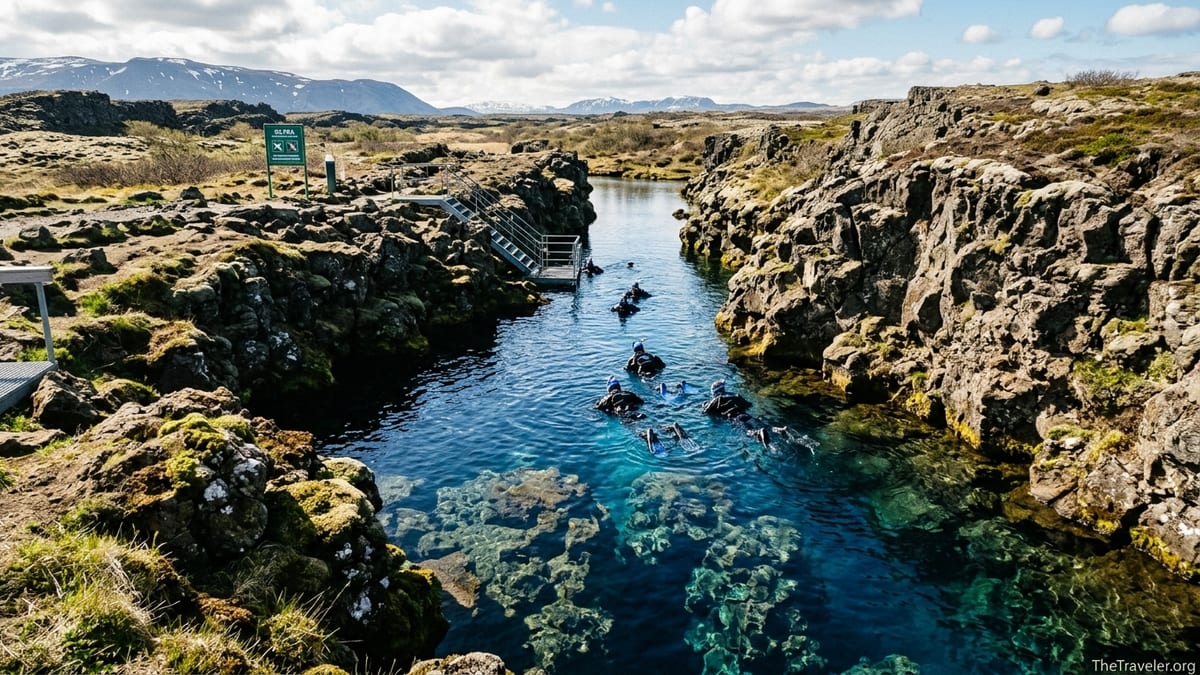
What Silfra Is and Where You Will Be
Silfra is a water-filled fissure in the Þingvellir rift valley, inside Þingvellir National Park on Iceland’s Golden Circle. The valley itself marks the crest of the Mid-Atlantic Ridge as it rises above sea level, and Silfra sits close to the visible boundary where the North American and Eurasian plates are pulling apart. Over time, tectonic movement opened cracks in the volcanic bedrock; one of these filled with groundwater to become the narrow, steep-sided canyon that snorkelers and divers explore today.
The water in Silfra is filtered meltwater from the Langjökull ice cap that has traveled underground through porous lava for years or even decades. By the time it emerges in the springs that feed Silfra, it is very clear and very cold. Operators and guide agencies consistently report underwater visibility that can exceed dozens of meters, and many market Silfra as one of the clearest dive sites in the world, although that is a promotional claim rather than a formal scientific ranking.
The fissure lies a short walk from a dedicated parking area and service zone within Þingvellir, separate from the historic parliament site and main viewpoints. Access to the water is controlled and limited to authorized snorkeling and diving operators under regulations issued by Þingvellir National Park and the Icelandic authorities. Independent diving or snorkeling is not allowed; you must join a guided activity that has a permit to operate at Silfra.
For most travelers, Silfra is reached either on an organized tour including transport from Reykjavík or by self-driving to the national park and meeting a tour group at the designated Silfra parking and staging area. In both cases, your time in the water is only part of a longer block that includes safety briefings, suiting up and walking to and from the entry and exit points.
Conditions: Temperatures, Seasons and Comfort
Silfra’s water temperature sits close to freezing all year, generally around 2 to 4 degrees Celsius, and it does not warm significantly in summer. Drysuits for both snorkelers and divers are standard so that you are insulated from the cold water; underneath, you wear warm base layers provided by you or the operator, typically synthetic or wool rather than cotton so they still insulate when damp. Operators emphasize that good thermal layers and proper fit of the drysuit make far more difference to comfort than the season.
Air temperature and wind at Þingvellir can be far more variable than the water. In winter it is common for the air to feel much colder than the fissure itself, especially when wind and wind chill are strong. In summer air temperatures are milder, but you may still be standing around in cold wind while wearing a bulky drysuit and gloves. Many guests report that the chilliest part of the experience is not the 30 to 40 minutes in the water but the waiting and walking in full gear before and after the swim or dive.
Silfra is operated year-round, and tours run in most weather conditions apart from severe storms, extreme cold snaps or visibility issues on the roads. Winter and shoulder seasons bring a stark, quiet atmosphere and fewer crowds in the fissure, while summer offers more daylight and easier driving but can be busier at Silfra and at other Golden Circle sights. Operators note that water clarity is consistently excellent in all seasons because the water is constantly refreshed springwater rather than surface runoff.
Whatever month you choose, expect cold conditions and plan accordingly. Bring warm, close-fitting base layers, thick socks, a hat and gloves for before and after the activity, and a full set of dry clothes to change into in case any water seeps into your suit. If you feel the cold strongly or have circulation issues, weigh this carefully when deciding whether to snorkel, dive or simply enjoy Silfra from the shoreline viewpoints.
Snorkeling Silfra: Requirements and Who It Suits
Snorkeling is the most accessible way to experience Silfra. Current operator information and park guidelines indicate that no formal diving certification is required to snorkel, but guests must be able to swim independently, be reasonably fit, and meet age, size and health criteria. Many operators set a minimum age of around 12 years, and minors must be accompanied on site by a responsible adult. There are usually minimum height and weight thresholds, often in the region of 150 centimeters and 45 kilograms, so that the drysuits seal and function correctly; maximum sizes may also apply. Because age and size limits differ slightly between companies, you should check the exact criteria with your chosen operator shortly before booking.
Health screening is taken seriously due to the cold and the drysuit environment. Operators typically ask participants to complete a medical questionnaire, and some require a doctor’s clearance for guests above a certain age, often around 60 to 65, or for anyone with cardiac, respiratory, neurological or recent surgical issues. Certain conditions may disqualify you from participating. These rules can be updated, so travelers are expected to review the latest forms from their operator and, if in doubt, discuss their situation with a physician before their trip.
Most Silfra snorkel tours use thick neoprene hoods and gloves with a fabric or fleece base layer under a drysuit, and guides keep groups small in the water for safety and supervision. You float on the surface, breathing through a snorkel, with buoyancy adjusted by the guide. You do not need previous drysuit experience; the guide team will help you into your gear and manage the suit inflation. However, you should be comfortable with your face in cold water and with using a snorkel, and be prepared for restricted movement, as drysuits are inherently bulky.
For travelers deciding if snorkeling is suitable, the key questions are comfort in cold water on the face and in tight gear, basic swimming ability, and willingness to be in the water for 30 to 40 minutes. Those who are uneasy swimmers, strongly claustrophobic or very cold sensitive may find even snorkeling uncomfortable and might prefer to experience Silfra from the viewing platforms instead.
The Snorkeling Experience Step by Step
Silfra snorkel tours either meet at the fissure parking area in Þingvellir or include pickup from Reykjavík, with the drive from the capital typically taking under an hour in normal conditions. If you are self-driving, you park in the designated Silfra lot and check in with your operator’s van or shelter. After registration, guides provide a detailed briefing covering the route through the fissure, signals, safety procedures and how the drysuits and snorkel gear work.
Next comes gearing up. You first put on base layers and warm socks, often in a heated van or small shelter, followed by the drysuit, hood, gloves and snorkel equipment with the help of your guide. This process can take 30 minutes or more, especially in busy periods when several groups are suiting up at once, and it is normal to feel constrained and somewhat awkward in the gear. Guides perform final seal and zipper checks, and then the group walks a short distance down to the entry platform at the top of the fissure.
Entry is usually a controlled climb down a metal staircase into the water, with guides assisting and ensuring that each participant is properly buoyant before moving away from the platform. Once afloat, you gently fin or drift with a mild current along the length of Silfra. The route passes through named sections, often described by operators as the Big Crack, the Silfra Hall and the Silfra Lagoon, with towering rock walls and bright blue water around you. Snorkelers stay on or near the surface, occasionally pausing to look down into deeper pockets where divers may be below.
At the end of the fissure, you exit via another set of steps or a gently sloping ramp. From there, it is a short walk back to the staging area, sometimes still in full gear. Operators typically help you out of your equipment, then provide hot drinks and light snacks in a sheltered area while you rewarm and talk through the experience. From start to finish, including check-in and changing, expect a standard Silfra snorkel session to take around three hours if you meet on site, or longer if transport from Reykjavík is included.
Scuba Diving Silfra: Training, Eligibility and What You See
Scuba diving in Silfra is a more advanced undertaking and subject to stricter requirements. Þingvellir National Park and Icelandic regulations require previous drysuit experience for Silfra dives, and leading operators enforce this through certification and logged-dive checks. At the time of research, a typical requirement is an Open Water or equivalent scuba certification plus a recognized drysuit certification, or an Open Water certification combined with documented proof of at least about 10 logged drysuit dives in the past two years. Divers must usually be at least in their late teens, often 17 or 18, and in good physical health.
As with snorkeling, divers complete medical screening forms and may need medical clearance if they have certain conditions or are past a particular age threshold established by the operator. Because Silfra is shallow by scuba standards and generally has little current, it is not considered technically complex, but the cold water, drysuit buoyancy control, heavy equipment and potentially icy conditions on the surface make it unsuitable for inexperienced or rusty divers. Operators and certifying agencies recommend that you be fully comfortable in a drysuit before attempting Silfra, ideally with recent practice dives in similar cold water environments.
The underwater route for divers roughly follows that of the snorkelers but at greater depth, often to around 10 to 18 meters depending on conditions and guiding policies. Excellent visibility means that divers can look up and see snorkelers silhouetted above and can also peer into crevices and along the rock formations at close range. That said, Silfra is not a site rich in marine life; you may see a few small fish, such as dwarf char, and some algae and aquatic plants, but the attraction is the geology, light and color rather than wildlife.
Because of this, divers who already have extensive cold-water experience may find Silfra visually stunning but technically straightforward. Those who are only occasionally in the water and are not yet drysuit certified might be better served by snorkeling instead of compressing drysuit training into a short pre-trip course just for one or two Silfra dives. The cost of a Silfra dive tour is usually higher than snorkeling, reflecting the extra equipment, guiding and safety demands, so it is worth considering how much value you will personally gain from being deeper rather than on the surface.
Regulations, Safety and Environmental Protection
Þingvellir National Park strictly regulates water activities in Silfra. Current park rules allow diving only in designated fissures such as Silfra and another nearby crack, and only under the supervision of authorized operators and guides who hold valid permits. Solo diving and snorkeling in Silfra are not allowed. Operators must follow detailed safety procedures, maintain appropriate guide-to-guest ratios, and comply with Icelandic maritime and diving regulations. Before you book, it is prudent to confirm that your chosen company is recognized by the park and that its guides hold professional dive or snorkeling leadership qualifications.
Safety considerations at Silfra focus on cold exposure, equipment use and controlled movement in a confined environment. The combination of near-freezing water, bulky gear and limited dexterity in gloves means that guests must listen carefully to briefings and follow guide instructions closely throughout the activity. Staying with the group, avoiding sudden dives or kicks, and signaling promptly if you feel uncomfortable are all emphasized in pre-entry talks. Operators may cancel or shorten tours if conditions deteriorate.
The fissure is also a fragile environment. The volcanic rock walls, sediment and aquatic vegetation can be disturbed or damaged by kicking, grabbing or standing on them. Guides therefore instruct both snorkelers and divers to remain neutrally buoyant and avoid contact with the bottom or sides as much as possible. Finning slowly in the midwater and keeping arms tucked in helps reduce your environmental impact and maintains the clarity that makes Silfra special.
Travelers are encouraged to check that their travel insurance covers cold-water snorkeling or drysuit diving in Iceland, as standard policies may exclude certain adventure sports. Divers in particular should verify that their insurance covers scuba in cold conditions and that they meet any medical self-declaration or physician-signoff requirements well in advance. For both snorkeling and diving, full honesty on medical forms is important, as guides rely on that information to manage safety.
Booking, Timing and Combining Silfra with the Golden Circle
Silfra has grown into a headline experience on many Iceland itineraries, especially for visitors staying in Reykjavík and exploring the Golden Circle. The site’s capacity is limited by park rules, guide availability and the time needed to move groups safely through the fissure, so prime tour slots can sell out. Operators report that demand is highest during the main tourist season from late spring through early autumn and during holiday periods. In those times, it is wise to book several weeks in advance, especially if you need a specific date or transport from Reykjavík.
Several daily departure times are usually available, with early morning and mid-day often the most popular. The entire experience, including transport, can occupy half a day or more. Many visitors pair a Silfra snorkel or dive with other Golden Circle stops such as Þingvellir’s historic sites, geothermal areas in the Haukadalur valley and Gullfoss waterfall. If you are self-driving, consider doing Silfra first so that you suit up and get in the water at your warmest and have flexibility afterwards for sightseeing at your own pace.
Prices vary by operator, season and whether transport is included, but snorkeling is consistently less expensive than scuba diving due to lower equipment and training demands. Expect a Silfra snorkel tour including all in-water gear to cost less than a dive tour on the same date, sometimes by a noticeable margin once certification, extra insurance and any pre-trip training are factored in. When comparing offers, look beyond the headline price to check what is included: photos or GoPro stills, hot drinks and snacks, group size and Reykjavík pickup can differ by company.
Regardless of which tour you choose, plan your day with some buffer time. Winter road conditions can slow the journey between Reykjavík and Þingvellir, and traffic around the Golden Circle can be unpredictable in busy months. Arriving early for your check-in window and avoiding tight connections immediately afterwards reduces stress and leaves more room to appreciate the landscape.
What to Bring and How to Prepare
Most operators provide the technical gear needed for Silfra, including drysuits or thick wetsuits, hoods, gloves, masks, snorkels and fins, as well as scuba cylinders and regulators for divers. Your main responsibilities are to bring suitable clothing, any required documents and anything you need for comfort and documentation. Warm, moisture-wicking thermal tops and leggings, thick wool or synthetic socks and a warm mid-layer that fits comfortably under a drysuit are strongly recommended. Cotton next to the skin is discouraged, as it traps moisture and can make you feel colder.
Bring a complete change of clothes, including underwear, in case a small leak develops in your suit. Pack a hat, scarf or buff and insulated jacket to wear while waiting outside, even in summer, along with sturdy shoes that you do not mind getting damp on the walk between the staging area and the water. If you wear glasses, discuss options with your operator, as standard masks may not fit over them; prescription masks or contact lenses may be recommended.
For cameras, many operators either provide or rent simple action cameras and share digital images as part of the tour, but policies vary. If you bring your own device, it should be genuinely waterproof and securely attached to you, and you must still keep your hands free enough to control your snorkel or diving equipment safely. Operators may restrict large housings or selfie sticks if they interfere with group movement or risk contact with the fissure walls.
Finally, eat a light meal beforehand and stay hydrated, but avoid heavy, greasy food and excessive caffeine that could make you uncomfortable in tight gear. Refrain from alcohol before your tour; reputable operators will not accept guests who appear impaired. Getting a good night’s sleep, allowing plenty of travel time to the meeting point and listening closely during the briefing all contribute to a calmer, warmer and more rewarding Silfra experience.
Snorkel, Dive or Stay Dry: Which Is Right for You?
Choosing between snorkeling, scuba diving or remaining on shore at Silfra depends on your skills, training, budget and tolerance for cold and confined equipment. For most travelers without prior drysuit experience, snorkeling offers the best balance of accessibility and impact. You see the same luminous blue water, rock formations and tectonic setting as divers, with far less training, lower cost and a shorter, simpler safety briefing. If you are a confident swimmer who can handle cold water on the face and the feel of a drysuit, snorkeling is likely to deliver what you are looking for.
Diving makes the most sense for certified divers who are already thoroughly comfortable in drysuits and cold water and who enjoy the sensation of hovering deeper within a unique geological space. The clarity of Silfra means that divers do not necessarily see entirely different scenery than snorkelers, but they do experience the fissure from another perspective, closer to the bottom and rock walls. If you fit the training requirements, have recent cold-water practice and are prepared for higher costs and stricter health thresholds, a Silfra dive can be a memorable addition to a broader diving-focused Iceland itinerary.
For some travelers, the wisest option is to appreciate Silfra from dry land. Those with significant medical issues, strong cold sensitivity, mobility limitations that make walking in heavy gear difficult, or anxiety around water may find the risks and discomfort outweigh the rewards. Þingvellir National Park offers walking paths and viewpoints where you can see the rift valley and parts of the fissure from above, understand the tectonic context and still enjoy the setting without entering the water.
Whichever route you choose, planning ahead and booking with a reputable, park-authorized operator are key. Confirm the latest age, size, medical and certification requirements close to your travel date, prepare properly for Iceland’s cold conditions and approach Silfra as both an adventure and a delicate environment. Done thoughtfully, snorkeling or diving here can be a highlight of your Iceland journey, a rare chance to slip briefly into the seam between continents.