


Mossy Cave Trail, on the quiet northern edge of Bryce Canyon National Park in Utah, packs waterfalls, hoodoos, and a shady grotto into less than a mile of walking. Because it sits along Highway 12 outside the main entrance stations, many travelers stumble on it without realizing that it is still part of Bryce Canyon and subject to park rules and fees. Having accurate maps, up-to-date trail conditions, and realistic expectations about parking and crowds will make your short stop here far more rewarding.
Get the latest updates straight to your inbox!
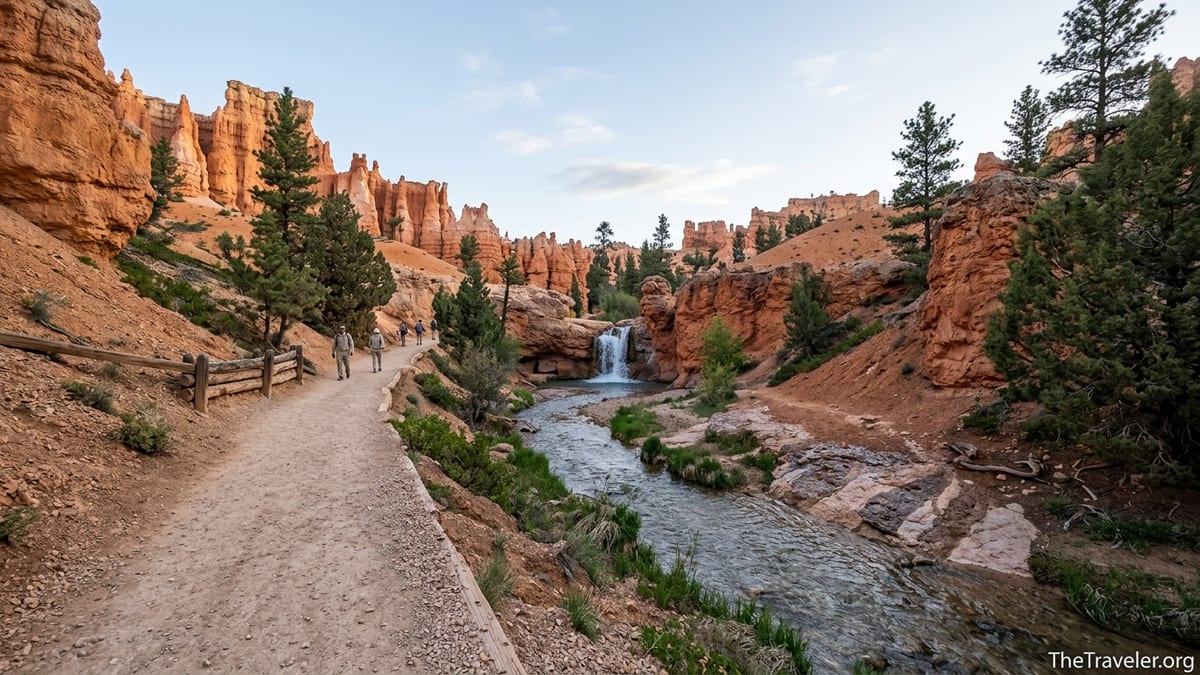
Where Mossy Cave Trail Fits Into Bryce Canyon
Mossy Cave Trail lies in the northern section of Bryce Canyon National Park, just off Utah State Route 12, roughly 3.5 to 4 miles east of the junction with Highway 63, the park’s main road. Instead of dropping from the rim into Bryce’s famous amphitheaters, the path follows a shallow canyon called Water Canyon along a small, flowing stream known as Tropic Ditch. It is one of the lowest elevation hikes in the park and one of the few that start with a gentle climb and end with an easy descent back to the parking lot.
The trail is short. The National Park Service lists it at about 0.8 miles round trip with roughly 150 feet of ascent and an expected hiking time of 30 to 60 minutes for most visitors. Some commercial hiking sites round this up to about 1 mile, so do not be surprised if your GPS app shows a number closer to that once you factor in short side detours for viewpoints or photos. Compared with steeper Bryce classics such as Navajo Loop or Queens Garden, Mossy Cave feels more like a stroll than a workout.
Mossy Cave is also one of the few places in Bryce where you can combine iconic orange hoodoos with water features. Along this short loop, you can see a man-made waterfall, a narrow stream bordered by willows and wildflowers in summer, and the shaded alcove of the cave itself, which fills with dripping mosses in warmer months and dramatic icicles in winter. That mix of water, shade, and scenery makes it especially popular with families and road-trippers coming from nearby towns like Tropic or Panguitch.
Although you access the trail directly from Highway 12 without going through a gate, it is still within the national park boundary. That means Bryce Canyon entrance fees and regulations apply. Rangers occasionally conduct checks at the parking area, so plan to have your park pass, digital reservation, or printed confirmation available in your vehicle.
Maps, Trail Layout, and How to Read Them
Before you set out, it helps to understand how Mossy Cave Trail is laid out on a map. From the parking lot, a single path follows the north side of the stream for a short distance, crosses a bridge, and then quickly reaches a signed junction. From this fork, the right-hand spur leads a short way uphill to a viewpoint above the waterfall on Tropic Ditch, while the left-hand spur continues up-canyon to the Mossy Cave alcove. On most maps, these two spurs are drawn as short “arms” at the end of a main line, forming a Y-shape.
The National Park Service offers a concise map of Mossy Cave as part of its Bryce Canyon day-hike guides and on the Mossy Cave page of the park’s website. In print, you will often find Mossy Cave labeled along with a small icon for a trailhead at the north end of the park. Digital navigation apps such as the official NPS app, as well as commercial tools like Gaia GPS, AllTrails, or hiking-specific platforms, typically show the trail as an out-and-back segment with a short spur to the waterfall overlook. These digital maps can be useful for orienting yourself at the junction and for noting that there is no official route above the waterfall.
When you look at Mossy Cave on a topo map, note the modest contour lines: the main climb is concentrated between the parking lot and the cave, while the section that parallels the stream remains relatively gentle. That explains why parents often report young children managing the hike with only short breaks. The steepest grades, which the park lists as reaching over 20 percent in brief stretches, may feel challenging for visitors with mobility issues but are short-lived for most hikers.
At the trailhead itself, you will find interpretive panels that include a small orientation map showing the parking area, the stream, the main trail, and the forks to the cave and waterfall. Take a moment to study this wayside before you start, especially if your group plans to split between the two endpoints. For example, one adult might walk with kids to splash at the stream below the bridge while another continues up to preview conditions at the cave and then reunites with the family at the junction.
Current Conditions: What to Expect in Each Season
Conditions on Mossy Cave Trail change noticeably with the seasons, even though the hike remains open year-round. In summer, typically from June through early September, the stream in Tropic Ditch is usually running, the waterfall is most photogenic, and the cave lives up to its name with bright green moss and dripping water. Daytime temperatures can climb into the 80s Fahrenheit at this lower elevation, but the combination of moving water and intermittent shade tends to make the canyon feel cooler than the sunbaked viewpoints in the main Bryce Amphitheater.
Autumn often brings cooler daytime highs and fewer thunderstorms, which can make September and early October particularly pleasant times to visit. Cottonwoods and shrubs along the stream show yellow foliage, and crowds begin to thin outside of major holiday weekends. The water volume in the ditch may drop slightly compared with peak summer, but the waterfall usually continues to flow. Trail surfaces are typically dry, although early season storms can dust the upper sections with snow.
Winter and early spring bring a different character. Bryce Canyon sits at high elevation and commonly sees snow accumulations, and Mossy Cave is no exception. While the lower canyon might hold only a few inches of snow, the alcove can fill with long, layered icicles that give the cave a frozen, cathedral-like ambiance. The park promotes this winter display as a seasonal highlight, but it comes with hazards. Trail sections can become icy, especially near the cave and on short steeper pitches. Visitors in December through March should be prepared for compacted snow and may find traction devices helpful, even on this short walk.
In all seasons, heavy rain can temporarily muddy the trail, and the stream can run faster and higher after storms. Although Mossy Cave is not typically associated with dangerous flash floods in the way that deeper slot canyons are, hikers should still be alert for rapidly changing water levels and be cautious about approaching the waterfall during or immediately after intense rainfall. Before your trip, it is wise to consult the Bryce Canyon National Park conditions updates or chat with rangers at the visitor center in Bryce Canyon City for any recent advisories relating to Mossy Cave, such as temporary closures, trail work, or sensitive habitat protection zones.
Parking, Access, and Crowd Management
Because Mossy Cave sits directly on Highway 12 and offers such a big reward for a short walk, parking has become one of the main challenges for visitors. The trailhead has a relatively small paved lot that can accommodate passenger vehicles and a limited number of oversized vehicles. The National Park Service notes that this lot often fills during peak visitation hours, typically between late morning and late afternoon, especially during summer vacations and long weekends. When that happens, drivers sometimes try to park along the narrow highway shoulder, but this is prohibited and unsafe; authorities may ticket vehicles parked on the road.
The most reliable way to find a spot is to time your visit outside of the busiest window. Arriving before about 9:00 a.m. often means you can pull directly into a space, especially on weekdays. Another good strategy is to visit in the early evening, after 5:00 or 6:00 p.m., when day-trippers have left and tour buses are less common. Many travelers who stay in nearby Bryce Canyon City or in the town of Tropic plan their Mossy Cave stop either at the very start of their day, as they drive in from accommodations, or as a final, low-effort walk after visiting the main amphitheater viewpoints.
Unlike many hikes that begin inside the main park road, Mossy Cave is not served by the Bryce Canyon shuttle system. The seasonal shuttle focuses on the Bryce Amphitheater area, transporting visitors between the main viewpoints and trailheads such as Sunrise, Sunset, Bryce Point, and Inspiration Point. Since the shuttle does not extend along Highway 12 to Mossy Cave, you will need a private vehicle, a small tour, or a bicycle to reach this trailhead. Some local outfitters based in Bryce Canyon City or Tropic occasionally include a Mossy Cave stop in half-day tours, particularly family-oriented sightseeing excursions, but availability can vary year to year.
Because this area is compact, it can feel crowded quickly. On busy summer afternoons, the short trail may be lined with hikers, and popular features such as the bridge, waterfall viewpoint, and cave alcove can turn into informal photo queues. If you prefer a quieter experience, combining early or late-day timing with a shoulder season visit in May, September, or early October can make a noticeable difference. Even in those calmer periods, it is courteous to step aside when you stop to take photos or admire the views so others can pass along the narrow path.
On the Trail: Highlights, Safety, and Etiquette
From the parking area, the path climbs gradually above the stream, with views opening toward low hoodoos and textured cliffs typical of Bryce Canyon’s geology. Within a few minutes, you reach the first bridge. Many families treat this as a natural pause to let children look over the railing at the flowing water and to take quick snapshots of the red rock walls. On warm days, you may see visitors down at the water’s edge, wading or sitting on rocks. The park allows people to enter the water but requests that they do so at bridge crossings to minimize the creation of unofficial paths that scar the fragile soil and vegetation.
After crossing the bridge and reaching the signed junction, the right fork travels a short distance to a viewpoint above the man-made waterfall on Tropic Ditch. This waterfall exists because late nineteenth-century settlers constructed the ditch to bring irrigation water from the East Fork of the Sevier River to fields near the towns of Tropic and Cannonville. Today, that engineering project doubles as a scenic stop for modern visitors. From the overlook, you can watch the stream plunge over a rock ledge framed by orange cliffs and green shrubs. Most hikers take a few minutes here for photos before returning to the junction.
The left fork leads up to Mossy Cave itself, a shaded alcove carved into the soft rock. In summer, water seeps through the ceiling, nurturing mats of moss that give the site its name and cooling the air. In winter, those seeps freeze into vertical sheets and icicles that can tower above visitors’ heads. Regardless of season, the park asks people not to enter the alcove or touch the delicate formations, since doing so can damage the moss and destabilize the icy columns. It is common to see small informal signs or ranger messages reminding visitors to admire the cave from the established path.
Although this is an easy hike, basic safety and etiquette still apply. Wear closed-toe shoes with decent traction; sandals with little grip can feel unsteady on loose gravel or iced-over sections. Bring at least a small bottle of water, particularly in summer, when even a short uphill walk in Bryce’s high-elevation sun can feel taxing. Keep an eye on children near the stream and along the drop-offs near the waterfall viewpoint. Pets are not allowed on Mossy Cave Trail, so plan to leave dogs at your lodging or in an approved boarding facility in Bryce Canyon City or Panguitch, rather than in a hot vehicle at the trailhead.
Planning Your Visit: Logistics, Passes, and Nearby Services
Because Mossy Cave is part of Bryce Canyon National Park, standard entrance fees apply even though there is no staffed gate at the trailhead. Many visitors purchase their pass at the main park entrance station earlier in the day, or they arrive with an America the Beautiful annual pass that covers entry for one private vehicle. Rangers periodically check vehicles at Mossy Cave for proof of payment, so keep your receipt or pass visible on your dashboard or readily available for inspection. If you are arriving from the direction of Capitol Reef or Escalante and plan to stop at Mossy Cave before the main amphitheater, you can pay your fee at the Bryce Canyon visitor center or entrance station after your hike the same day, as long as you drive into the main park road.
Facilities at the Mossy Cave trailhead are basic but sufficient for a short stop. There are vault toilets and trash receptacles near the parking lot, but no potable water or food services. Plan to fill water bottles and pick up snacks in Bryce Canyon City, Tropic, or at the main visitor center before you drive out along Highway 12. Cell service can be intermittent along this stretch of road, especially for some carriers, so it is smart to download offline maps or save directions before leaving town.
Nearby, the small community of Tropic offers motels, vacation rentals, and a handful of cafes and diners that cater to national park visitors. Many travelers choose to base themselves here or in Bryce Canyon City and make Mossy Cave one part of a broader itinerary that might include scenic drives to viewpoints like Sunrise Point and Bryce Point, longer hikes such as Peekaboo Loop, or a side trip along Highway 12 toward Kodachrome Basin State Park. Given that Mossy Cave itself usually takes less than an hour including photo stops, it fits easily into either a half-day or full-day Bryce Canyon plan.
When plotting your schedule, think about how Mossy Cave’s conditions complement the rest of the park. On hot afternoons, when the amphitheater overlooks feel exposed and crowded, the shady stream corridor along Mossy Cave can provide a cooler interlude. On winter days, travelers sometimes start at the higher-elevation viewpoints in the morning, then finish with Mossy Cave in mid-afternoon when the sun has had more time to soften icy patches on the lower trail. Either way, checking the current weather forecast for Bryce Canyon and reading the most recent park advisories will help you avoid surprises.
Responsible Travel and Protecting a Small Canyon
Mossy Cave Trail concentrates many visitors into a very small footprint, which makes responsible travel choices especially important. The canyon walls and hoodoos are composed of soft, crumbly rock that erodes easily under foot traffic. Staying strictly on the signed path, avoiding social trails, and resisting the temptation to scramble up slopes for new viewpoints helps preserve the landscape and keeps erosion from accelerating. Where the trail runs close to the stream, walk on the established path rather than the banks, which can crumble and send sediment into the water.
Water access is a particular concern here. The park acknowledges that many people enjoy wading in the stream, especially families with children during hot weather, but asks visitors to enter and exit only at the bridge crossings. Using these limited entry points means the majority of the streambanks remain vegetated and stable, instead of being trampled into dusty, eroding slopes. You can see the difference where previous visitors have cut down to the water in random places: the soil is bare, roots are exposed, and small slides are visible in the creek. Choosing the bridges is a simple way to minimize your impact while still enjoying the novelty of a flowing stream in the middle of hoodoo country.
The cave alcove and its moss or ice formations are also fragile. Touching the moss can kill or dislodge it, while breaking icicles can destabilize the overhanging sheets and increase risk for people standing below. Rangers sometimes rope off portions of the area when conditions are particularly sensitive. Treat any temporary fencing or signs as firm boundaries and enjoy the formations from a respectful distance. Photographers with longer lenses can still capture close-up details without stepping off the trail.
Finally, practice the usual Leave No Trace habits: pack out all trash, including snack wrappers and tissues; keep noise levels moderate in this confined canyon so others can enjoy the setting; and avoid carving names into trees or rock surfaces. The more that individual visitors treat Mossy Cave as a shared resource rather than a backdrop, the better chance this little canyon has of remaining a welcoming stop for future travelers driving the scenic stretch of Highway 12.
The Takeaway
Mossy Cave Trail is a compact introduction to Bryce Canyon’s geology and history, offering hoodoos, water, and a cool grotto in less than a mile of easy walking. Its location along Highway 12 makes it an obvious stop for road-trippers, but that convenience also means parking fills quickly and the narrow path can feel busy at peak times. Understanding the trail layout, checking seasonal conditions, and timing your visit for early or late in the day will go a long way toward ensuring a relaxed experience.
By arriving with a valid park pass, using official maps, and treating the canyon with care, you help protect one of Bryce’s most accessible corners. Whether you come in summer to let kids wade near the bridge or in midwinter to see the cave draped in icicles, Mossy Cave rewards a modest amount of planning with outsized scenery. With responsible travel choices and realistic expectations, this short side trip can become one of the most memorable stops on your Bryce Canyon itinerary.
FAQ
Q1. How long is the Mossy Cave Trail, and how difficult is it?
The trail is roughly 0.8 miles round trip with about 150 feet of elevation gain. It is generally rated easy, though a few short sections are moderately steep and may feel challenging for visitors with limited mobility.
Q2. Do I need a Bryce Canyon National Park pass to hike Mossy Cave?
Yes. Mossy Cave lies within the park boundary, so standard Bryce Canyon entrance fees apply. There is no gate at the trailhead, but rangers may check for valid passes or proof of payment at the parking area.
Q3. Where exactly is the Mossy Cave trailhead located?
The trailhead is on Utah State Route 12 in the northern portion of Bryce Canyon National Park, roughly 3.5 to 4 miles east of the junction with Highway 63, the main park road. A small signed parking lot sits just off the highway near a bridge over the stream.
Q4. Is there shuttle service to Mossy Cave?
No. The Bryce Canyon shuttle operates in the main amphitheater area and does not extend along Highway 12 to Mossy Cave. You will need a private vehicle, a guided tour that includes this stop, or a bicycle to reach the trailhead.
Q5. When is the best time of day to hike Mossy Cave to avoid crowds?
The parking lot often fills between late morning and late afternoon, especially in summer. Arriving before about 9:00 a.m. or after 5:00 or 6:00 p.m. usually offers a better chance at parking and a more relaxed experience on the trail.
Q6. What are conditions like at Mossy Cave in winter?
In winter, the cave alcove often fills with icicles and frozen flows, creating impressive formations. However, sections of the trail can be snowy and icy, particularly near the cave and on short steeper pitches, so traction devices and warm layers are recommended.
Q7. Can I wade or swim in the stream and waterfall?
Wading is permitted, but the park asks visitors to enter and exit the water only at bridge crossings to protect fragile streambanks and vegetation. Swimming is uncommon, as the water is usually shallow and cold, and conditions can change after storms.
Q8. Are pets allowed on Mossy Cave Trail?
No. Pets are not allowed on Mossy Cave Trail, in line with most unpaved trails inside Bryce Canyon National Park. Service animals that meet official definitions are permitted, but regular pets must stay in approved areas or accommodations.
Q9. Are there restrooms and water at the trailhead?
Vault toilets and trash bins are available near the parking lot, but there is no drinking water or food service at Mossy Cave. Bring water with you from Bryce Canyon City, Tropic, or the main park facilities.
Q10. Is Mossy Cave suitable for young children and older adults?
Yes, many families and older travelers enjoy this trail because it is short and relatively gentle, with interesting features like the stream, waterfall, and cave. That said, there are some short steeper sections and uneven surfaces, so sturdy footwear, a relaxed pace, and supervision of children near the water and drop-offs are important.