


From the cliff dwellings of Mesa Verde to the great houses of Chaco Canyon and the remote canyons of Bears Ears, the ancestral homelands of modern Pueblo peoples offer some of the most compelling archaeological travel in North America. Choosing the right tour or guided experience can be the difference between simply “seeing ruins” and beginning to understand a living cultural landscape. This guide highlights some of the best tours and archaeological experiences available today, with a focus on real-world logistics, expectations, and ways to visit respectfully.
Get the latest updates straight to your inbox!
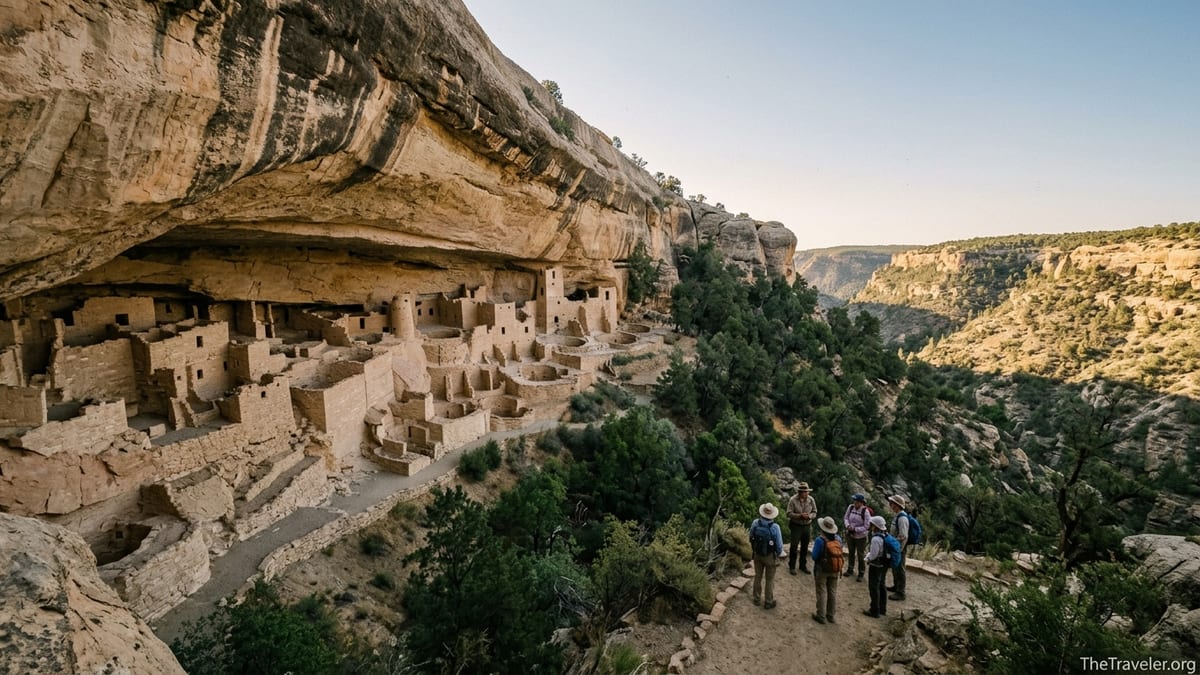
Mesa Verde: Classic Cliff Dwelling Tours With Context
Mesa Verde National Park in southwest Colorado is often the first stop for travelers interested in Ancestral Puebloan archaeology, and with good reason. The park protects more than 600 cliff dwellings and thousands of archaeological sites, including the iconic Cliff Palace and Balcony House. To actually enter most of the major cliff dwellings you must join a ranger guided tour, which keeps visitation controlled and allows staff to frame the sites in cultural and historical context.
The most sought after experience is the ranger guided tour of Cliff Palace, the largest cliff dwelling in North America. Tickets are sold for specific time slots through the federal ticketing system, and prices are typically under 20 dollars per person, making it relatively affordable for families. A ranger leads small groups down a staircase, across uneven rock, and up several wooden ladders into the alcove, describing how Ancestral Pueblo people engineered multistory masonry rooms, kivas, and water systems in this seemingly improbable location. Tours generally last 45 to 60 minutes, and you should arrive at least 30 minutes early to park, use restrooms, and assemble with your group.
More adventurous visitors often pair Cliff Palace with Balcony House, another ranger guided tour that is more physically demanding. This experience includes climbing tall ladders set against the cliff face and squeezing through a narrow tunnel, so it is better for travelers comfortable with heights and confined spaces. Those who prefer an overview can stay on Mesa Top Loop Road, where short walks lead to viewpoints of Cliff Palace, Square Tower House, and Sun Temple, often with rangers or volunteer guides offering informal talks in summer. Independent tour companies based in nearby Cortez and Durango also offer half day or full day packages that combine Mesa Verde with regional sites like Hovenweep or Canyons of the Ancients, useful if you prefer not to drive the mountain roads yourself.
To deepen your understanding, consider the “700 Years” style interpretive tours offered by concessioners in partnership with the park. These extended tours, usually three to four hours, visit earlier pithouse and village sites on Chapin and Wetherill mesas before ending in a ranger led Cliff Palace visit. By walking through centuries of architectural change, travelers see how people moved from early pit structures to the spectacular cliff dwellings constructed in the 12th and 13th centuries. These tours tend to cost more than basic ranger tours but pack multiple stops, commentary, and driving into a single outing, which can be excellent value if you have only one full day in the park.
Chaco Canyon: Great House Walks and Night Sky Archaeology
Where Mesa Verde is about dramatic cliffs, Chaco Culture National Historical Park in northwest New Mexico is about scale and alignment. Here, monumental “great houses” like Pueblo Bonito, Chetro Ketl, and Casa Rinconada form the heart of what researchers call the Chaco World, a regional center of Ancestral Puebloan life and ceremony between about 850 and 1150. The park is remote, reached by miles of washboard dirt road, so many visitors choose tours or guided experiences to get the most from the effort it takes to arrive.
Within the park, the National Park Service typically offers ranger led walks and talks from spring through fall, often focusing on Pueblo Bonito or Casa Rinconada. These programs change seasonally, but you can expect 45 to 90 minute walks that explore how Chacoan architects oriented buildings to cardinal directions and celestial events, as well as how modern Pueblo communities relate to these places today. Unlike Mesa Verde, you can access many great houses on your own during daylight hours, but first walking them with a ranger or archaeologist makes later solo exploration much more meaningful.
One of the most distinctive experiences at Chaco is the Night Sky Program, generally offered from April through October when staffing and weather allow. Under some of the darkest skies in the National Park System, staff and volunteers host evening sessions that link archaeoastronomy and modern astronomy. Visitors might listen to a talk on solstice alignments at great houses, then step outside to look at the Milky Way or Saturn through large telescopes beside the visitor center observatory. Programs are included with park admission, though camping fees apply if you stay overnight, and schedules are posted at the visitor center and online closer to each season.
Because of the rough access road, commercial tours from cities such as Albuquerque, Farmington, or Gallup can be worth the added cost, especially in wet weather. Small group day trips typically start around 200 to 250 dollars per person, including transportation, guiding, and park entry. Some companies employ archaeologists or local Indigenous guides who can discuss current research, ongoing preservation issues, and how to visit respectfully. If you prefer independent travel, consider at least one ranger program plus an evening stargazing session, and build in time to walk a segment of the backcountry trails that link great houses along the canyon rim and mesa tops.
Bandelier and the Pajarito Plateau: Hands On Cave Dwellings
Just northwest of Santa Fe, Bandelier National Monument offers a very different encounter with Ancestral Puebloan life. Here, people carved “cavates” and dwellings into soft volcanic tuff, then built masonry rooms in front of them, creating multi level villages along canyon walls. The main Pueblo Loop Trail near the visitor center is one of the most accessible archaeological walks in the region, and ranger guided tours add context without requiring a long drive or difficult logistics.
In the busier spring and summer seasons, Bandelier rangers often lead 30 to 45 minute walks from the visitor center down to Tyuonyi Pueblo, a large circular village on the canyon floor. These programs focus on daily life, farming, and the ongoing connections between the Pajarito Plateau and modern Pueblo communities nearby. Even if a formal tour is not scheduled, staff at the visitor center can point out ways to experience the site respectfully, from observing pottery shards without touching them to understanding why some areas or kivas are closed to entry.
One of the most memorable experiences at Bandelier is climbing wooden ladders into the cavates along the cliff. Several of these rooms along the Pueblo Loop Trail are open for visitors to enter, letting you feel the cool rock and look out across the canyon as residents once did. For a slightly more strenuous outing, the trail to Alcove House leads to a high shelter cave with a reconstructed kiva accessed by a series of tall ladders. This is not suitable for travelers with severe fear of heights, but for fit adults and older children it provides an unforgettable sense of vertical village life. Because these are self guided experiences, combining them with a short ranger program earlier in the day helps visitors interpret what they are seeing.
Bandelier also works well as a base for more specialized tours in the region. Santa Fe based outfitters sometimes bundle Bandelier with visits to nearby pueblos or museum collections, offering full day archaeology themed excursions that start around 175 to 250 dollars per person. These may include transport, lunch, and an expert guide who can connect what you see in the ruins to artifacts at institutions like the Museum of Indian Arts and Culture in Santa Fe, giving first time visitors a richer overview of the wider Ancestral Puebloan world.
Bears Ears and Cedar Mesa: Backcountry Archaeology With Experts
For travelers ready to leave paved roads behind, Bears Ears National Monument in southeast Utah, particularly the Cedar Mesa area, offers some of the most immersive archaeological hiking in the Southwest. Here, canyons hold cliff dwellings, towers, kivas, and rock art panels that have not been heavily reconstructed, and visitation is more dispersed than in major national parks. Because sites are fragile and often unmarked, joining a guided trip or hiring a professional archaeologist guide is strongly recommended.
Nonprofit organizations and local guide services based in towns like Bluff, Blanding, and Monticello offer day hikes and multi day backpacking trips focusing on Cedar Mesa’s archaeology. A typical single day tour might involve a four to eight mile hike into a canyon such as Mule Canyon or Fish Canyon, visiting several dwelling sites and granaries tucked into alcoves. Prices vary, but small group hikes commonly run between 180 and 250 dollars per person, often with a maximum of six to eight guests. Guides not only navigate and manage safety but also explain how archaeologists read architecture, pottery, and landscape features to understand past lifeways.
For those with more time, multi day camping based trips delve deeper into the Bears Ears landscape. Some conservation organizations host five night basecamp style programs that combine day hikes with evening talks on rock art interpretation, current research, and ongoing debates over land management and protection. These trips usually include all meals, tents or basic camping gear, transportation from a gateway town, and guiding, with prices typically starting in the low to mid four figure range per person. Because permits and group sizes are strictly controlled by the Bureau of Land Management, guided trips help ensure you comply with regulations while reducing your own planning workload.
Independent visitors to Cedar Mesa must be especially careful to follow Leave No Trace principles: staying on durable surfaces, not entering fragile structures, and never touching petroglyphs or pictographs. A good strategy is to start with a day or two on a guided hike, then apply what you have learned to easier self guided walks to well known locations where trails are established. Visitor centers and ranger stations in the region can provide up to date information on permit requirements, seasonal water availability, and trail conditions, all of which can change with storms and snowmelt.
Indigenous Led and Community Based Experiences
While many national park and commercial tours do an excellent job of interpreting archaeology, experiences led by Indigenous guides offer perspectives you will not find elsewhere. Modern Pueblo, Diné (Navajo), Ute, and other Native communities maintain deep connections to ancestral sites across the Four Corners, and a growing number of tours center their voices and values.
On the Navajo Nation, which borders or surrounds several major archaeological areas, small companies and community guides offer tours that weave together ancestral sites, traditional stories, and contemporary life. While many of these focus on well known landscapes such as Monument Valley or Canyon de Chelly, some itineraries include visits to Ancestral Puebloan sites or rock art panels along the way. Expect to travel in small groups, often in SUVs or open air vehicles, with prices that commonly range from 120 to 200 dollars per person for half day tours. These experiences often include stops at family run stands or homes where you can try Navajo foods or learn about weaving and silversmithing.
In New Mexico, some Pueblo communities host cultural centers and museums that interpret both ancestral and modern life, occasionally offering guided visits to nearby archaeological sites or ancestral villages that are not part of the national park system. These opportunities vary by season and by community, and it is essential to respect all posted rules, photography restrictions, and closure days for ceremonies. When they are available, however, they can be among the most profound experiences for travelers who want to understand that Ancestral Puebloan sites are not “lost civilizations” but part of ongoing, living cultures.
Travelers who prioritize Indigenous led experiences can look for tours or educational programs developed in partnership with tribal governments or cultural preservation offices. These may be advertised through regional visitor centers or word of mouth rather than large booking platforms. When you find such a tour, expect the focus to be less on detailed archaeological chronology and more on relationships among people, place, and spirit. That shift in emphasis can be deeply rewarding if you approach it with humility and a willingness to listen.
How to Choose the Right Archaeological Tour for You
With options ranging from short ranger talks to multi day backcountry expeditions, it helps to match your tour choices to your interests, fitness, and comfort level. If you are new to Ancestral Puebloan history or traveling with children, starting with national park ranger programs at Mesa Verde, Bandelier, or Chaco offers a strong foundation. These tours are usually reasonably priced, rarely exceed two hours, and build in plenty of stops and stories that keep younger visitors engaged. Combining a morning ranger tour with an afternoon of self guided exploration works well for a one or two day visit.
Travelers who already know the basics may prefer more specialized experiences. Archaeologist led tours around Chaco or Bears Ears, or extended interpretive trips that connect multiple sites in one itinerary, are worth the higher price if you are eager to delve into current research questions or broader regional patterns. When comparing options, ask companies about group size, guide training, and how much time you will actually spend walking among sites versus in a vehicle. Smaller groups and guides with formal training in anthropology, archaeology, or Indigenous studies often provide more nuanced interpretation.
Physical considerations matter. Some Mesa Verde tours involve tall ladders and narrow passages, while Bandelier’s Alcove House requires ascending a stack of steep ladders high above the canyon floor. If heights are not your friend, choose cliff dwelling views from overlooks, ground level villages like Tyuonyi at Bandelier, or easier canyon walks in Bears Ears. Tour descriptions usually spell out distance, elevation change, and any ladder or scrambling sections. When in doubt, email or call operators directly with your concerns; reputable companies and park staff will be honest about whether an outing is appropriate.
Finally, consider how much independence you want. Fully guided trips handle permits, logistics, and interpretation at a higher per day cost, which can be ideal for a once in a lifetime visit where your time is limited. Independent travelers can piece together a DIY archaeological journey using ranger programs, guidebooks, and a few carefully selected day tours as anchors. Either way, build in rest days or lighter sightseeing in nearby towns; these landscapes are high, dry, and intense, and travelers often underestimate how tiring full days of hiking in thin air and bright sun can be.
The Takeaway
Exploring Ancestral Puebloan sites is about more than photographing stone walls. The most rewarding tours help visitors connect architecture, landscape, and living cultures, whether through a short ranger walk at Bandelier, a night under the stars at Chaco, or a multi day trek in the canyons of Bears Ears. With thoughtful planning, you can tailor your experiences to your interests and abilities while supporting the people and organizations working hardest to protect these fragile places.
No matter which tours you choose, approach each site with respect. Stay on established paths, avoid touching walls and rock art, and never remove artifacts, even small pottery shards or corncobs. Ask before photographing people or ceremonies, and honor closures or restrictions without argument. When you do, you not only help preserve these places for future generations but also demonstrate that meaningful tourism and cultural preservation can go hand in hand.
FAQ
Q1. Do I need a guide to visit Ancestral Puebloan sites at all?
Many major sites such as Mesa Verde, Bandelier, and Chaco Canyon can be visited on your own, but guided tours unlock areas otherwise closed to independent visitors and add crucial historical and cultural context.
Q2. How far in advance should I book cliff dwelling tours at Mesa Verde?
During the main season from late spring through early fall, it is wise to reserve Cliff Palace or Balcony House tours as soon as your travel dates are set, since popular time slots often sell out days or weeks ahead.
Q3. Are these archaeological tours suitable for children?
Yes, many ranger led walks at Mesa Verde and Bandelier are family friendly, but parents should carefully review descriptions of ladder climbs, narrow passages, and hike lengths before booking more challenging tours.
Q4. What fitness level do I need for Bears Ears or Cedar Mesa hikes?
Most guided canyon hikes in Bears Ears require at least moderate fitness, comfort walking on uneven terrain, and the ability to manage several hours on trail with limited shade at elevations above 5,000 feet.
Q5. Can I visit archaeological sites in summer, or is it too hot?
Summer visits are possible but can be very hot and dry, especially in lower elevation canyons, so early morning tours, plenty of water, sun protection, and midday rest are essential for safety.
Q6. How much do guided tours typically cost?
Short ranger programs inside national parks are usually included with entrance fees or cost only a small additional ticket, while commercial day tours commonly range from around 120 to 250 dollars per person, with multi day expeditions costing more.
Q7. Are there tours led by Indigenous guides?
Yes, particularly on the Navajo Nation and in parts of New Mexico, where Indigenous owned or community based companies offer tours that blend visits to ancestral sites with contemporary cultural experiences.
Q8. What should I bring on an archaeological hiking tour?
Sturdy closed toe shoes, at least two liters of water per person, sun hat, sunscreen, layered clothing for changing weather, and a small backpack are standard; some operators also recommend trekking poles.
Q9. Is photography allowed at all sites?
Photography is generally allowed at most archaeological sites, but flash is usually discouraged near rock art, and some pueblos and Indigenous led tours prohibit photos of specific places, people, or ceremonies.
Q10. How can I make sure my visit is respectful and responsible?
Follow Leave No Trace principles, stay on marked paths, never sit or climb on walls, leave all artifacts in place, respect all posted rules and local guidance, and listen to Indigenous and park voices about how to behave at these ancestral places.