


Cedar Mesa, on the southern edge of Bears Ears National Monument in southeastern Utah, is one of the most culturally rich hiking landscapes in North America. Sandstone canyons hide ancient cliff dwellings, rock art panels and kiva sites, while mesa-top roads lead to remote trailheads and wide desert views. Planning a responsible trip here takes more than just dropping a pin on a map. Permits, fragile archaeology and long drives on lonely roads all shape how you explore. This guide focuses on the best Cedar Mesa tours, classic hiking routes and stand-out archaeological experiences you can realistically book and hike right now.
Get the latest updates straight to your inbox!
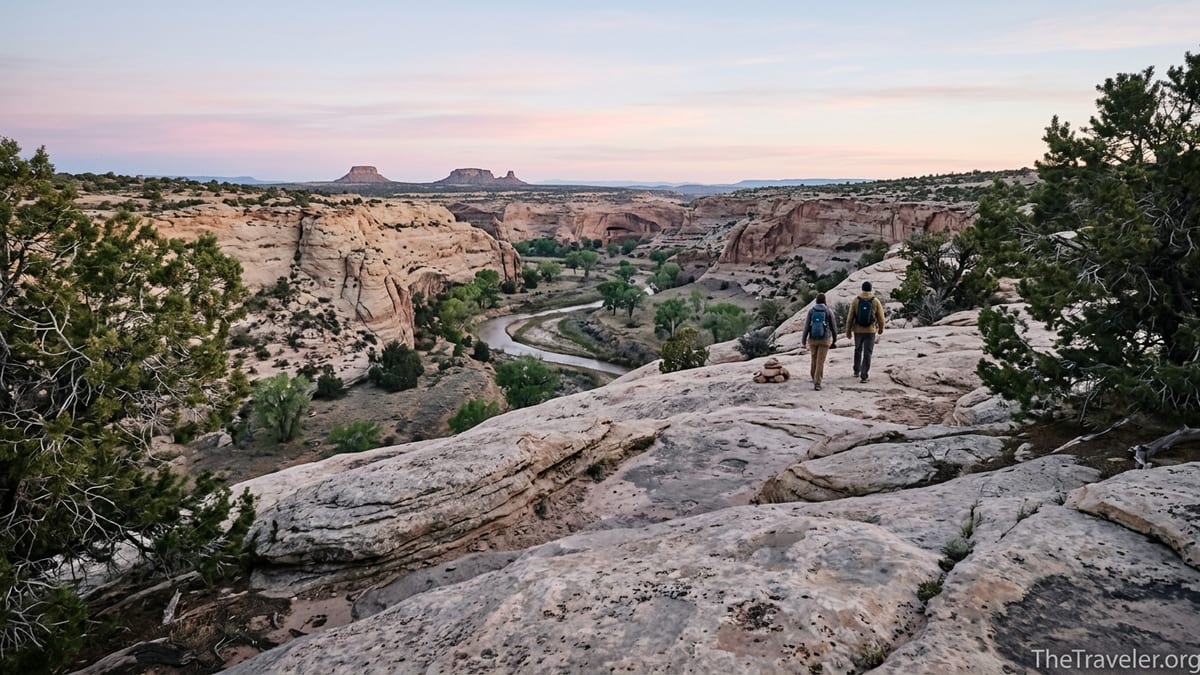
How Cedar Mesa Works: Permits, Seasons and Basecamps
Cedar Mesa sits in the southern portion of Bears Ears National Monument, between the towns of Blanding, Bluff and Mexican Hat. Most visitors arrive via Highway 95 or Highway 261, using the mesa-top roads to reach trailheads that drop into canyons such as Grand Gulch, Mule Canyon, Road Canyon and Fish and Owl. The setting feels wild and unregulated when you first arrive, but in reality it is one of the most carefully managed backcountry hiking areas in the Southwest, with permits, day-use fees and special rules designed to protect thousands of archaeological sites.
Day hiking in the canyons of Cedar Mesa and nearby Comb Ridge currently requires a day-use hiking pass managed by the Bureau of Land Management. These can be purchased in advance through the federal reservation system or in person using fee envelopes at major trailheads and at Kane Gulch Ranger Station. For backpacking in Grand Gulch and its tributaries, as well as certain canyons like Fish and Owl, you need an overnight permit that is quota-controlled. For popular sites such as Moon House, a separate limited-entry permit is required, with a small daily cap of visitors that must be reserved ahead of time.
The best way to organize your trip is to think in terms of basecamps. Many travelers stay in Bluff, where small hotels, the Bluff Dwellings Resort and several B&Bs cater to hikers, or in Blanding, which has more basic motels and grocery options. From Bluff, it is roughly a 45-minute drive to the Kane Gulch Ranger Station on Highway 261, which serves as an information hub and permit pick-up point during its operating season. Nearby, the Bears Ears Education Center in Bluff offers exhibits on cultural history and low-impact travel, which makes a valuable first stop before you set out on guided tours or independent hikes.
Seasonally, spring and fall are the prime windows for most tours and hikes on Cedar Mesa. March through early June and late September through October typically offer cool nights and manageable daytime temperatures, though cold snaps, snow and early heat waves do occur. July and August bring both intense heat and monsoon thunderstorms, which can make flash floods a real concern in narrow canyons. In winter, some guides still operate, but many dirt access roads can turn to impassable mud after storms, so you need flexibility in your plans.
Top Guided Cedar Mesa Tours to Book
For travelers who want to see key sites without worrying about route-finding or permit fine print, guided tours based out of Bluff and nearby towns are the most straightforward option. Several local outfitters run day hikes, 4x4 archaeological excursions and multi-day backpacks that focus specifically on Cedar Mesa and Bears Ears canyons. These are small operations and space is limited, so it is wise to reserve weeks or months ahead for peak spring and fall dates.
One example is Dark Canyon Land Company, which offers private and small-group hiking and vehicle tours throughout Bears Ears, including Cedar Mesa canyons and overlook routes. Their full-day custom trips commonly start around the mid-three-hundreds of dollars for up to four guests, with half-day options starting closer to the mid-hundreds. These tours typically pick you up in Bluff, then head up onto Cedar Mesa to visit overlooks, short hikes to cliff dwellings, or canyon-bottom routes depending on the group’s fitness and interests. Because the guides work here season after season, they know current road conditions, water availability and which trailheads are best matched to your experience level.
Bluff Dwellings Resort also partners with guiding services for hiking and canyoneering tours into Cedar Mesa side canyons, Butler Wash and other Bears Ears destinations. Guests might, for example, book a one-day guided hike to a classic ruin site such as House on Fire in South Fork Mule Canyon, paired with a scenic drive along Highway 95 and interpretive stops at roadside ruin overlooks. First-time desert hikers often find that this kind of guided introduction helps them understand the sensitivity of archaeological sites and the etiquette of visiting them respectfully before they venture out on their own.
For backpackers who would rather join an organized trip than manage logistics solo, a handful of Southwest outfitters run fully guided backpacking expeditions in Grand Gulch and adjoining Cedar Mesa canyons. These multi-day trips, often four to six days in length, usually include permits, group gear, backcountry meals and round-trip transport from a gateway town such as Flagstaff, Bluff or Moab. Prices can run into the low four figures per person because of permit quotas and the logistical complexity of shuttling vehicles between remote trailheads, but in return you gain access to an expert who can interpret rock art styles, puebloan architecture and desert ecology in real time as you hike.
Classic Day Hikes: House on Fire, Mule Canyon and Butler Wash
For independent hikers comfortable with basic navigation, Cedar Mesa’s day hikes deliver some of the region’s best combinations of scenery and archaeology. The South Fork of Mule Canyon is perhaps the most famous example. From a signed trailhead off Highway 95, a mellow canyon floor route leads upstream for roughly 1.5 miles to the House on Fire ruin, a small cliff dwelling set in a shallow alcove. In late morning light, streaks in the sandstone above the ruin can glow orange, creating the flame-like effect that gave the site its name. The hike itself is relatively short and moderate, which makes it a good first outing if you are still acclimating or traveling with older kids.
Just up Highway 95, the Mule Canyon roadside ruin provides an extremely accessible introduction to Ancestral Puebloan architecture. A short, flat path from a paved parking area leads to a partially reconstructed block of rooms and a kiva outlined on the surface. Interpretive signs help you understand how these structures once formed part of a larger community across the mesa. Many visitors stop here on their way to longer hikes, or use it as a weather-safe option on windy days when canyon travel is less appealing.
East of Cedar Mesa along Butler Wash Road, a network of short, unofficial routes accesses alcove dwellings and rock art sites in the side drainages of Comb Ridge. The hike to the often-photographed Procession Panel, for example, uses social trails and slickrock to climb into a shallow canyon, ending at a long wall of petroglyph figures that appear to be moving in a line. These routes are typically not signed or maintained in the way national park trails are, so a guidebook, map or local guiding company can be invaluable for choosing options that suit your group without accidentally wandering into closed or culturally sensitive areas.
On all of these day hikes, a day-use pass is required, and trailhead fee stations generally expect cash or checks in small denominations. Parking areas fill quickly during spring weekends, so arriving early not only helps with heat avoidance but also makes it easier to find space and enjoy quieter conditions at the sites themselves. Even where trails are obvious, carrying a printed map or downloaded offline map on your phone is wise, since cell coverage on Cedar Mesa is patchy at best.
Backpacking Grand Gulch and the Big Cedar Mesa Canyons
Backpacking through the long, sinuous canyons that cut into Cedar Mesa is one of the most memorable ways to experience this landscape. Grand Gulch in particular has become a classic multi-day backpacking route, with access points such as Kane Gulch, Bullet Canyon and Government Trail dropping hikers into a canyon system lined with alcoves and perennial springs. Along the way, you will pass dozens of archaeological sites, from granaries perched high in cliff recesses to rock art panels tucked behind cottonwoods and seeps.
Because of the canyon’s popularity and cultural significance, backpacking here is tightly regulated. Overnight permits are required and the number of backpackers is capped each day. Some permits can be reserved in advance through the federal system, while a limited number are held for walk-in allocation at the Kane Gulch Ranger Station. When permits open for a season, popular spring and fall weekends can book out quickly, so flexible dates and midweek starts make it easier to secure spots. Groups are typically limited in size, and commercial or organized groups may require special authorization beyond standard visitor permits.
Another demanding but rewarding option is the Fish and Owl Canyons loop on the eastern side of Cedar Mesa. This two- to three-day backpack involves steep entry and exit routes with some scrambling and occasionally challenging water conditions. In return, hikers are rewarded with solitude, towering walls, hanging gardens and scattered archaeological sites tucked into side alcoves. Because water sources can be variable from year to year, local guide services and the rangers at Kane Gulch are essential resources for up-to-date conditions, especially in dry springs or after major storms have altered pools and seeps.
Logistics for any Cedar Mesa backpack are more complex than a typical national park overnight. Trailheads sit on remote dirt roads where flat tires are common, shuttles between canyon entry and exit points can take hours on washboard tracks, and sudden storms can transform normally passable roads into deep mud. Many visitors choose to hire a local shuttle driver for one-way trips so they can hike point-to-point without leaving a car at each end. If you are renting a low-clearance vehicle, discuss road conditions with rangers or guides before committing to trailheads that may require high clearance after recent weather.
Moon House, Cliff Dwellings and Deeper Archaeological Context
While many Cedar Mesa hikes pass by small alcove ruins, a few sites stand out for their scale and preservation. Moon House, located in McLoyd Canyon on the east side of the mesa, is one of the best-known examples. This Pueblo III-era cliff dwelling occupies a deep alcove with multiple room blocks, plastered interior walls and painted designs that are still visible in places. Because of its fragility and popularity, access is strictly limited by a separate daily permit system, and visitors are required to stay behind protective ropes and follow a designated path through the alcove.
Reaching the Moon House trailhead typically involves driving a dirt spur road that can be rutted or rough after storms, followed by a steep descent into the canyon using a mix of user paths and cairned routes. The hike feels more committing than the short approach to House on Fire, and it is not recommended for those uncomfortable with loose rock, exposure or route-finding. Many first-time visitors choose to go with a guide who is familiar with both the physical route and the cultural protocols in place at the site, including group size limits and photography etiquette.
Beyond the marquee sites, Cedar Mesa’s archaeological story is woven into hundreds of smaller structures, farm fields and rock art panels spread across the mesa and its canyons. To place what you are seeing in context, consider pairing your hikes with time at off-site museums and interpretive centers. Edge of the Cedars State Park Museum in Blanding, for example, houses an extensive collection of artifacts and a restored pueblo and kiva, offering a museum-level introduction to Ancestral Puebloan history in the region. In Bluff, small community exhibits and educational centers help explain how modern tribal nations maintain cultural connections to this landscape today.
When you do visit sites in the field, the most important “tour” you can give yourself is one based on respect. That means staying out of rooms and kivas, never touching rock art or walls, not rearranging artifacts and avoiding walking on midden areas where cultural material lies just under the surface. Even small acts like moving a potsherd for a better photo or sitting on a centuries-old wall can cause irreversible damage. Guided tours will emphasize these Leave No Trace principles, but independent hikers share the same responsibility to treat Cedar Mesa as a living cultural landscape, not an abandoned ruin field.
Choosing Between Guided and Self-Guided Experiences
Deciding whether to book tours or travel independently on Cedar Mesa depends on your experience, time, budget and goals. Guided day tours are ideal if you have only one or two days in the area, prefer not to navigate dirt roads on your own, or want expert interpretation of archaeology and geology. For example, a couple staying two nights in Bluff might book a full-day guided outing that includes a hike to a ruin site, a drive to a Cedar Mesa overlook like Muley Point, and sunset views over Valley of the Gods, all with transportation, lunch and storytelling handled by the guide.
Self-guided hiking works well for travelers who are comfortable reading maps, managing desert conditions and securing their own permits. If you have a long weekend, you could spend one day on a low-key hike like House on Fire, another on a longer canyon day such as exploring Bullet Canyon toward Grand Gulch, and a final day visiting museums and roadside sites. This approach keeps costs down compared with hiring a guide each day, but it also demands more pre-trip research on topics like water availability, backcountry toilets and driving distances between trailheads.
For backpacking, guided trips can dramatically reduce the stress of planning in a complex environment. A solo hiker might weigh the cost of a guided five-day Grand Gulch trip, which includes meals, group gear and transportation, against the effort of securing permits, renting specialized equipment, caching water and arranging shuttles independently. Even experienced backpackers sometimes opt for a guided first visit, then return in future years to plan their own routes armed with better local knowledge.
Whichever route you choose, it is worth setting expectations that Cedar Mesa travel is slower and more contemplative than high-mileage peak-bagging. Archaeology-focused hikes often cover just a few miles while you spend long stretches quietly observing structures, rock art and the canyon setting. Tours that rush from site to site are less common here, in part because guides and land managers encourage a pace that prioritizes respect over checklists.
Practical Planning Tips for Cedar Mesa Trips
A successful Cedar Mesa tour or self-guided hike starts with realistic planning. Distances between services are significant: there are no gas stations or grocery stores on the mesa itself, and even basics like drinking water and cell coverage can be scarce once you leave Blanding or Bluff. Before heading up onto the mesa for the day, top up your fuel, carry several gallons of water in your vehicle and pack more drinking water per person than you think you will need for the hike, especially in warm months.
Vehicle choice matters more here than in many national parks. While some main trailheads are accessible by passenger cars in dry weather, high-clearance vehicles handle potholes and washboards far better, reducing the risk of damage on remote roads where help may be hours away. Rental contracts sometimes restrict travel on unpaved roads, so clarify your plans in advance or consider booking with regional car hire companies familiar with backcountry access. If you are unsure about a particular road to a tour meeting point or trailhead, call the outfitter or Kane Gulch Ranger Station for recent reports.
For accommodation, travelers who prioritize guided tours often choose to stay in Bluff or at small lodges and casitas closer to Highway 95, minimizing drive times to morning meet-ups. Campers can find both developed campgrounds and dispersed sites on nearby public lands, though camping regulations are tightening in popular areas, so always confirm current rules. Reservations for in-town lodging during peak seasons can fill quickly, especially when holidays coincide with prime hiking weather, so securing rooms well ahead of time helps lock in your tour dates.
Finally, build flexibility into your itinerary. Storms can render clay-based roads impassable, wildfire smoke may affect air quality, or a last-minute permit opening for Moon House or a Grand Gulch overnight might tempt you to shuffle plans. Having a mix of guiding contacts, short roadside stops and museum visits in Blanding and Bluff in your back pocket makes it easier to adapt without feeling like you have lost a day.
The Takeaway
Cedar Mesa rewards travelers who combine curiosity with patience and respect. Whether you are following a seasoned guide into a side canyon lined with granaries, hiking on your own to House on Fire at sunrise, or carrying a backpack deep into Grand Gulch, the experience is less about ticking off a list of ruins and more about spending unhurried time in a landscape that is still deeply connected to living Indigenous communities.
Booking a guided tour can turn an otherwise confusing web of dirt roads, permits and unmarked routes into a coherent story about people and place. At the same time, with the right preparation, self-guided hikers can safely visit classic sites and appreciate the scale of this high desert plateau. In both cases, the decisions you make about where to step, what not to touch and how much noise to make echo far beyond your own trip, helping ensure that Cedar Mesa’s canyons and archaeological sites remain intact for future visitors and for the descendants of those who built them.
FAQ
Q1. Do I need a permit for all Cedar Mesa hikes?
Most canyon hikes on Cedar Mesa and nearby Comb Ridge require a day-use pass, and backpacking in canyons like Grand Gulch, Fish and Owl typically requires advance overnight permits. Always verify current rules before your trip, since permit systems and fees can change.
Q2. When is the best time of year to book Cedar Mesa tours?
Spring and fall are generally the most comfortable seasons, with many guides focusing their operations from roughly March through early June and again from late September through October. Summer heat and monsoon storms make guided trips and long hikes less appealing for many visitors.
Q3. How far in advance should I reserve a Moon House permit?
Moon House access is tightly limited and reservations open several months ahead, so it is wise to book as soon as your dates are firm. Popular weekends in April, May and October can sell out quickly, while midweek dates often have better availability.
Q4. Are Cedar Mesa tours suitable for children?
Many half-day ruin hikes and scenic drives can work well for school-age children who are comfortable walking a few miles on uneven terrain, especially routes like House on Fire or short overlook walks. More technical backpacking routes and steep canyon entries are better suited to teens and adults with prior hiking experience.
Q5. Can I visit sites like House on Fire or Procession Panel without a guide?
Yes, experienced hikers commonly visit these locations independently using maps or reputable guidebooks, provided they obtain the required day-use passes. However, first-time visitors often appreciate a guide to help with navigation, share cultural context and reinforce low-impact travel practices.
Q6. What kind of vehicle do I need for Cedar Mesa trailheads?
Some trailheads are reachable in dry weather with a standard passenger car, but a high-clearance vehicle is strongly recommended, especially after storms or for less-traveled roads. Conditions change quickly, so check recent reports before committing to rougher access tracks.
Q7. Are drones or commercial photography allowed on Cedar Mesa?
Drone use is generally prohibited within Bears Ears National Monument without a special permit, and commercial filming or photography may require additional authorization. Even for personal photography, guides and rangers encourage visitors to avoid close-up shots that reveal precise locations of sensitive archaeological sites.
Q8. How much do guided Cedar Mesa tours typically cost?
Prices vary, but small-group half-day tours often start in the low to mid-hundreds of dollars per outing, while full-day private trips commonly run in the mid-three-hundreds or more for several guests. Multi-day backpacking expeditions with permits, meals and gear included usually cost significantly more per person.
Q9. Is water available in Cedar Mesa canyons?
Some canyons, such as sections of Grand Gulch, usually have springs or pools, but water availability can change from year to year or even week to week. Hikers should carry generous amounts of water, plan to treat any natural sources and consult current reports from ranger stations or local guides before relying on backcountry water.
Q10. How can I visit Cedar Mesa respectfully as a non-Indigenous traveler?
Travelers can show respect by staying on durable surfaces, never entering rooms or kivas, leaving artifacts where they lie, keeping noise down at cultural sites and following all posted guidance from tribes and land managers. Supporting local Native-owned businesses and spending time learning about the living cultures connected to Cedar Mesa also helps make your visit more thoughtful and responsible.