


Across the high deserts and canyons of the American Southwest, Ancestral Puebloan sites turn abstract history into something you can literally walk through. Sandstone cliff dwellings, circular ceremonial rooms, centuries-old footpaths and living Native communities all combine to offer one of the most compelling journeys into America’s past. For travelers willing to slow down, listen and tread carefully, these places reveal how people have thrived in this rugged landscape for more than a thousand years.
Get the latest updates straight to your inbox!
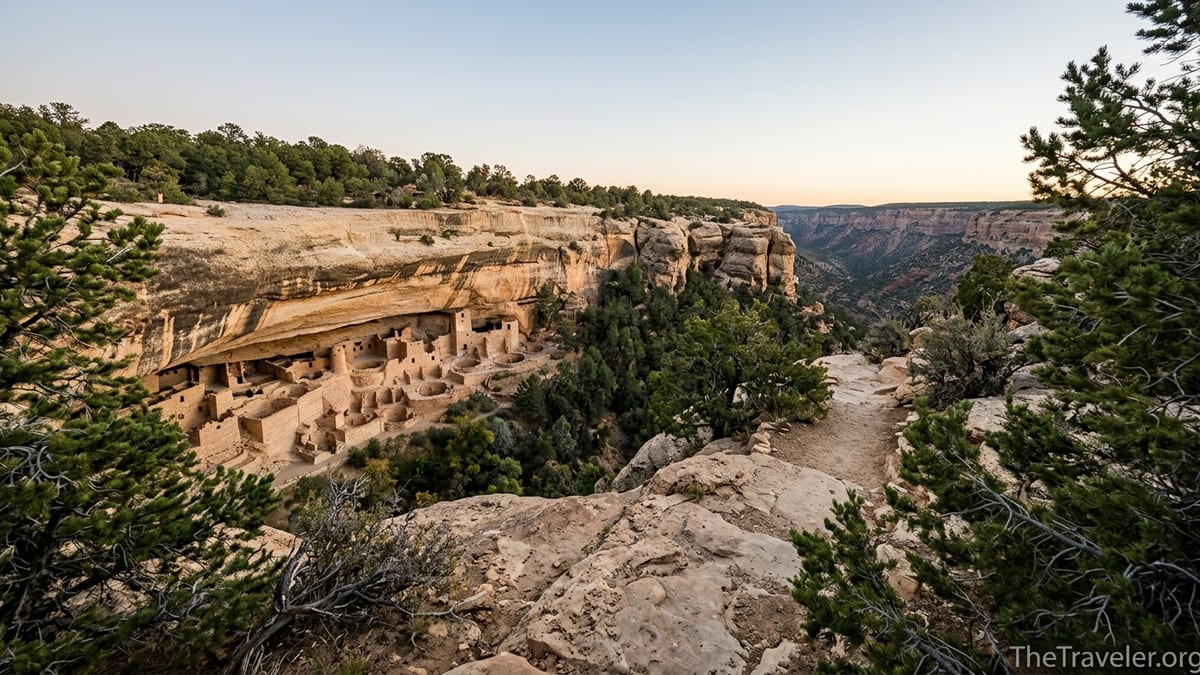
Stepping Into a Deep Timeline of North American History
Ancestral Puebloan culture flourished roughly from the first centuries AD through about 1600 in the Four Corners region where Colorado, Utah, Arizona and New Mexico meet. At major hubs such as Chaco Culture National Historical Park in New Mexico and Mesa Verde National Park in Colorado, you move through multi-story masonry “great houses,” storage rooms, plazas and kivas that were already old when Europeans first reached the continent. The sense of time is different here. Instead of a quick museum stop, you are surrounded by entire communities that once supported complex trade, agriculture and spiritual life.
In Chaco Canyon, for example, visitors can walk the loop road to sites like Pueblo Bonito, Chetro Ketl and Casa Rinconada. Pueblo Bonito alone contained hundreds of rooms and rose several stories high, arranged in a distinctive D shape aligned with the sun and stars. Even if you arrive on a regular day tour and not for one of the park’s astronomy programs, simply standing in the plaza and looking up at the terraced walls gives a tangible sense of the engineering and planning that went into this center of Ancestral Puebloan life.
What distinguishes these places from many historic sites in the eastern United States is the continuity with the present. For modern Pueblo communities such as Acoma, Zuni and the nineteen Pueblos along the Rio Grande, these are not “ruins” in the detached sense. They are ancestral homelands, woven into origin stories, ceremonies and family histories. As a visitor, learning even a little about that living connection changes how you experience a sandstone wall or a potsherd gleaming in the dust.
This deep timeline is also visible in more remote landscapes. In Bears Ears National Monument in southeastern Utah, canyons like Grand Gulch and Mule Canyon hold dense concentrations of dwellings, granaries and rock art. Some sites are small alcoves with a few storage rooms. Others are larger cliff dwellings tucked high under an overhang, accessible only by steep slickrock or old carved hand-and-toe “moki steps.” Backpackers who spend several days hiking here often describe the feeling of moving through a layered archive of human presence, from early hunter-gatherer camps to late masonry villages.
Iconic Sites That Make the Past Feel Visceral
Certain Ancestral Puebloan sites are so striking that they often become travelers’ first introduction to this history. Mesa Verde’s Cliff Palace in Colorado is one of them. Seen from the main overlook, it almost appears like a sandstone city nestled into a natural amphitheater. On a ranger-led tour, you descend stone steps, pass under overhangs and stand just meters from the original towers and kivas. The route requires some ladder climbing and mild scrambling, which makes the experience feel more like exploration than a static viewpoint.
Bandelier National Monument near Los Alamos, New Mexico offers a very different but equally visceral encounter. Here, many dwellings are carved directly into soft volcanic tuff. On the Main Loop Trail, short wooden ladders lead into cavates, small rooms hollowed out of the cliff. Inside, you can still see smoke-blackened ceilings and niches carved for storage. A longer walk takes you to Alcove House, once home to a small community and now reached by a sequence of tall ladders bolted to the cliff. Looking out from that alcove across Frijoles Canyon, with piñon and ponderosa stretching in all directions, it becomes easier to imagine the daily rhythms of life here centuries ago.
Farther north at Aztec Ruins National Monument near Farmington, New Mexico, you walk through interconnected rooms of a great house whose masonry combines styles from Chaco and Mesa Verde. The park includes a reconstructed great kiva, built under guidance from Pueblo advisors. Stepping down the ramp into this circular ceremonial space, with its roof beams and bench seats restored, gives a rare three-dimensional sense of what kiva interiors might have felt like when they were central to community religious and social life.
Less famous but equally powerful are cliff dwellings tucked into the canyons of Bears Ears and Cedar Mesa in Utah. Some require a day hike of several miles along sandy washes and over slickrock benches. The moment when a row of stone granaries or a small dwelling appears on a ledge above you can feel almost cinematic, not because it is staged, but because you have been walking through empty canyons for hours. These discoveries are part of why many backpackers call the region a “living museum,” and why land managers emphasize visiting only with good maps, strong route-finding skills and a firm commitment to leaving everything undisturbed.
Architecture, Astronomy and Ingenuity Written in Stone
Walking through Ancestral Puebloan sites reveals a level of architectural sophistication that surprises many visitors. Multi-story great houses like Pueblo Bonito in Chaco Canyon and Aztec West at Aztec Ruins National Monument are built with finely shaped sandstone blocks and intricate core-and-veneer walls. Small details stand out to the observant traveler: T-shaped doorways, carefully aligned windows and the way some walls curve to match bedrock or canyon edges. Even granaries in remote side canyons often show clever use of natural alcoves, with plastered walls to keep stored corn and beans dry.
Astronomical alignments are another source of fascination. While debates continue over the exact purposes of some features, there is broad agreement that the Chacoan world incorporated celestial observations into architecture and ritual. At Chaco Culture National Historical Park, certain windows and walls line up with solstice sunrises and sunsets. Elsewhere on the Colorado Plateau, rock panels show spirals and petroglyphs that interact with light and shadow on specific dates. Travelers who plan visits around solstices or equinoxes sometimes join ranger programs or night sky events that explore how closely people here watched the sky.
Even at smaller sites, you can read ingenuity in the details. In Cedar Mesa canyons, for example, hikers often see granaries tucked into seemingly impossible ledges, reached originally by ladders or carved steps. The plaster still bears the impressions of ancient hands. In banded sandstone alcoves, smoke stains from long-gone hearths trace a vertical history of cooking fires. At Bandelier, the combination of masonry-and-tuff dwellings shows how people exploited a very specific rock type that could be carved yet still remain stable.
Modern infrastructure around these sites also says something about how we engage with the past. Visitor centers at parks such as Mesa Verde, Bandelier and Aztec Ruins often feature small but insightful museums with pottery, stone tools and weaving equipment. Short introductory films, ranger talks and seasonal cultural demonstrations by Pueblo artisans add context. For a traveler, spending even 30 to 45 minutes in these centers before hiking out can change a quick photo stop into a more reflective experience grounded in what you are actually seeing.
Living Cultures, Shared Stewardship and Respectful Travel
One of the most compelling reasons these sites offer such a powerful journey into America’s past is that they are part of a living cultural landscape, not a finished chapter. Many modern Pueblo, Diné (Navajo), Ute and other Native nations trace connections to specific mesas, springs, cliffs and shrines across the region. When Bears Ears National Monument was first proposed and later restored, it was the Bears Ears Inter-Tribal Coalition, representing several tribes, that articulated why this landscape matters and how its cultural sites should be protected.
For travelers, understanding this living connection shapes how you behave on the ground. At Mesa Verde, ranger talks often emphasize that you are walking through the homes and ceremonial spaces of actual families whose descendants are still here. At Bandelier and Chaco, signage and brochures remind visitors not to enter rooms or kivas unless explicitly invited and to avoid touching walls or plaster. At more remote places like the canyons of Cedar Mesa, land managers ask hikers to stay on durable surfaces, keep a respectful distance from dwellings and never sit in doorways, climb on structures or rearrange artifacts.
Practical stewardship is woven into trip logistics. In popular Cedar Mesa canyons, day hikers are required to purchase a day-use permit, and overnight backpackers must secure advance permits with strict quotas. These small fees support trail maintenance, rangers and education programs that help keep sites intact. Travelers who join guided trips with reputable outfitters based in towns like Bluff, Monticello or Cortez typically receive detailed briefings about site etiquette, human waste disposal, and how to photograph rock art without physically approaching it.
Respect also means recognizing that not all knowledge is meant for visitors. Some shrines and ceremonial locations are intentionally unmarked, and tribal partners sometimes request that certain perched dwellings not be promoted on social media. When you see a sign or map that leaves an area vague, it is often an intentional choice to keep fragile places from being overwhelmed. Experienced hikers familiar with the region increasingly embrace a “no geotagging” ethic, sharing general impressions rather than specific coordinates, to help ensure that future travelers can still experience the sense of discovery that drew them there.
Travel Logistics: How to Experience These Places on the Ground
Though they sit in remote-feeling country, major Ancestral Puebloan sites are relatively accessible once you reach the broader Four Corners region. Mesa Verde National Park lies just off U.S. Highway 160 in southwestern Colorado, within an easy drive from Durango, Cortez and the Four Corners Monument area. Bandelier National Monument is reachable from Santa Fe or Los Alamos, often combined with a broader road trip that includes nearby historic plazas and museums. Aztec Ruins National Monument sits on the outskirts of the town of Aztec, New Mexico, making it a straightforward stop between Durango and Farmington.
More remote destinations require extra planning. Chaco Culture National Historical Park is reached via long stretches of unpaved road, and conditions can vary after storms. Most travelers drive in from U.S. Highway 550, allowing plenty of time for slow travel on washboard sections. In Utah, Bears Ears National Monument spreads across a vast area accessed by highways 191, 95, 261 and 163. Trailheads for popular Cedar Mesa hikes, such as Mule Canyon or Grand Gulch, often sit down graded dirt roads where high-clearance vehicles are helpful, especially in wet weather.
Costs are relatively manageable compared to many international trips. As of recent seasons, entrance fees for national parks and monuments in the region are typically in the range of a few tens of dollars per vehicle, with annual passes available for those visiting multiple sites. Day-use or backpacking permits on Cedar Mesa add modest additional costs, especially for overnight trips. Many travelers base themselves in gateway towns like Cortez, Durango, Moab, Bluff or Farmington, where basic motels, small inns and campgrounds cover a range of budgets. Rental cars from major airports such as Albuquerque, Salt Lake City or Denver make it easier to reach remote trailheads.
On the trail, self-sufficiency is crucial. Even short hikes to mesa-top villages or cliff dwellings can feel demanding at high elevation and low humidity. Carry more water than you think you will need, wear sturdy footwear with good traction and pack layers for sun, wind and sudden afternoon storms. In places like Bandelier, Mesa Verde and Chaco, well-marked trails and interpretive signs make for accessible half-day outings. In Cedar Mesa or other backcountry parts of Bears Ears, route-finding skills, printed maps downloaded in advance and a conservative approach to weather and daylight are essential.
Why These Journeys Feel Different From Other Historic Trips
Many travelers who have visited castles in Europe or Civil War battlefields in the eastern United States report that Ancestral Puebloan sites feel fundamentally different. Part of it is the combination of physical exertion and immersion in wild landscapes. To reach Cliff Palace or Balcony House at Mesa Verde, you climb ladders and squeeze through narrow passages. To stand beneath a remote alcove dwelling in Bears Ears, you may hike ten or more miles along sandy washes and over rock shelves. The effort underlines that these were places of real work and daily life, not just heritage scenery.
Another difference is the way earth, architecture and sky interlock. In Chaco Canyon, great houses align with cardinal directions and celestial events in ways you can still perceive by watching shadows move across walls. At Bandelier, the line between natural cave and carved room is blurred, making it hard to tell where geology ends and human craftsmanship begins. At Aztec Ruins, the reconstructed great kiva frames a circular patch of sky overhead, emphasizing the vertical connection between people, earth and cosmos.
There is also a strong emotional component for many visitors. Standing in a kiva or beneath a cliff dwelling, it is common to feel a mix of awe, curiosity and humility. You are aware that you are a guest in someone else’s sacred and domestic space. Unlike some museum experiences, where objects are removed from their context and placed behind glass, here most artifacts that remain are still in situ. A metate worn smooth in a sandstone ledge or a faint petroglyph of a spiral or bighorn sheep has not moved far from where it was originally used or carved.
Finally, these journeys can subtly shift how travelers think about North American history more broadly. Instead of a narrative that begins with European arrival, Ancestral Puebloan sites make it impossible to ignore the depth and complexity of Indigenous histories on this continent. Kivas, plazas, field systems and trade routes linking the Rio Grande Valley to the Pacific coast and Mesoamerica all point to a richly interconnected world that long predates modern borders. For many, this realization becomes one of the most meaningful souvenirs they take home.
The Takeaway
Visiting Ancestral Puebloan sites is not just about admiring intricate masonry or photographing dramatic cliff dwellings. It is about entering a deep, ongoing story that connects present-day communities to places where their ancestors planted corn, watched the stars and gathered for ceremony. From the major parks such as Mesa Verde, Chaco, Bandelier and Aztec Ruins to the quieter canyons of Bears Ears and Cedar Mesa, each site offers a slightly different window into that story.
For travelers willing to approach with humility, patience and curiosity, these journeys can be transformative. Long drives across the high desert, early starts to beat the midday heat, slow walks through sunlit plazas and shaded kivas all create space for reflection. Respectful travel practices, from staying on trails to leaving every potsherd where it lies, help ensure that the fragile traces of past lives remain for future generations and for the descendant communities to whom they matter most.
In an era when many trips blur together into a stream of similar photos and hotel rooms, time spent among Ancestral Puebloan sites stands apart. Here, you are reminded that people have been adapting to, cherishing and shaping this landscape for millennia. Standing in the cool shadow of a sandstone overhang or in the quiet of a stone-walled room, you may find that America’s past feels less like a distant abstraction and more like a living presence under your feet.
FAQ
Q1. What are Ancestral Puebloan sites and where are they located?
Ancestral Puebloan sites are ancient villages, cliff dwellings, kivas and rock art areas found mainly in the Four Corners region of Colorado, Utah, Arizona and New Mexico.
Q2. Which Ancestral Puebloan sites are best for a first-time visitor?
Many travelers start with Mesa Verde National Park, Bandelier National Monument, Aztec Ruins National Monument or Chaco Culture National Historical Park because they combine striking ruins with good visitor facilities.
Q3. Do I need a guide to visit these places?
You can visit most major parks on your own using marked trails and park brochures, but guided ranger tours or trips with reputable local outfitters often add valuable cultural context and help you visit more safely.
Q4. When is the best time of year to explore Ancestral Puebloan sites?
Spring and fall are generally best, with cooler temperatures and fewer storms. Summer can be hot, and winter brings snow or ice to some higher-elevation parks and canyon rims.
Q5. Are these sites suitable for children and less experienced hikers?
Yes, many locations offer short, relatively easy trails and accessible overlooks. However, some cliff dwelling tours involve ladders and exposure, so families should choose routes that match their comfort levels.
Q6. How can I visit respectfully as a non-Indigenous traveler?
Follow all posted rules, stay on established paths, never touch or enter structures unless invited, leave artifacts where you find them, and remember you are visiting ancestral homes and sacred places.
Q7. Are permits or fees required in Bears Ears and Cedar Mesa?
There is no general entrance gate, but certain canyons on Cedar Mesa require advance permits or day-use fees. Check current regulations with land managers before you go and budget for modest permit costs.
Q8. Can I camp near Ancestral Puebloan sites?
In many areas camping is allowed only in designated campgrounds or at specified distances from cultural sites. Always follow local rules and choose established campsites far from ruins and rock art.
Q9. Is photography allowed at these sites?
Photography is usually allowed for personal use, but drones are generally prohibited and some locations request no close-up or geotagged images. When in doubt, ask rangers or follow posted guidance.
Q10. How long should I plan for a trip focused on Ancestral Puebloan heritage?
A long weekend is enough for one major park, but a richer experience comes with a week or more to link several sites, allowing time for travel days, weather and unhurried exploration.