


Beyoğlu is where Istanbul stays up late. From rooftop terraces looking over the Bosphorus to smoky meyhanes, indie live music dens and Karaköy cocktail bars, this central district offers the city’s densest and most varied nightlife. It can feel chaotic on a first visit, but with a bit of context and some local pointers, you can enjoy memorable nights out while avoiding tourist traps and common safety pitfalls.
Get the latest updates straight to your inbox!
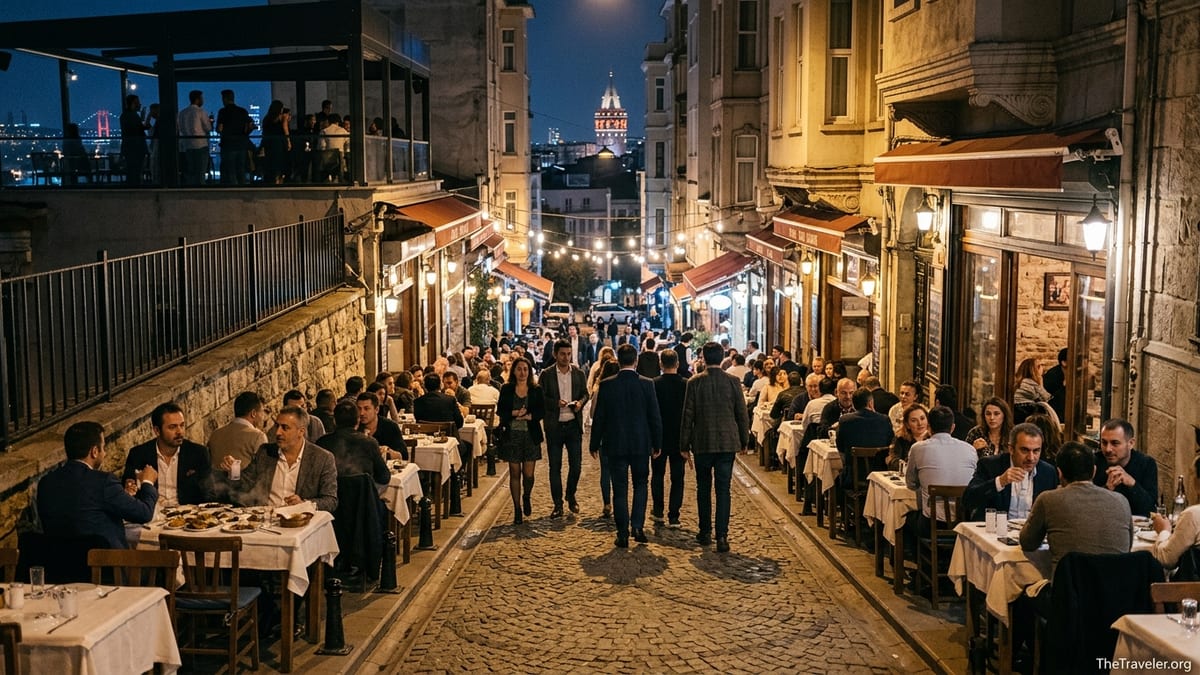
Understanding Beyoğlu After Dark
Beyoğlu sits on the European side of Istanbul, stretching roughly from Taksim Square down İstiklal Avenue to Galata and then Karaköy on the waterfront. It is a dense, walkable wedge of streets filled with consulates, 19th century apartments, galleries, bars and music venues. At night, the red tram clanks down İstiklal while side streets like Nevizade, Asmalımescit and Cihangir fill up with people eating meze, listening to live music or bar hopping.
The heart of the action runs between Taksim Square and Galata Tower. Around Taksim you find larger clubs, more mainstream bars and some of the city’s liveliest but also most touristic nightlife. As you walk downhill through Çukurcuma and Cihangir, venues become smaller and more local, with cozy wine bars and neighborhood meyhanes. Below Galata, Karaköy has evolved into a hub of design-forward cafes by day and stylish cocktail bars by night.
Alcohol in Turkey is heavily taxed, so drinks feel expensive compared with food. In 2026, expect a beer in a standard Beyoğlu bar to cost in the range of 150 to 250 Turkish lira, and cocktails at rooftop venues to start around 400 to 550 lira per glass, sometimes more in hotel bars or venues with famous DJs. Entry to most bars is free, but some clubs near Taksim may charge an entrance fee on weekends or for special events.
Beyoğlu is easy to navigate on foot, and at night taxis are plentiful along Taksim Square, Şişhane metro and Karaköy ferry pier. However, traffic can be heavy on weekends and narrow streets can get gridlocked. Whenever possible, plan to walk between neighborhoods and use the Tünel funicular or metro earlier in the evening, rather than trying to find taxis in the busiest hours around midnight.
Rooftop Bars with a View
Beyoğlu’s skyline is tailor-made for rooftop bars: on one side the Golden Horn and old city mosques, on the other the Bosphorus and the Asian shore. One of the district’s classic addresses is 360 Istanbul, located in a 19th century apartment building just off İstiklal Avenue. It combines restaurant, bar and club with panoramic city views and a lively DJ program, especially on weekends. Here, cocktails tend to sit at the upper end of the price scale, and a two-person dinner with drinks can easily reach several thousand lira, but many visitors treat it as a once-off splurge for the view.
Another high-profile venue is Mikla, a contemporary restaurant and bar on the rooftop of The Marmara Pera hotel. Its terrace looks out over the Golden Horn, Galata Tower and the historic peninsula. Mikla is primarily a fine-dining restaurant known for its modern Anatolian cuisine, but many travelers opt to reserve at the bar side or visit early for sunset drinks instead of a full tasting menu. A glass of wine or a signature cocktail is pricier than at street-level bars, but you are paying for the skyline and sophisticated atmosphere.
If you prefer a more low-key rooftop experience, newer spots along Meşrutiyet Avenue and around Şişhane station offer terraces with fewer tourists and slightly more moderate prices. Hotel rooftops in this area often accept non-guests for drinks; the vibe leans lounge rather than club, with soft music and couples sharing meze plates. It is common to order a bottle of Turkish wine and a small assortment of snacks and stay for several hours, rather than bar hopping.
Dress codes on Beyoğlu rooftops are generally smart casual rather than strictly formal. Men in neat jeans or chinos and a shirt, women in casual dresses or trousers and tops are typical. Sneakers are usually fine, but sportswear, backpacks and beachwear can feel out of place. Reservations on Friday and Saturday nights are highly recommended for sunset hours, especially in summer and around public holidays when Istanbul is busy with domestic travelers.
Meyhanes, Nevizade and Asmalımescit
The meyhane is the classic Istanbul nightlife institution: a tavern-like restaurant specializing in meze and rakı, often with live Turkish music. Beyoğlu is one of the best districts to experience it. Nevizade Sokak, a narrow lane just off İstiklal near the historic Çiçek Pasajı, is lined wall to wall with meyhanes. Tables spill into the street, musicians wander between them playing folk songs and guests sing along late into the night. It is loud, crowded and touristy, but also undeniably atmospheric.
A typical meyhane evening starts around 8 or 9 pm and can stretch well past midnight. You sit down and are either brought a tray of cold meze to choose from, or you order from a printed menu. Expect dishes like haydari (thick garlicky yogurt), fava bean purée, eggplant salads, seafood and grilled meats. Rakı is usually ordered by the 35 cl or 70 cl bottle for the table, mixed with water and ice in tall glasses. For a group of four, sharing a bottle of mid-range rakı plus a selection of meze and one hot main each can come to a few thousand lira, depending on the venue and seafood choices.
Asmalımescit, a network of streets a short walk from Şişhane metro, offers a slightly more mixed scene. Here you will find both traditional meyhanes and modern wine bars, as well as bistros that feel more European in style. Places spill onto the pavement but with a bit more breathing room than in Nevizade. It is a good compromise for travelers who want a local feel without over-the-top crowds. Consider looking for venues where menus are clearly priced in Turkish and English and where most guests seem to be locals out with friends or colleagues.
For a more low-key meyhane experience, some visitors seek out long-running institutions tucked into side streets, where interiors are simple and the focus is firmly on food and conversation. In these older venues, reservations are important on weekends and staff might speak limited English, but the experience tends to be less pushy. Here it is normal to linger for hours, chat with neighboring tables and end the night with a plate of fresh fruit rather than dessert.
Karaköy Bars, Live Music and Clubs Near Taksim
Down the hill from Galata, Karaköy has transformed from a working port into one of Istanbul’s most fashionable districts. During the day, third-wave coffee shops and galleries dominate. At night, streets near the tram line and the waterfront fill up with bars that feel more design-driven than the average Taksim pub. Cocktail-oriented venues in Karaköy often feature inventive takes on Turkish ingredients, such as drinks flavored with sumac, pomegranate or local herbs, and prices are similar to or slightly above standard Beyoğlu levels.
Many Karaköy spots blur the line between cafe, bar and restaurant. It is common to arrive around 8 pm for dinner and stay on as the lighting dims and DJ sets begin. Compared with Taksim, the music tends to be more electronic, indie or downtempo, and the crowd leans slightly older and more local. For travelers, this can feel like a comfortable way to experience Istanbul nightlife without the intensity of the bar streets directly off İstiklal.
Closer to Taksim Square, you will find more conventional nightclubs and larger venues that host theme nights, live bands or DJ events. These clubs attract a mixed crowd of locals, students and tourists. Entry policies can vary: some may ask for a reservation or table booking on busy nights, others simply charge a cover that includes one drink. Dress is usually smarter than in casual bars, and groups of men may sometimes be turned away in favor of mixed-gender groups, particularly at venues that brand themselves as upscale.
Istanbul’s live music scene is strong, and Beyoğlu remains a core part of it. Around Galata and Şişhane, basement venues host everything from Turkish rock to jazz and singer-songwriter sets. Cover charges are often modest, roughly the price of one drink, and performances may not start until 10 or 11 pm. Many travelers discover these venues simply by listening for music on side streets and following their ears downhill.
Late-Night Food and Classic Street Snacks
One of the pleasures of going out in Beyoğlu is how easy it is to find food at nearly any hour. Around Taksim and along İstiklal Avenue, doner kebab stands, burger joints and small lokantas stay open past midnight, and some operate 24 hours. A basic doner wrap can still be found at relatively modest prices compared with alcoholic drinks, making it a common late-night staple for students and bar hoppers.
In and around Nevizade and Çiçek Pasajı, seafood is a major feature. Street stalls sell midye dolma, mussels stuffed with spiced rice and lemon juice, by the piece. Many locals grab a few of these between bars or on the walk back toward the tram. Grilled fish sandwiches and fried mussel sandwiches are also common in season. Always look for busy stalls where turnover is high, as this is a simple way to reduce the risk of eating seafood that has been sitting too long.
Further down in Karaköy, you will find bakeries and pastry shops that stay open into the night, selling simit (sesame-crusted bread rings), poğaça (savory pastries) and desserts like baklava. Ordering tea or Turkish coffee alongside something sweet is a traditional way to wind down after a heavy meyhane meal. Cihangir and Çukurcuma, by contrast, lean more toward small neighborhood lokantas serving stews and home-style dishes; they may close earlier than the bars, so plan to eat there before the late hours.
Keep in mind that not all late-night food around Taksim is equal in quality. A cluster of very cheap, brightly lit fast-food spots near the main square exist largely for tourists and can be disappointing. If you walk just a few minutes into side streets like Bekar Sokak or down toward Galata, you are more likely to find grills and esnaf lokantası style eateries with better ingredients and a mix of local and visitor clientele.
Safety, Scams and Areas to Be Cautious
Beyoğlu is one of Istanbul’s busiest districts at night and, for most visitors, feels energetic rather than dangerous. Petty crime exists, as in any major city, but violent crime against tourists remains relatively uncommon. The main risks are opportunistic theft, overcharging, and a small number of scam bars and clubs that target foreigners, especially solo male travelers near Taksim.
A classic scam involves friendly touts approaching travelers around İstiklal or Taksim Square and suggesting a “great bar” or club. Once inside, guests are presented with an inflated bill, sometimes with fabricated drink orders or surcharges for music or “hostess” services they did not request. To avoid this, decline unsolicited invitations from strangers and choose venues you can see from the street or that are recommended by your accommodation. Always ask to see a drinks menu with prices before ordering, and if something seems unclear, clarify politely but firmly.
Some very narrow side streets behind Taksim Square and off the lower parts of İstiklal feel run-down and can be unsettling late at night, particularly if you are alone and bars have closed. These areas are not outright no-go zones, but it is wise to stick to better-lit streets with steady foot traffic after midnight. If you feel uncomfortable, take a taxi from a main road rather than wandering in search of a shortcut. Around Karaköy and Galata, streets closer to the waterfront and main tram line tend to feel safer than deserted uphill alleys.
As in any crowded nightlife district, keep your valuables close and avoid leaving phones or wallets on tables or in open bags. It is uncommon but not impossible to hear stories of drinks being spiked, so basic precautions such as not leaving your drink unattended and not accepting open drinks from strangers are sensible. Many locals also advise favoring bottled beer or wine in very small or ultra-cheap venues if you feel uncertain about the provenance of spirits.
Practical Tips: Money, Transport and Local Etiquette
Most mid-range bars, rooftops and meyhanes in Beyoğlu accept credit cards, but smaller places and late-night street food stands may prefer cash. It is wise to carry a modest amount of Turkish lira for such situations, but not so much that losing your wallet would be a major setback. ATMs are plentiful around Taksim and Galata; choose those attached to major banks and withdraw inside busy, well-lit areas rather than empty side streets.
For getting home, yellow taxis are the default option after public transport slows for the night. Use an official taxi from a rank or a reputable ride-hailing app where available, and always check that the meter is running from the start of the journey. From Beyoğlu to areas like Sultanahmet or Şişli late at night, rides will usually cost a fraction of what you spent on drinks, but be prepared for some drivers to resist short hops during peak bar-closing hours.
Local etiquette in nightlife settings is mostly relaxed, but a few points are worth noting. Public displays of affection that would be unremarkable in some European capitals may draw more attention here, especially in strongly conservative pockets, though Beyoğlu itself is relatively liberal. Dress is flexible, but extremely revealing outfits may attract stares. Tipping around 10 to 15 percent is appreciated in table-service bars, meyhanes and live music venues; you can either leave cash on the table or ask staff to round up the bill.
Smoking is still very common in Istanbul nightlife, even though indoor smoking restrictions officially exist. Expect terraces and semi-open spaces to be smoky; some venues have well-ventilated indoor rooms for non-smokers. Earplugs can be useful for late-night streets like Nevizade or Asmalımescit if your accommodation is nearby, as the combination of music, singing and clattering plates can continue into the early hours.
The Takeaway
Beyoğlu offers one of the richest urban nightlife experiences in Europe, but it rewards a bit of planning. Rooftop bars supply unforgettable city panoramas, meyhanes deliver long, convivial meals set to Turkish music, and Karaköy’s bars add a contemporary, design-led dimension. At the same time, alcohol taxes keep prices relatively high and a small ecosystem of tourist-oriented venues operates alongside genuinely local spots.
If you focus on well-regarded rooftops, lively yet reputable meyhanes around Nevizade and Asmalımescit, and the growing bar scene of Karaköy, you can stitch together nights out that feel authentically Istanbulite. Combine this with common-sense safety habits, awareness of potential scams near Taksim and a willingness to walk a few extra blocks to eat and drink where locals do, and Beyoğlu’s nocturnal side becomes one of the most rewarding chapters of any stay in the city.
FAQ
Q1. Is Beyoğlu safe to walk around at night for solo travelers?
Overall, yes, Beyoğlu is busy and feels reasonably safe with normal big-city precautions. Stick to well-lit streets with foot traffic, avoid very quiet alleys behind Taksim after bars close, and use taxis from main roads if you ever feel uncomfortable.
Q2. What time does nightlife in Beyoğlu usually start and end?
Rooftop bars and meyhanes begin to fill from around 8 or 9 pm, with live music often starting after 10 pm. Bars in areas like Asmalımescit and Karaköy stay lively until 1 or 2 am, and some clubs near Taksim continue closer to dawn on weekends.
Q3. How expensive are drinks in Beyoğlu compared with other European cities?
Because of Turkey’s alcohol taxes, drinks feel relatively expensive compared with local food. Expect a beer in a standard bar to cost roughly what you might pay in a mid-priced European capital, while cocktails at rooftops and hotel bars can approach or exceed Western European prices.
Q4. Do I need reservations for rooftop bars and meyhanes?
For popular rooftops such as those near İstiklal or Pera and for classic meyhanes in Nevizade or Asmalımescit, reservations are strongly recommended on Friday and Saturday nights and during peak seasons. On quieter weekdays you can often walk in, especially if you arrive early in the evening.
Q5. Which areas are best for a relaxed, non-touristy night out?
Side streets in Asmalımescit, parts of Cihangir and the bar cluster in Karaköy generally feel less tourist-focused than the loudest stretches of İstiklal and the immediate vicinity of Taksim Square. Choosing venues where you see a mix of locals and visitors is usually a good sign.
Q6. Are there dress codes for clubs and rooftop venues?
Most Beyoğlu venues follow a smart casual standard. Clean jeans or trousers and a shirt are fine for men, and casual dresses or stylish separates for women. Sportswear, beachwear and large backpacks can be frowned upon, and some clubs may be stricter on weekends.
Q7. How can I avoid bar scams and inflated bills?
Avoid following strangers or touts to unknown clubs, always ask to see a menu with clear prices before ordering, and check your bill line by line before paying. Choosing well-known venues, asking your hotel or hostel for recent recommendations and paying as you go rather than opening large tabs can all reduce risk.
Q8. Is it okay to bar hop between Taksim, Galata and Karaköy on foot?
Yes, many people walk between these areas in the same night. The downhill route from Taksim through İstiklal and Galata to Karaköy is straightforward and busy. Just wear comfortable shoes, watch for uneven cobblestones and consider a taxi back up the hill if you are tired or it is very late.
Q9. Can I find vegetarian or vegan options during a night out?
Vegetarian options are widespread, especially in meyhanes where many meze dishes are vegetable-based, such as eggplant salads, bean dishes and yogurt dips. Vegan options exist but may require a bit more selection; in Karaköy and Cihangir, modern bistros and cafes are particularly used to catering for plant-based diets.
Q10. What is the tipping etiquette in Beyoğlu bars and meyhanes?
Leaving around 10 to 15 percent is customary where there is table service. In very casual bars you can simply round up the bill, while in meyhanes and rooftop venues a more defined tip is appreciated, either added to the card payment if possible or left in cash on the table.