


The Philadelphia most visitors meet is compact: Independence Hall, the Liberty Bell, maybe Reading Terminal Market and a quick photo by the Rocky steps. It is a powerful story about the American experiment, but it is only a fraction of what locals know as their city. To find the real Philadelphia, you have to leave the tourist core around Old City and Center City and ride the subway, walk the rowhouse blocks, and linger where people argue about hoagies instead of history textbooks.
Get the latest updates straight to your inbox!
Why the Real Philadelphia Lives in Its Neighborhoods
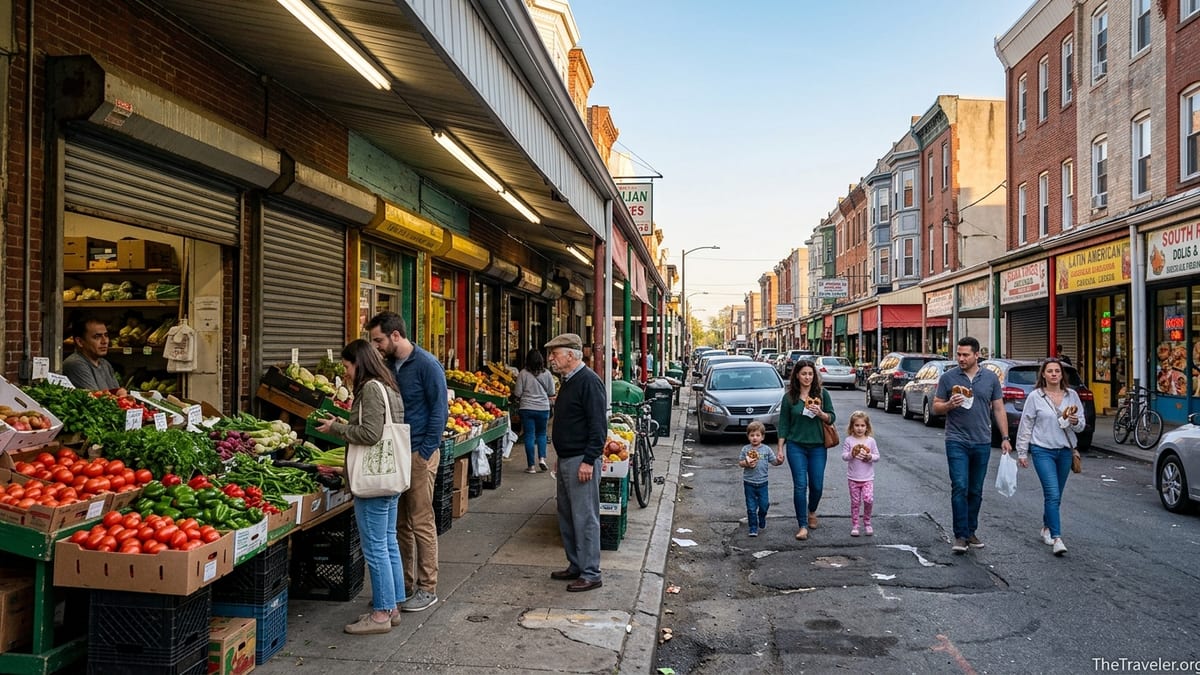
The official visitor map suggests that Philadelphia begins and ends around Independence Mall, the Museum of the American Revolution, and a neat band of museums along the Benjamin Franklin Parkway. Those sites are worth your time, but for most residents, they are backdrops rather than daily life. Real Philadelphia is the barista at a corner coffee shop in Passyunk who knows everyone’s order, the high school band practicing in a Germantown park, and grandparents folding lawn chairs along narrow South Philly streets for a block party.
If you only stay in the tourist core, you will mostly see hotel brands, chain restaurants, and places calibrated to first-time visitors. Take the Broad Street Line south, or the Market–Frankford Line toward Fishtown, and the city shifts. Corner bars advertise three-dollar citywide beer-and-shot specials, discount stores spill onto sidewalks, and hand-painted signs offer halal platters, pupusas, or hand-pulled noodles, often for under 15 dollars. These are the kinds of everyday landscapes where you can actually overhear Philadelphians debating sports, politics, and which neighborhood bakery makes the best cannoli.
Neighborhoods outside the core are also where you will feel Philadelphia’s reputation for blunt honesty. Strike up a conversation with someone waiting for the 47 bus down 7th Street, ask the bartender in a Point Breeze taproom what they think about the latest real estate project, or chat with parents at a Saturday youth soccer game in Pennsport. You are likely to get opinions, not slogans. That willingness to speak plainly is as much a local landmark as the Liberty Bell’s famous crack.
South Philadelphia: Markets, Rowhouses, and Sunday Sauce
South Philadelphia, stretching from South Street down to the stadium complex, has long been a gateway for new arrivals. Italian immigrants helped establish the South 9th Street Italian Market in the late 19th century, and today it functions as one of the oldest and largest open-air markets in the United States, running for roughly ten blocks along 9th Street. Morning shoppers weave between outdoor produce stands and butcher shops where prices are often penciled on cardboard instead of glowing on digital screens. You might pay five to eight dollars for a bag overflowing with peppers, herbs, and tomatoes if you bargain and buy in season.
The Italian Market of 2026 is no museum. Many of the old-school Italian delis and cheese shops remain, but taco spots, a tortilleria, and Southeast Asian grocers reflect newer Mexican and Vietnamese communities. Grabbing a hot barbacoa taco from a walk-up window for a few dollars, then picking up a wedge of sharp provolone next door, is a practical way to taste how migration keeps reshaping this part of the city. For a deeper immersion, time your visit with the annual Italian Market Festival in May, when 9th Street closes to traffic and local bands, food stalls, and children’s rides fill the asphalt.
Move a few blocks east to East Passyunk Avenue and you will see a different layer of South Philadelphia. Here, low-slung former bakeries and social clubs have become natural wine bars, tasting-menu restaurants, and specialty coffee shops. A multi-course dinner may run 80 to 120 dollars per person before drinks, yet around the corner, long-running red-sauce spots still serve family-style platters of pasta and meatballs for under 25 dollars. On a Sunday, it is common to walk past rowhouses where the smell of slow-simmered tomato gravy floats out of open windows while children chalk hopscotch grids on the sidewalk.
Farther south, the blocks around Snyder and Oregon Avenues lean more residential, with pocket parks, church festivals, and the occasional backyard chicken coop. Here, the only “attractions” are family-owned bakeries selling trays of cookies by the pound, corner taprooms where regulars watch the Phillies on muted televisions, and playgrounds full of teenagers playing basketball until the lights cut off at night. Wandering without a fixed agenda, stopping for a three-dollar soft pretzel and a coffee at a corner bakery, can feel more revealing than any ticketed tour.
Fishtown and Kensington: Philadelphia’s Creative Engine
To the northeast of Center City along the Delaware River, Fishtown has evolved from a working-class fishing and industrial district into one of Philadelphia’s most talked-about creative neighborhoods. Old brick factories now house design studios and music venues. By early evening, Girard Avenue and Frankford Avenue fill with people heading to cocktail bars, ramen counters, and natural wine spots. It is not unusual to find a small plate of locally sourced vegetables priced around 14 dollars sitting next to a happy-hour beer special for four dollars at the same bar.
Fishtown has become a dining destination in its own right, with several restaurants recently recognized by national and international guides. Some of those kitchens operate out of spaces that once held neighborhood diners or longtime taverns. The atmosphere is rarely hushed. Conversations about the Sixers bounce between tables, indie rock seeps from speakers, and servers are as likely to be wearing vintage band T-shirts as starched shirts. For travelers, it is a chance to experience what locals actually mean when they talk about Philadelphia’s surging food scene, rather than the packaged version in a hotel lobby restaurant.
Just inland, parts of Kensington reveal a different, more complicated side of the city. For years, this area has faced overlapping challenges, including factory closures, disinvestment, and the visible impact of the opioid crisis. Yet it is also home to artist-run galleries, co-working studios in reclaimed warehouses, and community gardens squeezing kale and tomatoes out of vacant lots. Local organizations host open-studio nights where you can walk through old mill buildings, talk with painters, printmakers, and sculptors, and buy work directly, sometimes for under 100 dollars.
Exploring Fishtown and Kensington requires nuance and respect. Stick to well-traveled commercial corridors at night, support businesses that are clearly rooted in the community, and listen when locals discuss how rising rents and short-term rentals are reshaping their blocks. A craft beer brewed in a converted factory may be delicious, but it also sits inside a longer story about who could once afford to live and work here, and who still can.
Germantown and Northwest Philadelphia: Layers of History and Everyday Life
Head northwest on the Chestnut Hill West or Fox Chase regional rail lines, and Philadelphia’s urban grid gives way to tree-lined streets, steep hills, and a patchwork of historic districts. Germantown, founded by German settlers in the 17th century, has played a significant role in American history, including as the site of a Revolutionary War battle and early anti-slavery organizing. Today it is a predominantly Black neighborhood where colonial-era stone houses sit a few doors down from corner stores selling hoagies and lottery tickets.
Visitors can tour preserved sites such as the Deshler–Morris House, known as the Germantown White House, or Cliveden, a Georgian mansion that now hosts programs grappling with the legacy of enslavement and abolition. Entrance fees are typically modest, often in the 10 to 15 dollar range, and many sites participate in seasonal free-admission days. Yet what makes Germantown feel alive rather than frozen in time is everything that happens between these landmarks: youth drumlines rehearsing in Vernon Park, church congregations organizing food distribution drives, and neighbors chatting on wide front porches as buses rattle past.
In recent years, Germantown has also embraced public art as a way to process trauma and celebrate resilience. Projects that turn residents’ poetry into large-scale installations across commercial corridors highlight personal stories of loss and survival. Walking these streets with a takeout cup of coffee from a local café, you may find a stanza about grief printed on a building wall facing a bus stop, or a mosaic of names near a recreation center. For travelers willing to move slowly, these details offer a deeper narrative than any single museum panel.
Continue farther northwest to Mount Airy and Chestnut Hill, and the city’s character shifts again. Here, leafy avenues, independent bookstores, and co-op grocery stores sit close to trailheads leading into Wissahickon Valley Park. A day might combine a morning hike through gorge trails, where the only sounds are running water and cyclists passing, with an afternoon browsing used records and grabbing a sandwich at a deli that has been slicing cold cuts for decades. The prices edge upward compared with South or West Philadelphia, but the rhythm is calmer, and the mix of longtime residents and newer arrivals is immediately apparent in coffee-shop conversations about local schools and zoning meetings.
West Philadelphia: Universities, Rowhouses, and Global Dining
Across the Schuylkill River from Center City, West Philadelphia stretches far beyond the polished campuses most visitors see. The area around University City, anchored by major universities and hospitals, features glassy research towers, mid-range chain restaurants, and high-rise student housing. A few blocks west, however, the streets quickly transition into dense rows of Victorian twins, corner mosques, and small storefront churches. Here, community gardens share space with auto shops and hair-braiding salons.
West Philadelphia is one of the city’s most diverse food destinations. On Walnut, Chestnut, and Baltimore Avenues, you can find West African stews, Ethiopian platters, Vietnamese banh mi, and halal carts grilling skewers, often for under 15 dollars a meal. In neighborhoods like Cedar Park and Cobbs Creek, renovated cafés serve oat-milk lattes and vegan pastries by day, then host neighborhood meetings or poetry nights after dark. Walking west along Baltimore Avenue from 45th Street, you can watch the storefronts shift from student-oriented burrito spots to long-standing Caribbean takeout counters and Liberian restaurants announcing daily specials on hand-lettered boards.
Public space activism is also visible here. Admire the murals stretching along Lancaster Avenue that honor jazz musicians, community organizers, and neighborhood elders, or stop by a block where residents have installed “little free libraries” in front yards so that children can swap books. In summer, streets close down for community festivals where food trucks park beside tables selling shea butter, handmade jewelry, and secondhand vinyl. For visitors, these events feel like invitations: quietly buy a plate of jollof rice, ask the vendor how they season their grilled fish, and you will often get not only an explanation but a story.
West Philadelphia is candid about its pressures. Rising housing costs, student demand, and speculative development have pushed some residents farther west or into the suburbs. You will see “Stop Displacement” posters in windows and flyers about zoning hearings taped to lampposts. Travelers who choose to spend money here, whether on a 20-dollar brunch at an independent café or a five-dollar platter from a corner truck, become small participants in these evolving conversations about who the neighborhood is for and what kind of future it deserves.
How to Explore Beyond the Tourist Core Responsibly
Leaving Philadelphia’s familiar tourist triangle does not require elaborate planning, but it does call for situational awareness and respect. Start by using the city’s transit system: the Broad Street subway, Market–Frankford Line, and regional rail lines link most of the neighborhoods in this article to Center City in under 30 minutes. A single-ride fare on local transit is modest, and day passes are often cheaper than two or three point-to-point tickets, especially if you are pairing a morning in Germantown with an evening in Fishtown.
When you arrive in a new neighborhood, take a few minutes to observe. Notice how people are using public space: Are kids playing on the sidewalks, are older residents gathered outside a church, are street vendors busy? Avoid blocking narrow sidewalks for photos, and ask before photographing people, especially children or religious gatherings. If you are visiting a neighborhood that has recently faced safety challenges, consider exploring during daylight hours, staying near active commercial corridors, and taking a rideshare or taxi back to your hotel after dark.
Choose locally rooted businesses whenever possible. In South Philadelphia, buy cannoli or seeded rolls from bakeries that have been on the same corner for generations rather than from the nearest national coffee chain. In West Philadelphia, look for restaurants where staff greet regulars by name and the menu reflects the cuisines of nearby residents, whether that is Senegalese, Dominican, or Vietnamese. Tip generously. An extra few dollars on a 12-dollar lunch may not register for you, but it can matter on a slow Tuesday for a family-run spot.
Finally, listen more than you speak. Attend a neighborhood jazz night in Germantown, where the cover charge might be 10 to 20 dollars, and pay attention to the between-song banter about school funding or local elections. Sit at the bar in a Fishtown pub and let conversations about the Phillies or union negotiations drift around you before you jump in. By treating these spaces as communities first and tourist attractions second, you will not only stay safer and more grounded, you will also gain a more nuanced understanding of Philadelphia’s contradictions and strengths.
The Takeaway
Philadelphia’s historic core has undeniable power, and first-time visitors should absolutely walk Independence Mall and gaze at the Liberty Bell. Yet stopping there misses the point of a city that prides itself on being stubbornly alive, gloriously imperfect, and hard to flatten into a brochure. To really know Philadelphia, you have to eat where Sunday sauce perfumes entire South Philly blocks, ride the El to a Fishtown bar carved out of an old warehouse, read poetry printed on Germantown brick, and accept a paper plate of food at a West Philly block party.
These experiences rarely show up in glossy visitor guides, and they are not neatly scripted. You might wait in line behind regulars picking up hoagies, navigate a confusing intersection where trolley tracks intersect bike lanes, or mis-time a bus and end up walking farther than planned. Embrace those small frictions. They are the texture of a living city, not a curated set piece. If you return home with a favorite corner bakery instead of another postcard of the skyline, you will have started to tap into the real Philadelphia that begins where the tourist core ends.
FAQ
Q1. Is it safe to explore Philadelphia neighborhoods outside the tourist areas?
It is generally safe if you use basic urban common sense: visit unfamiliar areas in daylight, stay on active commercial streets, pay attention to your surroundings, and use rideshares or taxis at night if you feel unsure.
Q2. Which neighborhood should I visit first if I want to go beyond the Liberty Bell?
South Philadelphia is an easy starting point, especially the Italian Market and East Passyunk Avenue, which are well known, walkable from transit, and packed with food options.
Q3. How do I reach Fishtown or Kensington without a car?
You can take the Market–Frankford Line to stations like Girard or Berks for Fishtown, then walk along Frankford or Girard Avenues. For Kensington arts corridors, stay close to main stops and busy streets, especially after dark.
Q4. Are there guided tours that cover these non-tourist neighborhoods?
Yes. Several local operators and community organizations offer walking food tours in the Italian Market, mural tours in West and North Philadelphia, and history walks in Germantown. Ask your hotel concierge or visitor center staff for current options.
Q5. What is a realistic daily budget for eating in these areas?
If you mix inexpensive takeout counters with a sit-down dinner, you can often eat well for 40 to 70 dollars per person per day, not including alcohol, with many excellent meals under 20 dollars.
Q6. How can I be respectful when visiting neighborhoods facing gentrification?
Support long-standing local businesses, avoid treating residential streets like backdrops for social media photos, respect posted rules about photography in shops or markets, and listen when locals share concerns about housing and displacement.
Q7. Are there family-friendly activities outside Center City?
Yes. Families often enjoy wandering the Italian Market in the morning, playing in parks like Clark Park in West Philadelphia, exploring historic houses in Germantown, or hiking the trails of Wissahickon Valley Park.
Q8. Do I need to rent a car to see these neighborhoods?
No. Most areas mentioned are reachable by subway, elevated train, regional rail, bus, or a short rideshare. A transit pass plus occasional taxis is usually cheaper and less stressful than renting a car and paying for parking.
Q9. What should I wear when exploring beyond the tourist core?
Wear comfortable walking shoes, weather-appropriate layers, and practical bags that keep your hands free. Philadelphians tend to dress casually, so neat sneakers and jeans are almost always appropriate.
Q10. How many days do I need to experience the “real” Philadelphia?
With three full days, you can see the main historic sites and still devote at least one day to neighborhoods like South Philadelphia, Fishtown, and West or Northwest Philadelphia, getting a more balanced sense of the city.