


Choosing the right eSIM service can make or break your next trip abroad. Between BNESIM and Roamless you are looking at two very different approaches to travel connectivity: one built around classic prepaid data bundles, the other around a single global eSIM with pay as you go credits and optional plans. This guide breaks down how each works in practice, what they cost as of mid 2026, and which one fits specific real world travel scenarios from a weekend in Paris to a six month round the world trip.
Get the latest updates straight to your inbox!
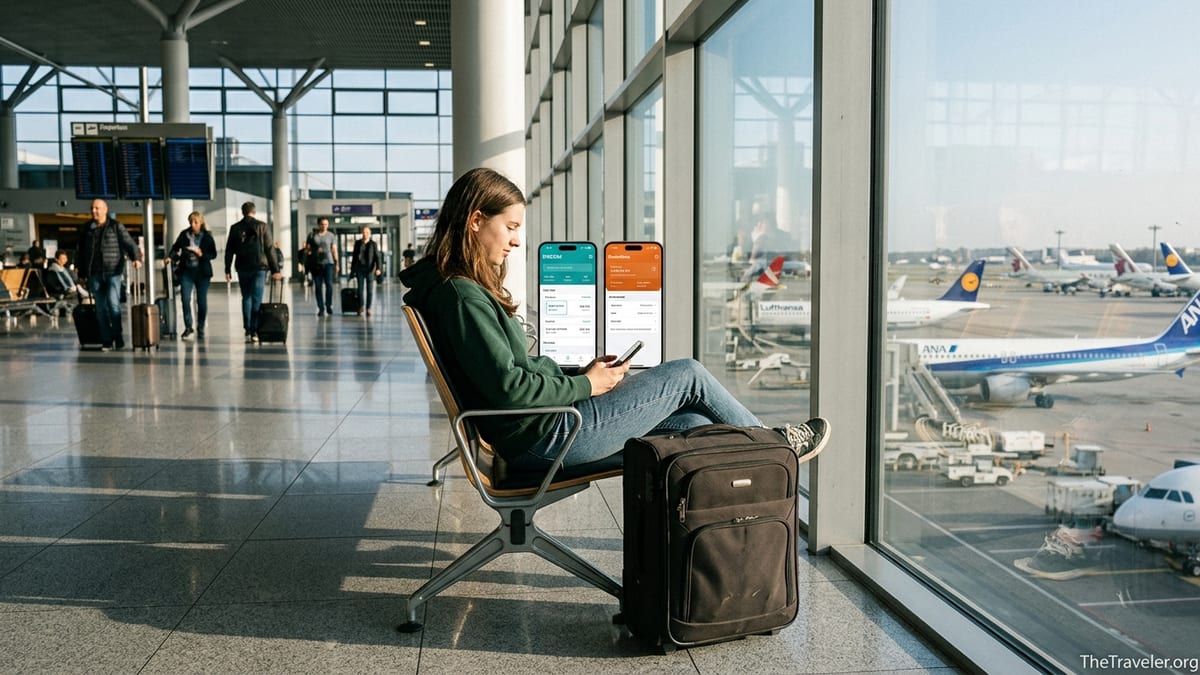
BNESIM and Roamless in a nutshell
BNESIM is a long established European based eSIM provider that specializes in prepaid data packages for global, regional and country specific travel. It offers a huge catalogue of plans, including global bundles that work across more than 140 countries and regional passes for places like Europe, Asia or North America. You choose a data allowance and validity period up front, pay once, and use that quota until it runs out or expires. BNESIM also sells non expiring global data packs that stay on your account indefinitely, which appeals to frequent travelers who cross borders often but use data only occasionally.
Roamless is a newer player that focuses on simplicity: one single global eSIM profile that you install once and then top up with credits or activate data plans as you go. Instead of buying a fixed gigabyte pack in advance, its core “Flex” model lets you pay per megabyte of data and per minute of calls, with pricing that varies by country but uses the same credit balance everywhere. Roamless also offers fixed data plans (“Fix”) for popular destinations if you prefer more predictability, but the defining idea is that you carry one eSIM from trip to trip and only pay when you actually use it.
In practical terms, BNESIM feels similar to buying a classic roaming package from a travel SIM store, just with more plan variations and usually better pricing than many mobile operators. Roamless behaves more like a global prepaid wallet for connectivity. You install the eSIM once on your iPhone or Android phone, keep it dormant at home, and each time you land in a new country you switch it on and start burning through your credit balance.
For many travelers both services can coexist with your normal physical SIM. You might keep your home carrier SIM in the phone to receive SMS from banks, while using BNESIM or Roamless solely for data. The key question is which eSIM better matches how you actually travel, because their strengths show up in very different kinds of trips.
Coverage and network performance on the road
Both BNESIM and Roamless target global travelers rather than people who stick to one country. BNESIM advertises service in more than 200 countries and territories, with specific global data packs that currently cover around 140 destinations on a single plan and many additional local plans for single markets. For example, you can buy a Europe multi country regional pack that includes countries from Portugal and Spain to Poland and Turkey, or separate national plans for the United States, Japan or the United Arab Emirates. In practice this means you often choose between a slightly more expensive global plan or a cheaper regional or local one if you know your exact itinerary.
Roamless meanwhile markets a Single Global eSIM that can connect in more than 200 destinations, with one profile that you install once and reuse. The biggest difference is that you do not switch to another eSIM when crossing a border. If you fly from New York to Rome, then on to Bangkok and Sydney, the same Roamless eSIM remains active and simply adjusts the per megabyte and per minute rates in the background. That can be a major advantage for digital nomads or people who string many countries together, because you avoid the usual juggling of multiple QR codes and installations that often happens with fixed country eSIMs.
Travelers’ reports from the last year suggest that both services usually ride on well known local partner networks when available, such as major carriers in France, Germany, Thailand or the United States. Performance then tends to mirror local 4G or 5G quality in busy city centers like Paris or Singapore as well as on regional train routes. However, coverage is not identical and there are edge cases. BNESIM’s plan list shows that some of its cheaper regional bundles skip a few smaller markets in Africa or the Balkans, while Roamless users have noted that certain niche destinations are covered but can be relatively expensive per gigabyte.
If you are planning routine tourist routes in Europe, North America or East Asia, both BNESIM and Roamless should deliver solid data speeds suitable for Google Maps, WhatsApp, ride hailing and high definition streaming in city centers. For more remote regions or islands, such as parts of rural South America or outlying Greek islands, it is wise to treat any global eSIM as a convenience layer rather than a guarantee and always consider a local physical SIM as a backup if you need steady data for work.
How pricing works: bundles vs pay as you go
Pricing is where BNESIM and Roamless diverge most clearly. BNESIM focuses on prepaid data bundles, either time limited or non expiring. At the time of writing, a global eSIM pack with 1 GB valid for 30 days is roughly priced in the mid teens in euros, with larger 10 GB or 20 GB global packs running into the low to mid triple digits for the same 30 day window. The non expiring global options cost more per gigabyte but suit people who travel several times a year and only use a few hundred megabytes on each trip. BNESIM also lists regional passes where, for example, a Europe multi country plan might offer 10 GB for around the equivalent of a few euros per day over 10 or 30 days, and North America regional passes bundle the United States, Canada and Mexico with similar structure.
Roamless uses a hybrid model. You first install the global eSIM at no cost, then top up your Roamless wallet with credits. These credits can be used in Flex mode, where you are charged per megabyte of data and per minute of calls at country specific rates, or converted into fixed data plans that behave more like classic travel eSIM bundles. In Flex mode you could, for instance, land in London with no active plan, turn on data roaming for the Roamless eSIM and simply pay a per megabyte rate while you get from Heathrow into the city. Once at the hotel with Wi Fi, you might then switch to a 5 GB fixed plan tailored for the United Kingdom if that works out cheaper for your remaining days.
The pay as you go pricing often looks attractive because you avoid unused data. For example, if you are on a three day business trip to Frankfurt and only need navigation, email and occasional video calls, you might end up using 1 to 2 GB of data. Instead of buying a 5 GB or 10 GB BNESIM bundle that expires after your trip, a Roamless Flex balance could let you pay only for the actual gigabyte or two that you consume. On the flip side, heavy data users who routinely stream video or tether a laptop will usually find that BNESIM’s or Roamless’s own fixed 10 GB or 20 GB bundles offer much better cost per gigabyte than pure pay as you go.
One subtle but important detail is validity. BNESIM’s non expiring global packs do not have a fixed time limit, which can be uniquely helpful if you want a permanent backup data connection in your wallet for emergencies, or if you hit the road only sporadically. Roamless Flex credits today come with a long but finite validity window that refreshes every time you top up. For frequent travelers that still feels practically open ended, but for someone who travels abroad only once every few years it is worth checking the latest terms before loading a large credit balance.
Real world trip scenarios: which service fits best?
To understand how BNESIM and Roamless compare, it helps to walk through concrete travel scenarios. Imagine a long weekend city break: you are flying from Boston to Paris on a Thursday night, spending four days sightseeing and dining, and heading home on Monday. You expect to use data mostly for maps, restaurant searches, and uploading photos, roughly 3 to 4 GB for the entire trip. In this case a BNESIM France or Europe local bundle in the 3 to 5 GB range for 7 to 10 days is likely the simplest and often cheapest solution. You buy it before departure, scan the QR code, and the plan expires naturally after you are home.
Now picture a more complex itinerary: two months backpacking through Spain, Italy, Croatia, Greece and Turkey, followed by another month in Thailand and Vietnam. Here the pain point with traditional eSIMs is constantly switching plans when crossing borders. A Roamless Single Global eSIM can be attractive because you activate it once at the start of your trip and then either let Flex credits cover light usage between hostels and Wi Fi, or enable fixed regional or country plans when you know you will burn more data. You could, for example, buy a Roamless 10 GB Europe plan for the first six weeks, then fall back to Flex for the short stays in each Southeast Asian country without micromanaging lots of separate eSIM profiles.
Now consider a third scenario: you are a consultant based in Chicago who flies abroad every few weeks for meetings in Toronto, London, Dubai or Singapore. You usually stay for two or three days at a time and only need a few hundred megabytes per trip. BNESIM’s non expiring global eSIMs are designed almost exactly for this pattern. You might buy a 5 GB non expiring global pack once, leave the eSIM installed but disabled on your phone, and let it serve as your roaming lifeline on every trip until the data eventually runs out. Alternatively, a modest Roamless Flex credit balance could also work, but the certainty that BNESIM’s data will not time out in a year or two can be reassuring if your travel volume fluctuates.
Finally, imagine a family of four on a one month drive across the United States and Canada in a rental RV, with two teenagers streaming music and social media in the back. Here the equation changes again. Local physical SIMs from carriers like T Mobile or Rogers can sometimes offer far more generous high speed data allowances than any global eSIM, often with unlimited usage for the month. In this context BNESIM or Roamless may be best as secondary backup connections or for the first and last day of the trip before you have time to visit a carrier store. It underlines an important point: both services are powerful tools, but neither fully replaces local SIMs in every high usage scenario.
Ease of use, apps and installation experience
Both BNESIM and Roamless rely heavily on their mobile apps to manage eSIMs, and installation is similar at a technical level. On recent iPhone models you generally scan a QR code or tap a deep link and the eSIM profile installs in seconds. BNESIM sends eSIM details upon purchase via email and inside the app, while Roamless lets you activate the global eSIM directly from within its app after sign up, sometimes with the option to test basic connectivity before committing serious funds.
Where they differ is how much ongoing management they expect from you. With BNESIM, every time you plan a trip you typically select a specific plan in the app, pay for it, and then either install a new eSIM profile or top up an existing one depending on how the plan is structured. Some travelers like this because it forces them to think about data needs and costs upfront. Others find it fiddly, especially when crossing many borders in a short time and needing to switch between regional and national plans.
Roamless leans hard into the idea of set it once and forget it. After you install the Single Global eSIM the first time, most of your work lives inside the Roamless app itself. You top up credits, toggle between Flex and fixed plans, and see live usage per country without changing the underlying eSIM profile. For multi country travelers, this smoother lifestyle can be a key advantage. When you land in Tokyo after a 13 hour flight from Los Angeles, not having to hunt for a new QR code or worry about plan compatibility can be a relief.
On both services, you still need to be comfortable switching mobile data settings on your phone. A common pattern is to set your BNESIM or Roamless eSIM as the preferred data line while keeping your regular SIM for calls and SMS. You also need to enable data roaming on the eSIM profile for it to function abroad. Providers publish step by step installation PDFs and support articles for iOS and Android, and it is wise to complete installation the day before departure while you are still on a reliable Wi Fi network rather than gambling on airports or hotel lobbies.
Extras, voice options and customer support
Although most travelers buy these services for data, both BNESIM and Roamless offer various extras. BNESIM has long pitched itself as a full communication suite, with options including virtual numbers in multiple countries, VoIP style calling within its app and conference call features. This can be useful if you want a stable number that clients can reach even as you move between countries, though fees vary based on destination and usage. Its marketplace approach also means you sometimes see special regional offers appear for places like the Middle East or Oceania, which can be intriguing if your trip lines up with a promotion.
Roamless by contrast keeps the core product tighter. Its app supports data services everywhere and allows outbound app based calling using your prepaid balance to many destinations, plus options to subscribe to a dedicated Roamless number for inbound calls and SMS if you need one. Frequent travelers who rely mostly on data messaging apps such as WhatsApp, Signal or Telegram may never touch these voice add ons, but business travelers who still receive traditional calls could find value in consolidating everything into a single eSIM and app.
Customer support is an area where traveler experiences are mixed for both companies, as is common in the low margin travel eSIM world. Some BNESIM users praise quick in app responses when a plan fails to activate properly, while others have reported frustration over slow replies when scheduled activations misfired. Roamless earns positive comments for straightforward onboarding and responsive chat in many cases, but like any fast growing startup it occasionally sees users confused by the dual Flex and fixed plan system or by how credits convert between countries.
When comparing support, it helps to calibrate expectations. Neither BNESIM nor Roamless is a full service domestic carrier with retail stores on every corner. They are app based travel tools designed to reduce roaming bills, and both work best for travelers who are comfortable troubleshooting basic connectivity steps on their phones and who view eSIM support channels as a backstop rather than white glove service.
The Takeaway
BNESIM and Roamless both aim to free travelers from traditional roaming charges, but they do so in distinct ways that suit different habits. BNESIM is strongest for people who like clear, prepaid bundles and especially for those who appreciate non expiring global data that can sit on their phones for months or years as a safety net. It shines on straightforward trips where you know your destinations in advance and can pick regional or country specific passes accordingly.
Roamless is at its best for travelers who value flexibility and simplicity across many borders. The Single Global eSIM concept, along with pay as you go Flex credits and optional fixed plans, reduces the friction of hopping between countries every few days. It suits digital nomads, long overland travelers, and anyone who hates juggling multiple eSIM profiles but is happy to keep an eye on per megabyte costs.
For a typical tourist heading to one country for a week or two, BNESIM’s or Roamless’s fixed local bundles are likely to be more cost effective than pure pay as you go on Roamless Flex, and either provider can do the job. For light but frequent travelers, BNESIM’s non expiring data and Roamless’s long lived credits offer elegant always ready connectivity without monthly fees. Heavy data users and families should still compare prices with local physical SIMs on arrival, because no global eSIM can yet match the most generous in country unlimited offers.
In the end there is no single winner. The smarter approach is to map your next twelve months of travel. If that map shows many short, scattered trips with modest data needs, BNESIM’s non expiring plans or a modest Roamless wallet may be ideal. If it shows a sweeping, multi country sabbatical or a digital nomad year, installing a Roamless global eSIM as your day to day travel connection and keeping a small BNESIM pack as an emergency backup could give you the best of both worlds.
FAQ
Q1. Which is cheaper overall, BNESIM or Roamless?
Pricing depends heavily on your usage pattern. For predictable trips of one or two weeks where you know you will use several gigabytes, BNESIM or Roamless fixed bundles often work out cheaper per gigabyte than Roamless Flex. For very light or irregular use across many countries, Roamless Flex credits or BNESIM’s non expiring global packs can be cost effective because you avoid paying for unused data.
Q2. Which service is better for a multi country backpacking trip?
For a trip covering many countries in one journey, such as two months across Europe and Asia, Roamless is usually more convenient. Its Single Global eSIM keeps working as you cross borders, and you can combine Flex credits with fixed plans without reinstalling eSIM profiles. BNESIM can still work via regional passes, but you need to pay more attention to which plan covers each leg of the trip.
Q3. Which is better for one short vacation in a single country?
If you are taking a one week holiday in a single country like Japan, Spain or the United States, both BNESIM and Roamless offer local bundles that can cover the trip. In many cases the simplest choice is whichever provider offers a 5 to 10 GB plan with validity that matches your dates at the best price. The advantage of Roamless is that the same eSIM stays installed for your next trip, while BNESIM’s advantage is the breadth of its region and global bundle catalog.
Q4. Do BNESIM or Roamless replace local SIM cards completely?
Not always. For moderate usage, a global eSIM from BNESIM or Roamless can be easier than visiting a carrier store and provides enough data for most tasks. For heavy usage such as streaming hours of video daily or sharing Wi Fi with a family, a local SIM from a domestic carrier often delivers far more generous data allowances for a similar or lower price. Many travelers use BNESIM or Roamless as their primary connection for convenience, then add a local SIM when they know they will consume large volumes of data.
Q5. Which eSIM is easier to install and manage?
Installation is similar for both services on modern iOS and Android phones, usually involving scanning a QR code or using an in app activation flow. In ongoing use, Roamless tends to be simpler for multi country travel because you keep one Single Global eSIM profile and manage everything inside the app. BNESIM requires more plan selection and occasional new eSIM profiles when you switch between certain bundles, which some users find slightly more involved.
Q6. Can I keep my home phone number while using BNESIM or Roamless?
Yes. On most dual SIM capable phones you can keep your physical SIM from your home carrier active for calls and SMS, while setting BNESIM or Roamless as the data line. This allows you to receive authentication texts from banks and services while using low cost travel data. You should check with your home carrier about any roaming voice or SMS charges that might still apply.
Q7. Do either BNESIM or Roamless offer voice and SMS options?
Both do, but in different ways. BNESIM offers various voice solutions and virtual numbers that work through its app, aimed at people who want a stable reachable number in multiple countries. Roamless focuses on app based outbound calls billed per minute from your credit balance and lets you subscribe to a dedicated number for inbound calls and SMS if needed. In practice, many travelers rely mainly on data based messaging apps and use these voice features only in specific situations.
Q8. What happens if I run out of data on a trip?
With BNESIM, once your bundle’s data allowance is used up or the validity period ends, your connection stops until you top up or buy a new plan in the app. With Roamless, if you are using a fixed plan, it behaves similarly, but if you have remaining Flex credits those can continue to provide connectivity at pay as you go rates once the bundle ends. Either way it is straightforward to add more data mid trip as long as you have a payment method attached to your account.
Q9. Are BNESIM and Roamless suitable as permanent home internet replacements?
They are not designed to replace a home broadband connection. Both services target travel use and price their data accordingly. While you can technically use them at home for occasional backup connectivity, relying on either as your main everyday internet would usually be much more expensive than domestic mobile or fixed line plans. They are best thought of as travel tools rather than full time replacements.
Q10. How should I choose between BNESIM and Roamless for the next year?
Start by listing where you expect to travel and how heavily you use data. If your calendar shows many short, scattered trips and you value a permanent backup connection, BNESIM’s non expiring global bundles or a small Roamless wallet both make sense. If it shows a long, multi country journey or a lifestyle of constant movement, installing a Roamless Single Global eSIM for everyday use and keeping BNESIM as a backup plan can give you both flexibility and redundancy.