


More news on this day
Boise Airport reopened its runway after a landing gear issue involving an arriving aircraft temporarily halted flight operations, triggering delays and diversions for travelers moving through Idaho’s busiest commercial airport.
Get the latest news straight to your inbox!
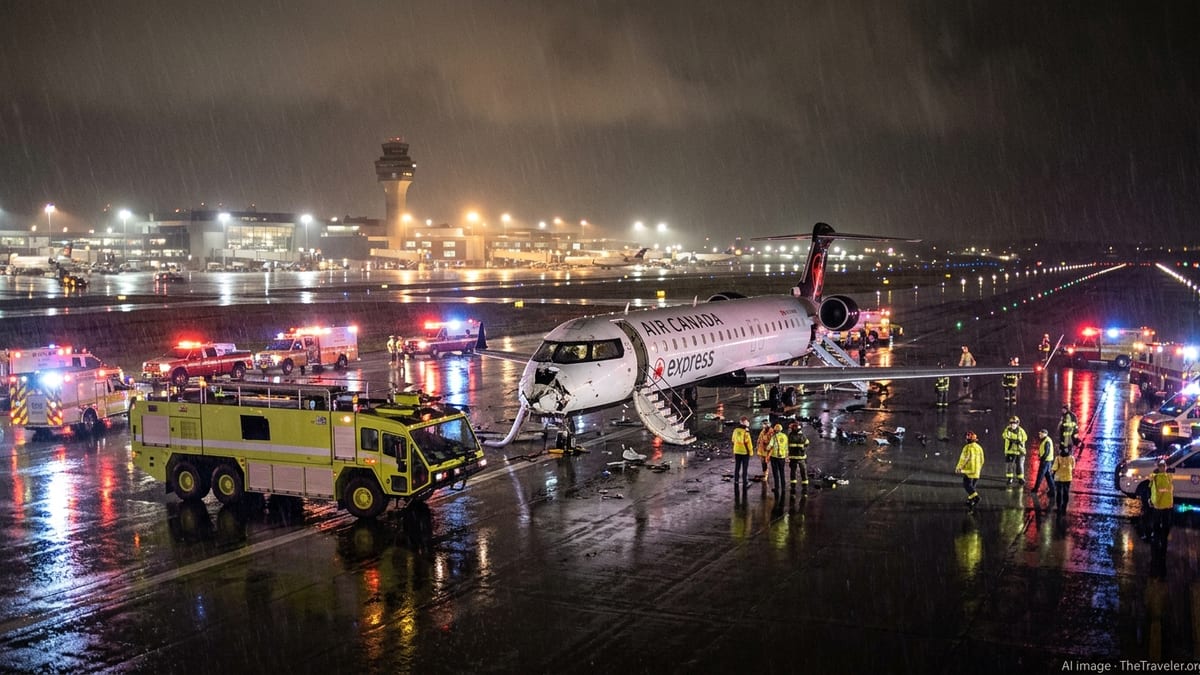
What happened at Boise Airport
Published coverage indicates an aircraft experienced a landing gear problem during arrival at Boise Air Terminal (BOI) on Thursday, September 17, 2026, leaving the aircraft unable to clear the runway quickly and prompting an operational pause while the airfield was secured and the runway area was addressed.
With a runway blocked, airlines and air traffic management typically shift quickly into irregular-operations mode: inbound flights may be held at their origin, placed into airborne holding, or rerouted to alternate airports, while departures can be paused or slowed until the runway is available again.
Boise ultimately resumed normal runway operations after the disabled aircraft was removed and the airfield was inspected and cleared for use, allowing scheduled service to gradually normalize through the remainder of the day.
Delays and diversions ripple through the regional network
During the disruption, some arriving flights diverted to other airports in the region rather than waiting for Boise to reopen. Published coverage and flight-tracking records reflect diversions to Magic Valley Regional Airport in Twin Falls (TWF) among the alternates used during the temporary stoppage.
Even when an airport reopens quickly, the passenger impacts can linger. Aircraft and crews end up out of position, inbound aircraft that diverted must be refueled and cleared to continue, and gate schedules can become compressed as multiple flights try to arrive within a narrower time window.
Travelers scheduled to depart Boise can also feel the effects because the aircraft meant to operate their flight may be arriving late from elsewhere, or may be arriving from an alternate airport after a diversion. That can cascade into rolling delays that extend beyond the initial runway closure period.
Why a landing gear issue can shut down a runway
A landing gear malfunction, blown tire, or related mechanical issue can immobilize an aircraft on the runway or require specialized towing and emergency-response coordination. In those scenarios, the runway environment must be kept clear for safety reasons until responders and equipment can work without conflicting aircraft movements.
Once an aircraft is moved, airports typically conduct a runway inspection for debris or fluid, and may sweep the pavement to remove any material that could pose a hazard to subsequent takeoffs and landings. That inspection step is a key reason a short operational stoppage can last longer than the time it takes to physically move an aircraft.
Boise’s airfield is designed with safety areas and procedures for exactly these kinds of events, but the immediate operational reality is straightforward: if the usable runway is obstructed, commercial traffic must pause until it is cleared and verified safe.
Boise Airport context: growth, infrastructure work, and resilience
The disruption came as Boise Airport continues to modernize and expand airfield and terminal-area infrastructure to keep up with rising demand. Publicly available City of Boise information shows the airport received three FAA grants totaling $74 million in July 2026 to support airfield infrastructure improvements and apron work tied to future growth.
Those grants include funding connected to runway reconstruction and upgraded visual guidance features, part of a broader effort to maintain reliability and safety even as passenger volumes increase. The same City of Boise information also describes how the airport’s traffic has grown significantly over the past decade, with more than 5 million travelers passing through in 2025.
Events like a disabled aircraft are relatively uncommon, but they are also a stress test for how quickly an airport can shift into a recovery posture. The speed of runway clearance, the availability of towing and response resources, and the ability of nearby airports to accept diversions all affect how fast schedules stabilize.
What travelers should do after an unexpected runway stoppage
For passengers traveling in or out of Boise following the September 17 disruption, the most practical step is to check the operating airline’s app or flight status tools for aircraft routing changes, updated departure times, and gate information, because recovery sequencing can change throughout the day.
If an inbound flight diverts, travelers should be prepared for a longer-than-usual timeline even after the runway reopens, since the diverted aircraft may need refueling, crew duty-time checks, and a new departure slot to continue to Boise. In some cases, airlines may choose to bus passengers from an alternate airport, but that varies by carrier and operational constraints.
Finally, travelers with tight connections or time-sensitive plans may want to build in extra buffer time after any airport-wide interruption, since the secondary effects can persist as airlines reposition aircraft and crews back onto their planned schedules.