


The short hop from Soufrière town to Anse Chastanet is one of Saint Lucia’s most popular mini-journeys, linking a buzzing Caribbean fishing town with a secluded bay below the Pitons. It is only about 2 kilometers by road, yet the combination of steep hills, potholes, and limited public transport means visitors often underestimate how much planning this transfer needs. Whether you are staying at Anse Chastanet or Jade Mountain, or just heading up for a day of snorkeling, this guide explains your taxi, water taxi and self-drive options with realistic costs, timings and practical advice.
Get the latest updates straight to your inbox!
Understanding the Route from Soufrière to Anse Chastanet
Soufrière sits on Saint Lucia’s west coast, roughly in the middle of the island, with Anse Chastanet tucked into a small cove just northwest of town. The resort and public beach lie on a dead-end road that peels off from the main Soufrière highway and climbs over a ridge before dropping steeply down to the sea. The distance is short, generally quoted at about 2 kilometers or a little over 1 mile, and driving time in light traffic is often 10 to 15 minutes. In practice, the state of the road and the type of vehicle make more difference than the distance itself.
The access road serves not only Anse Chastanet Resort but also Jade Mountain, a cluster of villas and small guesthouses, and local traffic heading to the beach. At peak times you may meet delivery trucks or staff buses navigating the same narrow, winding route. Drivers routinely slow to walking pace to pick their way around potholes, and passing an oncoming vehicle sometimes means easing into a lay-by or reversing to a wider spot. This is normal for the area and is one of the reasons many travelers choose to rely on local taxi drivers instead of renting a car.
There is no coastal footpath from Soufrière to Anse Chastanet. To walk, you must use the same steep road vehicles use. That road is fully paved, but it is hilly, with limited shade in some sections, and there are no formal sidewalks. For confident walkers it can be a rewarding climb with views back to Soufrière bay, but for most visitors, especially in the midday heat, it is a challenging workout rather than a casual stroll.
Taxi Options: Land Taxis from Soufrière
Land taxis are the most straightforward way to travel between Soufrière and Anse Chastanet, particularly if you are carrying luggage, traveling with children, or arriving after dark. Soufrière has a cluster of licensed taxis that operate from the town center and waterfront, and most hotels or guesthouses can call a driver they work with regularly. Visitors commonly use local operators such as Junior’s Taxis and Tours or independent drivers recommended by villas and small hotels, who often publish sample price lists for transfers in the Soufrière area.
Because the distance is short, fares for the Soufrière to Anse Chastanet run are typically priced per trip rather than strictly per kilometer. As of 2026, many visitors report paying in the region of 20 to 30 US dollars each way for a private taxi between a hotel in or near Soufrière and either Anse Chastanet or Jade Mountain for 1 to 2 passengers, with a modest increase for larger groups. Some villa-focused drivers price this as part of a wider package, such as a round trip from a hillside rental down to Soufrière town with optional stops and waiting time.
Standard practice in Saint Lucia is to agree the fare before you set off. Drivers may quote in Eastern Caribbean dollars or US dollars; clarify the currency and whether the price is per car or per person. For example, a couple staying at a hillside guesthouse 5 minutes from Soufrière might agree a rate of 25 US dollars for a one-way evening transfer to Anse Chastanet, or 40 to 50 US dollars for a round trip including a late-night pickup after dinner. Cash is the norm, although a few larger taxi outfits will accept cards if arranged in advance.
From a timing perspective, it is wise to allow 20 to 25 minutes door to door, even though the ride is usually closer to 10 or 15 minutes. This gives a buffer for your driver to navigate the narrower stretches safely and to pause for oncoming traffic. If you are connecting with an excursion boat or spa appointment at the resort, build in extra time during rain, when potholes can fill with water and visibility drops, slowing traffic still further.
Water Taxis: Arriving by Sea from Soufrière
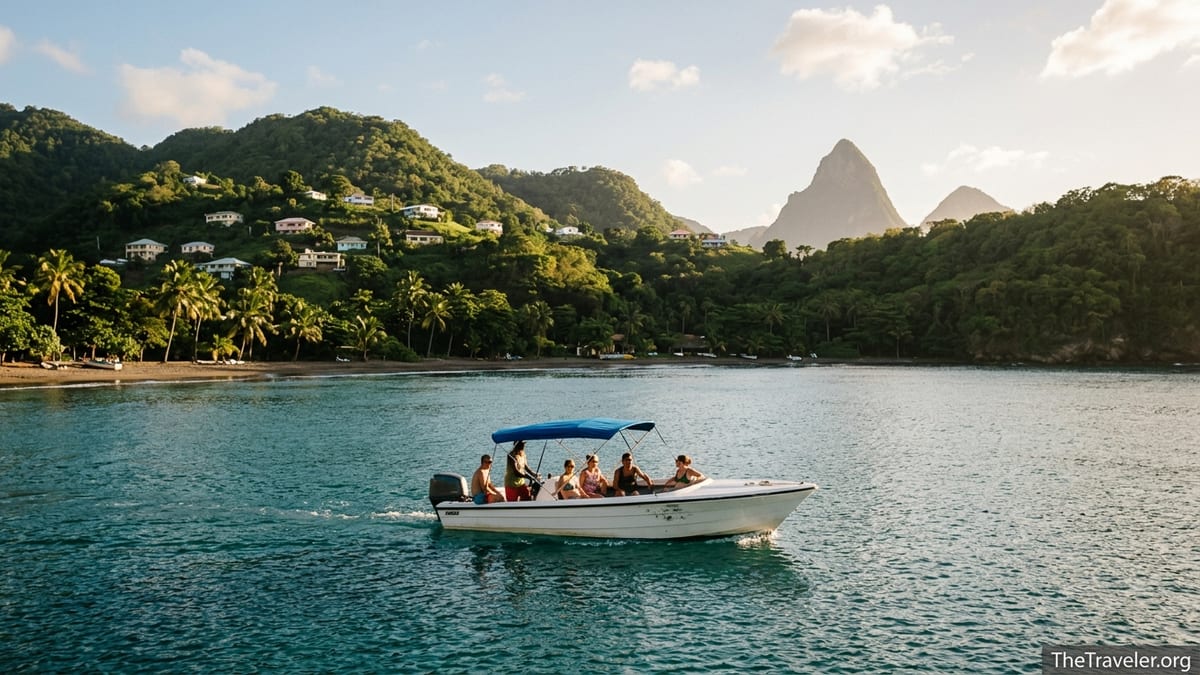
Water taxis are an attractive alternative, particularly for day visitors staying in or near Soufrière who want to turn a simple transfer into part of the experience. Several small operators run out of Soufrière’s waterfront and beach park, using open fiberglass speedboats or covered launches. They typically run short hops to nearby beaches such as Anse Chastanet, Anse Mamin and Sugar Beach, as well as longer trips up the coast toward Marigot Bay or Rodney Bay.
For the short Soufrière to Anse Chastanet run, the on-water time is usually about 10 minutes, sometimes less in calm conditions. Boats pull directly up to the sand near the resort pier, so you step off almost at the waterline. Recent traveler reports and local guides suggest that typical prices for this short hop fall in the rough range of 10 to 20 US dollars per person each way, with some boatmen offering bundled round-trip deals with a pre-arranged pickup time. Exact pricing varies by operator, group size and season, and it is common to negotiate slightly lower rates for groups of four or more.
In practice, a couple might walk down to the Soufrière waterfront mid-morning, speak to a few boatmen along the beach, and agree on a round-trip transfer to Anse Chastanet for something like 40 to 60 US dollars total, including a late afternoon pickup. For comparison, another pair sharing a boat from Anse Chastanet down to Sugar Beach and back could pay 80 US dollars or more for the longer run. Regardless of the route, the key is to confirm the price, currency and timing up front and to exchange mobile numbers if you have local coverage so you can message if plans change.
Safety-wise, look for basic signs of professionalism: life jackets on board, a captain who seems sober and experienced, and a vessel in decent condition. Ask about sea conditions if you are prone to motion sickness; the west coast is usually calm, but afternoon chop can make the short ride surprisingly bouncy. For families with very young children or anyone uncomfortable with small boats, a land taxi may feel more secure, especially in squally weather.
Driving Yourself: Rental Cars and the Anse Chastanet Road
Some visitors decide to rent a car for their time around Soufrière and use it for the run up and down to Anse Chastanet. This offers maximum flexibility, especially if you plan to explore multiple viewpoints, waterfalls and restaurants scattered across the hills. However, the combination of left-hand driving, steep grades and heavily potholed surfaces means this is not a casual choice. Even seasoned drivers from North America and Europe describe the Anse Chastanet road as one of the bumpiest they have ever experienced, joking that it feels at times like there is more pothole than pavement.
The road is paved but narrow and winding, with tight corners and a few blind bends. In dry weather, a compact car can technically make the trip, and some rental agencies and villa owners confirm that guests do this regularly. However, many experienced locals recommend a vehicle with higher ground clearance such as a small SUV, since this allows you to straddle or avoid deeper potholes and reduces the risk of scraping the underside. One villa operation based near the Anse Chastanet road highlights that guests driving standard passenger cars can manage the route, but only if they take it slowly and avoid driving during or immediately after heavy storms, when water can obscure the worst ruts.
Travel times by rental car are similar to a taxi, around 10 to 15 minutes each way from Soufrière, but you should budget another few minutes to navigate parking at the beach or resort. If you are not staying at Anse Chastanet or Jade Mountain, you will generally park in a designated area above the beach and walk down. Check in advance whether your accommodation provides guidance on where non-guests can park and whether there are any current restrictions.
Rental car costs in Saint Lucia vary by season, but it is common to see daily rates in the ballpark of 60 to 90 US dollars for a small SUV, including basic insurance but excluding fuel and the mandatory local driving permit. If your plan is simply to go back and forth between Soufrière and Anse Chastanet, renting a car purely for this leg rarely makes financial sense. A more typical scenario is that travelers rent a car for several days to cover airport transfers, excursions to other parts of the island, and local pottering, with the Anse Chastanet run as one small piece of a broader driving itinerary.
Road Conditions, Walking Limits and When to Skip the Hike
On paper, a 2 kilometer hill walk between Soufrière and Anse Chastanet sounds manageable for many travelers. The reality is more demanding. The road climbs steeply out of town before dropping again toward the sea, with gradients that can feel punishing in the tropical sun. There are no continuous sidewalks, and although vehicle speeds are generally low due to the potholes, there are a few blind corners where it is important to stay alert and walk single file on the edge of the pavement.
Fit, experienced walkers who are comfortable with hills often enjoy this route in the cooler parts of the day. For example, a couple staying in a hillside guesthouse above Soufrière might walk down to the beach in 30 to 40 minutes early in the morning, carrying just a daypack and water, then catch a taxi or water taxi back up in the late afternoon when the sun is hotter and legs are tired. Others combine a downhill walk from a villa in the Anse Chastanet neighborhood into town with a stop at the market, then hire a taxi for the return climb.
For many visitors, particularly those not used to steep hills, significant heat or high humidity, walking the full distance is not advisable. Anyone with heart, joint or mobility issues should plan to use a taxi instead. The lack of shade in some sections, combined with limited places to refill water, means dehydration and heat exhaustion are real risks if you set off casually at midday. Local hosts frequently remind guests that while Soufrière itself is walkable, the surrounding roads to resorts and villas rise quickly into the hills, so what looks close on a map may be far more strenuous on foot than it appears.
There is currently no safe shoreline route between Soufrière and Anse Chastanet. Cliffs and private land interrupt the coast, and any attempt to pick a way along the rocks is both unsafe and discouraged. If you are tempted by the idea of a coastal approach, the safe and legal way to enjoy that experience is to take a water taxi instead and see the Pitons and coastline from the sea.
Hotel Shuttles, Transfers and Package Arrangements
Guests staying at Anse Chastanet or its sister property Jade Mountain typically rely on the resorts’ own transfer services for arrivals and departures from the airport and for trips into Soufrière and nearby attractions. These properties sit at the end of the same access road, and their shuttles are driven by staff who navigate the route multiple times a day. While the cost is higher than hiring a local taxi independently, many guests value the convenience and the fact that the transfer cost can be bundled into their booking or added to the room bill.
For instance, a couple arriving at Hewanorra International Airport might pre-book a resort-organized car transfer to Anse Chastanet that takes about 75 to 90 minutes, then rely on the resort’s shuttles for complimentary or fee-based trips down to Soufrière for dinner. Policies vary over time, so it is important to check current details with the property, but it is common for upscale hotels in the Soufrière area to offer at least some scheduled shuttles into town or to nearby sights, such as the Sulphur Springs or Diamond Falls, for guests who do not want to rent a car.
Smaller hotels, guesthouses and villas around Soufrière generally do not operate their own vehicles but almost always have long-standing relationships with reliable drivers. When you book, it is worth asking whether your host can arrange transfers to and from Anse Chastanet and what the approximate cost will be. Many hosts share a simple rate sheet that lists typical taxi prices for common routes: Soufrière to Anse Chastanet, Soufrière to Sugar Beach, Soufrière to the Tet Paul Nature Trail, and so on, so you can budget ahead.
Packages that combine accommodation, excursions and transport can also be good value if you plan to move around frequently. For example, a villa might offer a “sand and supper” evening where a driver takes you to Anse Chastanet beach in the afternoon, waits while you swim and watch the sunset, then brings you back after dinner at the beachside restaurant for a fixed price that is slightly lower than booking each leg separately. These kinds of arrangements smooth out the logistics and remove the need to negotiate individual fares late in the evening.
Returning After Sunset: Safety, Visibility and Night-time Options
Many of the most memorable moments at Anse Chastanet involve the late afternoon and early evening: snorkeling as the light softens, sipping a drink at the beach bar, or staying for a long dinner with the Pitons silhouetted against the sky. If you are not staying at the resort, planning your return to Soufrière after sunset is essential, because both the access road and the short sea route feel very different in the dark.
On land, the main concerns at night are reduced visibility, occasional patches of broken pavement and the possibility of rain making potholes harder to judge. Most visitors find it comfortable to rely on a local taxi driver rather than driving themselves after dark, especially on their first few nights on the island. Booking your return trip in advance is wise. If your driver drops you at Anse Chastanet in the late afternoon, agree a specific pickup time and meeting point, for example, “9:00 pm at the main reception area,” and make sure both of you have a way to contact each other in case your plans change.
Water taxis can and do operate after sunset, but in practice many boatmen prefer to finish their day before it is completely dark, particularly outside of peak tourist season. Night-time sea conditions can be harder to read, and navigation requires more care. If you love the idea of returning to Soufrière under the stars by boat, arrange it specifically with a reputable operator, confirm that the boat has proper lighting and safety equipment, and have a backup plan on land in case the weather turns or the captain decides conditions are not suitable.
Personal safety in and around Soufrière is, for most visitors, more about common-sense precautions than specific threats. The town is used to tourists coming and going to dinner or bars in the evening, and many travelers report feeling comfortable walking short distances in pairs or groups. That said, walking the hilly road between Soufrière and Anse Chastanet after dark is not recommended because of its poor lighting, blind corners and lack of sidewalks, rather than because of crime. After a relaxed sunset on the beach, the easiest and safest option almost always remains a pre-booked taxi or resort shuttle back to your accommodation.
The Takeaway
Getting between Soufrière and Anse Chastanet is a small but important piece of a trip to Saint Lucia’s west coast. The journey covers only a couple of kilometers, yet the mix of steep terrain, rough pavement and limited public transport means it pays to think ahead. Land taxis are reliable, relatively quick and not unreasonable in cost when you consider the terrain and expertise involved, especially if you agree your fare clearly in advance. Water taxis transform the transfer into a mini-boat trip, usually for similar or slightly higher pricing per person, and are often the most enjoyable option for day visitors.
Driving yourself is certainly possible, particularly with a higher-clearance rental vehicle, but it comes with caveats: left-hand traffic, challenging gradients and potholes make this better suited to confident drivers who want full independence rather than those simply focused on a comfortable beach transfer. Walking the entire route is best reserved for fit travelers who understand the heat and hills and who are content to tackle the climb in cooler hours, while everyone else will be happier and safer leaving the hills to the vehicles.
Whichever mode you choose, the essentials stay the same. Build in a little extra time, especially in wet weather or at night. Confirm prices and pickup times before you leave. Let your accommodation or resort help with arrangements when in doubt. With those basics in place, the short journey between Soufrière and Anse Chastanet becomes less of a logistical hurdle and more of a memorable part of your Saint Lucia story, whether you are climbing a bumpy hillside road, skimming across the bay by boat or watching the lights of Soufrière twinkle as you head back after a perfect beach day.
FAQ
Q1: How long does it take to get from Soufrière to Anse Chastanet by taxi?
In normal conditions, the drive usually takes about 10 to 15 minutes each way, but it is sensible to allow up to 20 or 25 minutes in your schedule to account for slow sections and traffic.
Q2: What does a typical land taxi cost between Soufrière and Anse Chastanet?
Recent visitors often report paying roughly 20 to 30 US dollars each way for 1 to 2 passengers, with slightly higher prices for larger groups or late-night returns; always confirm the exact fare beforehand.
Q3: How much is a water taxi from Soufrière to Anse Chastanet?
Short water taxi hops from Soufrière to Anse Chastanet commonly fall in the range of about 10 to 20 US dollars per person each way, with some operators offering negotiated round-trip deals that work out a bit cheaper per leg.
Q4: Is the road from Soufrière to Anse Chastanet really that bad?
The road is paved but narrow, steep and heavily potholed in places, so most drivers take it very slowly; it is manageable with care, especially in a higher-clearance vehicle, but it can feel rough and bumpy if you are not used to such conditions.
Q5: Can I walk from Soufrière to Anse Chastanet?
Yes, it is physically possible to walk the roughly 2 kilometer road, but it is steep, can be very hot, and lacks sidewalks, so it is recommended only for fit walkers who are comfortable with hills and plan to go during the cooler parts of the day.
Q6: Is it safe to return from Anse Chastanet to Soufrière after dark?
Most visitors choose to use a pre-booked taxi or resort shuttle after dark; the main issues at night are poor lighting and rough pavement rather than specific safety concerns, so walking the road is not advised once the sun has set.
Q7: Should I rent a car just to go between Soufrière and Anse Chastanet?
Renting a car purely for this short, hilly route rarely makes financial sense; it is usually better value to rely on taxis or water taxis unless you plan to use a rental extensively for exploring other parts of the island.
Q8: Do Anse Chastanet and Jade Mountain offer their own transfers?
Yes, these resorts typically arrange their own paid transfers from the airport and can organize trips into Soufrière and nearby attractions, so guests often find they do not need to arrange separate transport unless they want additional flexibility.
Q9: Are there public buses between Soufrière and Anse Chastanet?
No, the public minibus system serves main roads and town-to-town routes and does not run down the private access road to Anse Chastanet, so visitors rely on taxis, resort shuttles, water taxis or walking.
Q10: How far in advance should I book my taxi or water taxi?
For simple daytime trips, arranging transport a few hours ahead is usually enough, but for late-night returns, busy holiday periods or special dinners it is smart to book earlier in the day so you can secure a reliable driver and agree your pickup time.