


Landing at Boston Logan International Airport and just wanting to reach your hotel without thinking about subway maps is a familiar feeling. Taxis are still the most straightforward way to get from Logan to downtown Boston, especially if you are jet-lagged, arriving late at night, or juggling heavy luggage. This guide walks you step by step through finding the official taxi ranks, understanding fares and surcharges, choosing hotels with easier taxi access, and knowing when a cab actually makes more sense than public transport.
Get the latest updates straight to your inbox!
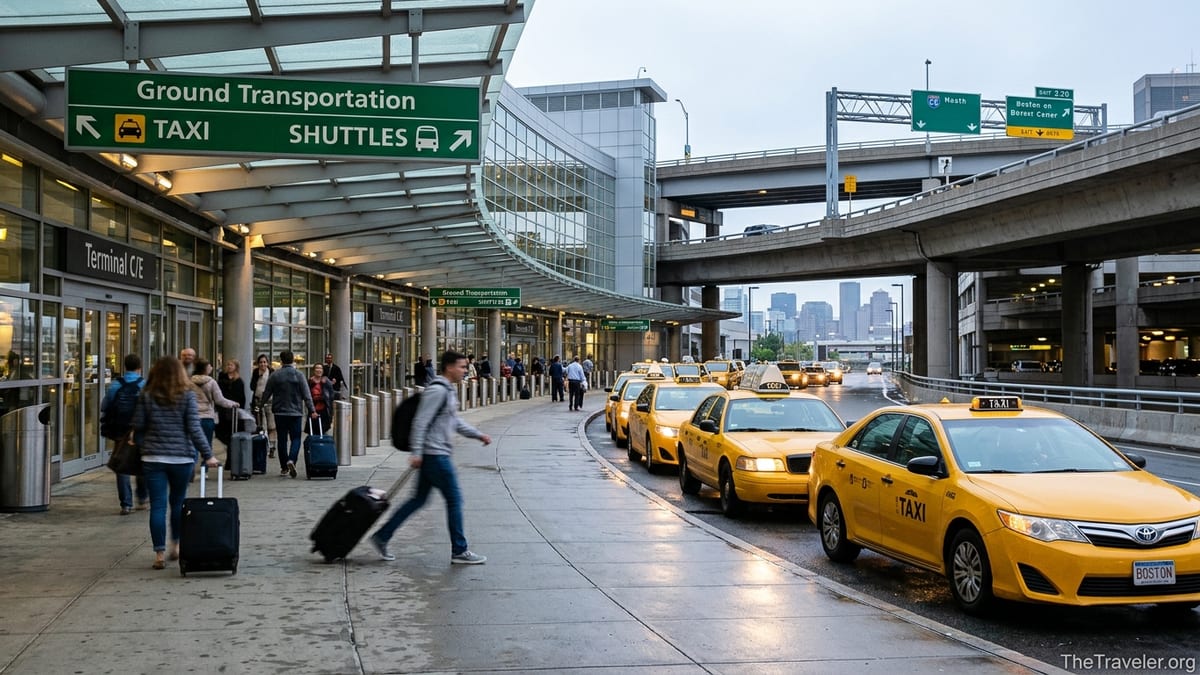
Where to Find Official Taxi Ranks at Logan
All official airport taxis at Boston Logan operate from clearly signed taxi stands on the arrivals level of each terminal. When you exit baggage claim at Terminals A, B, C, or E, follow the green "Ground Transportation" and "Taxi" signs. These will lead you outside to marked islands or curb areas where a Massport taxi dispatcher manages the queue, so you do not need to call a taxi or negotiate in advance.
At Terminal A, serving mainly Delta and a few partner airlines, arrivals are on the lower level. After collecting your bags, walk straight out through the sliding doors, cross to the traffic island, and you will see the designated taxi area, typically with yellow cabs lined up and a dispatcher in a reflective vest. Terminal B has two separate arrival zones; in both cases you follow the same Ground Transportation signage to reach the stand used by American, United, and other domestic carriers.
Terminal C, which handles JetBlue and several other domestic flights, and Terminal E, the international terminal, also have taxi ranks directly outside the arrivals level. At Terminal E, the stand is just across the service road from the main exit doors, which is convenient if you are arriving on overnight flights from Europe. If in doubt, ask any airport staff where the "taxi stand" is and avoid going up to random cars that solicit you inside the terminal; licensed cabs are required to use the official stands.
Massport employs ground transportation agents at each terminal who keep lines moving, direct larger parties to suitable vehicles, and can tell you roughly what a downtown trip should cost. This organized system means you typically join a single queue and take the next available licensed Boston taxi, instead of choosing a company yourself at the curb.
What a Taxi from Logan to Downtown Really Costs
Boston taxi fares are regulated by the city, so all licensed cabs use the same meter structure. The meter starts at a base "drop" charge of around 2 to 4 dollars, then increases by distance and time. Recent schedules indicate a base fare of about 2.60 to 3.80 dollars, with distance charges of roughly 2.8 dollars per mile and a per-minute waiting time component when the car is stopped in traffic. On top of this, airport trips include tunnel or bridge tolls and a Massport taxi pool fee, which together usually add around 4 to 5 dollars to the meter when leaving Logan.
In practice, most travelers going from Logan to central downtown neighborhoods such as the Financial District, Government Center, or North End can expect to pay in the region of 30 to 45 dollars including tolls but before tip, depending on traffic. For example, a mid-afternoon ride from Terminal E to a hotel near Faneuil Hall, roughly 4 miles away, might show 22 to 28 dollars on the meter plus about 4.50 to 4.90 dollars in tolls and airport fees. With a typical 15 to 20 percent tip, the total is commonly around 35 to 40 dollars.
Hotels a little farther out, such as in Back Bay or around Fenway, often fall in the 35 to 50 dollar range including tolls and tip. Late-night rides with almost no traffic can be noticeably cheaper, while weekday rush hour journeys can cost more because the meter keeps running in stop-and-go congestion. There are no official flat fares for downtown, so if a taxi driver proposes a lump-sum price instead of using the meter, you can politely insist the meter be switched on or choose another cab from the rank.
Remember that luggage itself should not incur extra fees in Boston; the standard rules state there is no charge for suitcases. You may, however, pay extra if the driver needs to take a longer toll route at your request. Always check that any additional amount added at the end corresponds to a posted tunnel or bridge toll plus the airport taxi pool fee rather than a mysterious "airport surcharge" with no explanation.
Choosing a Hotel Zone With Easy Taxi Access
If you know you will be relying on taxis rather than public transit, some Boston neighborhoods are more convenient than others. The most straightforward areas from Logan are the waterfront and downtown core. A taxi to a hotel in the Seaport District, for example near the Boston Convention and Exhibition Center or along Seaport Boulevard, typically takes 10 to 20 minutes outside peak hours and runs around 30 to 40 dollars including tolls and a modest tip. This area is very direct from the airport via the Ted Williams Tunnel.
Staying in the Financial District, Faneuil Hall, or Government Center also keeps your airport taxi ride short and predictable. Hotels clustered around State Street, Congress Street, and Tremont Street are only a few miles from the airport, so even in heavier traffic you are usually inside the cab for under half an hour. Travelers on tight schedules often prefer these zones because morning departures back to the airport are less vulnerable to backups on the interstate.
Back Bay and the South End, centered around Copley Square, Boylston Street, and Columbus Avenue, are popular with leisure travelers and still reasonably close to Logan. However, reaching these neighborhoods normally involves driving through one of the tunnels and cutting across downtown streets, which can slow things down in the late afternoon or during major events. Expect airport taxi fares in these areas to be slightly higher, often in the high 30s to mid 40s with tip.
If you are attending a game or concert near Fenway Park or staying in Cambridge around Harvard Square or Kendall Square, budget a bit more time and money for your airport transfers. For instance, a taxi from Logan to a hotel near MIT in Kendall Square might cost around 40 to 50 dollars with tip and take 25 to 35 minutes in daytime traffic. The tradeoff is that these neighborhoods are very walkable once you arrive, so you may not need taxis again until your return to the airport.
Late Arrivals, Early Flights, and When Taxis Are Worth It
Boston has a solid network of public transport options to and from Logan, including the MBTA Blue Line via the free airport shuttle, the Silver Line bus to South Station, and Logan Express buses to several suburbs. For solo travelers arriving at midday with just a backpack, these services are cost-effective and reasonably straightforward. But there are situations where a taxi is clearly the easier option.
If you are landing after about 22:00 or on a delayed international flight close to midnight, taxi ranks are often the simplest solution. While the MBTA does continue operating into the late evening, frequencies drop and connections become less convenient, especially if you need to transfer with luggage or shepherd tired children across platforms. In these cases, hopping into a cab at the terminal door and going directly to your hotel in the North End, Back Bay, or Cambridge can easily be worth the extra 30 to 40 dollars.
Families and groups also tend to benefit from taxis. For example, a family of four arriving from Europe with three large suitcases and a stroller would pay multiple individual transit fares, possibly plus a regional commuter ticket if continuing beyond downtown. Splitting a 35 to 45 dollar taxi fare among four people makes the cost more competitive, while avoiding stairs, crowded buses, and repeated transfers. Many standard Boston taxis are sedans, but minivan cabs are common at the airport and can handle extra luggage or bulky sports equipment.
Early morning departures work similarly. If you need to be at your terminal by 05:00 for a 07:00 transcontinental flight, a pre-arranged taxi or simply picking up a cab from downtown at 04:15 means a direct, predictable journey without worrying whether your first subway or bus of the day will be on time. For business travelers staying near South Station or Copley Square, the time saved can justify the fare, particularly when traveling on an expense account.
Luggage, Accessibility, and Traveling With Kids
Boston regulations indicate there is no extra fee for normal luggage in licensed taxis, so you can place suitcases in the trunk without worrying about a per-bag surcharge. Still, it is courteous to organize your baggage quickly at the curb to keep traffic flowing. If you travel with oversized items such as skis or musical instruments, watch for larger taxis or minivan-style cabs at the rank; these typically have more cargo space and sliding doors that make loading easier.
For travelers with mobility issues, taxis have an important advantage over many ride-hail pickups at Logan: they are allowed to pick up directly at the terminal curb. This reduces walking distances compared with some ride-hail zones that require moving to a central garage. A portion of the Boston taxi fleet consists of wheelchair-accessible vans; if you need one, mention this to the dispatcher at the taxi rank and they will either direct you to an accessible vehicle already in line or call one in from the taxi pool. It is sensible to allow extra time during busy periods in case an accessible cab needs to come from a holding area.
Parents should be aware that Massachusetts law does not explicitly exempt taxis from child seat requirements, but in practice many local families use taxis without car seats for short urban trips. To maximize safety and avoid any issues, consider bringing a travel-friendly child seat or a compact booster if your child is the right age and size. Some private car services that operate to and from Logan allow you to pre-book vehicles with child seats for an additional fee, but on-demand airport taxis generally do not carry them by default.
If you are arriving with items like folding strollers or collapsible wheelchairs, most drivers will help you load them into the trunk at no additional charge. In Boston it is customary to tip slightly more, perhaps 18 to 20 percent, when a driver goes out of their way to assist with heavy or awkward baggage, especially in winter weather.
Taxis vs Public Transport and Ride-Hail: Realistic Comparisons
Comparing taxis with other ways of leaving Logan helps clarify when you should choose each option. The MBTA Silver Line bus to South Station is free from the airport and connects to the Red Line, which serves Cambridge and parts of downtown. The Blue Line connection from Airport Station also links to central Boston with a simple transfer to the Orange or Green lines. These options can get a solo traveler from Logan to the downtown area for just a couple of dollars once you leave the free airport section, but you will need to manage luggage on and off buses, escalators, and trains.
Ride-hailing services like Uber and Lyft serve Logan as well, but pickups for most terminal areas are generally routed to a central garage or designated lot rather than directly outside baggage claim. This means following signs, taking an escalator or elevator, and walking a moderate distance to meet your car. In good weather with light baggage this is fine, but in snow, rain, or with mobility challenges, the direct curbside pickup of a taxi can be far more comfortable. Price differences between taxis and ride-hail for a typical Logan to downtown trip are not always dramatic, especially when surge pricing is active after major events or during peak times.
A concrete example helps: a midweek afternoon ride-share estimate from Logan to a Back Bay hotel might show 28 to 40 dollars depending on demand, very close to what a metered taxi would cost with tolls before tip. At quiet times ride-hail can be a little cheaper, while during a snowstorm or holiday weekend surge pricing can push app-based rides above the cost of a traditional cab. If you value door-to-door convenience and predictable access, especially when arriving, taxis are usually the most straightforward option.
On the other hand, if you are a budget traveler staying near a major station like South Station, North Station, or Airport Station on the Blue Line, public transport can bring you within a short walk of your hotel for a fraction of the price. Many younger visitors arriving for conferences or city breaks choose the Silver Line to South Station, then walk or take a short subway ride to their accommodation in Chinatown, the Financial District, or the Seaport, using taxis only in bad weather or late at night.
Practical Tips for a Smooth Taxi Experience
To keep your Logan taxi ride hassle-free, a little preparation goes a long way. Before you land, have your hotel name and street address written down or saved on your phone; Boston has several similar-sounding streets and a clear address helps avoid confusion. When you reach the taxi stand, show the address to the dispatcher or directly to the driver. Most drivers are familiar with major hotels like those around Copley Square, the waterfront, and Kendall Square, but smaller guesthouses may require a quick check on the car’s navigation system.
Payment is straightforward in Boston cabs. By regulation, licensed taxis are generally required to accept credit and debit cards, and most vehicles have card terminals in the back seat. If you prefer to pay cash, that is normally fine as well. It is wise to confirm at the start of the journey if paying by card is acceptable, especially late at night or during very short rides. Tipping is customary: 15 to 20 percent of the total fare is common, slightly more if the driver assists with heavy luggage or provides helpful local advice.
If you suspect that something is not right, such as the driver refusing to use the meter or quoting a suspicious "flat rate" to a nearby neighborhood like the North End or Fenway, you have options. You can calmly insist on the meter being used, ask to be dropped back at the terminal, or note the taxi’s medallion number and later file a complaint with the city’s hackney carriage unit. Official guidance makes clear that licensed taxis in Boston are meant to use the meter for almost all journeys within the metro area rather than inventing their own prices.
Finally, allow a realistic amount of time when returning to the airport by taxi. From downtown or the Seaport, 20 to 30 minutes is typically enough outside rush hour, but during weekday mornings and late afternoons it is prudent to allow 45 minutes or more. From Cambridge, Fenway, or Brookline, give yourself extra breathing room, especially if you are unfamiliar with Boston traffic patterns. Most front desks at major hotels are used to arranging airport taxis and can suggest appropriate pickup times for your specific flight.
The Takeaway
For many visitors, a taxi is the simplest link between Boston Logan Airport and their downtown hotel. With clearly marked taxi ranks at each terminal, regulated meter fares, and drivers who know the local hotel zones well, it is an option that trades a modest increase in cost for a large gain in convenience. Whether you are arriving late, traveling with family, or carrying heavy bags, taxis often remove stress from the first and last miles of your journey.
Approximate fares from Logan to central areas like the waterfront, Financial District, Back Bay, and Cambridge are easy to anticipate, usually in the 30 to 50 dollar range once tolls and a standard tip are included. By choosing hotel locations with straightforward road access, understanding that luggage is not charged extra, and knowing when taxis beat public transit and ride-hail on comfort and reliability, you can make confident, informed choices about how to move between the airport and the city.
FAQ
Q1. How much does a taxi from Boston Logan to downtown usually cost?
For most central downtown hotels, a taxi from Logan typically costs around 30 to 45 dollars including tunnel or bridge tolls but before tip. With a 15 to 20 percent tip, many travelers end up paying roughly 35 to 50 dollars in total.
Q2. Where exactly do I catch a taxi at Logan Airport?
You can find official taxi ranks on the arrivals level outside Terminals A, B, C, and E. Follow the green Ground Transportation and Taxi signs from baggage claim to reach the designated curb or island where Massport dispatchers line up licensed cabs.
Q3. Are there flat-rate taxis from Logan to downtown Boston?
There is no official flat-rate system for downtown destinations. Licensed Boston taxis are expected to use the meter for trips to neighborhoods like the North End, Back Bay, and the Financial District, with tolls and airport fees added at the end.
Q4. Do Boston taxis charge extra for luggage?
Standard rules indicate that normal luggage should not incur extra charges in licensed Boston taxis. Suitcases, backpacks, and small sports equipment can go in the trunk without a per-bag fee, though very large or unusual items may require a larger vehicle.
Q5. Is it cheaper to take a taxi or ride-hail service like Uber from Logan?
Prices overlap. Sometimes ride-hail is slightly cheaper, especially in off-peak times, but surge pricing can make it more expensive than a taxi. Since taxis pick up directly at the terminal curb while many ride-hail pickups use a central garage, some travelers prefer taxis for convenience even if the price is similar.
Q6. How long does a taxi from Logan to Back Bay or Fenway take?
Outside of rush hour, a taxi ride to Back Bay or Fenway usually takes about 20 to 30 minutes. During weekday peak times or major events, allow 40 minutes or more due to congestion in the tunnels and on city streets.
Q7. Can I pay for a Boston taxi by credit card?
Yes. Most licensed Boston taxis are equipped with card terminals and accept major credit and debit cards. It is still a good idea to confirm at the start of the journey if you intend to pay by card, particularly late at night or for very short trips.
Q8. Are there wheelchair-accessible taxis at Logan?
Yes, a portion of the taxi fleet consists of wheelchair-accessible vans. At the taxi rank, tell the dispatcher you need an accessible vehicle and they will direct you to one in the queue or arrange for one to come from the taxi pool. It is wise to allow extra time at busy periods.
Q9. Should I tip my taxi driver from Logan, and how much?
Tipping is customary. Most travelers tip between 15 and 20 percent of the total fare, rounding up a little more if the driver helps with heavy bags, navigates challenging traffic, or provides especially good service.
Q10. When is a taxi better than public transport from Logan?
A taxi is often the better choice if you arrive late at night, are traveling with young children or several heavy bags, have mobility issues, or need a fast, direct ride to an early-morning departure. In these situations, the extra cost is frequently offset by time saved and reduced stress.