


For travelers in New England, the choice of airport is not always automatic. Boston Logan may be the region’s giant, but smaller rivals Providence TF Green and Manchester Boston Regional increasingly tempt flyers with cheaper fares, calmer terminals, and easier parking. Deciding which one actually works best depends on where you live, where you are flying, and how you plan to get there. This comparison looks at flight prices, access to nearby cities, parking, rental cars, public transport, and overall convenience so you can pick the airport that really fits your trip, not just the one you have always used.
Get the latest updates straight to your inbox!
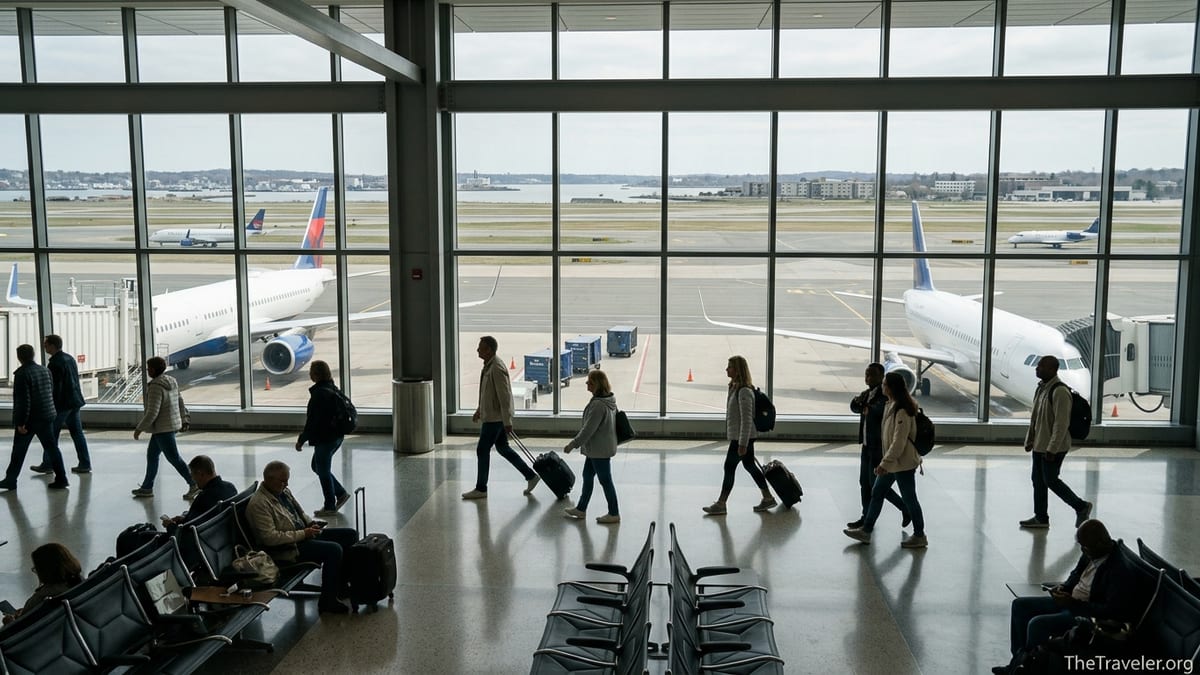
Airport Overview: Size, Airlines, and Where They Shine
Boston Logan International Airport is the undisputed heavyweight in New England. It handles tens of millions of passengers a year and supports a dense network of domestic and international routes. Major U.S. airlines such as American, Delta, United, Southwest, JetBlue, and Alaska all operate significant schedules here, and Logan also hosts long-haul carriers to Europe and beyond. For a traveler trying to reach smaller cities in the Midwest, the West Coast, or Europe without multiple connections, Logan usually offers the most options in terms of both airlines and departure times.
Rhode Island T. F. Green International Airport in Warwick is smaller and far less hectic, but it punches above its weight. It focuses on domestic and near-international service, with carriers like Southwest, American, Delta, Breeze, and others operating routes to major hubs and vacation spots. You are more likely to find nonstop flights to places such as Orlando, Tampa, or Washington National than to remote small markets, but for many leisure travelers in southern New England those are exactly the routes that matter. The airport’s compact footprint can translate into shorter security lines and less time walking through the terminal.
Manchester Boston Regional Airport in New Hampshire serves a catchment that stretches across northern Massachusetts, southern and central New Hampshire, and parts of Vermont and Maine. It is smaller still, with a modest set of nonstop routes typically focused on large hubs and warm-weather destinations. You may find flights to cities like Charlotte, Atlanta, or Orlando, depending on season and airline schedules. For residents of places like Concord, Nashua, or Portsmouth, Manchester can save well over an hour of surface travel compared with driving into Boston, even if it means a connection at a hub.
In broad terms, Logan wins on sheer breadth of service and number of daily departures. Providence and Manchester primarily compete on simplicity, proximity to their local markets, and an experience that often feels more relaxed and predictable. The right choice often comes down to whether you value options and frequency more than ease of use and a shorter drive.
Flight Prices and Availability: When Smaller Airports Save You Money
On average, airfares out of Boston Logan tend to run higher than those from Providence, while Manchester often falls somewhere in between, especially on routes with limited competition. Data from U.S. transportation statistics in recent years show that Providence’s average domestic itinerary fares have often come in below Boston’s, reflecting the strong presence of low-cost carriers and competition on leisure-heavy routes. Travelers regularly report finding roundtrips from Providence to Florida for less than comparable Boston departures, especially during off-peak periods and school weeks that sit outside major holidays.
The picture shifts when you look at business-heavy routes and peak travel windows. For a Monday morning departure to a large hub such as Atlanta or Chicago, Logan’s higher number of daily flights can keep prices surprisingly competitive when booked well in advance, simply because airlines have more seats to fill. For example, a traveler searching a month out might see multiple Boston to Atlanta roundtrips in the 250 to 350 dollar range, while Providence or Manchester could show fewer nonstop options and more itineraries requiring connections. In some cases, the smaller airports can even be more expensive for the same city pair if seats are limited and business travelers are willing to pay for convenience.
Manchester’s pricing can be particularly route-dependent. On leisure routes to Florida, the presence of a low-cost airline can produce very attractive fares, sometimes undercutting Boston when sales are running. Yet on thin routes such as Manchester to a single major hub, fewer daily flights and less competition can push prices up sharply close to departure. It is common for New Hampshire travelers to check both Manchester and Boston when booking, particularly if they are flexible on airport choice and travel time.
One other factor matters in real-world budgets: hidden ground costs. A Logan flight that is 50 dollars cheaper than Providence might not actually save money once you add a 40 or 60 dollar rideshare to East Boston or several days of high parking fees. Conversely, a slightly more expensive ticket from Providence or Manchester can work out cheaper overall if you can park for less, avoid tolls, or get a ride from a nearby friend or family member.
Getting to the City: Access to Boston, Providence, and New England
Logan’s biggest advantage is its direct connection to downtown Boston. The airport is less than five miles from the Financial District and Back Bay as the crow flies. The MBTA Silver Line bus runs from all Logan terminals to South Station, where travelers can connect to the Red Line subway, commuter rail, and Amtrak. Fares are modest by big-city standards and travelers using a reloadable transit card can often transfer between services without paying a full second fare. For someone staying near South Station or in the Seaport, it is realistic to step off the plane and be at a hotel within 30 to 45 minutes during normal traffic levels.
By car, taxi, or rideshare, the drive from Logan to central Boston is short in distance but very sensitive to traffic. A ride to Back Bay on a quiet Sunday afternoon might cost 25 to 35 dollars and take 15 minutes. The same trip in rush hour on a weekday can stretch toward 45 minutes and cost more, particularly since Massport has increased fees on ride-hail pickups and drop-offs at the airport in recent years. For travelers heading beyond Boston, interstate highways such as I-93 and the Massachusetts Turnpike are just across the harbor tunnels, but congestion at peak times is a real planning factor.
Providence TF Green sits just south of Providence in Warwick with direct access to Interstate 95. The drive to downtown Providence typically takes around 15 minutes outside heavy traffic, making it extremely convenient for residents of Rhode Island and nearby Massachusetts communities like Attleboro or Seekonk. For access to Boston, Green Airport has its own MBTA commuter rail station on the Providence/Stoughton Line. Typical travel time from the airport station to Boston’s South Station is around 80 to 90 minutes, and a one-way non-discounted ticket is usually in the low double digits in dollars. Frequency, however, is lower than urban subway standards, and evening or weekend schedules can require close attention.
Manchester Boston Regional is just off Interstate 293 and not far from I-93, giving solid highway access to much of New Hampshire and northern New England. Driving time from Manchester to downtown Boston in good conditions is roughly an hour, though weekday traffic south of the New Hampshire border can easily add another 20 to 30 minutes. Unlike TF Green, Manchester currently lacks direct commuter rail, so travelers going to Boston rely primarily on driving, regional shuttles, or intercity buses that connect to places like South Station or North Station. For residents of Concord, Keene, or the Lakes Region, Manchester often represents a major reduction in driving compared with Logan, even if the ultimate destination is out of state.
Parking: Daily Rates, Long Stays, and Real-World Costs
Parking can dramatically change the calculus of which airport is “cheapest.” Logan’s official on-airport parking in central garages is among the most expensive in the region. Depending on which garage and program you use, daily maximums can easily run into several dozen dollars a day. It is easy for a week-long trip to accrue a parking bill in the low hundreds of dollars if you choose the most convenient on-site garages. Some travelers offset this by using off-airport commercial lots that run shuttle buses to the terminals, which often cut daily costs by a meaningful margin at the price of extra transfer time.
Providence TF Green tends to offer lower daily parking rates than Logan, particularly in long-term surface lots. While exact charges change periodically, travelers commonly find weeklong stays that total significantly less than comparable parking near Logan. In practice, a Rhode Island family heading for a seven-day vacation might pay something on the order of tens of dollars per day for official airport parking, and potentially less by pre-booking off-site lots or packages with nearby hotels. Commuter rail riders also have the option of parking at the MBTA garage attached to the TF Green station, which has its own daily structure that can be attractive for three to five day trips.
Manchester Boston Regional is often the clear winner for parking affordability. Official guidance from the airport shows its garage daily maximum set in the mid-teens in dollars, with long-term parking consolidated into this structure in recent years. That means a full week in the main garage can often cost less than two days in a prime Logan garage. Manchester also periodically runs parking promotions, such as free-day credits for future stays when you park during specific months. For New Hampshire residents who value parking directly at the terminal without breaking their budget, this can be a decisive advantage.
Of course, travelers can also sidestep airport parking entirely. In Boston, park-and-ride lots attached to commuter rail stations or suburban garages sometimes offer lower daily rates than Logan, making it practical to leave your car in the suburbs and take a train or bus into the city. In Providence and Manchester, friends and relatives are often willing to provide rides because the airports are less intimidating to drive to than Logan’s tight loops and busy tunnels. When comparing total trip cost between airports, it pays to run a realistic calculation that includes parking, tolls, and fuel, not just airfares.
Ground Transport and Rental Cars: Moving Beyond the Terminal
At Logan, rental car facilities are grouped in a centralized Rental Car Center served by dedicated shuttle buses from all terminals. Major brands such as Enterprise, Hertz, Avis, Budget, National, and Alamo maintain large fleets here. Daily rental rates can be competitive thanks to high volume, but taxes and airport concession fees add a noticeable surcharge compared with off-airport rental locations. In practical terms, a compact car that rents for 50 dollars a day off-airport in the Boston suburbs might price in the 60 to 70 dollar per day range when collected at Logan, especially once local fees are included.
Providence TF Green also offers a consolidated rental car facility directly connected to the terminal by an elevated walkway. The experience is often faster than Logan simply because the passenger volume is lower, meaning shorter lines at counters and quicker exits from the garage. For travelers planning to drive around Rhode Island, Cape Cod, or eastern Connecticut, starting from Providence can simplify routes and avoid Boston’s dense city traffic. Rental prices here can be similar to or slightly lower than Boston depending on demand, and taxes are generally more modest than in a larger metropolitan airport.
Manchester’s rental car area sits adjacent to the terminal building, and walking distances from baggage claim to the lots are usually just a few minutes. Multiple national brands operate there, though fleets are smaller than at Logan or TF Green. This can limit last-minute selection of specific vehicle types, but it also means the pickup and return process is typically fast. For trips focused on the White Mountains, the Lakes Region, or rural New Hampshire, starting from Manchester keeps you closer to your destination and out of Boston’s traffic entirely.
Beyond rental cars, all three airports are served by taxis and rideshare services such as Uber and Lyft. Logan’s large rideshare operation is subject to per-ride surcharges that have increased over time, making a typical ride to downtown more expensive than a similar-distance trip from a neighborhood. In Providence, rideshare from TF Green to downtown Providence often comes in at a noticeably lower cost than a Logan ride to downtown Boston, largely due to both distance and fee differences. Manchester sits farther from Boston, so a rideshare to the city can be costly, but local trips within New Hampshire are often reasonably priced and free of big-city surcharges.
Public Transport and Car-free Travel
Logan is by far the best-connected of the three airports for travelers determined to go car-free. The MBTA Blue Line subway connects to Logan via the Airport station, linked to the terminals by frequent free shuttle buses. The Silver Line bus offers a direct connection to South Station, with luggage racks and dedicated airport routing. From there, travelers can ride the Red Line subway, multiple commuter rail lines, or long-distance buses to points across New England. For many visitors staying in downtown Boston or Cambridge, these transit options eliminate any real need for a rental car.
Providence TF Green has useful, if more limited, public transport. Rhode Island’s public bus system operates several routes between the airport and downtown Providence, with fares typically just a few dollars each way. From Providence’s central train station, Amtrak and the MBTA commuter rail extend connections north to Boston and south along the Northeast Corridor. The MBTA station at TF Green itself allows some travelers to step off a plane, walk to the platform, and board a commuter rail train directly to Boston, though schedules are sparse enough that many people time their arrivals and departures carefully.
Manchester is the least transit-rich of the three. There is local bus service in the Manchester area, and some regional buses or shuttles link the airport to other New Hampshire destinations and, in some cases, to Boston. However, there is currently no MBTA commuter rail station at the airport, and intercity rail service in New Hampshire is limited. For most Manchester users, travel to and from the airport is car-based, whether in a private vehicle, taxi, shuttle, or rideshare. For travelers comfortable driving, this is often acceptable, but it is less attractive for visitors trying to rely entirely on trains and buses.
If you are a traveler planning to stay mostly in city centers without a car, Logan is usually the strongest choice for Boston, Cambridge, and Somerville, while TF Green can work well for stays in Providence. Manchester is better matched to trips where renting a car is already part of the plan, particularly vacations in the White Mountains or visits to smaller northern towns.
Terminal Experience, Crowds, and Convenience
Logan’s scale is both a blessing and a challenge. On the positive side, its terminals offer a wide range of dining, shopping, and lounges. You can grab a quick lobster roll before a flight, sit in an airline club, or pick up higher-end travel items at specialty shops. On the downside, security lines at peak times can be long, and walking distances between some gates, especially in larger terminals, are substantial. Travelers connecting between international and domestic flights at Logan can face additional time through security or customs, and it is wise to allow generous layovers.
Providence TF Green and Manchester, by contrast, tend to have a calmer, more compact feel. In Providence, you can often step from curb to gate in less than 30 minutes at off-peak times, especially if you are checked in online and traveling with just a carry-on. Manchester’s terminal is similarly simple, with most gates just a short walk from security. This makes both airports particularly appealing for families with young children, older travelers, or anyone who finds the crowds at Logan overwhelming.
For early morning departures, smaller airports can be much less stressful. A 6 a.m. flight out of Logan can require departing your home unusually early to account for traffic, security, and potential check-in delays. That same 6 a.m. departure from Providence or Manchester might allow you to leave home significantly later while still arriving with a comfortable buffer. In snowy weather, the ability to park close to the terminal and avoid congested urban highways can also feel like a major advantage.
The trade-off is that Logan’s flight frequency offers more backup options if something goes wrong. If your first morning flight from Logan is canceled, there may be several later departures to the same hub or alternative connections the same day. From Providence or Manchester, a single canceled flight can sometimes mean either a long wait or a reroute through another airport. Travelers with tight onward connections, important meetings, or cruise departures should weigh this resilience when picking an airport.
The Takeaway
For travelers whose priority is options, flexibility, and strong public transport into Boston itself, Logan usually works best. It offers the widest range of airlines, the most nonstop destinations, and the most backups when weather or mechanical issues disrupt the schedule. If you are staying in downtown Boston or Cambridge, arriving at Logan lets you reach your hotel quickly on the Blue Line or Silver Line without renting a car, which keeps overall costs predictable even when airfares run a bit higher.
Providence TF Green is often the sweet spot for southern New Englanders who value a calmer airport and potentially lower fares, especially on leisure routes. Its quick access to Providence and reasonable commuter rail link to Boston make it attractive for trips that include both cities, provided you are comfortable managing train schedules. Parking is usually cheaper than Logan, rental car access is easy, and the terminal rarely feels as intense as Logan on a busy holiday weekend.
Manchester Boston Regional shines for travelers in New Hampshire and northern Massachusetts who want to spend more time in the air and less time in a car. Its lower parking costs, simple layout, and uncongested approaches make it ideal for weeklong trips, particularly if you live north of the Massachusetts border. The trade-off is fewer routes and less frequent flights, so it pays to book early and keep an eye on alternative options in case of disruptions.
Ultimately, the best New England airport is the one that minimizes your total travel time, total cost, and total stress for a given trip. That may be Logan for a complex international itinerary, Providence for a family vacation to Florida, or Manchester for a ski week in the Rockies. Comparing airfares is only the first step. Add in parking, ground transport, and your own tolerance for crowds, and you will quickly see which of these three airports actually works best for you.
FAQ
Q1. Is flying from Providence or Manchester usually cheaper than flying from Boston Logan?
In many cases, Providence and sometimes Manchester offer lower fares on leisure routes, but Logan can be cheaper on busy business routes or when sales target larger markets. It is smart to price all three for your specific dates.
Q2. Which airport is best if I am staying in downtown Boston without a car?
Boston Logan is generally the best choice because the MBTA Blue Line and Silver Line connect the airport directly to downtown and South Station, making car-free travel straightforward.
Q3. How much can I realistically save on parking by using Providence or Manchester instead of Logan?
Depending on current rates, a week of parking at Logan’s main garages can easily cost several times what you might pay at Manchester and noticeably more than long-term options at Providence, often translating into savings of many tens of dollars.
Q4. Does Providence TF Green have a direct train to Boston?
Yes. The MBTA commuter rail serves the airport’s station on the Providence/Stoughton Line, with trains running to Boston’s South Station, though service is less frequent than Boston’s subways.
Q5. Is Manchester Boston Regional Airport convenient for reaching downtown Boston?
Manchester is most convenient for New Hampshire and northern Massachusetts. To reach downtown Boston you typically need to drive, take a shuttle, or use an intercity bus, and travel times can run around an hour or more depending on traffic.
Q6. Which airport is easiest for families traveling with young children?
Providence and Manchester often feel easier for families because of shorter walks, smaller crowds, and simpler parking, though Logan offers more food choices and backup flights if plans change.
Q7. If my flight is canceled, which airport gives me the best chance of same-day rebooking?
Logan usually provides the best odds of same-day alternatives thanks to its larger number of daily flights and carriers, especially on routes to major hubs like New York, Chicago, or Atlanta.
Q8. Are rental cars cheaper at Providence or Manchester than at Logan?
Base rental rates can be similar across all three, but taxes and airport fees at Logan often push total costs higher, so collecting a car at Providence or Manchester may be slightly cheaper overall.
Q9. Which airport should I choose for a trip focused on New Hampshire’s mountains and lakes?
Manchester Boston Regional is usually the most convenient starting point for the White Mountains, Lakes Region, and much of rural New Hampshire, keeping you closer to your destination and away from Boston’s urban traffic.
Q10. Is it worth driving from New Hampshire or Rhode Island to Logan just for better flight options?
It can be worth it for complex itineraries, international trips, or when prices at Logan are significantly lower, but you should factor in extra driving time, parking costs, and the possibility of heavy traffic before deciding.