


Brisbane Airport is one of Australia’s main gateways to Queensland’s beaches and hinterland, and for many visitors the easiest way to explore is with a rental car. Whether you are planning surf days on the Gold Coast, a relaxed Sunshine Coast escape, or a road trip through the Glass House Mountains, picking up a hire car at Brisbane Airport can save time and give you flexibility. This guide walks you through the on-airport rental process, toll roads, insurance choices, parking and real-world driving tips so you can decide whether renting is worth it for your trip.
Get the latest updates straight to your inbox!
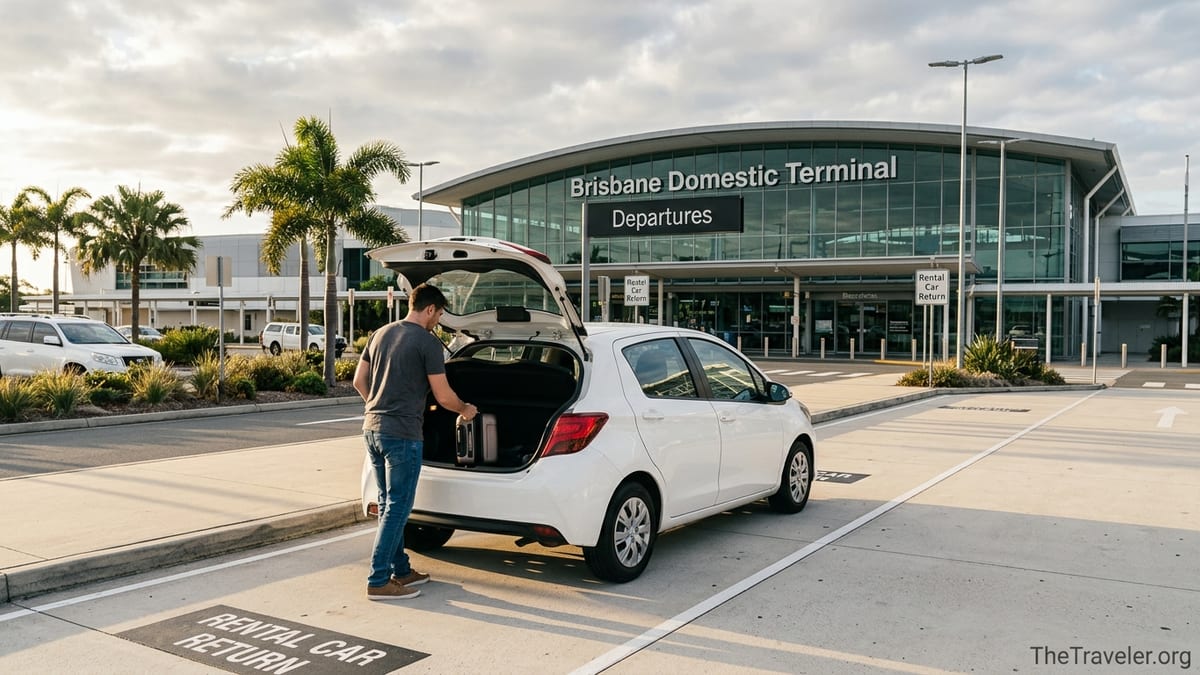
Where to Find Car Rental Desks at Brisbane Airport
Brisbane Airport has rental car counters in both the Domestic and International terminals, operated by major brands such as Budget, Avis, Hertz, Europcar, SIXT and Dollar. At the Domestic Terminal, desks are located on Level 1 near the baggage claim area, so you will see the car rental signage as you exit the secure arrivals zone and walk toward the terminal exits. For example, Europcar and Budget both describe their Brisbane Domestic counters as being on Level 1 close to baggage collection, a short walk from the escalators leading to the public concourse.
At the International Terminal, rental counters sit in the Arrivals Hall on Level 2. After clearing immigration and customs, you walk into the public arrivals area and will find the car hire desks grouped together on the landside concourse. Brands like Europcar, Budget and Dollar all note that their service points here are in the Level 2 arrivals area, making it easy to compare offers if you have not prepaid your booking before travel.
Most on-airport rental companies keep their vehicles in multi-storey car parks connected to the terminals by covered walkways. At the Domestic Terminal this usually means following “Rental Cars” signs to the P1 or P2 car parks, while at the International Terminal you will use the adjoining parking facility signposted for rental returns and collections. Staff will either walk you to the car park or give you simple directions, and the walk is generally no more than five minutes with luggage trolleys available along the way.
In addition to these on-airport brands, several off-airport companies operate near Brisbane Airport and provide free shuttle transfers from designated pickup bays outside the terminals. These can sometimes be cheaper, but you must factor in shuttle waiting times, slightly more complex returns, and limited office hours compared with the on-airport desks that are aligned with flight schedules.
Booking, Pickup Process and What to Expect at the Counter
If you book ahead with a comparison site or directly with a brand like Hertz, Budget or SIXT, your confirmation will show the pickup terminal, expected opening hours and inclusions such as mileage and basic insurance. Brisbane Airport is busy in Australian school holiday periods, especially around Christmas and Easter, and same-day walk up customers can face high prices or sold-out categories. For example, compact cars that might be advertised from around 35 to 45 Australian dollars per day in quieter periods can jump significantly in holiday weeks, so reserving early is usually wise.
At the counter you will need your full driver’s licence and a credit card in the main driver’s name. International visitors from many countries can drive on their home licence for short stays, but some companies ask for an International Driving Permit alongside a non-English licence. The agent will confirm your booking, present the rental agreement and may offer optional extras such as GPS units, child seats, toll passes or premium roadside assistance. If you have booked a specific class like SUV or intermediate, aim to have your confirmation handy in case there is any confusion about the category you paid for.
Inspecting the vehicle carefully before driving away is important, especially for coastal trips where you might be moving luggage and sports gear in and out of the car. Walk around the vehicle, check for existing scratches or dents and ensure they are marked on the condition report. Take quick photos on your phone of each side, the front and rear, and the odometer reading. Brisbane Airport car parks are well lit but can be busy, so take a moment before you leave to familiarise yourself with the fuel type label, the handbrake and lights, and to set up your phone mount if you are using navigation.
When you return the car, follow the roadside “Rental Cars” signage as you approach the airport. For Domestic, you will typically peel off into the dedicated rental car return lane that feeds into the multi-storey car parks; for International there is a clearly marked rental return section next to the terminal. Many companies at Brisbane allow after-hours returns via secure key drop boxes located near the desk in the arrivals halls or in the car park, but you remain responsible for the vehicle until it is checked in during opening hours, so consider this if you have very early or late flights.
Insurance, Waivers and Bond Holds
In Australia, rental rates generally include basic cover for damage and third-party liability, but with a relatively high excess, often in the range of 4,000 to 6,000 Australian dollars for standard vehicles. At the Brisbane Airport counter, staff will usually offer you a collision damage waiver or “reduction package” that lowers this excess substantially, sometimes to a few hundred dollars, in exchange for a daily fee. For example, a compact car that costs 50 dollars a day might require an extra 25 to 35 dollars per day for maximum cover with a minimal excess, depending on the brand and season.
Whether you buy this add-on depends on your risk tolerance and any existing cover you already hold. Some travelers rely on credit card travel insurance or a standalone rental excess policy purchased from a third-party insurer, which can be cheaper per day but requires you to pay the rental company first and claim reimbursement later. If you choose to decline the in-house waiver at Brisbane Airport, expect the rental company to place a higher pre-authorisation hold on your card, which temporarily reduces your available credit for the duration of the hire.
Pay particular attention to exclusions that matter on Queensland coastal trips. Many rental contracts exclude driving on unsealed roads, through flood water or on beaches, all of which can be tempting in a region known for its national parks and 4WD experiences. If you plan to visit places like Bribie Island’s off-road beach tracks or Fraser Island (K’gari), a standard airport sedan hire will not be suitable and damage in those areas may not be covered at all. Confirm with the agent where you are allowed to drive, and keep to sealed roads unless you have explicit permission and an appropriate vehicle.
Windshield, tyre and underbody damage are also commonly excluded or only partially covered. On stretches like the Bruce Highway toward the Sunshine Coast or the Pacific Motorway toward the Gold Coast, trucks and roadworks can increase the chance of stone chips. Some premium protection packages specifically include glass and tyre cover, which can be useful for longer trips. Always read the key points on the agreement summary, and ask the agent at Brisbane Airport to explain anything unclear before you sign.
Understanding Brisbane Toll Roads and Paying for Tolls
Several major roads around Brisbane Airport are toll roads, including the AirportlinkM7 tunnel and the Gateway Motorway, both operated within the broader Linkt toll network in Queensland. These roads provide fast links from the airport to the city and to the coastal highways, but they charge electronic tolls with no cash booths. The Queensland Department of Transport lists Gateway Motorway, Logan Motorway, AirportlinkM7, Clem7, Legacy Way and the Go Between Bridge among the declared toll roads in the region, each with distance-based charges and regular price indexation.
Most rental companies at Brisbane Airport handle tolls automatically via a toll administration system linked to the vehicle’s registration. The common model is for you to drive through toll points without stopping and later receive a post-trip invoice or charge to your credit card, which includes both the toll amounts and an administration fee. The admin fee can vary significantly by company. For instance, some brands charge a per-day “toll service fee” for every day of the rental when a toll is incurred, even if you only pass through one toll point. On a five-day Gold Coast trip that includes two toll journeys, these fixed fees can end up costing more than the tolls themselves.
To avoid surprises, ask the agent at pickup exactly how tolls are managed and what fees apply. If the company uses a daily toll package, estimate how often you expect to drive on toll roads. For travelers who only need to get from the airport to a coastal base and back, using the Gateway Motorway once in each direction might be cheaper than paying for an unlimited toll package. Conversely, if you plan to criss-cross Brisbane during peak hours, a flat daily toll add-on can provide certainty and reduce the risk of penalty fees for unpaid trips.
If you want to manage tolls independently, check whether the rental company allows you to add your own temporary toll account using the vehicle’s plate number through the toll operator’s visitor service. This can sometimes reduce or eliminate rental company admin fees, but not all brands permit it, and entering the wrong dates or plate number can lead to fines. Given the complexity, many short-term visitors accept the rental company system but try to limit their use of toll roads outside the key airport access routes.
Driving from Brisbane Airport to the Gold Coast
The Gold Coast is one of the most common destinations for travelers hiring a car at Brisbane Airport. In normal conditions it is roughly a one hour drive from the airport precinct to central Gold Coast areas such as Southport or Surfers Paradise, although traffic can extend this to 90 minutes or more during peak commuter times and holiday weekends. The usual route involves joining the Gateway Motorway southbound before merging onto the M1 Pacific Motorway, a dual carriageway that runs all the way to the border near Coolangatta.
As you leave Brisbane Airport, you can choose between using the toll Gateway Motorway, which is faster and bypasses suburban traffic, or following local non-toll roads that add time and complexity. For most visitors, especially after a long flight, using the Gateway is worth the modest toll cost for a simpler, well signposted route. From the rental car park you will follow signs for Airport Drive and then for the Gateway Motorway south. After crossing the Brisbane River via the Sir Leo Hielscher Bridges you continue on the M1, watching for exit signs to Helensvale, Southport or Surfers Paradise depending on your accommodation.
The drive is straightforward but busy, with frequent roadworks and heavy truck traffic in certain sections. Speed limits vary from 80 to 110 kilometres per hour, and fixed and mobile speed cameras are common. Rest areas appear periodically along the M1, but if you are arriving after a long-haul flight it can be more comfortable to stop at one of the large service centres around Coomera or Beenleigh, which offer fuel, food outlets and toilets. Many visitors pick up basic groceries at these centres before reaching their holiday rental, particularly if they land outside supermarket opening hours.
Parking on the Gold Coast is a mix of free and paid, depending on how close you are to the beach. Many hotels and apartment complexes in Surfers Paradise and Broadbeach include one free space per unit in a secure underground garage, while day visitors often use metered street parking near the esplanades. If you plan to drive to popular beaches such as Burleigh Heads or Coolangatta, arriving early in the morning improves your chance of a convenient spot, especially on weekends and school holidays when locals and visitors compete for limited coastal parking.
Driving from Brisbane Airport to the Sunshine Coast
The Sunshine Coast lies to the north of Brisbane and offers a string of coastal towns such as Caloundra, Mooloolaba and Noosa Heads. From Brisbane Airport, you generally head onto the Gateway Motorway northbound, then merge onto the Bruce Highway, which forms part of the national highway network. The drive to Caloundra can take around 70 to 90 minutes in light traffic, with Noosa often closer to two hours, though peak congestion near the Brisbane northern suburbs and around Caloundra can add significant time during busy periods.
Much of the route is on high-speed dual carriageway, with speed limits typically between 100 and 110 kilometres per hour. The Bruce Highway is a major freight and holiday route, so be prepared for large trucks and stretches of roadworks as sections are upgraded. It can be tempting to detour onto smaller coastal roads like the Sunshine Motorway near Mooloolaba or the scenic routes through the Glass House Mountains, and these can make pleasant breaks in the journey if you have time. Remember that some hinterland roads are winding and narrow, so allow extra time and drive cautiously in wet weather.
Once on the Sunshine Coast, parking is generally easier than in inner Brisbane but still tight in the most popular beachfront precincts. Towns such as Mooloolaba and Noosa have a mix of short-stay street parking near the main beaches and longer-stay council car parks just a block or two back from the sand. Accommodation providers often include on-site parking, but height limits in basement garages can be an issue for taller SUVs or people carriers, so confirm clearance details if you are booking a larger vehicle from Brisbane Airport.
Many visitors use a rental car to explore beyond the beaches. Day trips from a Sunshine Coast base might include the inland village of Montville, the Maleny rainforest region or the Australia Zoo precinct near Beerwah. A standard compact or intermediate car from Brisbane Airport is suitable for these sealed-road excursions, but you should still check your rental agreement for any specific restrictions on mountain or national park access, and avoid unsealed side roads leading to informal lookouts or state forest trails.
Parking at Brisbane Airport and in Brisbane City
If you are collecting a car on arrival but not leaving immediately for the coast, it helps to understand parking options around Brisbane Airport and in the city. The airport itself has multiple car parks for passengers, staff and rental fleets, and public parking in the terminal car parks is priced at a premium. For example, short-stay parking in the P1 and P2 multi-storey car parks is designed for drop-offs, pickups and quick visits, and becomes expensive for stays longer than a few hours. This matters more if you are returning a rental car early and waiting for a much later flight, as you may need to budget for time in the terminal rather than in a parked vehicle.
In Brisbane’s central business district, on-street parking is metered and time-limited, with higher charges in core streets and during weekday business hours. Several commercial parking garages ring the city centre and South Bank, offering evening and weekend flat rates that can be reasonable for visitors driving in from the airport or the coasts for a day trip. Many locals use public transport when visiting major events at venues like the Gabba or Suncorp Stadium to avoid congestion and parking costs, which is also a consideration for travelers who may not want to drive into the densest parts of the city.
For travelers staying overnight in Brisbane before or after a coastal trip, choosing accommodation with on-site parking included can simplify things dramatically. Many inner-city hotels in areas like Spring Hill, Kangaroo Point or South Bank advertise parking, but some charge a nightly fee. Comparing hotel parking costs with the convenience of leaving your rental car in a secure on-site garage is worthwhile when you plan to explore the river promenades or take river ferries without needing the vehicle for a day.
When returning your rental car, allow extra time in case of congestion on the approach roads and within the airport precinct, particularly during morning peak hours and late afternoon. After dropping the vehicle and completing the inspection, you may have a short walk back to the terminal via covered bridges from the car park. Lifts and escalators link the rental floors to departures, and luggage trolleys are usually available near the return bays, which is useful if you have surfboards or bulky bags from your coastal stay.
Is Renting a Car at Brisbane Airport Worth It?
Whether a Brisbane Airport rental car is worth the cost depends on your itinerary, group size and comfort with driving in a busy urban and highway environment. For couples staying mostly in central Brisbane with occasional day trips, the Airtrain from the airport and local public transport can be more economical, supplemented by rideshare trips when needed. Airport train services link directly to central stations, and inner suburbs have buses and river ferries that cover many popular attractions without the need to pay for parking.
For families or groups heading to the Gold Coast or Sunshine Coast, renting often makes strong financial sense. A typical one-way airport shuttle for a family of four to Surfers Paradise can cost close to the daily rate of a compact hire car in off-peak periods, and you still need local transport at the destination. With a rental, you gain flexibility for supermarket runs, theme park visits and day trips to hinterland lookouts or quieter beaches, which can be difficult or time-consuming on public transport.
Driving confidence is another factor. The routes from Brisbane Airport to both coasts are primarily motorway-style roads with clear signage, but new visitors must be comfortable with left-side driving, variable speed limits and electronic tolling. Those who are anxious about multi-lane highways in unfamiliar cars might prefer organised transfers and local tours. On the other hand, experienced drivers often find the independence of a hire car in Queensland invaluable, especially when chasing morning surf, sunset viewpoints or last-minute restaurant bookings away from main tourist strips.
Environmental impact and parking stress may also influence your choice. If you plan to spend several days car-free in a walkable beach town like Noosa or Burleigh Heads, it can be sensible to use public or shuttle transport from the airport and skip the car altogether. For itineraries with multiple bases, national park detours and evening drives between towns, a Brisbane Airport rental car remains one of the most practical ways to experience the region at your own pace.
The Takeaway
Brisbane Airport is well set up for car rentals, with major brands operating counters in both terminals and vehicles stationed in nearby multi-storey car parks. The pickup process is usually quick once you have your documents ready, and clear signage helps you exit the precinct toward the coast or the city. Understanding toll roads, insurance options and parking norms in advance can prevent unwanted surprises on your bill and make the driving experience more relaxed.
For many visitors, particularly families and groups planning to explore the Gold Coast, Sunshine Coast and hinterland, the convenience and flexibility of a rental car outweigh the costs, provided you budget for tolls, fuel and parking. If your plans are confined to central Brisbane or a single beach town, you may decide that trains, buses and shuttles are sufficient. By considering your specific itinerary, comfort with driving and the real-world examples above, you can choose the option that best fits your Queensland adventure.
FAQ
Q1. How long does it take to drive from Brisbane Airport to the Gold Coast?
In light traffic it is often around one hour from Brisbane Airport to central Gold Coast suburbs such as Southport or Surfers Paradise, but during peak commuter periods and school holidays the trip can stretch to 90 minutes or more, especially where the Gateway Motorway meets the M1 Pacific Motorway.
Q2. Are there tolls on the way from Brisbane Airport to the coasts?
Yes, many common routes to both the Gold Coast and Sunshine Coast use toll roads, particularly the Gateway Motorway and AirportlinkM7 tunnel around Brisbane. Tolls are charged electronically, so you do not stop at booths, and your rental company will usually bill you afterwards with an additional administration fee.
Q3. Can I avoid toll roads when driving from Brisbane Airport?
You can avoid toll roads by using alternative suburban routes, but these are slower, involve more traffic lights and can be confusing if you are unfamiliar with the area. Most visitors choose the toll roads for a simpler, faster journey, particularly after long flights or when travelling with children and luggage.
Q4. Do I need an International Driving Permit to rent a car at Brisbane Airport?
Drivers with licences in English from countries such as the United Kingdom, New Zealand, Canada or the United States usually do not need an International Driving Permit for short stays. If your licence is not in English, an International Driving Permit or certified translation is often required, and individual rental companies may have their own rules, so check your booking conditions in advance.
Q5. What type of car is best for driving to the Gold Coast or Sunshine Coast?
A compact or intermediate sedan is adequate for most coastal trips on sealed roads, and these vehicles are usually the best value. Families or groups carrying surfboards, prams or multiple suitcases may prefer a midsize SUV or people carrier for extra space, but remember that larger vehicles can be harder to park in tight beachfront car parks and may use more fuel.
Q6. Is parking difficult at popular beaches on the Gold Coast and Sunshine Coast?
Parking near the most popular beaches, such as Burleigh Heads, Surfers Paradise, Mooloolaba and Noosa Main Beach, can be challenging at weekends and during holidays. Spaces nearer the sand often have time limits or fees, while free spaces tend to be a short walk away. Arriving earlier in the morning or later in the afternoon usually makes it easier to find a spot.
Q7. Can I take my Brisbane Airport rental car onto beaches or unsealed tracks?
Most standard rental agreements from Brisbane Airport prohibit driving on beaches, through water or on unsealed tracks, and damage in those conditions is often not covered by insurance. If you want to tackle sand or rough trails, you will need a specialist 4WD rental from a company that explicitly allows off-road use, and you should still confirm any area-specific restrictions before you go.
Q8. How are fuel policies usually handled for Brisbane Airport rentals?
Many rentals use a full-to-full fuel policy, meaning you collect the car with a full tank and must return it full to avoid refuelling charges. Fuel stations near Brisbane Airport typically price fuel higher than in suburban areas, so many travelers stop at a service station along the main highway shortly before entering the airport precinct to top up at a more competitive rate.
Q9. Is it cheaper to rent a car on-airport or off-airport at Brisbane?
Off-airport companies sometimes offer lower daily rates than on-airport brands, but you must factor in shuttle wait times, more limited opening hours and potentially more complex returns. On-airport rentals usually cost a little more but offer the convenience of walking straight to the car park from the terminal and dropping the vehicle at the airport just before check in.
Q10. When is renting a car at Brisbane Airport not worth it?
Renting may not be worthwhile if you plan to stay only in central Brisbane, use the airport train to reach the city and rely on public transport, walking and rideshare for local trips. It can also be unnecessary if you join an organised tour that includes transfers or are staying in a beachfront town where you intend to stay mostly car-free and can reach shops, restaurants and activities on foot.