


More news on this day
More than 100 passengers on a Brisbane to Bundaberg Tilt Train were left stranded overnight in regional Queensland this week after a storm brought down powerlines near Gundiah, cutting power to the long-distance service and forcing an early-morning evacuation to buses.
Get the latest news straight to your inbox!
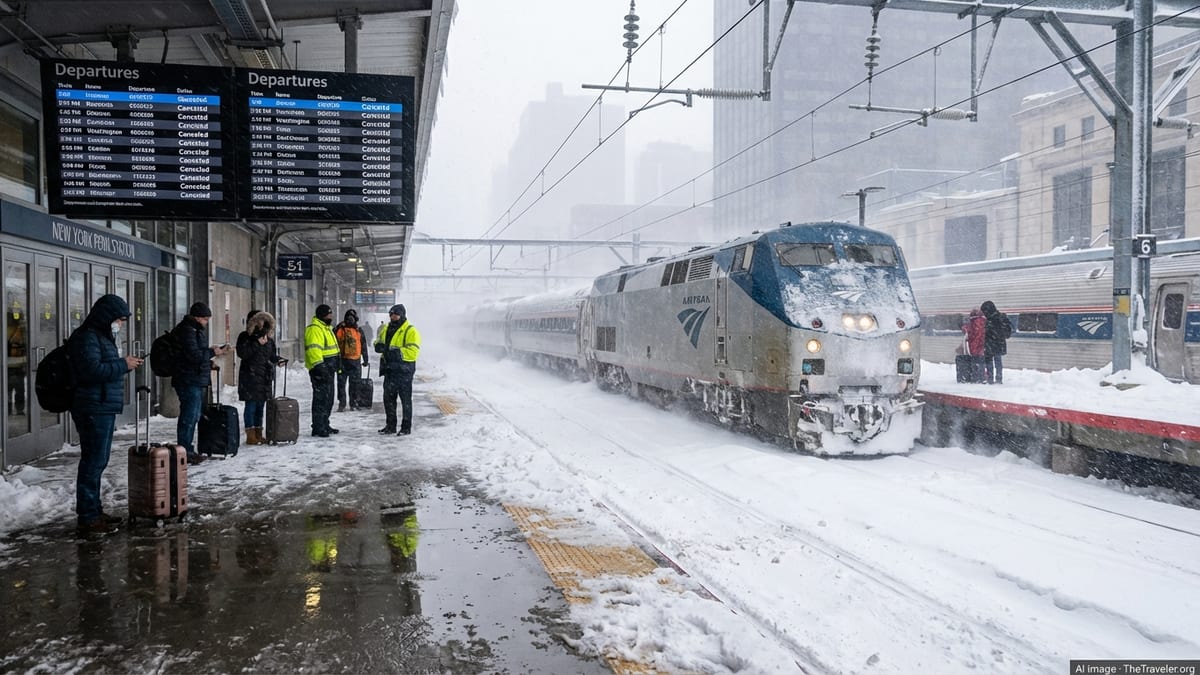
Storm brings down powerlines north of Brisbane
According to published coverage from Australian and international outlets, the northbound Bundaberg Tilt Train departed Brisbane on Wednesday evening and was travelling along the North Coast line when severe weather moved across the Fraser Coast region. Near Gundiah, a rural locality south of Maryborough and about three hours by rail from Brisbane, lightning and strong winds reportedly brought down overhead powerlines late at night.
Publicly available information indicates that the fallen lines caused a major power fault shortly before midnight, leaving the electric Tilt Train without traction power or onboard air conditioning. The incident halted the service on open track rather than at a station, limiting options for passengers to disembark safely while the line remained affected by damaged electrical infrastructure.
Subsequent reporting describes the event as a “dewirement” affecting more than 500 metres of overhead equipment on the busy North Coast corridor. Repair crews were sent to the site overnight, with rail operators indicating that they worked through the early hours to clear debris and begin restoring the system so that traffic could later resume.
The disruption occurred on one of Queensland Rail Travel’s flagship long-distance routes linking Brisbane with Bundaberg and Rockhampton, where electric Tilt Trains typically reach up to 160 kilometres per hour on the upgraded coastal alignment.
Six hours in the dark as comfort systems fail
Reports indicate that around 100 to 110 people were on board when the train came to a stop near Gundiah. With the power cut, passengers spent about six hours on the immobilised service without functioning air conditioning or lighting in some carriages, while onboard catering and hot food services were also unavailable.
Coverage from Australian broadcasters and digital outlets notes that passengers described increasingly uncomfortable conditions during the prolonged stoppage. With overnight temperatures still warm and humidity high along the Fraser Coast, the loss of ventilation reportedly made carriages stuffy, and toilets were described as reaching capacity as the night wore on.
Publicly available reports further suggest that staff remained on board throughout the incident, while emergency services were dispatched to the scene to support the eventual transfer to road transport. However, until conditions were assessed as safe and replacement buses could be positioned on the nearby highway, most passengers were required to remain on the train.
The incident follows other recent accounts of rail travellers across Queensland experiencing lengthy delays on long-distance routes, but this week’s event drew particular attention because of the combination of nighttime timing, hot conditions and limited access to food and water during the stoppage.
Evacuation at first light and flow-on service disruptions
Shortly after dawn, buses arrived to complete the interrupted journey. According to regional news briefings, passengers began transferring off the stranded Tilt Train at about 6:00 am, following approximately six hours stopped on the line. Road coaches then continued the trip north to Bundaberg and other intermediate destinations along the Bruce Highway corridor.
Publicly available information from regional bulletins indicates that the knock-on effects extended well beyond the single service. North Coast long-distance operations including the Spirit of Queensland and other Bundaberg and Rockhampton Tilt Trains experienced partial cancellations and diversions while repairs continued on the damaged overhead system.
One Rockhampton to Brisbane service scheduled to depart at 6:45 am on Thursday was reported as terminating early at Maryborough West, with onward road transport arranged. A later Brisbane to Bundaberg Tilt Train, due to leave Roma Street in the late afternoon, was also expected to rely on substitute coaches over part or all of the route while overhead line equipment remained out of service.
Information published by local outlets in Brisbane and the Wide Bay region characterises the North Coast line disruption as one of the more significant weather-related interruptions to long-distance passenger rail in Queensland this year, given the number of stranded travellers and the corridor’s importance for both tourism and essential travel.
Passenger frustration highlights expectations on regional rail
The ordeal has sparked wider discussion among Queensland travellers about the reliability and resilience of long-distance rail links, which are heavily used by holidaymakers, regional residents and people connecting with flights or medical appointments in Brisbane. Social media posts and letters pages referenced in coverage of the incident point to concern over access to contingency supplies such as water, snacks and basic medical support when trains are immobilised for long periods.
Travel commentators note that Queensland’s Tilt Train services are marketed as a faster, more comfortable alternative to driving along the Bruce Highway or taking regional flights between Brisbane and coastal centres. Experiences like the Gundiah stoppage, even when caused by severe weather and external infrastructure damage, can therefore have an outsized impact on traveller confidence, particularly among visitors unfamiliar with the region’s storm season.
Observers also highlight that the North Coast line doubles as a key freight route, meaning that track closures for repairs and safety inspections can rapidly create congestion for both passenger and goods services. In this case, publicly available information suggests that multiple trains were affected by the powerline damage, requiring tight coordination between rail operators and road coach providers to avoid leaving passengers at unattended regional stations.
For domestic and international visitors planning Queensland itineraries that rely on long-distance rail, the episode serves as a reminder to allow buffer time in schedules during the late spring and summer storm period, and to consider flexible accommodation or connection arrangements when travelling on single-track regional corridors.
What travellers should know about the Brisbane–Bundaberg route
The Brisbane to Bundaberg Tilt Train route covers roughly 360 kilometres along the North Coast line, typically taking around four and a half hours in each direction. Services depart from Roma Street Station in Brisbane’s central transit precinct and call at coastal centres such as Gympie North and Maryborough West before reaching Bundaberg, a popular gateway for the Southern Great Barrier Reef and nearby coastal towns.
Queensland Rail Travel generally operates the electric Tilt Train on this corridor several times a week, providing reserved seating, at-seat service in higher classes and checked baggage options. For many visitors, it offers a scenic alternative to driving the Bruce Highway, passing cane fields and river crossings on the approach to the Wide Bay region.
Following this week’s incident near Gundiah, publicly available information shows that rail crews have been engaged in repairing more than 500 metres of damaged overhead infrastructure, with substitute buses used where needed while the work continues. Timetables for upcoming days are expected to be updated as repairs progress, and travellers are being advised in published coverage to check for service alerts before departure, especially where connections to regional flights, tours or cruises are involved.
For those planning itineraries over the coming weeks, travel planners suggest monitoring local weather forecasts along the Fraser Coast and Wide Bay, building in extra time around key connections, and carrying basic supplies such as water, snacks and any essential medication whenever travelling long distances by rail in Queensland’s storm season.