


More news on this day
Los Angeles International Airport became a symbol of aviation gridlock on Friday as a rare nationwide ground stop halted most departures across the United States, leaving terminals crowded with stranded passengers, cots rolling into concourses and departure boards filled with red as travelers wondered how long they would be stuck.
Get the latest news straight to your inbox!
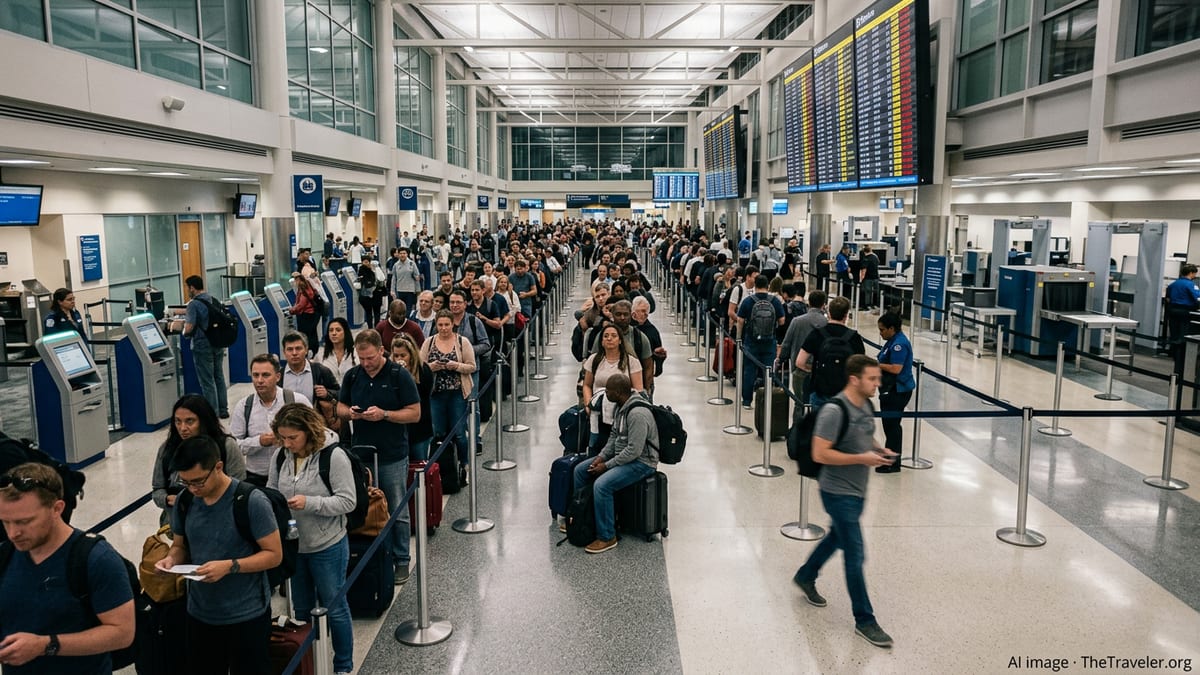
A rare nationwide halt freezes departures
Publicly available information from the Federal Aviation Administration shows that departures across the United States were halted on Friday afternoon after communications problems affected multiple regional air traffic control centers. The agency described the decision as a nationwide ground stop for all U.S. airports, citing what it called extraordinary circumstances and ongoing technical investigations.
News coverage from national outlets indicates that the stoppage applied broadly to domestic departures, with select international and long-haul flights allowed to continue under specific clearances. Aviation trackers reported thousands of flights delayed or canceled across the national airspace system within hours, disrupting airline schedules, crew positioning and airport operations nationwide.
By early evening Pacific time, delay monitoring services were still showing widespread disruption at major hubs, including Los Angeles, Atlanta, Chicago O’Hare and New York area airports. Passenger forums and social media posts described terminal corridors packed with travelers sitting on the floor, long lines at concession stands and gate areas overflowing with people waiting for updated departure times.
Homeland security officials speaking in public briefings stated there was no indication of a malicious attack. Transportation-focused outlets reported that federal technicians were working to isolate a communications fault affecting the network of en route centers that manage aircraft movements between airports, a critical layer above local tower operations at terminals such as LAX.
LAX terminals turn into holding areas
At LAX, one of the nation’s busiest international gateways, the ground stop quickly translated into gridlock inside the terminals. Airport condition pages and independent delay trackers showed large numbers of departing flights in delayed status, with some evening departures canceled outright as the outage stretched on. Passenger posts from Terminals 4, 5 and 7 described people clustered around power outlets, lining up for food and anxiously refreshing airline apps for any sign of movement.
According to public airport operations guidance, LAX already manages daily constraints, including limited contact gates and finite room in secure areas for passengers waiting to clear federal inspection. Those constraints became even tighter as aircraft that had already boarded remained at gates waiting for permission to depart, while inbound flights continued to arrive and needed somewhere to park and unload.
Flyers exchanging updates online reported that some long-haul international flights to Asia and other overseas destinations continued to depart after receiving route-specific clearances, while many domestic services remained frozen. One widely shared anecdote described a traveler joking that they might spend the rest of their life at LAX as rolling delays pushed their departure time back hour after hour.
Local ground transportation information published earlier in the week had already warned of construction around pickup and drop-off areas. With the ground stop in effect, ride-hailing zones and curbside lanes grew congested as some travelers abandoned delayed trips and tried to leave the airport, while others continued to arrive for flights that no longer had firm departure windows.
Ripple effects at airports nationwide
The disruption extended well beyond Los Angeles. Flight-tracking dashboards and airport status boards showed significant knock-on delays at major hubs across the country, including Chicago O’Hare, Dallas Fort Worth and East Coast airports that were still recovering from earlier autumn weather problems. Airlines that rely on tightly timed hub banks faced the prospect of missed connections, overnight misplacement of aircraft and crews and a complex recovery stretching into the weekend.
Sports coverage highlighted that professional and collegiate teams were among those caught in transit, with some NBA, NHL and college squads unable to depart for games and others forced to wait on parked aircraft. That added a high-profile dimension to what was already a disruptive event for business travelers, tourists and those flying for family emergencies or personal milestones.
Recent data from aviation analytics firms had shown on-time departure performance at LAX hovering in the mid-70 percent range earlier in November. Analysts noted that the ground stop would not only depress those figures for the day, but also create secondary delays on subsequent rotations as aircraft and crew schedules were resynchronized, even after the technical issue was resolved.
Travel industry commentary pointed out that the disruption came in a season already marked by dense holiday travel, construction at key terminals and earlier waves of weather-related delays. For passengers trying to navigate multiple stressors at once, the sudden communications failure and resulting halt in departures proved especially destabilizing.
What stranded passengers are being advised to do
Consumer advocates and travel rights organizations urged passengers to focus first on confirming the status of their own flight through official airline channels, including apps, text alerts and gate displays. Many airlines activated flexible rebooking policies, allowing customers on affected flights to move their trips to later dates without change fees, subject to seat availability and published fare rules.
Guidance based on federal passenger rights information emphasizes that compensation and care obligations vary depending on the cause of a disruption. Because the ground stop originated from an air traffic control systems issue rather than an individual airline’s internal problem, carriers are not universally required to provide hotel rooms or meal vouchers, though some may choose to do so as a matter of policy or goodwill. Travelers were encouraged to keep receipts for any essential expenses incurred during extended delays or overnight stays.
Legal resources and travel assistance services recommended that stranded flyers document communications with airlines, including screenshots of delay notices, and consider contacting their credit card issuer or travel insurance provider to review coverage for trip interruption. Many comprehensive policies include specific provisions for extended delays due to airspace closures or control system outages.
For those already inside crowded terminals such as LAX, airport information pages advised monitoring public address announcements for updates about security checkpoint hours, shuttle bus adjustments and any temporary capacity limits inside hold rooms. Passenger forums also shared practical tips, from finding quieter seating near less-used gates to using portable battery packs in case access to outlets was limited.
Longer-term questions for U.S. aviation
The scale of Friday’s ground stop immediately raised questions about resilience in the U.S. air traffic control system. Industry observers noted that this was one of the most sweeping halts to domestic departures in many years, inviting comparisons with previous nationwide pauses tied to technical failures or major security events.
Policy analysts pointed to a pattern of recent strain on the national airspace system, citing earlier waves of weather-driven disruptions, pockets of controller staffing shortages and infrastructure modernization efforts that are still being phased in. Reports from aviation think tanks have warned that single points of failure within communications and surveillance networks could have outsized effects if not fully mitigated.
Airline groups and airport operators are expected to press for a detailed public accounting of the root cause of the communications breakdown, its geographic scope and the safeguards that will be put in place to prevent a recurrence. Lawmakers with aviation oversight roles have previously signaled interest in hearings and formal reviews after large-scale outages, particularly when they coincide with peak travel periods.
For travelers, the scenes at LAX and other major hubs served as a reminder of how dependent modern air travel has become on complex digital systems behind the scenes. Even as flights gradually resume, the images of packed terminals, mounting delays and passengers joking grimly about never getting home are likely to resonate well beyond the day the screens finally turn back to green.