


More news on this day
A fresh passenger lawsuit against British Airways over an alleged in-flight injury is drawing renewed attention to how airlines are held liable for accidents in the cabin, as recent turbulence incidents involving Singapore Airlines, Delta Air Lines and others push questions about compensation, safety obligations and legal loopholes back into the spotlight.
Get the latest news straight to your inbox!
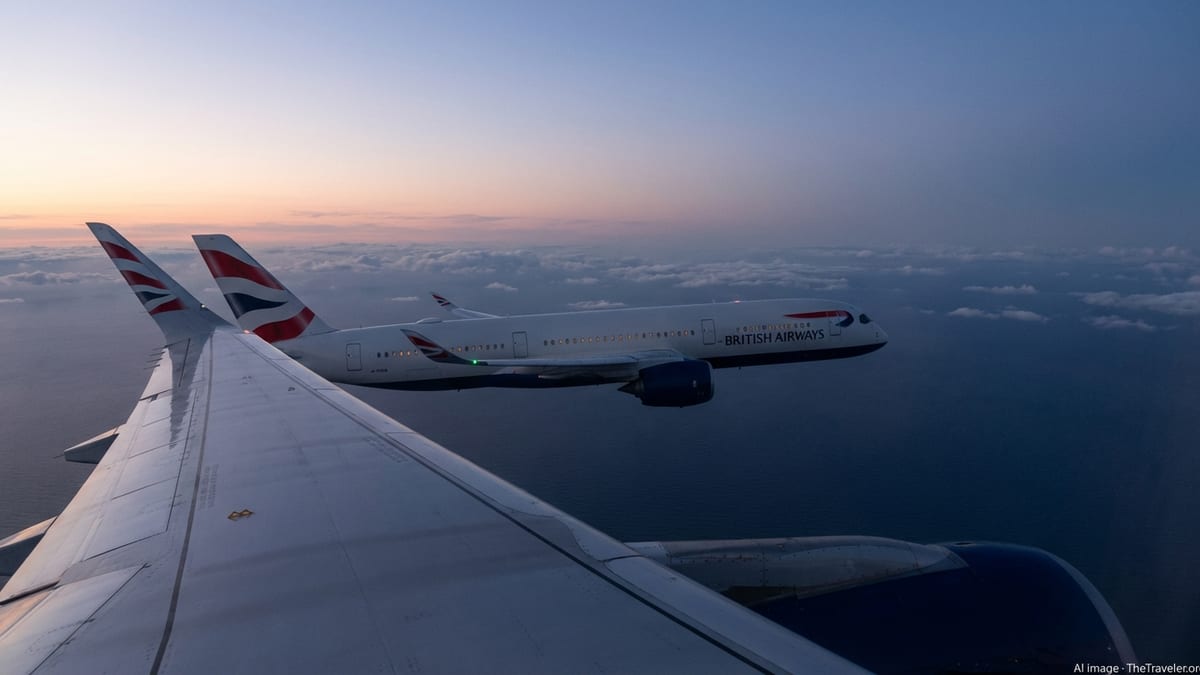
British Airways Case Highlights Legal Gray Areas
Recent legal filings in the United Kingdom involving British Airways describe a passenger claim for bodily injury allegedly sustained during international carriage, placing the dispute squarely under the Montreal Convention, the global treaty that governs airline liability on cross-border flights. Court documents and specialist aviation-law bulletins indicate that the case, listed in a 2024 travel and aviation law update, focuses on whether the circumstances of the incident meet the treaty’s definition of an “accident” and whether the injury occurred during operations of embarking, disembarking or onboard the aircraft.
The emerging British Airways dispute follows a string of earlier carrier-specific cases in which courts have been asked to decide how far an airline’s responsibility extends beyond the aircraft door. In one earlier claim involving the airline, Brannen v. British Airways, a US federal court examined whether an injury that occurred while a passenger was boarding an airport shuttle bus fell within the Montreal Convention’s scope. The court scrutinized how closely the event was tied to the physical process of boarding, underscoring how technical and fact-dependent these determinations can become.
Legal commentary surrounding the new British Airways lawsuit suggests that the passenger is seeking damages for medical costs, pain and suffering and related losses, framed under the Convention’s provisions for bodily injury. While the precise facts and any potential settlement remain to be seen, the case is already being cited in specialist newsletters as part of a wider wave of litigation that tests the boundaries of what counts as an “unexpected or unusual” event in modern air travel.
For travelers, the British Airways claim serves as a reminder that even relatively routine cabin incidents, such as falls in the aisle or impacts from unsecured items, can trigger complex jurisdictional debates. Where a claim may be filed, how long a passenger has to sue and whether local negligence law still applies are all conditioned by the Montreal framework, which preempts many traditional state-law remedies in favor of a treaty-based system.
Singapore Airlines Turbulence Disaster Sets a Modern Benchmark
The British Airways case is unfolding against the backdrop of one of the most widely publicized in-flight injury events in recent years: the Singapore Airlines Flight SQ321 turbulence incident. On May 21, 2024, the London-to-Singapore service encountered sudden extreme turbulence over Myanmar, plunging roughly 50 meters and forcing an emergency diversion to Bangkok. Published reports state that one passenger died and more than 100 people required medical attention, including dozens with spinal, spinal cord and head injuries.
Subsequent investigative updates and media timelines describe chaotic scenes in the cabin, with passengers and crew thrown against ceilings and overhead bins. Singapore’s Transport Safety Investigation Bureau later noted that a weather radar issue could not be ruled out, though the final technical causes remain the subject of detailed analysis. The severity of the injuries and the global visibility of the event have turned SQ321 into a reference point for contemporary discussions about turbulence risk, cabin safety protocols and the adequacy of current compensation rules.
Singapore Airlines moved quickly to announce compensation offers. Publicly available statements and coverage show that the carrier offered at least 10,000 US dollars to passengers with minor injuries and an advance payment of 25,000 US dollars to those seriously hurt, with additional compensation to be discussed case by case. Legal analysts emphasize that these payments sit within the framework of the Montreal Convention, which imposes strict liability up to a defined threshold and allows higher awards if an airline cannot prove it took all reasonable measures to avoid the damage.
Nearly a year after the incident, passengers have begun testing those limits in court. A group of SQ321 travelers has filed a personal injury claim in the UK High Court, arguing that the airline should be held liable under the Convention for long-term physical and psychological harm. The claim is expected to probe how much protection the strict-liability tier actually offers in catastrophic turbulence cases and whether operational decisions, weather-avoidance practices or seatbelt enforcement will be scrutinized as potential breaches of reasonable care.
Delta Turbulence Claims Add to Growing Litigation Wave
US carriers have also faced mounting scrutiny over in-flight injuries, particularly in connection with severe weather. Passengers on recent Delta Air Lines flights have filed lawsuits alleging that crew knowingly flew into dangerous storm systems despite multiple meteorological warnings, causing violent turbulence and cabin chaos. One widely reported complaint describes approximately two and a half minutes of extreme shaking that left dozens of travelers injured, framing the event as avoidable rather than an inevitable act of nature.
Separate federal court rulings, including Boone v. Delta Air Lines in the Eastern District of Virginia, illustrate how US judges are applying the Montreal Convention to such scenarios. In Boone, a passenger alleged bodily injury on an itinerary with an international component, and the court accepted that the treaty could govern even where the injury occurred on a domestic leg. The decision reinforces that once a journey is structured as international carriage, the Convention may apply to every segment, limiting the availability of state-law negligence claims and channeling disputes into the treaty’s liability system.
Other filings against Delta in US courts similarly rely on Article 17 of the Montreal Convention, arguing that the airline is responsible for the actions of pilots, ground handlers and dispatchers whose decisions allegedly contributed to turbulence encounters. Complaints reference tools such as significant meteorological (SIGMET) warnings, predictive turbulence data and in-house weather services, contending that carriers have sophisticated resources for weather avoidance and should be held to account when those tools are not adequately used.
The rise in US-based turbulence suits mirrors a broader trend in which passengers frame bad-weather encounters as preventable operational failures rather than unavoidable atmospheric events. This framing is important because, under the Convention, carriers may escape higher levels of liability if they can show that all reasonable measures were taken. Plaintiffs, by contrast, attempt to demonstrate that the airline’s risk assessments, route choices or altitude decisions fell short of that benchmark.
How the Montreal Convention Shapes Passenger Remedies
At the core of all these disputes is the Montreal Convention of 1999, which harmonizes rules for international air carriage. The treaty establishes a two-tier liability system for death or bodily injury. Airlines are strictly liable up to a specified amount denominated in Special Drawing Rights, a currency unit set by the International Monetary Fund. Recent adjustments place that figure in the rough range of 170,000 US dollars per passenger, according to publicly available guidance and commentary.
Above that threshold, carriers may be held liable without any upper cap unless they can show that the damage was not due to their negligence or wrongful act, or that it was solely caused by a third party. For passengers, this structure offers a baseline of compensation without the need to prove fault, but it can become legally complex when claims exceed the strict-liability band or when multiple causes are involved. Courts often must evaluate operational decisions, crew training, maintenance records and even the behavior of injured passengers themselves.
Another contentious issue is what qualifies as an “accident” under Article 17. Legal scholarship and court decisions trace the definition to an event that is both external to the passenger and unexpected or unusual in the context of normal flight. Turbulence, sudden altitude changes, falling service carts or hot-liquid spills can all meet this test, but routine bumps, standard seat recline or preexisting medical events typically do not. Recent academic work has highlighted a circuit split in the United States over how fact-finders should determine whether an event is sufficiently unexpected, revealing divergent approaches that can influence outcomes in otherwise similar cases.
The Convention also circumscribes where lawsuits may be filed. Claims generally must be brought within two years and may only be initiated in specific jurisdictions tied to the carrier’s domicile, principal place of business, the origin or destination of the flight, or, in some cases, the passenger’s residence. The British Airways, Singapore Airlines and Delta cases demonstrate how plaintiffs strategically choose forums that are perceived as more favorable on evidentiary standards, damages calculations or class-action procedures.
Rising Turbulence and Evolving Expectations of Cabin Safety
Beyond the courtroom, these incidents point to a changing risk landscape in the skies. Aviation regulators and meteorological experts have warned that climate change is likely contributing to an uptick in clear-air turbulence, particularly along heavily trafficked transoceanic routes. While commercial aviation remains statistically very safe, the cluster of high-profile injuries on international flights has prompted renewed questions about seatbelt policies, cabin design and passenger awareness.
Analyses in specialist aviation-law newsletters suggest that legal exposure may hinge increasingly on how rigorously airlines encourage or enforce seatbelt use when passengers are seated. In the SQ321 case, publicly available reporting notes that some of the most serious injuries affected travelers who were not buckled at the moment of the turbulence encounter. This has fueled debate over whether cabin announcements, warning signage and mid-flight reminders are sufficient, or whether carriers should adopt more assertive compliance practices during cruise.
Commentary also points to the role of technology. Airlines now access powerful weather-avoidance and turbulence-forecasting tools, some integrated directly into flight-planning software and cockpit displays. When a severe event still occurs, plaintiffs are increasingly likely to argue that the carrier failed to use those tools adequately. As a result, legal expectations of what counts as “reasonable measures” under the Montreal Convention may evolve alongside technological capabilities, tightening the standard of care over time.
For travelers, the British Airways litigation and the recent Singapore and Delta cases underline both the protections and limitations of existing law. The Montreal Convention offers a unified framework and guarantees a level of strict liability, but it also caps certain claims, channels lawsuits into specific courts and excludes purely emotional distress where there is no proven bodily injury. As turbulence incidents draw more headlines and more passengers turn to the courts, pressure is likely to build for clearer guidance on how far airlines must go to anticipate and mitigate the next sudden jolt at 37,000 feet.
Singapore Airlines SQ321 compensation coverage
SQ321 turbulence incident timeline
Boone v. Delta Air Lines court opinion
Overview of the Montreal Convention
Academic analysis of accidents under the Montreal Convention