


On 5 December 2026, Copenhagen opens one of its most anticipated new attractions on Paper Island: KAI, a striking Water Culture House by Japanese architect Kengo Kuma. Combining indoor pools, wellness facilities, culture spaces and future harbour baths on a timber pier, KAI is set to become a new focal point on the city’s already vibrant waterfront. Here is what travelers need to know about the pools, saunas, outdoor onsen and harbour swimming zones, and how to plan a visit in the first seasons after opening.
Get the latest updates straight to your inbox!
What KAI Copenhagen Is and Why It Matters
KAI is a 5,800 square meter public Water Culture House on Christiansholm, better known as Paper Island, in the heart of Copenhagen Harbour. The building’s name nods to both Japanese and Danish. In Japanese, “kai” refers to the sea. In Danish, it echoes “kaj,” the word for quay, underlining how closely the facility is tied to the harbour edge. The project is backed by the City of Copenhagen and Nordea-fonden, with a construction budget of just under 1 billion Danish kroner, which reflects both its architectural ambition and its role as a long term civic landmark.
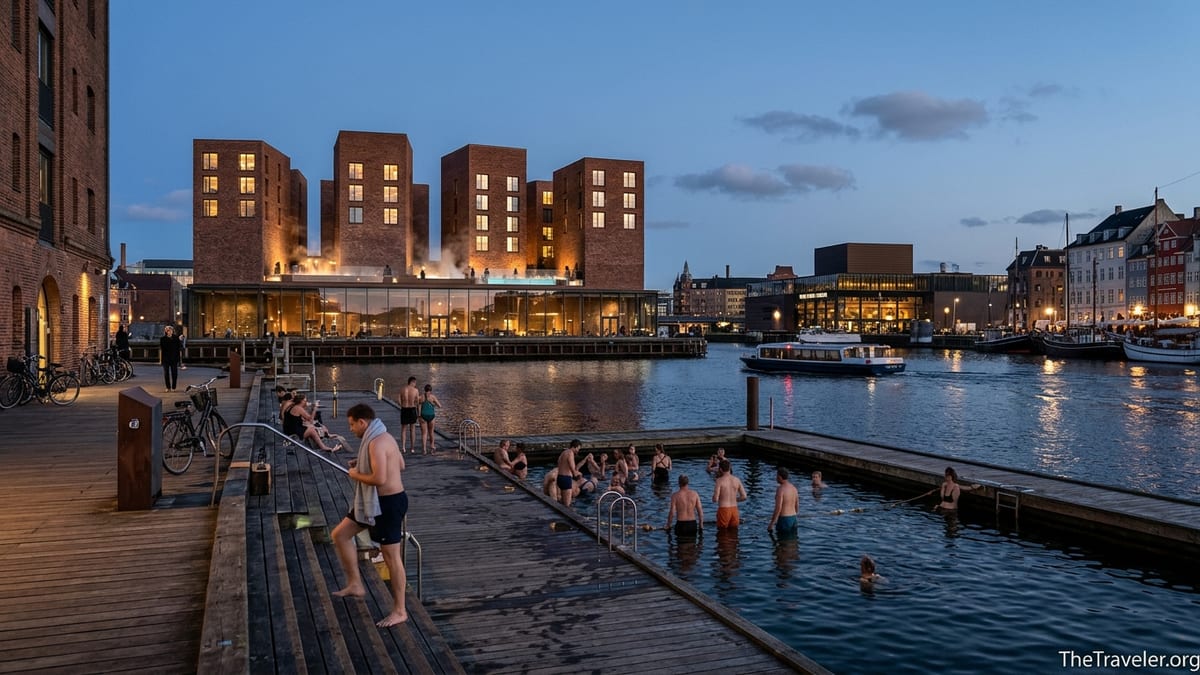
The building is designed by Kengo Kuma & Associates, in collaboration with Danish firms including Vilhelm Lauritzen Arkitekter. From the outside, visitors will see five brick “towers” raised above a transparent glass base. Each tower follows the outline of a pool below, so the building’s sculptural form grows directly out of its water spaces. Around 300,000 handmade bricks and more than 400 window openings create a play of light and views, especially on grey or rainy days when the warm interiors glow against the harbour.
KAI is intended to be more than a swimming hall. The city describes it as a “water culture house,” combining aquatic facilities with culture rooms, events and a generous public waterfront. Inside the tallest brick tower is the so called Culture Tower, where spaces such as Horisonten and Blikket can host performances, talks, yoga or community activities. For travelers, that means KAI will not only be a place to swim, but also a venue where you might catch a dance workshop, a small concert or a family friendly art event themed around water.
The complex also anchors the wider regeneration of Paper Island. Once a working harbour zone used for storing paper bales, the island is being reshaped into a mixed neighbourhood of housing, hotels and public spaces. KAI sits on the island’s edge, embraced by a large timber quay that will become a public harbour bath. Even for visitors who do not pay to enter the pools, this boardwalk and its free swimming zones will form a major new outdoor attraction from early 2027 onward.
Inside KAI: Pools, Wellness and the Outdoor Onsen
At the heart of KAI are ten pools with carefully calibrated temperatures and depths. On the ground floor, travelers will find a 25 by 15 metre Exercise Pool with six lanes and water kept around 27 degrees Celsius. It is deep enough for confident swimmers at 1.1 to 2 metres, and it is where lap swimmers and local swim clubs are likely to focus their training. Alongside it is a Teaching Pool, approximately 23 by 6.5 metres and slightly warmer at about 29 degrees, which is designed for lessons and for less confident swimmers who want a calmer space.
Families and younger visitors are likely to gravitate toward the three Play Pools, which offer shallow water zones from around 0.4 to 0.95 metres, heated to roughly 32 degrees. These pools vary in size, with the largest combining two connected basins, and they are designed for supervised play rather than serious exercise. Travelers visiting with small children can expect a typical Copenhagen scene: toddlers in float vests, parents chatting on the edge and lifeguards patrolling in bright uniforms, similar to what you might see at existing municipal pools such as Bellahøj or Øbrohallen.
Above the main hall sits the wellness floor, where the mood shifts from energetic to contemplative. Here, three smaller pools offer contrasting temperature experiences. The Therapy Pool holds water around 36 degrees, warm enough to encourage long soaks and gentle stretching. Nearby, the Fire Pool pushes that sensation further, with water reported around 42 degrees. In contrast, the compact Ice Pool offers a cold plunge at roughly 15 degrees, appealing to winter bathers and visitors interested in Nordic style hot and cold rituals. This floor also includes a Finnish sauna, a steam room, a lounge area and warm stone surfaces where guests can lie down between sessions.
On the first floor roof terrace, between the brick towers, KAI’s most photogenic features come into view. The Valley Pool stretches roughly 30 metres in length and is heated to about 26 degrees. Next to it sits the Onsen, a smaller 6.4 by 8 metre outdoor pool with water around 36 degrees and a view over Copenhagen Harbour. Unlike a traditional Japanese hot spring, this onsen is fed by treated city water, but the intent is similar. Visitors can sit in steaming water while looking out across the harbour to landmarks such as the Opera Park or the Royal Danish Playhouse, especially atmospheric on a frosty morning or at dusk in winter.
The Harbour Baths and Outdoor Swimming Zones
One of KAI’s defining features is its integration with Copenhagen’s harbour bathing network. From the ground floor, paying guests will have direct access to outdoor swimming areas via doors leading onto the timber pier. However, the city has confirmed that the harbour baths here will be free to use for everyone, year round and around the clock, once they open fully. This follows the model of other harbour facilities such as Islands Brygge and Nordhavn’s Sandkaj, which combine open access basins with lifeguard presence during summer.
In front of KAI, the city is building a 50 by 12 metre Bathing Zone in the harbour basin, with a water depth of roughly 3 metres and views toward the Opera Park. Next to it, a 22 by 6 metre Dipping Zone will provide shallower water, from about 0.4 to 0.9 metres. These two areas are enclosed within floating pontoons and safety lines to separate swimmers from boat traffic. The timber quay and harbour bath structures are still under construction at the time of writing in November 2026, with the City of Copenhagen stating that they are expected to open in early 2027 rather than on the 5 December building opening date.
Once the harbour facility comes online, visitors will be able to move between the indoor pools and the sea. A typical winter routine might look like this: a traveler books a two hour session in KAI’s wellness area, warms up in the Finnish sauna, then walks down to the harbour via the internal access route, dips in the cold sea in the Bathing Zone, and finally returns indoors to rinse thoroughly and relax in the Onsen. Access back into KAI from the quay will use the same wristband issued at reception, but the harbour water itself will remain free to all, including locals who simply want to swim without paying for indoor access.
As with other harbour baths in Copenhagen, water quality will be monitored closely. The city publishes regular bathing water forecasts and closes zones temporarily after heavy rain, when storm drains can overflow into the harbour. Travelers arriving in summer 2027 and beyond should be prepared for red flag days when swimming is not allowed. In those cases, KAI’s indoor pools and outdoor heated basins will remain an all weather alternative to the open harbour.
Tickets, Prices and How Booking Will Work
The City of Copenhagen has stated that ticket prices at KAI will follow the same level as other municipal swimming halls and water culture houses. In practice, that means visitors can expect entry fees broadly in line with existing facilities in late 2026. As of autumn 2026, a single adult ticket to a standard city pool typically costs in the range of 50 to 65 Danish kroner, with reduced prices for children and free access for very young kids. Exact KAI pricing, including any supplements for the dedicated wellness area, has not yet been fully published, so travelers should check the city’s official swimming portal or KAI’s own channels for up to date figures closer to their visit.
At launch, KAI’s opening hours are planned from 06.00 to 21.00 every day of the week, which is slightly longer than many older municipal pools. This is intended to spread demand and accommodate early morning lap swimmers, families in the afternoon and evening wellness visitors. For travelers, these hours make it feasible to combine a dawn swim with a full day of sightseeing, or to plan an evening onsen session after a winter day spent outdoors. Peak local usage is likely in late afternoons and early evenings on weekdays, as well as weekend mornings.
Details of the booking system are still being finalized as of November 2026. However, based on how Copenhagen runs other pools and harbour facilities, travelers can expect a mix of pre booked time slots and drop in access. It is likely that popular classes in the Teaching Pool and wellness events in the Culture Tower will require advance online booking, while general swim sessions may be available on a first come, first served basis until the building reaches its stated capacity of around 380 bathers at a time. International visitors who prefer certainty should plan to reserve ahead once an online booking platform is announced.
Payment will almost certainly follow standard city practice. At other municipal pools, visitors either buy single tickets at reception or use multi ride passes loaded onto a plastic card or app. Most accept international credit and debit cards, and contactless payment is the norm. Travelers who are used to spa complexes in Germany or Japan should note that KAI is organized as a municipal facility rather than a private resort, so pricing is relatively modest, and visits are time limited rather than all day by default.
How to Get to KAI on Paper Island
KAI sits on Paper Island in Copenhagen’s inner harbour, within easy reach of the historic center. The island lies just off Christianshavn and opposite the Royal Danish Playhouse and Nyhavn. There are no private car parks dedicated solely to the Water Culture House, and the city actively encourages visitors to arrive by public transport, bicycle or on foot. For most travelers staying in central Copenhagen, the most straightforward route combines the metro with a short walk across one of the harbour bridges.
The nearest metro stops are Christianshavn and Kongens Nytorv. From Christianshavn Station on the M1 and M2 lines, the walk to Paper Island is roughly 10 to 15 minutes, depending on your pace and the exact route once interim construction fences have been removed. From Kongens Nytorv, visitors can either walk down past Nyhavn and across the Inner Harbour Bridge or hop on a harbour bus ferry for a scenic approach when seasonal services are running. Harbour buses are part of the regular public transport system, so standard tickets and travel cards are valid.
Cycling is often the most pleasant way to reach KAI, especially in the warmer months. Copenhagen’s bike lanes lead all the way to Paper Island, and the bridges around the harbour include wide, segregated cycle tracks. Travelers arriving from Vesterbro or Nørrebro can ride into the center and then cross the harbour on Inderhavnsbroen or the newer Lille Langebro bridge, before following signs toward Christiansholm. Public bike share schemes and hotel loaner bikes make this option accessible even if you did not arrive with your own bicycle.
For those who need step free access, KAI’s main entrance at quay level is designed to be fully accessible, with elevators connecting the different pool and culture levels. When planning a visit that involves wheelchairs, strollers or mobility aids, it is worth checking the latest access notes published by the City of Copenhagen, especially while the surrounding Paper Island district is still being finished and pedestrian routes may shift.
Practicalities: What to Expect Inside
Inside KAI, visitors can expect a contemporary Nordic municipal facility rather than a luxury spa hotel. Changing areas are likely to follow the mixed model used in other Copenhagen pools, with separate male and female locker rooms plus family or accessible cabins. As with all public pools in Denmark, a thorough soap shower without swimwear before entering the water is mandatory, and attendants may remind guests of this rule. Travelers should bring their own swimsuits and towels, although towel rental may be available on site for a fee similar to other city run facilities.
Swim caps are not universally required in Danish pools, but long haired visitors may find them more comfortable for lap swimming. Goggles, flip flops and simple water toys for children can easily be bought at sports stores around the city such as Intersport or Stadium, if not directly at KAI’s reception. Photography rules are usually strict in Copenhagen’s public pools to protect privacy, so it is safest to assume that cameras and phones are not welcome on the pool decks. The outdoor onsen and Valley Pool may have designated zones for discrete photography of the architecture and harbour views, but travelers should respect signage and lifeguard instructions.
The air and water temperatures inside KAI are carefully controlled, but the outdoor pools and harbour baths expose visitors to the elements. In winter, it is sensible to bring a wool hat and warm outer layers to put on immediately after leaving the water, just as locals do at established winter bathing clubs. Many Copenhageners step from a hot sauna straight into 2 to 4 degree sea water and then back into a robe and clogs. KAI’s combination of indoor warm pools and direct harbour access will support similar routines, and international visitors keen to try cold water bathing can do so while staying close to heated facilities.
Food and drink options on Paper Island are expanding as new buildings open. While specific tenants in KAI itself have not all been announced publicly, it is reasonable to expect at least a small café or kiosk for coffee, light snacks and simple meals, mirroring offerings at other major culture and sports venues in the city. Travelers who prefer more substantial dining can plan to eat at nearby Christianshavn restaurants or around Nyhavn after their swim.
Combining KAI With Nearby Sightseeing
One of KAI’s strengths for travelers is its central location among some of Copenhagen’s most visited sights. From the timber quay outside the Water Culture House, it is only a short walk or ferry ride to Nyhavn, with its historic gabled houses and canal tour departures. Many visitors will find it easy to start the morning with a harbour swim at KAI, then join a classic one hour canal boat tour from Nyhavn or the Royal Danish Playhouse jetty later in the day. These tours pass under low bridges, through Christianshavn’s channels and out toward the Opera House, giving a complementary view of the harbour that you have just bathed in.
To the east, Christianshavn’s cobbled streets and canals invite slower exploration. The Church of Our Saviour, famous for its external spiral staircase climbing the tower, lies within walking distance. On a clear day, climbing the tower offers wide views across the harbour, including toward Paper Island and KAI’s brick towers. Combine a late morning ascent with an afternoon in KAI’s wellness area to balance physical exertion with relaxation. Further south along the harbour, Freetown Christiania provides a very different cultural experience, with its self managed community, galleries and cafés.
Across the water from KAI stand several modern cultural landmarks. The Royal Danish Playhouse anchors the harbourfront near Nyhavn, while the Copenhagen Opera House dominates the view from KAI’s outdoor pools. In summer, it is possible to attend an evening performance at the Opera after spending the afternoon by the water. Travelers can walk or take a harbour bus between the two, timing their visit so they watch sunset over the harbour from the Onsen before heading to a concert or opera production.
For families, a day that combines KAI with a visit to Experimentarium in Hellerup or the National Aquarium Denmark near the airport can turn into a water themed itinerary. Children can play in KAI’s warm, shallow pools in the morning and then spend the afternoon learning about marine science, currents and sea life. Public transport connections between these venues run via central hubs such as Nørreport and Kongens Nytorv, making such combinations realistic on a single day, especially in summer when daylight lasts late into the evening.
Planning Your Visit in the First Seasons
Because KAI is brand new, the first months after opening on 5 December 2026 will be a period of adjustment. Operational details such as booking procedures, crowd management and specific wellness rules may evolve as the city responds to demand. Travelers visiting in winter 2026 and spring 2027 should expect occasional changes and follow on site signage and staff instructions. It is wise to arrive a little early for booked time slots, particularly on weekends, to allow time for ticketing, changing and the mandatory shower before entering the pools.
The harbour baths on the timber pier are not expected to open until early 2027, which means that visitors in December 2026 and January or February 2027 will experience KAI primarily as an indoor and rooftop facility. For many travelers, this will still be a highlight, especially when snow or sleet is falling over the harbour while they float in the warm Onsen. If swimming directly in the sea is a priority, consider planning a trip for late spring or summer 2027, when the Bathing Zone and Dipping Zone should be operating and when the broader harbour swimming season is in full swing.
As with all water activities in Copenhagen, travelers should pack realistically for the season. In summer, outdoor deck areas around the Valley Pool and Onsen will invite sunbathing between dips, and sunscreen, sunglasses and a light cover up are useful. In winter, plan for icy wind on the quay and bring footwear that can cope with wet wooden surfaces. For those interested in photography, KAI’s architecture is at its most atmospheric in low angled light. Early morning and late afternoon sessions will showcase the texture of the brick towers and the reflections in the harbour.
Finally, consider how KAI fits into your wider Copenhagen itinerary. A two or three night city break can comfortably accommodate one substantial visit of around two to three hours, slotted between museum visits, walking tours and restaurant reservations. For longer stays, especially in winter, KAI could become a recurring anchor activity, offering a restorative counterpoint to colder, darker days. Whether you are an experienced cold water swimmer, an architecture enthusiast or simply curious about how Copenhagen lives with its harbour, the new Water Culture House on Paper Island provides a fresh lens on a city already synonymous with life by the water.