


More news on this day
British Airways has withdrawn two long-haul routes from its schedule until 2027, a move that affects travelers on intercontinental journeys and underscores ongoing volatility in global aviation networks.
Get the latest news straight to your inbox!
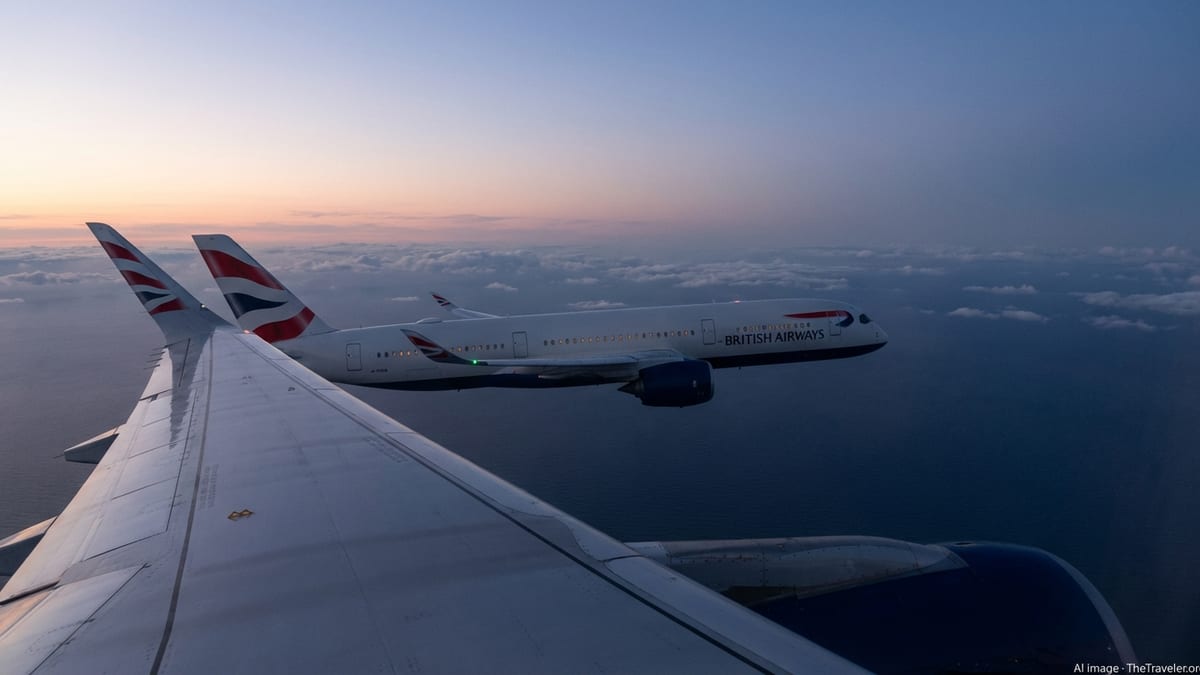
Two Long-Haul Links Withdrawn Until 2027
Recent schedule filings and publicly available timetables indicate that British Airways has removed two long-haul routes from regular operation until 2027, effectively putting the services on extended pause rather than classifying them as permanent closures. The changes appear in updated route summaries and airport data that list the services as resuming in early 2027, after multiple seasons of absence.
Information compiled from airport and airline schedule data shows that affected flights are long-haul links that require widebody aircraft and substantial crew and operational resources. In official listings, the services are no longer displayed as active options for the 2026 travel calendar, with the next available dates pushed into 2027.
Industry observers note that such extended suspensions typically reflect a combination of commercial demand assessments, aircraft availability, and external factors such as geopolitical risk or airspace restrictions. Rather than operating at reduced frequency, British Airways has opted to remove the routes from sale until conditions are judged more favorable for a full relaunch.
The decision effectively takes two intercontinental corridors out of the airline’s global portfolio for at least one full year, creating knock-on effects for connecting traffic through London and for travelers seeking nonstop options on specific city pairs.
Operational Pressures Behind the Route Decisions
Publicly available coverage of British and European aviation indicates that carriers continue to adjust long-haul networks in response to aircraft delivery timelines, maintenance cycles, and the need to prioritize high-yield markets. Widebody capacity remains tightly managed, and airlines are redeploying aircraft towards routes that promise stronger premium demand or fewer operational constraints.
Analysts following British Airways note that extended suspensions, rather than short rolling cancellations, give the airline greater planning certainty. By formally removing a route from the schedule until a set point in the future, planners can commit aircraft to other destinations, refine crew rosters, and avoid repeated short-notice changes that frustrate passengers and strain customer-service resources.
There is also a financial dimension. Long-haul routes tie up significant capital and are exposed to fuel-price swings, insurance costs, and airspace-routing inefficiencies. If those factors worsen on a given corridor, an airline may choose to pause the service for several seasons, even if long-term demand looks promising. Public reporting on network changes across Europe shows several examples of airlines stepping back from marginal long-haul routes and later returning when conditions improve.
In British Airways’ case, the decision to push the two routes out to 2027 aligns with a broader pattern of network consolidation around core markets while selectively rebuilding secondary long-haul links. The extended timeline suggests that the carrier is not counting on a quick reversal of the pressures affecting those specific services.
Impact on Travelers and Booked Itineraries
For travelers, the most immediate consequence is the loss of nonstop options and the need to reroute through alternative hubs or on partner airlines. Journey times can increase, and connections may involve additional security checks or immigration procedures, depending on the transit point. Passengers who prefer single-carrier itineraries may find fewer choices on the affected city pairs for the 2026 travel period.
According to publicly available information on general airline-practice standards, customers whose flights are removed from the schedule are typically offered rebooking on alternative services, rerouting through other hubs, or refunds. The precise options depend on the fare type and the jurisdiction in which the ticket was purchased, but many travelers facing long-haul cancellations are able to select new dates or different routings without extra charges.
Consumer advocates often advise passengers to monitor their bookings closely whenever an airline announces a prolonged suspension, as timetable changes can occur in multiple waves. Travelers with trips planned deep into 2026 may find that their original itineraries are altered months in advance, providing time to adjust hotel reservations or connecting flights on other carriers.
Frequent flyers and corporate travel planners are also likely to recalibrate their strategies. With two British Airways long-haul routes off the board until 2027, some organizations may shift premium travel to other oneworld partners or to competing carriers that still operate nonstop links on similar corridors, especially where time-sensitive business travel is involved.
Network Strategy and Competitive Landscape
The extended pause on the two routes fits into a wider pattern of network reshaping by European and global full-service airlines. Since the pandemic, carriers have repeatedly trimmed and restored long-haul services in response to changing border rules, regional tensions, and economic conditions. British Airways has been part of that broader trend, adding capacity on some long-haul routes while reducing or suspending others.
Published analysis from aviation-focused outlets highlights that competition on many long-haul markets has intensified, particularly where Gulf and Asian airlines offer alternative one-stop options between Europe, Asia, and Australasia. When a European carrier suspends a route for several seasons, rival airlines often step in to capture displaced traffic, leveraging their own hubs and connecting banks.
For British Airways, the challenge is to maintain a compelling global network centered on London while managing costs and operational risk. By committing to a 2027 return for the suspended services, the airline signals that it still sees long-term value in those markets, even as it diverts aircraft to destinations that currently deliver stronger returns or fewer complications.
Travelers planning long-haul trips over the next year will be watching closely for further schedule updates. Any acceleration of the return date or redeployment of aircraft to new routes could reshape the options available from London and nearby airports, while the eventual relaunch in 2027 will test whether demand on the paused corridors has rebounded sufficiently to sustain consistent service.