


More news on this day
Iran’s decision to reject a United States backed proposal to immediately and fully reopen the Strait of Hormuz has extended weeks of uncertainty across the Gulf, with travel, trade and energy flows remaining vulnerable to sudden disruption that directly affects residents and travelers in the United Arab Emirates.
Get the latest news straight to your inbox!
What Iran’s rejection means for the Strait of Hormuz
The Strait of Hormuz is a narrow waterway linking the Gulf with the Arabian Sea and beyond, and is regarded as one of the world’s most important energy and shipping corridors. A large share of the crude oil and liquefied natural gas exported from the region typically transits this chokepoint, alongside container traffic serving Gulf hubs such as Jebel Ali and Khalifa Port.
Since the outbreak of the latest Iran United States confrontation and the closure or partial closure of the strait during key phases of the crisis, navigation has operated under heightened military tension and, at times, formal restrictions. The recent US backed plan sought a clearer framework to normalize traffic and provide guarantees on freedom of navigation, but Tehran has pushed back against arrangements it views as limiting its leverage and regional role.
Reports indicate that Iranian officials have instead tied any durable reopening to broader conditions, including an end to attacks on Iranian territory and allied groups, security guarantees, and international recognition of Iran’s position in the waterway. This approach leaves the strait technically passable at times, but subject to rapid changes in risk levels, insurance costs and operational rules for passing vessels.
For UAE residents, the rejection does not mean that all traffic stops, but it does mean that uncertainty persists. Travel, shipping and energy companies must continue to plan around a fluid security situation rather than a stable, treaty based reopening.
How air travel from the UAE is being rerouted
Passenger flights in and out of the UAE are not directly sailing through the Strait of Hormuz, but air routes over and around the Gulf have been repeatedly reviewed since the conflict intensified. Publicly available airspace notices show that some airlines have adjusted flight paths to avoid sensitive zones, especially near Iranian coastal areas and over parts of the Gulf closest to potential military activity.
For travelers, this can translate into modestly longer flight times on certain routes, especially to Europe and North America, as aircraft take more southerly or circuitous paths. In some cases, schedules have been padded to absorb possible air traffic control delays or reroutings that are decided in real time as the security picture shifts.
Major UAE based carriers have generally sought to maintain their global networks while incorporating risk assessments derived from open aviation advisories and insurance requirements. When tensions spike, airlines can temporarily replace overwater night routes with daylight schedules or shift cruise levels to comply with new safety guidance. These measures are designed to keep passenger services running while reducing exposure to any escalation near the strait.
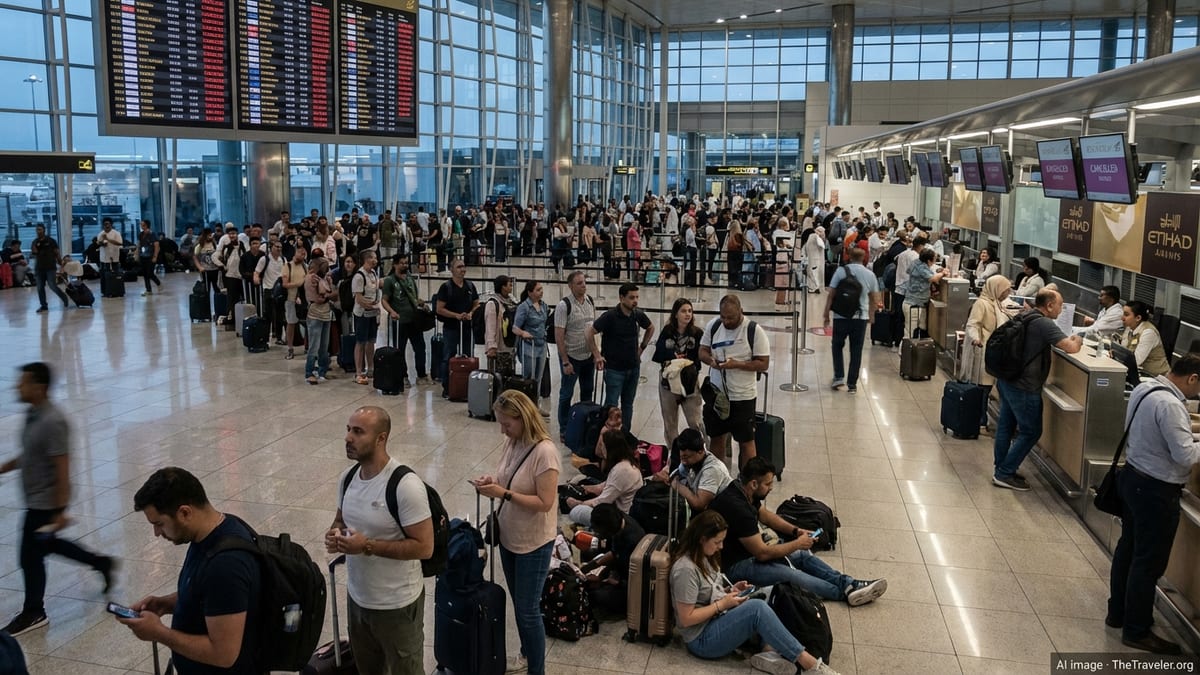
Residents planning trips are advised to keep an eye on schedule updates from their airline and allow extra time for connections, especially when itineraries involve multiple regional stops. While large scale cancellations have not become the norm, short notice changes to routing and timing remain a possibility while the diplomatic standoff over Hormuz continues.
Implications for shipping, imports and consumer prices in the UAE
For the UAE, which has developed some of the region’s largest ports and logistics hubs, uncertainty in the Strait of Hormuz carries direct implications for trade flows. Container ships, oil tankers and product carriers serving Emirati ports often pass through or near the strait, and higher risk assessments can translate into increased insurance premiums, rerouting and delays.
Shipping industry coverage indicates that some operators have already adopted more conservative routing, sailing in convoys where possible and coordinating closely with naval escorts or monitored corridors. Longer voyages and higher war risk surcharges can raise costs for imported goods, refined fuel shipments and raw materials that feed UAE industries.
For residents, the effect may be gradual rather than immediate. Over time, higher transport and insurance costs can filter through to consumer prices, particularly for imported foodstuffs, construction materials and manufactured goods. Fuel prices in the UAE, which are adjusted monthly, can also reflect global oil market volatility linked to the status of the strait, even when domestic supply remains physically secure.
Business travelers and logistics managers based in the Emirates are watching freight schedules closely. Any future escalation that further restricts tanker or container movements through Hormuz could prompt companies to redirect some cargo via alternative regional ports, or to build up inventories to cushion against potential bottlenecks.
Safety, security and travel planning for UAE residents
While the current situation centers on maritime access and high level diplomacy, it naturally raises questions for people living in Gulf states closest to the strait. Publicly available briefings from regional governments and international agencies have consistently emphasized that there is no broad evacuation guidance for residents and tourists in the UAE, but that individuals should remain informed and follow official advisories.
For day to day life in the Emirates, most activity continues as normal. Schools, offices, malls and airports remain open, and major attractions are operating. The main adjustments for residents and visitors are more subtle: closer scrutiny at some border points, occasional security related traffic diversions around ports or industrial zones, and the heightened presence of maritime patrols in Gulf waters.
Travel specialists recommend that UAE based residents check their travel insurance policies carefully to ensure that coverage remains valid for trips that involve transiting near conflict affected areas. Some providers classify the waters around Hormuz as a higher risk zone, which can affect policies for cruise itineraries, yacht deliveries or specialist offshore work.
It is also sensible for residents with upcoming trips to Iran, Iraq or other frontline states to monitor visa policies and airline schedules, which can shift quickly during periods of heightened tension. For most travelers whose journeys start and end within the UAE or link through its airports to other regions, the main impact is likely to be uncertainty rather than direct danger.
What to watch next: diplomacy, energy markets and regional travel
Iran’s refusal to accept the latest US backed framework for reopening the Strait of Hormuz does not close the door on further negotiations. Recent coverage of the talks suggests that intermediaries are continuing to explore compromise formulas that would pair security guarantees for shipping with phased political and military steps by all sides.
For UAE residents, developments in three areas will be particularly important. The first is whether a durable ceasefire arrangement around Iran and its regional adversaries takes hold, reducing the likelihood of sudden escalations that could again threaten traffic in the strait. The second is how global oil and gas markets respond to each twist in the talks, since price swings can quickly influence transport and household costs in the Emirates.
The third concerns regional connectivity. Any new agreement that stabilizes the maritime environment could encourage airlines, cruise operators and logistics providers to restore suspended routes, launch new itineraries and invest in additional capacity. Conversely, a prolonged stalemate or fresh disruption around Hormuz could delay new projects and keep risk premiums elevated, ultimately feeding into higher costs for travelers and businesses.
Until a clearer diplomatic outcome emerges, UAE residents are likely to live with a degree of strategic uncertainty just off their shores. Understanding how the Strait of Hormuz shapes energy flows, shipping patterns and travel options can help individuals and companies make more informed decisions in an evolving situation.