


More news on this day
Oman Air is reporting delays and schedule changes on select routes after temporary airspace restrictions in parts of the Middle East forced airlines to reroute traffic through Oman’s airspace, increasing congestion around Muscat International Airport.
Get the latest news straight to your inbox!
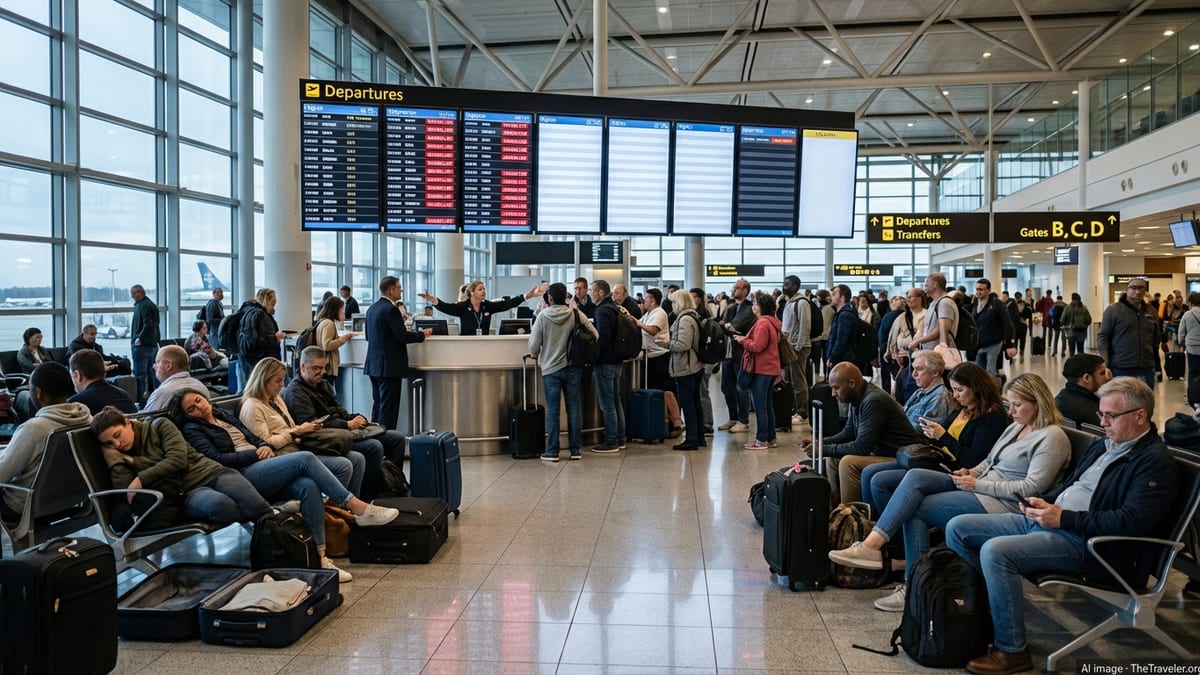
Temporary airspace measures ripple across Oman routes
Publicly available flight tracking data and operational bulletins indicate that recent temporary airspace restrictions in neighboring Middle Eastern flight information regions have diverted additional traffic into Muscat’s skies. While Oman’s own airspace remains open, the knock-on effect has been a denser flow of aircraft transiting the Muscat Flight Information Region, particularly on Europe–Asia and South Asia–Gulf corridors.
According to industry analyses of the current regional situation, closures and restrictions in parts of the Middle East have disrupted key east–west corridors and led airlines to favor more southerly routings. This has elevated the role of Muscat as an alternate pathway, concentrating traffic that would normally be more widely distributed. As a result, Oman Air’s operations are being affected by constraints that originate beyond the airline’s direct control.
Reports from recent weeks show that some carriers using Muscat for overflights, diversions, and technical stops have had to adapt at short notice as airspace availability changed. In this environment, Oman Air’s own schedules are interacting with an unusually high number of transit flights, contributing to periods of airborne holding, extended taxi times, and revised departure slots.
Congestion at Muscat leads to delays and longer journeys
Regional aviation briefings focused on the Middle East describe a pattern of mounting congestion at hubs that remain fully or partially open while neighboring airspace is constrained. For Oman Air, based at Muscat International Airport, this has translated into delays on both departure and arrival waves when air traffic control flow management measures are in place.
Operational presentations submitted to international aviation forums highlight Muscat’s experience in earlier airspace crises, noting that surges in unplanned traffic can lead to long airborne and ground delays, unplanned diversions, and higher workload for controllers. Current conditions appear to echo those patterns, with Oman Air flights occasionally held on the ground or in holding stacks while priority is managed among rerouted international traffic.
Travelers connecting through Muscat have reported schedule changes, including extended layovers and, in some cases, significant re-timings of onward flights when routing options narrowed. These adjustments are consistent with standard airline responses to regional airspace disruptions, where carriers consolidate services, adjust departure banks, and add buffer time to rotations in an effort to stabilize operations.
Airspace restrictions tied to wider Middle East disruptions
Aviation and economic analyses of the 2026 Middle East security crisis describe widespread airspace closures, temporary flight restrictions, and capacity reductions across several states. These measures have affected major hubs around the Gulf and beyond, prompting airlines to redraw long-haul routings between Europe, Asia, and Africa and to increase reliance on remaining open corridors, including Oman’s airspace.
Industry assessments note that when surrounding airspace closes or becomes heavily restricted, Muscat’s role as a southern bypass becomes more prominent. This can rapidly increase the volume and complexity of traffic in Oman’s skies, even if the country’s own airports and airspace infrastructure are functioning normally. For Oman Air, that environment narrows the operational flexibility typically used to absorb minor disruptions, making any additional constraint more likely to cascade into visible delays.
Analysts also point out that capacity limits in air traffic management systems can become binding far sooner than runway or terminal capacities. In practice, this means that even modest additional flow from rerouted traffic may push sectors around Muscat toward their safe handling limits during peak hours, requiring regulators and controllers to meter departures and arrivals. Oman Air’s reported delays fit within this broader pattern of regionwide congestion.
Impact on passengers and guidance for upcoming trips
For passengers, the most immediate impact is manifesting as longer journey times, rescheduled departure slots, and tighter or extended connections through Muscat. Anecdotal accounts from travelers in recent days describe late-notice schedule adjustments and boarding delays attributed to airspace restrictions on routes into and out of Oman and neighboring states.
Travel advisories from industry and corporate travel risk providers generally recommend that passengers build additional time into itineraries touching the Gulf region while temporary airspace measures remain in place. Oman Air customers are being advised in public-facing guidance and through booking channels to monitor their flight status closely, keep contact details up to date with the airline, and be prepared for potential last-minute gate or timing changes.
Travel management experts indicate that, where possible, passengers on complex itineraries should aim for slightly longer connection windows at Muscat to reduce the risk of misconnecting if an inbound sector is delayed. Flexible tickets and travel insurance that covers delays may also provide additional protection in a period of heightened operational uncertainty.
Outlook as regional airspace situation evolves
Forecasts from aviation bodies assessing the Middle East traffic outlook suggest that irregular operations could persist as long as airspace access across the region remains fluid. While Oman’s own skies are expected to remain a key corridor, the scale and duration of rerouted traffic flows will depend on the trajectory of the broader security situation and the reopening of currently restricted corridors.
Strategic planning documents from Oman’s aviation authorities emphasize that Muscat has been investing in airspace design and capacity enhancements to reduce bottlenecks and better absorb traffic surges. However, these same assessments acknowledge that in severe regional crises, even well-prepared systems can experience delays when multiple neighboring airspaces impose restrictions at the same time.
For now, Oman Air passengers are likely to continue facing periodic disruptions linked to the wider Middle East airspace picture rather than to localized technical issues in Oman. Travelers with upcoming journeys through Muscat are encouraged, via public advisories and airline communications, to stay informed about their specific flights and to anticipate that schedules may be adjusted as the regional situation evolves.