


More news on this day
British holidaymakers heading to Europe this summer are being urged to prepare for queues of up to six hours at passport control, with seven major EU airports singled out as particular trouble spots as new biometric border checks collide with peak-season traffic.
Get the latest news straight to your inbox!
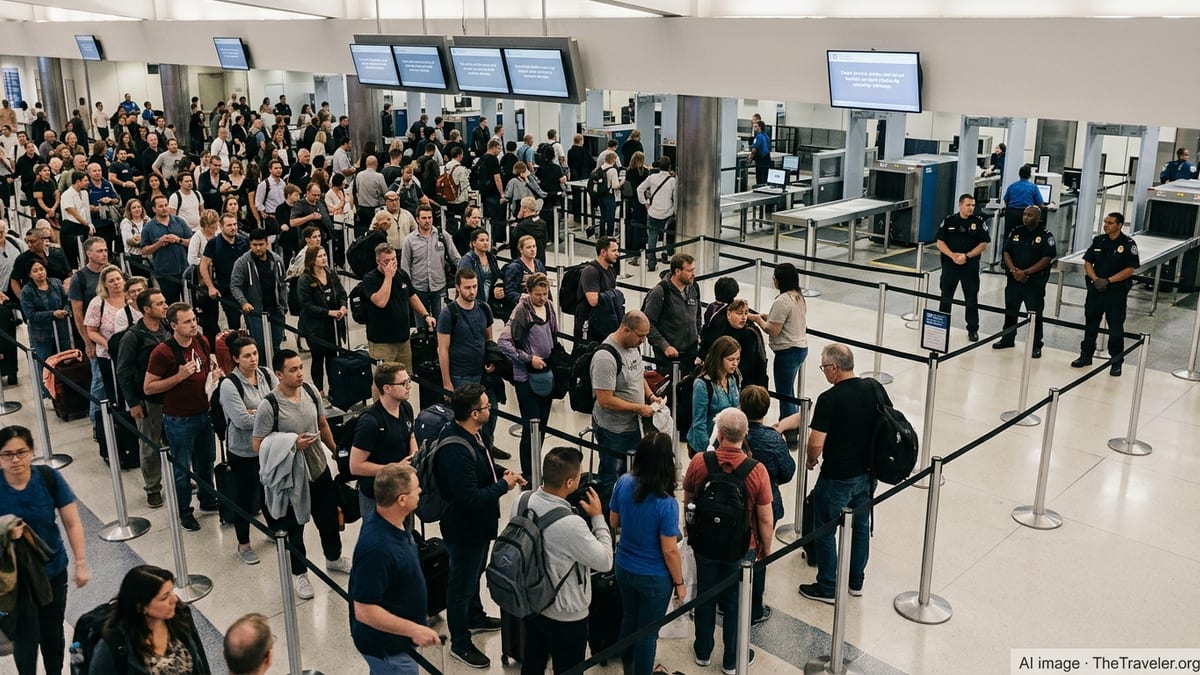
New EU border system blamed for mounting delays
Travel industry reports link the latest warnings to the European Union’s new Entry/Exit System, a biometric border regime that became fully operational at most Schengen external borders in April 2026. The system records fingerprints and facial images for non-EU visitors, including British passport holders, at their first entry and exit.
While the technology is intended to tighten security and automate future crossings, early evidence from airports across the bloc indicates that registration is taking significantly longer than anticipated during busy periods. Aviation trade groups have highlighted cases where queues have already stretched to four or five hours at peak times, and in worst case scenarios could reach six hours if systems falter or staffing falls short.
Publicly available information from airport associations suggests that the combination of manual checks, new kiosks and data verification has squeezed capacity at border control just as summer demand returns to near pre-pandemic levels. Industry forecasts show tens of millions of British trips to Europe this year, intensifying the strain on terminals that were already operating close to their limits during school holidays.
Travel commentators note that the delays are not confined to any single country, but instead reflect how unevenly the Entry/Exit System has been rolled out, with some airports investing in extra staff and infrastructure and others still adapting procedures in real time.
Seven airports highlighted as high-risk bottlenecks
Budget carriers and aviation news outlets have drawn particular attention to seven airports where non-EU queues are reported to be consistently long and vulnerable to further deterioration as July and August traffic builds. These include popular Spanish gateways such as Malaga, Alicante and Tenerife South, key leisure airports around the Mediterranean, and at least one major low-cost hub in northern or central Europe frequently used by UK travellers.
Airline briefings monitored by travel media describe these locations as being at heightened risk of “queue chaos,” with reports of passengers missing flights, planes departing half empty and queues spilling into public areas during busy changeover weekends. In some instances, passengers arriving from the UK have faced additional waits for baggage reclaim and onward transport because border-processing backlogs created a wave of late arrivals.
Several of the named airports serve some of Europe’s most popular beach resorts, making them especially exposed to concentrated flows of British families during school breaks. Commentators warn that the coming weeks will test both terminal layouts and the resilience of newly installed biometric kiosks as multiple full flights arrive within short timeframes.
Airport-focused analysis indicates that local operators are attempting to reconfigure queuing areas, redeploy staff and add signage for non-EU passengers, but acknowledge that physical constraints and the time required for first-time biometric enrolment limit how quickly throughput can be improved before the height of summer.
Airlines and airport bodies press for changes
The growing disruption has prompted a coordinated response from airline and airport associations, which argue that the current implementation of the Entry/Exit System is not sustainable during peak travel periods. Public statements from industry bodies call for either a phased approach to full enforcement or temporary relief measures to prevent severe congestion at the busiest gateways.
Low-cost carriers with large networks between the UK and Europe have been particularly vocal, using public communications to warn customers about potential six-hour waits and to urge authorities to streamline processes. Some operators have adjusted schedules or gate allocations in an attempt to absorb late-arriving passengers, but stress that they have limited control over border processing times.
Airports Council representatives and other European trade groups have warned that prolonged delays could damage the region’s reputation as an accessible destination and deter repeat visitors. Economic modelling cited in travel-industry coverage suggests that routine delays of several hours at passport control risk billions in lost tourism spending if travellers divert to destinations with smoother entry procedures.
National and EU institutions have acknowledged the pressures in broad terms through public briefings, while emphasising that the new system is a legal requirement designed to enhance security and track overstays. Travel specialists note that any significant redesign of the scheme or change to its timeline would require political agreement between member states, making rapid adjustments difficult even as the summer peak arrives.
What British travellers can expect at the border
For British citizens, the most immediate impact of the new regime is felt on arrival at their first Schengen border crossing. Instead of a quick passport stamp, first-time Entry/Exit System users are required to provide fingerprints and may need to undergo facial image capture at dedicated kiosks or booths before proceeding through manual checks. Subsequent trips should be faster, but anecdotal accounts suggest that technical glitches or missing records have occasionally forced repeat registrations.
Travel reports describe a patchwork of experiences. At some airports, passengers report completing the process in under an hour outside peak times, while others recount standing in static lines for several hours when multiple large aircraft landed in quick succession. Families with young children and travellers with reduced mobility are among those most affected when queues stretch far beyond the terminal’s original design.
Observers note that outbound journeys back to the UK can also be affected, particularly where border facilities for non-EU departures are limited or where returning passengers’ data needs to be verified. In congested terminals, this has the potential to cause knock-on delays at security and boarding, especially on days when charter and low-cost flights are tightly banked.
Despite the difficulties, travel analysts stress that the underlying risk is one of time rather than safety. Airports and carriers continue to operate normally, but travellers passing through the most affected hubs should expect an experience that is considerably slower and less predictable than in previous summers.
Practical advice for summer 2026 holidaymakers
Publicly available guidance from airlines and airport operators now routinely advises UK passengers to build in significantly more time than usual when travelling to or through the seven highlighted airports. For many routes, travellers are being encouraged to arrive earlier at their departure airport, especially if they are checking bags or flying at peak morning and weekend periods.
On arrival in the EU, passengers are being urged by travel commentators to follow signage for non-EU queues, have passports ready, and keep accommodation details and onward travel information accessible in case they are asked for supporting documentation. While such steps cannot remove systemic delays, they can help prevent additional holdups at the individual level.
Families are advised to prepare for the possibility that children may need to participate in fingerprint or facial image capture, depending on local rules, and to bring snacks, water and entertainment for young travellers in case queues extend to several hours. Those with tight onward connections, such as separate low-cost flights or long-distance rail bookings, are being warned that missed links are a real risk at certain hubs this summer.
Travel planners suggest that, where possible, British holidaymakers consider routing via airports that have not featured in recent warning lists or scheduling arrivals outside the busiest weekend peaks. However, with demand already high and alternative flights limited on many leisure routes, the overarching message is that patience, flexibility and extra time are now essential components of a trip from the UK to the most popular corners of Europe.