

More news on this day
Travelers at Brussels Airport faced severe disruption as nearly 100 flights were delayed and several cancelled, leaving passengers bound for Oslo, Freetown, Newark, Montreal and other destinations stranded for hours in packed terminals.
Get the latest news straight to your inbox!
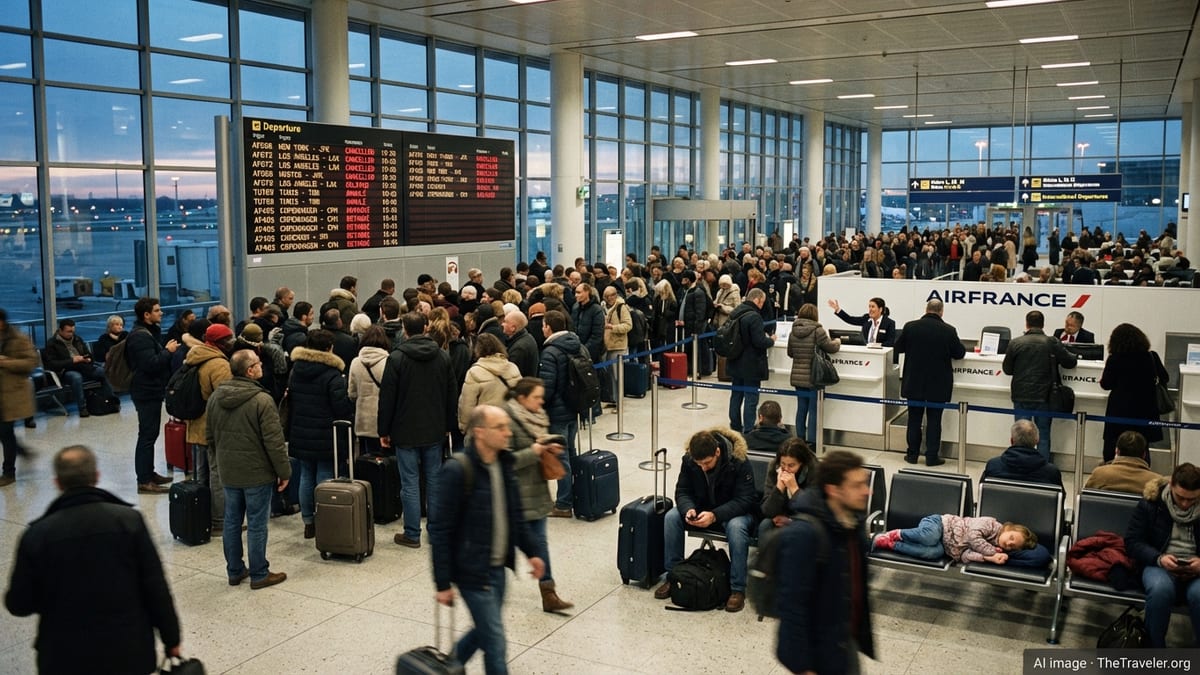
Widespread Disruption Hits Key Summer Departures
The latest operational disruption at Brussels Airport has caused an estimated 98 flight delays and at least five cancellations, affecting a mix of short haul and long haul routes at the height of the early summer travel period. Publicly available flight boards and tracking services on 18 June show clusters of late departures and retimed services across European and transatlantic networks, as ground handling and air traffic capacity struggled to keep schedules on track.
Passengers heading to Oslo, Freetown, Newark and Montreal were among those most visibly impacted, with departure times repeatedly pushed back and some rotations removed from the schedule entirely. Flights operated by SAS, Brussels Airlines, Ryanair, Air Baltic and other carriers all appeared among those disrupted, compounding the sense of uncertainty for travelers already checked in and waiting at the gate.
Reports from Belgian and international aviation outlets indicate that the situation is unfolding against a wider backdrop of operational strain in Belgian airspace in June, following earlier stoppages by air traffic controllers and a series of technology and staffing challenges. Although the latest disruption is more contained than the complete airspace shutdown seen on 2 June, the cumulative effect for travelers connecting through Brussels has been significant.
While live data continued to update throughout the day, the pattern pointed to rolling delays rather than a single isolated incident, with knock on effects expected to ripple into the evening bank of departures and overnight arrivals.
Airlines Scramble to Rebook and Recover Schedules
Carriers using Brussels as a hub or focus city moved into recovery mode as delays mounted. Brussels Airlines, which concentrates a large share of its European and African network at the airport, adjusted rotations, swapped aircraft and retimed services in an attempt to preserve long haul connections where possible. Published guidance from the airline in recent days has emphasized the use of its mobile app and airport displays for real time status updates, and indicates that rebooking and waiver options may be available during severe disruption.
Scandinavian carrier SAS, which links Brussels with its Nordic hubs and beyond, has already been managing a challenging June marked by selective route suspensions and high load factors across the network. Recent passenger accounts from other SAS routes describe late flight notifications, overnight delays and complex rebooking via alternative hubs, underscoring how even small schedule changes can cascade through a tightly timed operation.
Low cost operator Ryanair, an important player at Belgian airports, has also been contending with industrial and airspace issues in the country this month. Coverage of an air traffic control strike on 2 June highlighted widespread cancellations and diversions affecting Ryanair flights in and out of Charleroi and Brussels, illustrating the vulnerability of high frequency point to point airlines when en route and terminal airspace becomes constrained.
For smaller carriers such as Air Baltic and regional operators serving Brussels, the main challenge has been securing new slots and parking positions once delays extend beyond their initial window. With aircraft and crew often scheduled to operate multiple legs in a single day, a delay originating in Brussels can quickly spread across several countries.
Passengers Endure Long Queues, Unclear Timelines
For travelers on the ground, the operational data translated into hours of waiting at departure gates, service desks and baggage halls. Social media posts and traveler forums on 18 June describe long queues at information counters and security, scarce seating in departure lounges and families struggling to rearrange onward travel once their flights were delayed beyond planned connection times.
Several passengers reported receiving multiple rolling delay notifications on their phones, with departure times shifting in 30 to 60 minute increments as airlines and the airport sought new slots. In some cases, flights that were initially listed as delayed were later removed from departure boards entirely as they were cancelled or consolidated with later services.
Travelers connecting through Brussels on their way to long haul destinations such as Freetown, Newark and Montreal faced particular uncertainty, as missed connections can mean overnight stays and complex rerouting via other European hubs. Accounts shared in recent weeks by passengers on similar disrupted itineraries show that rebookings can involve entirely new routings through cities like Frankfurt, Copenhagen or Chicago, depending on available capacity and interline agreements.
With school holidays approaching across much of Europe, the timing of the disruption has heightened frustration. Many of those affected are leisure travelers with fixed accommodation bookings at their destinations, for whom even a 12 hour delay can trigger a cascade of lost hotel nights, missed tours and additional costs.
Background of Strain in Belgian Airspace
The latest wave of delays comes less than three weeks after a high profile stoppage at Belgian air navigation provider Skeyes, which led to the temporary closure of large parts of Belgian airspace on 2 June. Contemporary coverage documented a broad halt to flights to and from Belgian airports for several hours, causing widespread cancellations, diversions and same day disruption for tens of thousands of passengers.
While operations resumed after that event, observers note that the system has remained sensitive to any additional stress, whether from staffing constraints, weather, technical issues or congestion in adjacent air traffic control sectors. Eurocontrol performance briefings for early June point to continued pressure points in continental European airspace, with carrier on time performance affected by a mix of en route constraints and airport capacity limits.
Belgium’s two main commercial airports, Brussels Airport and Brussels South Charleroi, both play important roles in European networks, anchoring hub operations, low cost point to point services and long haul links. Any constraint in Belgian airspace can therefore trigger a chain reaction of delays for flights crossing the region, including services that only briefly transit Belgian-controlled sectors.
Aviation analysts commenting on recent events have underscored that, while industrial actions or technical failures may be short lived, the knock on effects on airline schedules can persist for days. Aircraft and crews end up out of position, maintenance windows are compressed, and spare capacity that might otherwise absorb minor delays is quickly exhausted.
What Stranded Travelers Can Do Next
For passengers still facing disruption at Brussels Airport, publicly available consumer guidance highlights a few immediate steps. Travelers are generally advised to monitor their flight status through airline apps, departure boards and text or email notifications, as information at gate level can change more rapidly than generic timetables.
In parallel, many airlines encourage affected customers to use digital self service tools for rebooking, rather than queuing at physical service desks. Recent documentation from Brussels Airlines and other European carriers notes that, during major disruption events, change fee waivers and alternative routing options may be made available online, sometimes including departures from nearby airports.
Under European passenger rights regulations, travelers on flights departing from EU airports may be entitled to care such as meals, refreshments and accommodation during long waits, as well as compensation in certain circumstances when delays or cancellations are not caused by extraordinary events. However, the exact level of support depends on multiple factors, including flight distance, length of delay and the cause of the disruption.
As operations gradually stabilize, aviation observers will be watching how quickly Brussels Airport and its airline partners can restore normal schedules and absorb the backlog of displaced passengers. For now, those traveling from the Belgian capital are being urged, through publicly available advisories, to allow extra time at the airport and to be prepared for late changes to their plans.