


More news on this day
Travelers across the United States and Europe faced mounting disruption today as Delta Air Lines reported 473 flight delays and 29 cancellations, disrupting heavily used domestic and international routes serving Atlanta, New York, Orlando, Los Angeles, London, Paris, Amsterdam, and Rome.
Get the latest news straight to your inbox!
Wide Ripple Effects Across Delta’s Domestic Network
The latest operational disruption hit Delta’s largest hubs first, with Atlanta and New York emerging as focal points for cascading delays. Publicly available tracking data showed a growing number of late departures from Hartsfield Jackson Atlanta International Airport, where Delta operates its biggest connecting complex, affecting connections across the Southeast and onward links to the West Coast and Europe.
New York’s key airports experienced similar strain as schedule changes in and out of John F. Kennedy and LaGuardia quickly multiplied the number of missed connections. Travelers bound for Orlando and Los Angeles reported extended ground holds and rolling departure-time changes as aircraft and crews arrived late from earlier flights, creating a knock-on effect throughout the domestic network.
While only 29 flights had been canceled at the time the figures were compiled, the 473 reported delays represented a significantly larger operational challenge for passengers. Extended delays often leave travelers caught between waiting for a late departure or attempting to rebook through already congested alternative routes, with both options increasing time spent in crowded terminals.
The pattern mirrored previous disruption days in the United States in which a relatively small number of outright cancellations masked a far greater share of flights operating well behind schedule. For Delta customers, this translated into missed onward flights, lengthier layovers, and difficulty securing same-day alternatives to popular destinations including Orlando and Los Angeles.
Transatlantic Disruptions Impact London, Paris, Amsterdam, and Rome
The disruption was not limited to North America. Delta’s transatlantic network also experienced knock-on effects, with services connecting major European gateways such as London, Paris, Amsterdam, and Rome subject to delays and schedule shuffles. These routes are among the airline’s most important long haul services, carrying a mix of business travelers, tourists, and connecting passengers bound for further destinations across Europe, Africa, and the Middle East.
Publicly available flight-status boards indicated late departures from US hubs to Europe, as well as delayed inbound arrivals returning to American cities. Even when European departures remained technically “on schedule,” earlier delays in the system affected check in times, boarding, and crew rotations, increasing the risk of last minute changes.
For passengers starting their journeys in London, Paris, Amsterdam, or Rome, the primary challenge was uncertainty over connections onward to US domestic destinations. Many travelers rely on same day links from European arrival flights into cities such as Atlanta, New York, Orlando, and Los Angeles. When long haul segments depart behind schedule, tightly timed onward itineraries can quickly become unworkable, forcing passengers to accept overnight stays or rerouting.
Because Delta coordinates extensively with joint venture and codeshare partners on its European routes, extensive delays can also complicate itineraries that include other major carriers. When one airline’s long haul arrivals are late, it can strain partner operations that must adjust gate allocations and handling resources at busy European hubs.
Stranded Travelers Face Long Lines and Limited Rebooking Options
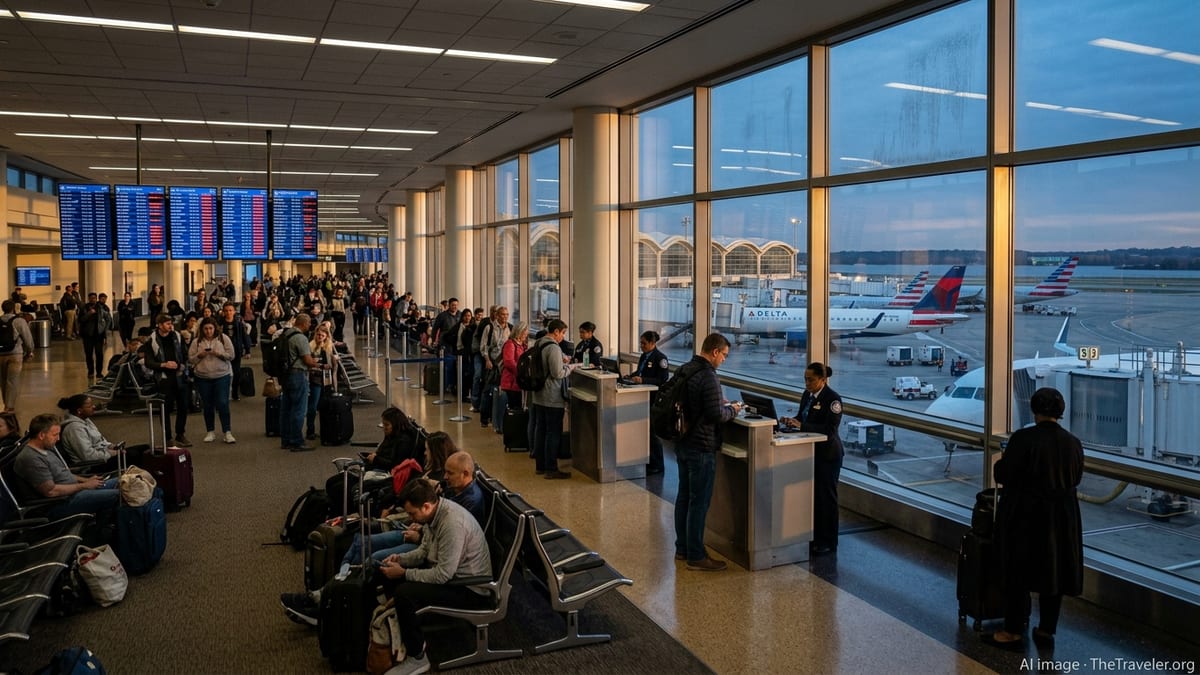
As the day’s disruption widened, images from major airports showed substantial queues at customer service counters, self service kiosks, and gate podiums. Travelers attempting to adjust plans found that many alternative routings on Delta and other major carriers were already heavily booked, a common pattern during periods of widespread delay across the US system.
Rebooking challenges were particularly acute at Delta’s main connecting hubs. In Atlanta and New York, passengers with missed onward flights to Orlando, Los Angeles, and other leisure markets discovered that remaining same day seats were scarce amid peak travel demand. Some travelers were offered itineraries involving multiple connections or travel the following day instead of the nonstop or one stop journeys they originally booked.
Airport hotel capacity also came under pressure as longer delays turned into missed final connections, leaving some travelers needing overnight accommodation at short notice. In busy markets surrounding large hubs, rooms near the airport can sell out rapidly on high disruption days, pushing affected passengers to outlying properties and increasing their ground transport costs and time.
At the same time, not all passengers were fully aware of their digital options. Delta’s mobile app and website provide tools to monitor flight status, accept automatic rebooking, and adjust seats, but travelers caught in rapidly changing situations sometimes discovered updates only after arriving at the gate, limiting their ability to choose among alternatives before they filled.
Potential Causes and Broader Context for the Disruption
As of today, no single, clearly defined cause has been publicly confirmed for the exact pattern of 473 delays and 29 cancellations. Recent aviation coverage has highlighted a mix of factors that frequently converge to disrupt operations across multiple US carriers, including seasonal thunderstorms, staffing constraints in air traffic control, and airline specific crew and aircraft positioning challenges.
Industry data from the US Department of Transportation and independent flight tracking services show that delays often outnumber cancellations by a wide margin on high impact days. Even when weather affects only part of the country, temporary ground stops or flow restrictions into key hubs such as Atlanta and New York can quickly reverberate across national and international networks as aircraft and crews end up out of position.
Delta has faced periods of significant disruption before, including past events linked to technology outages and severe weather, which highlighted the vulnerability of complex hub and spoke systems to any prolonged interruption. Analysts frequently note that once substantial delays accumulate early in the day, it can be difficult for large carriers to return to normal schedules before the end of the evening wave of departures.
The current disruption fits into a broader pattern in which large US airlines operate at or near capacity during peak periods, leaving limited slack in schedules to absorb irregular operations. When irregular events occur, even a modest share of delayed flights can translate into hours of additional travel time and complex rebooking scenarios for tens of thousands of passengers.
What Impacted Travelers Can Do Next
For travelers still en route or preparing to fly on Delta today, publicly available guidance from airline and government resources emphasizes proactive monitoring and flexibility. Checking flight status repeatedly in the hours before departure, confirming gate information at the airport, and enrolling in text or app alerts can reduce the risk of missing time sensitive changes to boarding or departure times.
Passengers facing significant delays or missed connections are typically able to explore rebooking options online or in the airline’s mobile app before joining airport service queues. In past disruption events, travelers who acted early often secured scarce seats on later flights, while those who waited until arrival at the airport found fewer options remaining.
For itineraries that include international segments to or from London, Paris, Amsterdam, or Rome, it may be especially important to review minimum connection times and consider the possibility of overnight stays if outbound or inbound long haul flights are heavily delayed. Travelers who booked through online or traditional travel agencies may also have access to additional support in reshaping complex multi carrier journeys.
While today’s figures of 473 delays and 29 cancellations represent a snapshot in time, the experience serves as a reminder that even airlines with strong historical reliability can encounter days of severe disruption. For many travelers caught in the latest wave of schedule changes, the immediate priorities remain reaching their destinations safely, securing accommodation if needed, and piecing together new routes through some of the world’s busiest air travel hubs.