


More news on this day
JetBlue passengers traveling through major U.S. and Caribbean gateways are facing significant disruption as operational data for Thursday shows 209 delayed flights and 17 cancellations across the carrier’s network, affecting domestic and international routes into New York, Boston, Fort Lauderdale, Orlando, Los Angeles, San Juan, Cancun, Aruba, Nassau, and other popular destinations.
Get the latest news straight to your inbox!
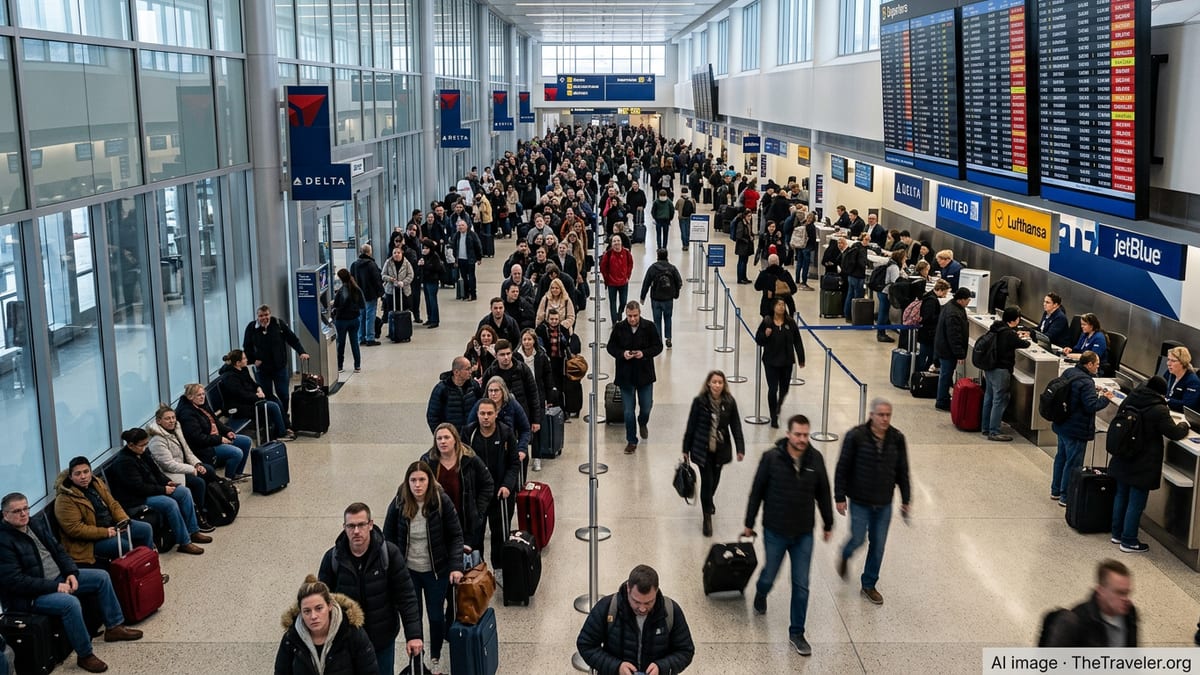
Wide Network Impact on Busy Summer Routes
The latest disruption is hitting at the height of the early summer travel period, when demand for leisure and family travel is building toward the July peak. Publicly available tracking data indicates that JetBlue’s current wave of delays and cancellations is concentrated around some of its largest bases and focus cities, including New York, Boston, and Fort Lauderdale, with knock-on effects across Florida, the Caribbean, and Mexico.
New York area airports are among the hardest hit, with delayed and cancelled departures and arrivals at John F. Kennedy International, LaGuardia, and Newark feeding schedule problems throughout the day. Boston Logan, another core JetBlue base, is also seeing late-running flights and re-timed departures that are rippling out to transatlantic services and Caribbean links.
International leisure destinations closely tied to JetBlue’s network strategy, such as San Juan, Cancun, Aruba, and Nassau, are particularly exposed when irregular operations build up at hub airports. Reports from live-status dashboards show late departures out of the Northeast translating into late arrivals across the Caribbean and in turn compressing turnaround times for return services back to the United States.
On the U.S. mainland, Fort Lauderdale and Orlando in Florida and Los Angeles on the West Coast are all seeing disruption as aircraft and crews run behind schedule. With many of these routes operating at or near peak summer load factors, relatively small delays early in the day have quickly escalated into a larger pattern of missed connections and evening cancellations.
Operational Constraints and Network Pressures
Published coverage on airline performance points to a mix of factors typically driving days with elevated disruption, including air traffic control constraints in congested corridors, summer weather in the Northeast, and the tight utilization of aircraft and crews at high-demand hubs. When combined, these elements leave limited flexibility to absorb even modest schedule shocks before delays start to cascade.
Industry analyses have previously highlighted that JetBlue’s heavy concentration at delay-prone airports such as JFK and Boston can make the carrier more vulnerable to network-wide knock-on effects. Once ground holds, storms, or congestion slow operations in New York or Boston, aircraft rotations that touch multiple cities in a single day can quickly fall behind, affecting destinations far from the original bottleneck.
Recent financial and strategic updates on JetBlue also describe ongoing cost-cutting and network adjustments, including a planned reduction of some operations at Newark and LaGuardia and a renewed emphasis on Fort Lauderdale as a growth market. While such moves are intended to improve long-term reliability and profitability, short-term schedule changes and resource shifts can in some cases add operational complexity during the transition.
A separate stream of publicly available guidance on JetBlue’s performance notes that, despite a generally high flight-completion rate in recent years, the carrier continues to face challenges on days when weather and traffic control combine to reduce capacity in the Northeast corridor. Today’s set of 209 delays and 17 cancellations reflects how quickly those stresses can reappear during peak travel windows.
Domestic, Caribbean, and Mexico Passengers Scramble to Rebook
The disruption is affecting a broad cross-section of travelers, from business passengers on shuttle-style frequencies between New York, Boston, and Los Angeles to families heading on vacation to Florida, Puerto Rico, and beach destinations in Mexico and the Caribbean. Routes into San Juan, Cancun, Aruba, and Nassau are seeing schedule gaps and rolling delays as aircraft and crews arrive late from the continental United States.
Travelers connecting through New York, Boston, Fort Lauderdale, and Orlando are particularly exposed, as missed inbound connections can make it difficult to secure onward seats the same day. On heavily booked routes into major leisure markets, later flights are often sold close to capacity, limiting options once earlier departures run significantly late or are canceled altogether.
Publicly available information from travel tracking and advisory services emphasizes the importance of monitoring flight status frequently on days like this and acting quickly when a delay lengthens or a cancellation appears. With multiple routes disrupted at once, remaining seats on alternative flights are often taken within minutes, especially on popular city pairs linking the Northeast with Florida and the Caribbean.
Passengers whose itineraries involve international segments to Mexico or the Caribbean may also face additional complications with overnight connections, onward ground transport, or prebooked hotels. When an evening service from the United States is canceled or heavily delayed, rebooked passengers can arrive a full day later than planned, forcing costly last-minute changes on the ground.
What Stranded Travelers Can Do Today
Consumer-rights guidance and airline policy summaries outline several practical steps for travelers facing long delays or cancellations. The first is to confirm whether a disruption qualifies for a refund, credit, or complimentary rebooking under JetBlue’s own conditions of carriage and any applicable U.S. Department of Transportation rules, particularly in cases where the cause is considered within the airline’s control rather than purely weather related.
Many experienced travelers recommend simultaneously using the airline’s app, website, and airport kiosks while also queuing for assistance from customer-service agents. On busy disruption days, digital channels may offer the fastest path to securing scarce seats on later services, while in-person support can help resolve more complex itineraries or special-service needs.
Travel insurance policies that include travel disruption coverage may provide reimbursement for additional hotel nights, meals, or alternative transport when delays cross certain thresholds. Policy summaries generally advise keeping detailed receipts and documentation, including screenshots of delay notifications and cancellation records, to support any later claim.
Advisories from travel experts further suggest building extra time into itineraries during the peak summer season, especially when flying through congested hubs or relying on tight connections to reach cruise departures or tour start dates. Today’s pattern of 209 JetBlue delays and 17 cancellations illustrates how a single day of irregular operations can upend even well-planned journeys.
Broader Context for JetBlue’s Summer Performance
The current disruption arrives as JetBlue continues to refine its network and product strategy ahead of the heart of the summer schedule. Recent announcements detailing an expanded premium Mint offering from Fort Lauderdale to key West Coast destinations underscore the airline’s ambition to strengthen its position in South Florida while still maintaining a large presence in New York and Boston.
At the same time, recent business coverage notes that JetBlue has signaled an intention to trim underperforming routes and focus resources on markets where it can sustain profitable growth. This has included targeted exits from some smaller stations and schedule reductions on certain competitive transcontinental and leisure routes as the carrier seeks to control costs.
Travel analysts observing today’s operational picture point out that airlines across the United States have been contending with a demanding environment that includes tight labor markets, high jet fuel prices, and increasingly volatile summer weather patterns. Against that backdrop, JetBlue’s network, which connects some of the country’s most congested airports with seasonal leisure hotspots, remains especially sensitive to any disruption at its core hubs.
For passengers set to travel with JetBlue in the coming days, the current wave of 209 delays and 17 cancellations serves as a reminder to monitor itineraries closely, allow additional buffer time when connecting, and be prepared with contingency plans if key routes through New York, Boston, Fort Lauderdale, Orlando, Los Angeles, San Juan, Cancun, Aruba, or Nassau experience further irregular operations.