


More news on this day
As travel demand surges toward 2026, a new generation of once-in-a-lifetime journeys is taking shape, from high-tech polar expeditions to commercial spaceflights and solar eclipse cruises that are already filling up years in advance.
Get the latest news straight to your inbox!
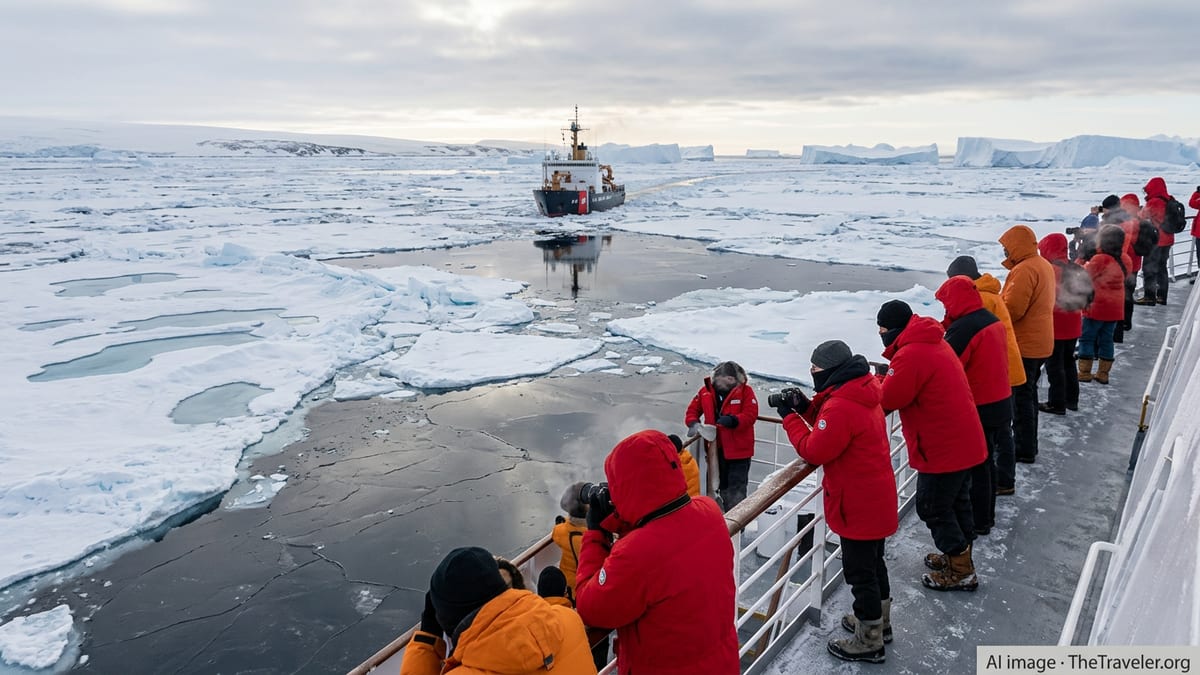
Next-Generation Polar Expeditions Reach Deeper Into the Ice
Polar travel operators are rapidly expanding itineraries for the 2025 and 2026 seasons, responding to strong demand from travelers seeking rarer routes and smaller ships. Booking platforms focused on expedition cruising report that sailings to the Arctic and Antarctica for 2026 are opening earlier, with many departures already waitlisted. New and refurbished ice-strengthened vessels are being marketed with a mix of scientific programming, wellness spaces and more flexible off-ship excursions.
In the Arctic, specialist cruise companies are advertising North Pole voyages for summer 2026 on small-capacity ships carrying roughly 100 to 150 guests, highlighting icebreaker-assisted routes, helicopter-assisted landings on the sea ice and traditional “polar plunge” experiences. These trips, once the preserve of research vessels, are now being sold as pinnacle adventures for seasoned travelers who have already visited Svalbard or Greenland and want to stand at the geographic top of the world.
On the opposite end of the globe, operators are rolling out new Antarctic programs for the 2026 and 2027 austral summers that push beyond the standard peninsula route. Promotional material from major expedition lines describes itineraries crossing the Antarctic Circle toward remote bays and historic research stations, supported by hybrid-powered ships designed to reduce emissions and noise in sensitive ecosystems. Some programs emphasize helicopter operations and small-boat landings to access more isolated ice formations and penguin colonies when conditions allow.
Many of these voyages are being pitched as “last chance” opportunities in a rapidly changing polar environment. Industry briefings point to increasing interest in citizen-science elements on board, with guests invited to assist with wildlife counts, sea ice observations and plankton sampling alongside resident naturalists, turning a bucket-list cruise into an informal field assignment.
Space Tourism Targets a Breakout Year
Commercial spaceflight companies are positioning 2026 as a key year for taking more private travelers beyond the atmosphere. Trade publications tracking the sector note that firms behind suborbital vehicles are preparing upgraded spaceplanes and capsules after extended safety reviews and test campaigns. Marketing materials highlight multiple flights per week from dedicated spaceports, with itineraries promising several minutes of weightlessness and sweeping views of Earth’s curvature.
Recent coverage of the industry indicates that demand from high-net-worth travelers remains robust despite pauses in some flight programs. As operators move toward routine service, space tourism is increasingly framed as an achievable, if still premium-priced, extension of adventure travel rather than a purely experimental experience. Companies are promoting astronaut-style training weekends, g-force familiarization and behind-the-scenes access to launch facilities as part of multi-day packages.
Beyond suborbital hops, orbital experiences are also edging closer to the bucket lists of non-professional astronauts. Industry newsletters tracking private space stations report that the first commercial modules are targeting launches around late 2026, with an eye to eventually offering multi-day or multi-week stays in low Earth orbit. While these plans remain dependent on technical and regulatory milestones, they signal a future in which a small but growing number of travelers may soon list “sleeping in space” alongside trekking to Everest Base Camp or crossing the Antarctic Circle.
For travelers unable or unwilling to commit to a launch, space-adjacent travel is emerging as a niche in its own right. High-altitude balloon concepts, astronomy-focused resorts and observatory-linked itineraries are being developed to bring guests closer to the night sky, blending elements of astrotourism with traditional luxury hospitality.
Solar Eclipse Travel Drives a 2026 Booking Rush
A rare total solar eclipse on August 12, 2026 is already reshaping travel plans across parts of Europe, Greenland and the Arctic. Publicly available astronomical forecasts show the path of totality crossing northern Spain, the Balearic Islands, parts of the North Atlantic, Iceland and western Greenland, creating what analysts describe as one of the most travel-accessible total eclipses in recent years. Tourism industry reports indicate that hotel demand is rising sharply in several regions under the path.
Spanish and European media coverage has highlighted how destinations such as Asturias, Galicia and Mallorca are preparing eclipse-focused programs, from coastal viewing events to cultural festivals scheduled around the celestial spectacle. Travel trade publications describe Mallorca as one of the headline destinations for 2026, citing the combination of established beach infrastructure and its position near the line of totality. In Iceland, local news and online travel forums have discussed the prospect of heavy visitor inflows and the pressure that a single peak day of eclipse viewing could place on roads, accommodation and emergency services.
Cruise lines and tour operators are also moving quickly to secure prime viewing positions at sea. Promotional brochures for 2026 Mediterranean and North Atlantic sailings feature itineraries timed specifically for the eclipse, including voyages that plan to position ships offshore from Spain or near Iceland on the day of totality. University alumni associations, astronomy clubs and specialist agencies are offering chartered trips that combine expert-led lectures with multiple contingency viewing sites in case of cloud cover.
Travel analysts point out that the 2026 eclipse is part of a broader rise in event-driven itineraries that also includes major sports finals and cultural festivals. For many travelers, eclipse chasing is becoming a recurring theme, with 2026 seen as a follow-up to North America’s 2024 event and a stepping stone toward future celestial alignments elsewhere in the world.
Beyond the Icons: Emerging Frontiers in Extreme Travel
While the poles, space and eclipses capture headlines, several emerging frontiers are rounding out the 2026 bucket-list landscape. Adventure-focused tour operators are promoting new high-altitude trekking routes that link lesser-known mountain regions with cultural homestays, aiming to distribute visitor traffic beyond classic peaks while still offering serious physical challenges. These itineraries often emphasize smaller group sizes, slower travel and permits that limit numbers on the trail.
Ocean-focused experiences are evolving as well. Expedition yacht charters are marketing extended voyages that combine remote archipelagos, diving with marine biologists and visits to protected marine reserves under strict guidelines. Travel trade news notes growing interest in itineraries that blend luxury amenities with hands-on conservation activities, such as reef monitoring dives or shoreline clean-up programs arranged with local partners.
Industry observers also highlight the rise of “climate-awareness” adventures, where the journey itself is framed as an educational window into environmental change. Examples include trips that trace retreating glaciers, follow migratory wildlife routes or visit communities adapting to sea level rise. These experiences are typically structured to balance impactful storytelling with strict environmental standards, including lower-emission transport options and transparent carbon accounting.
Taken together, these developments suggest that 2026 will be defined less by new destinations and more by how travelers choose to experience them. The most sought-after journeys are those that combine rarity, scientific insight and a sense of direct engagement with the planet and its changing skies, whether that means boarding an ice-class ship, stepping into a spaceplane cabin or standing beneath a briefly darkened midday sun.