


More news on this day
Lebanon’s Rafic Hariri International Airport in Beirut remains operational at reduced capacity despite intensified conflict involving Israel and Hezbollah, even as airspace closures and safety advisories continue to disrupt major travel routes linking Turkey, Egypt, Australia and key Mediterranean corridors.
Get the latest news straight to your inbox!
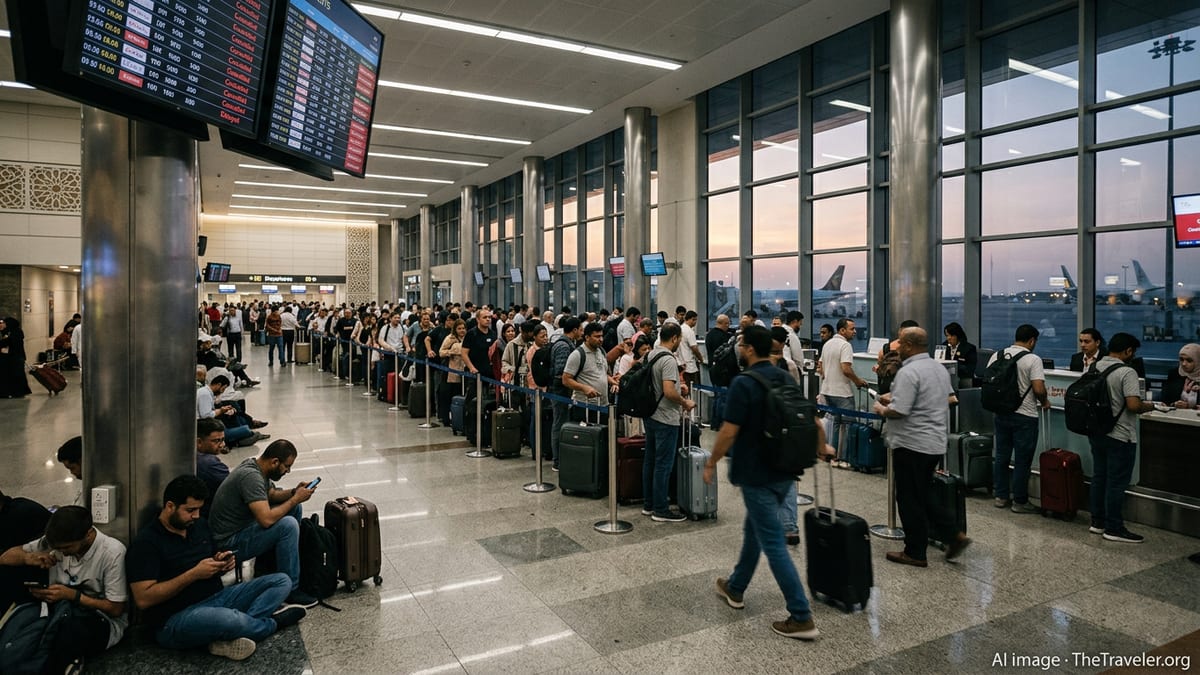
Beirut Airport Operates Under Strain as Strikes Hit Nearby Areas
Publicly available information indicates that Beirut’s international airport has continued handling a limited number of commercial flights in mid-April, even as Israeli strikes have hit southern Beirut, coastal districts and other parts of Lebanon. Reports describe quieter-than-usual terminals, reduced schedules and heightened security procedures around the airport perimeter.
Lebanon’s flag carrier is operating a trimmed network, including select services to Turkey and other regional gateways, while several foreign airlines have suspended or significantly reduced Beirut operations. Published coverage suggests that flights are concentrated in daylight hours and rely on carefully defined approach and departure paths designed to keep civilian aircraft away from known conflict zones.
Analysts note that the airport’s continued activity underscores its role as Lebanon’s sole international passenger gateway at a time when land borders are heavily constrained and maritime links are affected by the wider crisis in the eastern Mediterranean and the Strait of Hormuz. For residents and essential travelers, even a skeleton flight schedule provides a critical, if fragile, lifeline.
At the same time, risk assessments from aviation safety databases and regional advisories classify Lebanese airspace as high risk, prompting many international carriers to avoid overflights. This has kept inbound tourism minimal and left Beirut functioning primarily as an origin and destination point for those with urgent travel needs rather than as a transit hub.
Conflict Zone Advisories Redraw Middle East Airspace
Across the wider region, a succession of missile strikes, drone activity and cross-border attacks since late February has triggered extensive airspace restrictions and airline schedule changes. Official conflict zone bulletins from European aviation regulators, along with specialized risk databases, advise operators to avoid or severely limit flights over multiple Middle Eastern countries, including Israel, Lebanon, Iran, Iraq, Jordan and several Gulf states.
These advisories have been extended into late April, reflecting continued volatility despite intermittent ceasefire announcements. Operators are urged to follow updated Notices to Air Missions (NOTAMs), apply conservative routing and prepare for sudden closures. For passengers, the impact is visible in longer flight paths, irregular departure patterns and rising reports of missed connections on multi-leg journeys.
While Lebanon’s airspace technically remains available for limited civil use, prohibitions issued by individual countries and airlines, particularly in Europe, have sharply reduced the number of carriers willing to operate over or into the country. Travel industry reporting indicates that some national aviation authorities in Europe have barred their airlines from using Lebanese airspace altogether, citing the presence of long-range weaponry and the potential for miscalculation.
This divergence between domestic operational status and external risk policies helps explain why Beirut can remain open yet see far fewer international services than before the current escalation. Travelers who do find operating flights are doing so in a tightly controlled environment shaped more by risk tolerances and insurance conditions than by airport infrastructure capacity.
Turkey, Egypt and Mediterranean Corridors Absorb Rerouted Traffic
With large portions of core Middle Eastern airspace either closed or subject to conflict warnings, airlines have shifted long-haul traffic to alternative corridors. Turkey and Egypt have emerged as critical junctions, with flight-tracking data and government statements showing increased overflight volumes as carriers link Europe to Asia and the Indian Ocean via more northerly or southerly paths.
Egyptian airspace in particular has become a primary bridge between Europe, Africa and Asia, as airlines redirect flights that would previously have crossed the Gulf region, Iraq or Iran. Cairo’s main airport has handled rising numbers of diverted and rerouted services, and North African and eastern Mediterranean airports in Cyprus and Greece have taken on more contingency operations when corridors tighten with little notice.
Turkey’s position at the crossroads of Europe, the Caucasus and the eastern Mediterranean has likewise drawn additional traffic, although its own skies have been affected by missile interception activity and precautionary restrictions linked to the conflict. Published updates from Turkish authorities describe dynamic rerouting over neighboring states, with flows channeled through carefully managed corridors that skirt high-risk areas.
For Lebanon, this reconfiguration has a double effect. On one hand, regional capacity for diversions through neighboring states helps keep minimal access available for those connecting from Beirut via Cairo, Istanbul or other hubs. On the other, the prominence of alternative routings reduces incentives for many global airlines to maintain direct links to Lebanon until security conditions clearly stabilize.
Long-Haul Itineraries to and from Australia Face Extended Journeys
Travel between Australia and Europe, as well as between Australia and parts of the Middle East, has been particularly affected by the shifting airspace picture. Many routes that once transited Gulf hubs or flew efficient great-circle tracks across Iran and the wider region are now being funneled along longer paths via southern Africa, the Indian Ocean or extended segments over the Mediterranean and North Africa.
Australian government advisories and airline network updates highlight the knock-on effect for passengers: longer block times, more technical stops and a higher likelihood of last-minute schedule changes. Some carriers have temporarily suspended services to affected Middle Eastern destinations, while others maintain limited frequencies using modified routings that avoid the most sensitive airspace.
These adjustments reverberate across the network of connections linking Australia with Lebanon and other Levant destinations. Instead of relatively straightforward one-stop trips via Gulf or Levant hubs, travelers may now need multi-stop journeys that route through Southeast Asia and Europe or via Africa and the Mediterranean. Each additional leg introduces further exposure to delay and missed connections.
For global flyers, including members of the Lebanese diaspora, the result is a more complex planning environment. Itineraries that once felt routine now require close attention to airline advisories, booking conditions and travel insurance exclusions related to conflict disruption and airspace closures.
Practical Guidance for Global Flyers Using Lebanese and Regional Routes
For travelers still needing to fly to or from Lebanon, experts recommend beginning with the most current information from airlines rather than relying on static timetable data. Given the rapidly changing situation, carriers may adjust frequencies, switch aircraft types or cancel flights on short notice, even when airports remain technically open.
Booking patterns have shifted toward larger, well-resourced airlines and hubs with multiple alternative corridors, such as Istanbul, Cairo and major European cities. These hubs offer more options for same-day rebooking if a particular route is disrupted. Passengers connecting to or from Beirut often benefit from leaving longer layover times than usual to absorb potential delays on one segment of their journey.
Travel risk advisories published by governments and aviation safety organizations also play a significant role. Many classify Lebanon and neighboring airspace as high risk, which can affect the validity of standard travel insurance and the willingness of some carriers to operate. Passengers are increasingly encouraged to review policy wording carefully and, where available, consider coverage that explicitly addresses conflict-related disruption.
Amid these constraints, Lebanon’s ability to maintain at least a modest level of air connectivity has provided an important though limited bridge for residents, aid workers and essential business travelers. The broader map of regional routings, centered on Turkey, Egypt and alternative Mediterranean corridors, continues to evolve day by day, requiring global flyers to remain flexible, well-informed and prepared for itineraries that are longer and more complex than before the latest escalation.