


More news on this day
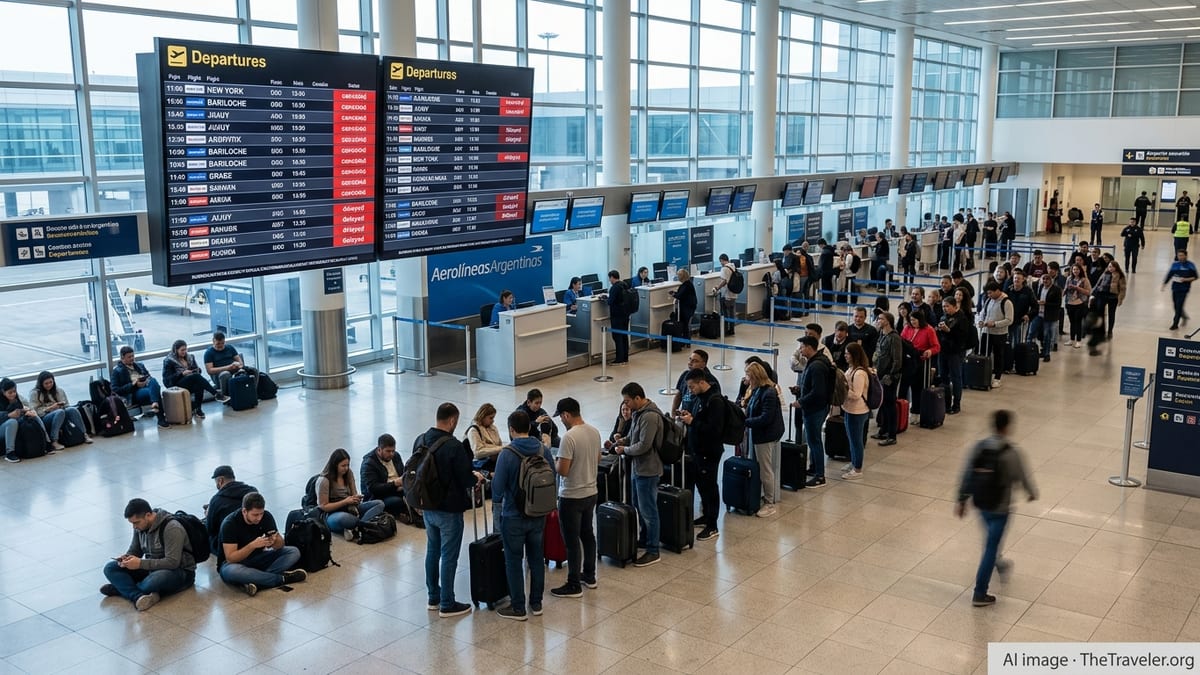
Flight operations in and out of Buenos Aires faced a fresh wave of disruptions on Tuesday, with publicly available tracking data showing at least 22 delays and five cancellations affecting routes to Posadas, Rio de Janeiro, Asunción, Lima and several other South American destinations.
Get the latest news straight to your inbox!
Chain reaction from Buenos Aires to regional hubs
Real time departure and arrival boards for Buenos Aires Jorge Newbery Airport indicate an uneven operating day, with some services running close to schedule while others experience significant changes in departure times and routings. The pattern is producing knock-on effects across Argentina and neighboring countries that depend on the capital as a primary connection point.
Regional cities such as Posadas and Asunción appear among the most affected, with multiple services operated by low cost and full service carriers either delayed or withdrawn from the timetable. Several of these flights are short domestic or near regional sectors, which typically rely on tight aircraft rotations throughout the day, making them especially vulnerable when the schedule is disrupted early.
Longer regional links, including services to Rio de Janeiro and Lima, are also seeing altered departure times. Tracking platforms for flights from Buenos Aires to Lima, for example, show schedule updates and minor delays, indicating that even higher profile international routes are not entirely insulated from the operational strain.
While operations at Buenos Aires Ezeiza and Jorge Newbery continue, the combination of delayed departures, late arrivals and selected cancellations is reshaping travel plans for hundreds of passengers using the city as a hub or origin point.
Flybondi cancellations hit Posadas and other domestic routes
Publicly available data for Flybondi’s network on Tuesday shows a concentrated wave of cancellations on multiple domestic routes touching Buenos Aires. Several flights between the capital and Posadas, Corrientes, San Miguel de Tucumán, San Salvador de Jujuy, Córdoba, Iguazú and other cities are listed as canceled on day of operation displays.
Among the suspended services are multiple rotations between Buenos Aires and Posadas, including both outbound and inbound flights that would normally support same day trips or onward connections. Other affected routes include Buenos Aires to Córdoba and Iguazú, as well as links to interior provinces that rely heavily on a small number of daily frequencies.
The same data shows additional Flybondi flights operating with delays, such as services from Rio de Janeiro to Buenos Aires where revised departure and arrival times significantly exceed the original schedule. This combination of delays and cancellations is reducing overall capacity on several trunk and secondary routes for the day.
Low cost operators typically rely on tight aircraft utilization and quick turnarounds. When a single rotation is canceled or extended, the impact can cascade across the rest of the schedule, creating a pattern of disruption that is visible in the day’s cancellation lists and delay statistics.
Aerolineas Argentinas and LATAM Brasil contend with schedule changes
The disruptions are not limited to one carrier. Aerolineas Argentinas, the country’s flag airline, shows a mixed picture on arrival and departure boards, with most flights operating but some services to destinations such as Iguazú flagged as canceled and others experiencing minor timing adjustments. Links to regional capitals, including Asunción, continue to appear on schedules, although the broader operational environment remains challenging for timekeeping.
For LATAM group carriers, publicly available flight tracking pages for the Buenos Aires to Lima corridor on Tuesday display updated departure times, reflecting modest delays relative to the original schedule. Services connecting Buenos Aires with São Paulo and other Brazilian gateways also show the potential for knock on impacts, as aircraft and crews circulate through the regional network.
On the Brazilian side, LATAM Brasil and other airlines feeding traffic into Buenos Aires from Rio de Janeiro and São Paulo face the additional complication of coordinating with altered arrival or departure slots in Argentina. When flights arrive late into Buenos Aires, passengers with onward connections to interior cities such as Posadas or international destinations like Lima may find their options narrowed by previously announced cancellations.
Data from regional arrival boards in airports such as Asunción also reflects this dependence on Buenos Aires connections, with certain early morning and midmorning arrivals from the Argentine capital forming critical links in broader itineraries across South America.
Impact on travelers and regional connectivity
For travelers, the immediate effects range from moderate inconvenience to full itinerary overhauls. Passengers booked on canceled Flybondi services between Buenos Aires and interior destinations, or on certain Aerolineas Argentinas flights marked as withdrawn from the schedule, are likely to face rebooking challenges on already busy alternative services.
Those flying from cities such as Rio de Janeiro, São Paulo, Asunción and Lima into Buenos Aires for same day onward connections may also be affected if their inbound flights arrive behind schedule or if onward sectors no longer operate. The result can be extended layovers in Buenos Aires, overnight stays, or the need to reroute through other hubs in Brazil, Chile or Peru where seat availability permits.
The pattern underlines the central role Buenos Aires plays in regional air connectivity. With many secondary cities in Argentina and neighboring countries linked by only a handful of daily frequencies, even a small cluster of cancellations and delays can significantly limit options for business and leisure travelers, as well as those flying for medical or educational reasons.
Travel planning tools, airline mobile applications and airport displays continue to advise passengers to monitor flight status closely on days when disruption indicators, such as elevated delay counts and cancellation clusters, appear early in the operating schedule. The situation illustrates how quickly localized operational issues in a key hub can ripple across a wide swath of South American air routes.
What travelers can do if their flight is affected
Given the current pattern of disruptions, travelers flying into or out of Buenos Aires on Aerolineas Argentinas, LATAM Brasil, Flybondi and other carriers are advised by public travel guidance sources to check flight status repeatedly in the hours before departure. Same day changes to departure times and even last minute cancellations have been observed on several routes, particularly in the low cost sector.
Passengers on canceled services typically have options to seek rebooking on later flights operated by the same airline or, where permitted by fare rules, on partner carriers serving the same route. With limited frequencies to cities like Posadas or Asunción, however, same day alternatives may be scarce, making it important to act quickly once a cancellation appears in the system.
For those already en route and facing missed connections in Buenos Aires, focusing on securing accommodation, confirming new flight arrangements and informing any ground transport or hotel bookings at the final destination can help reduce stress associated with unplanned changes. Airport information desks, self service kiosks and airline digital channels are usually the first points of reference for revised travel plans.
The ongoing disruptions highlight the importance of flexibility when traveling through a busy regional hub. Allowing longer connection times, traveling with carry on luggage where practical and maintaining up to date contact details in airline booking systems can all make it easier for travelers to navigate days when operations in Buenos Aires experience elevated delays and cancellations.