


More news on this day
Travelers across Canada faced widespread disruption on June 30 as eight major airports reported 52 flight cancellations and 223 delays, snarling schedules for Air Canada, WestJet, Jazz, Porter, Flair and several smaller carriers during the busy summer travel period.
Get the latest news straight to your inbox!
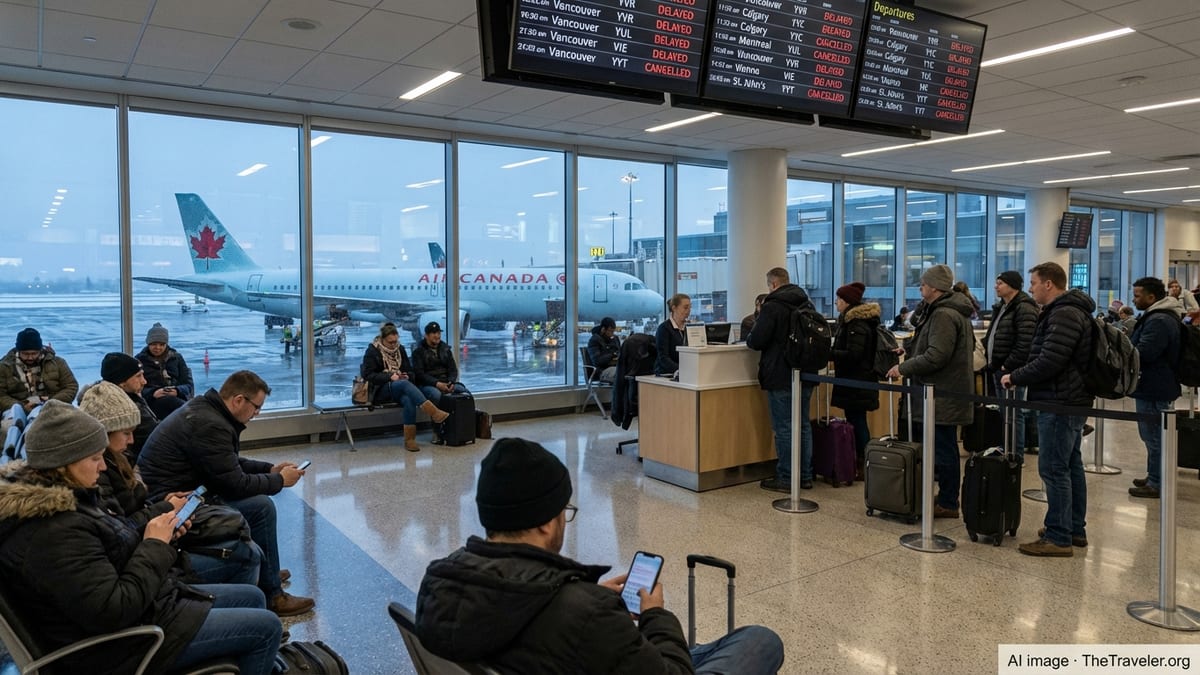
Nationwide Disruption Hits Major Canadian Hubs
Publicly available flight-tracking data for June 30 shows cancellations and delays across Toronto Pearson, Calgary, Montreal Trudeau, Ottawa, Winnipeg, Edmonton, Quebec City and Toronto City Centre airports. While the majority of services operated, the volume of disruptions was high enough to affect thousands of passengers on domestic and transborder routes.
Among the 52 cancellations, regional and domestic routes bore much of the impact, with several short-haul services to and from major hubs scrubbed from schedules. The 223 delayed flights added further pressure to terminal operations, creating longer lines for check in and security and pushing some arrivals late into the evening peak.
Operations data indicates that the disruption was distributed throughout the day rather than confined to a single time window, complicating recovery efforts. With Canada in the midst of peak summer travel and school holidays, even modest irregularities in flight programs can quickly cascade into missed connections and crowded rebooking desks.
This latest wave of cancellations follows a series of challenging operational days for Canadian aviation in late June, underlining the sensitivity of the network to staffing constraints, aircraft availability issues and localized weather or air-traffic restrictions.
Air Canada, WestJet and Regional Partners Most Affected
Canada’s two largest carriers, Air Canada and WestJet, were among the airlines most affected by the June 30 disruptions, according to same-day operational summaries and flight-status boards. Their extensive domestic networks meant that even a relatively small proportion of canceled or delayed flights translated into considerable passenger impact.
Jazz, which operates many regional services under the Air Canada Express brand, accounted for a substantial share of affected flights, particularly on short-haul routes linking Toronto, Montreal, Ottawa and secondary Western Canadian cities. Reports indicate that Jazz recorded the highest number of cancellations among individual operators, notably across Toronto Pearson, Toronto City Centre, Montreal, Ottawa and Edmonton.
Porter Airlines, Flair Airlines and a mix of leisure and regional carriers also appeared on the day’s disruption tallies. While these airlines run smaller fleets compared with the country’s two dominant carriers, their operations are concentrated on key point-to-point links, so even a handful of cancellations or late departures can significantly narrow travel options on specific routes.
For travelers, the fragmented nature of Canada’s domestic network means that disruptions at one carrier can limit the availability of alternatives across the board. On certain city pairs, especially outside the Toronto–Montreal–Vancouver triangle, rebooking opportunities may be restricted to a small number of daily flights or even a single operator.
City-by-City Impact Across the Canadian Network
Toronto Pearson, the country’s busiest airport, once again emerged as a focal point of the disruption. With a dense schedule of Air Canada, WestJet, Porter, Flair and international services, even minor schedule adjustments quickly translated into crowded departure lounges and longer turnaround times. Publicly visible boards showed a steady stream of late departures and arrivals throughout the day.
Calgary, Edmonton and Winnipeg recorded a mix of cancellations and delays affecting both eastbound and westbound traffic. These airports serve as important connection points for Western Canada, linking prairie and northern communities with hubs in Ontario and Quebec. Disruptions on these routes can have knock-on effects, particularly for travelers relying on same-day connections onward to Atlantic Canada, the United States or sun destinations.
In central and eastern Canada, Montreal Trudeau and Ottawa Macdonald–Cartier saw multiple services adjusted or canceled, including flights feeding into Toronto and Western Canada. Quebec City, a smaller but strategically important station in the Quebec market, also appeared on the day’s cancellation lists, tightening options for travelers seeking non-stop links to other major centers.
Toronto City Centre Airport, which is heavily used by Porter Airlines and regional partners, experienced delays that complicated travel for business and government passengers shuttling between Toronto, Ottawa and Montreal. With many of these routes operating at high load factors in summer, same-day alternatives were limited once flights began to slip behind schedule.
Potential Causes: Congestion, Crewing and Summer Strain
While specific reasons for each individual cancellation and delay vary by flight, several structural pressures are evident across Canada’s aviation system this summer. Industry analyses published in recent months have pointed to a combination of tight airline staffing, high aircraft utilization, ground-handling constraints and chronically busy airspace around major hubs.
Operational data from previous disruption days in late June and earlier in the season shows that relatively minor weather events or traffic-management initiatives can trigger rolling delays when airlines are already running near maximum capacity. When aircraft and crew are tightly scheduled, a late arrival in one city can quickly ripple across several subsequent legs, resulting in missed rotations and, ultimately, cancellations.
Carriers also continue to navigate cost pressures, including higher fuel prices and ongoing fleet renewal programs. These factors can reduce the operational flexibility available to add backup aircraft or extra sections at short notice, especially on thinner regional routes where demand fluctuates but alternatives are limited.
At the airport level, staffing for security screening, baggage handling and border processing has improved since the worst of the post-pandemic crunch, but published performance data for several hubs indicates that peak-hour congestion remains a concern. Longer processing times can slow aircraft turnarounds and contribute indirectly to departure delays, especially when combined with late-arriving crews or equipment.
What the Disruptions Mean for Travelers
The June 30 wave of cancellations and delays underscores the importance for travelers in Canada of building extra time into itineraries, particularly when connecting at major hubs such as Toronto, Montreal or Calgary. Travel-planning resources consistently recommend avoiding tight layovers, especially during early-morning and late-afternoon peaks when the system is most vulnerable to knock-on effects.
Passenger-rights advocates and air-travel information sites note that under Canadian rules, compensation and assistance depend on the cause of the disruption and the size of the carrier. Travelers are encouraged to document delay durations, keep expense receipts and check official carrier policies to determine whether they are entitled to meal vouchers, hotel stays or financial compensation when flights are disrupted for reasons within the airline’s control.
Consumer guidance also emphasizes the value of monitoring flight status early and often on the day of travel. With irregular operations now a recurring feature of peak seasons, same-day schedule changes are common. Travelers who spot an early warning of a likely delay or cancellation may have a better chance of securing rebooking options before seats on remaining services are exhausted.
For Canada’s aviation sector, the latest disruption adds to a pattern of challenging high-demand days at the start of the summer period. As airlines, airports and regulators continue efforts to stabilize operations, travelers are likely to keep facing an environment in which preparation, flexibility and awareness of their rights remain essential to navigating the country’s busy skies.