


Tongass National Forest in Southeast Alaska stretches across islands, fjords and glacier-carved mountains, and it offers one of North America’s most extensive public cabin systems. More than a hundred reservable public use cabins and numerous campgrounds dot shorelines and forests from Ketchikan to Juneau and Sitka. Most are booked through the federal reservation system and, compared with private RV parks, amenities are very simple: think bunks, a roof and a stove, rather than hookups and showers. Understanding the mix of cabins, road-accessible campgrounds and rustic sites is the key to planning a comfortable night in this temperate rainforest.
Get the latest updates straight to your inbox!
How the Tongass overnight system works
Tongass National Forest has one of the densest networks of public use cabins in Alaska, with more than 140 reservable structures scattered across islands and mainland inlets, plus dozens of campgrounds. According to the U.S. National Park Service overview of Alaska public cabins, Tongass public use cabins generally cost about 25 to 45 dollars per night and are typically reservable up to 180 days before arrival through the federal reservation system or by phone. That window and fee range were still current as of November 17, 2026, but visitors should always confirm details when they book, since specific sites can differ slightly in rules and pricing.
Cabins are complemented by campgrounds of varying development levels. Near towns such as Juneau or Ketchikan you will find drive-in forest service sites where you can park an RV or car-camp in a tent site with a picnic table and fire ring. Deeper in the forest and along the coast, overnight options become more rustic, shifting toward walk-in tent clearings or cabin sites reached only by boat or floatplane. Across this spectrum the unifying theme is simplicity: vault or pit toilets rather than flush facilities, no electrical hookups, and typically no potable water provided.
Most national forest cabins and many campgrounds in the Tongass use the recreation-focused federal reservation platform as their primary booking channel, and many include an additional service fee per reservation. A small number of primitive campgrounds still operate on a first-come, first-served basis for individual sites, but in the busier districts surrounding cruise ports and regional hubs, summer dates increasingly must be reserved in advance. Travelers used to commercial RV resorts should adjust expectations toward a quieter, more self-reliant style of camping.
Cabins versus campgrounds: understanding the main options
Public use cabins in the Tongass are simple wooden structures, often about 15 by 17 feet, outfitted with wooden bunks, a table, benches and either a wood stove or diesel or oil heater. An example described by an Alaska-focused travel resource is a cedar log cabin near Ketchikan that sleeps up to eight people on wooden bunks and is heated by a wood stove, with users supplying their own firewood or purchasing it locally where allowed. Most cabins do not have mattresses; you sleep on the wooden platform using your own sleeping pad and bag. There is no on-site staff or housekeeping, so you are responsible for cleaning the cabin, hauling out trash and leaving it ready for the next party.
Developed campgrounds, by contrast, provide open-air sites suitable for tents or small RVs. They usually offer cleared pads, fire rings, picnic tables and vault toilets. Near Juneau, for instance, popular campgrounds at Auke Village and near Mendenhall Lake include individual sites arranged along short access roads, with parking adjacent to each site. Fees for Tongass forest campgrounds commonly fall in the range of roughly 10 to 25 dollars per night for a standard site, occasionally more for group areas, with no electrical hookups and no dump stations. In these campgrounds your overnight shelter, kitchen and warmth are whatever you bring in your vehicle or backpack.
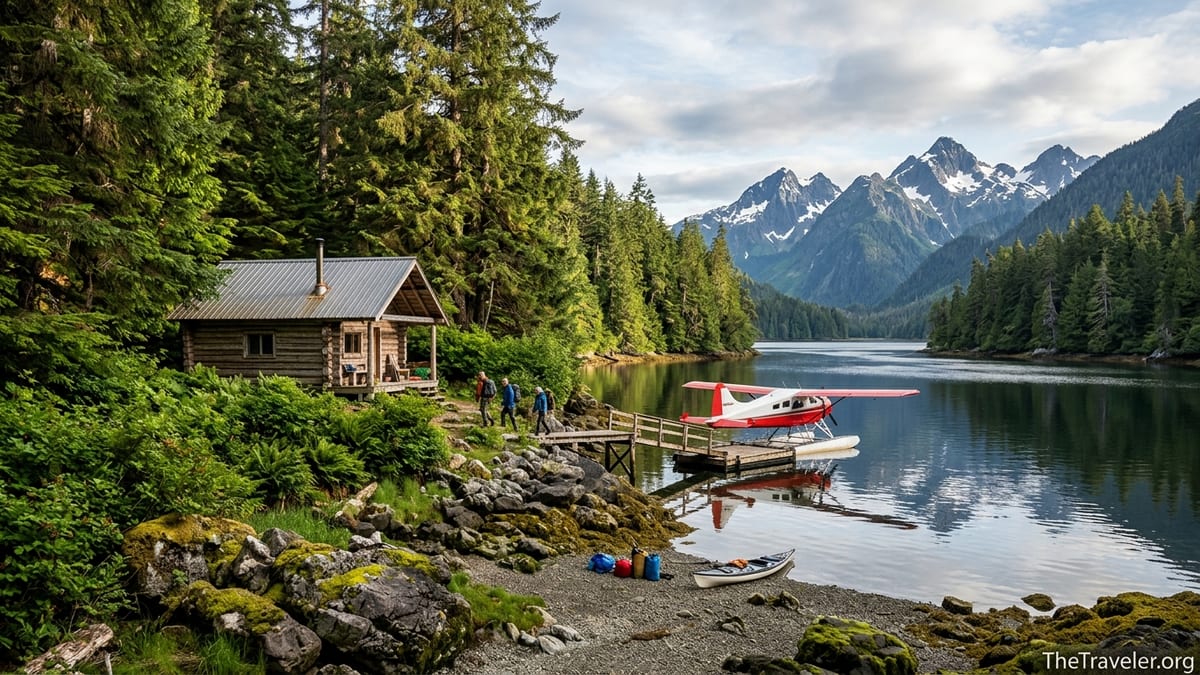
Between these options are road-adjacent or short walk-in cabins and more remote boat or floatplane cabins. Roadside cabins might be reached by driving to a trailhead outside Juneau or Wrangell, then walking a mile or two along a maintained path. Remote cabins could require a chartered floatplane from Juneau, Ketchikan or Sitka that lands on a lake directly in front of the cabin or a small boat transfer across an inlet to a beach or mooring buoy. The more remote the access, the more you must treat a cabin stay like a full backcountry expedition rather than a simple camping weekend.
Access types: road, trail, boat and floatplane
Road-accessible campgrounds are clustered near communities like Juneau, Ketchikan, Sitka, Wrangell and on Prince of Wales Island. In the Juneau area, for example, campgrounds at Auke Village and near Mendenhall Lake can be reached by paved road from town. They serve car campers, cycle tourers arriving via ferry and small RVs arriving via the Alaska Marine Highway. Fees at many of these drive-in campgrounds are in the teens of dollars per night and are typically reserved online, especially for peak dates in late June through August, when local residents and independent travelers converge.
Roadside or trail-access cabins sit a step further out. Around Juneau, several public use cabins are set a short hike from the road system, such as those along the Eaglecrest or Perseverance areas, although exact availability can change as cabins are renovated or temporarily closed. On Prince of Wales Island, trail-access cabins may begin at parking turnouts off the island’s logging roads and require a moderate hike to reach lakeside sites. These cabins are particularly popular on summer weekends because they combine backcountry atmosphere with the relative simplicity of driving to the trailhead rather than arranging a boat or plane.
Boat and floatplane access cabins make up the majority of Tongass public use shelters. A National Park Service summary notes that most Tongass cabins are reached by boat or small aircraft, and that cabins with trail access often book months in advance in summer. Examples include Anan Bay Cabin near Wrangell, which sits beside a small bay with a mooring float used by both cabin guests and other boaters, and numerous lake cabins on Admiralty and Baranof Islands reached by chartered floatplane from Juneau or Sitka. Access to these cabins depends heavily on weather and daylight; strong winds, fog or coastal storms can delay or cancel flights and small-boat crossings, something visitors must anticipate when planning tight travel connections.
Representative locations around the Tongass
Near Juneau, the public use system supports both cabin users and car campers. Drive-in campgrounds at Auke Village and near Mendenhall Lake give tent and small-RV travelers a base within driving distance of the airport and ferry terminal. Auke Village sites place campers within walking distance of shoreline views across Lynn Canal. A short ferry or floatplane ride away, Admiralty Island National Monument and nearby mainland inlets host several Tongass cabins on lakes and sheltered bays, often used as bases for bear viewing or fishing trips that start in Juneau but require guests to be self-sufficient once they arrive.
Around Ketchikan, cabins and campgrounds line Revillagigedo Island and nearby shores. The road system north of town leads to simple forest service and state recreation campgrounds near beaches and salmon streams, while public use cabins such as those on Naha Bay or around Misty Fjords National Monument require boat or floatplane transport. One state-managed public use cabin at Settlers Cove sits near a small drive-in campground off the North Tongass Highway, combining easy road access with a roofed shelter in the rainforest.
In Sitka, Wrangell and on Prince of Wales Island, cabins are more thinly distributed but still form an important part of the forest’s overnight infrastructure. Sitka’s nearby islands and bays hold a handful of marine-access cabins that sea kayakers and boaters weave into multi-day itineraries, while Wrangell serves as a jumping-off point for cabins like Anan Bay or sites in narrow inlets south of town. Prince of Wales Island, reached by ferry or small plane, has a lacing of logging roads that give access to lakeside campgrounds and some trailheads for cabins, making it attractive for visitors with rental cars who want to mix road-based camping with more secluded cabin nights.
What cabins provide and what you must bring
Tongass public use cabins follow a common pattern of amenities. Inside, guests can expect wooden bunks or sleeping platforms, a table and benches, and some form of stove, usually wood-burning in older cabins or oil or diesel heaters in newer or renovated units. Many cabins have an outdoor fire ring and a nearby outhouse. A few shoreline cabins include mooring floats for boats or protected beach landings, particularly in areas with strong tides. There is no electricity, running water or bedding, and cell coverage is rare away from town. Lighting is what you bring; lanterns and headlamps are essential.
Because furnishings are basic, your packing list for a public use cabin resembles that for tent camping, minus the tent itself. Visitors must bring sleeping pads and bags, a complete cooking kit including stove, fuel, pots, utensils and dishwashing supplies, and all food and beverages. Although forest service literature sometimes notes that dead and down wood may be collected for campfires, many popular cabin areas near Juneau, Ketchikan and Sitka are heavily used, and relying on found firewood can leave you short, especially in wet weather. Where allowed, consider buying bundled firewood in town and transporting it, or plan to use a portable camp stove as your primary cooking tool and treat the cabin’s wood stove mainly as backup heat.
Water is another critical consideration. While most coastal and lakeside cabins sit near a water source, it is not treated, and visitors must either boil, filter or chemically treat all drinking and cooking water. The forest service and interagency bear safety guidance emphasize proper food and waste management to avoid attracting bears; this includes packing out all garbage and food scraps and not dumping dishwater with food particles near cabins or campsites. Human waste is usually handled via outhouses, but in more primitive sites or in winter conditions where vault toilets are snowed in, visitors should be prepared to follow backcountry sanitation practices to protect streams and lakes.
Reservations, demand and stay limits
According to federal and interagency summaries, reservations for Tongass public use cabins can generally be made up to 180 days in advance, with nightly user fees often between 25 and 45 dollars and a per-reservation service fee charged by the booking platform. Many cabins enforce maximum stay limits, usually three to seven consecutive nights during the primary summer season and sometimes slightly longer in winter. A Tongass visitor guide published in recent years notes that some districts may cap certain high-demand cabins at very short summer stays, with Juneau-area cabins sometimes restricted to only two nights at a time to ensure more users can experience them. As of November 2026, those broad patterns remained in place, though individual cabin rules can be updated, so always verify current limits on the reservation page.
Peak booking pressure arrives in late June, July and early August, especially for cabins that combine easy access with iconic scenery, such as lakes near Juneau, shoreline cabins close to Ketchikan, or trail-access cabins on Prince of Wales Island. The National Park Service notes that Tongass cabins with trail access tend to be reserved months in advance. Road-accessible campgrounds around major towns now require advance reservations for many or all sites during the main season; for example, campers discussing Auke Village and Mendenhall campgrounds in Juneau report that all sites must be reserved beforehand rather than secured on arrival. For visitors, this means that spontaneous road trips in midsummer are increasingly difficult in the most popular districts.
Cancellation rules are spelled out on the reservation platform at the time of booking. In general, cancelling more than a certain number of days before arrival results in a partial refund minus a service fee, while cancellations closer to the stay or no-shows may forfeit most of the cabin or campsite fee. Policy changes to public-lands reservation systems have been under review across Alaska, and state-managed cabins are transitioning from longer booking horizons to shorter ones in response to resident feedback that year-out planning led to unused reservations. While those shifts mainly affect state park cabins, it is a reminder to read current Tongass federal cancellation and modification policies carefully before finalizing a trip.
Safety, wildlife and seasonal considerations
Travelers in the Tongass share the forest with both black and brown bears, and proper food storage is non-negotiable. Federal food storage regulations for public lands and bear safety guidance from national agencies stress that all food, scented items and garbage must either be locked in a hard-sided structure such as a cabin, secured in a hard-sided vehicle at road-accessible sites, or stored in certified bear-resistant containers where required. Many popular cabins and trailheads now provide steel bear-proof food lockers, but you cannot rely on them being available everywhere. Backpackers and boaters should plan to carry approved bear canisters or use properly rigged bear hangs where regulations allow, and never leave coolers or bags unattended outdoors.
Campfires, where permitted, must be built only in established fire rings or on durable surfaces well below high tide lines on beaches, and completely extinguished before leaving. Forest orders and wilderness ethics both emphasize using only dead and downed wood, and in some areas seasonal fire restrictions may temporarily prohibit open fires entirely during dry spells. Coastal cabins require particular attention to tides and storms; cabins such as Anan Bay, which sit near inlets with significant tidal range, may have mooring floats that rise and fall with the tide, but boaters still need to plan landings and departures for adequate water depths and safe daylight conditions.
Winter introduces a different layer of complexity. At higher elevations near Juneau, Sitka or Wrangell, access to cabins may be by ski or snowshoe along unmaintained routes where avalanche exposure is a real hazard. Local avalanche centers and ranger district offices can advise on typical winter access and whether specific cabin routes cross known slide paths. Lakes can freeze, altering normal boat access and potentially permitting ski or snowshoe approaches across ice, but thickness is never guaranteed, and the forest service does not routinely monitor lake-ice safety. Inside unheated or minimally heated cabins, temperatures can remain below freezing, so winter guests must bring cold-rated sleeping bags, extra insulating layers and stoves capable of functioning in subfreezing conditions.
Choosing between cabins, campgrounds and town lodging
For many visitors, the puzzle is not whether to visit the Tongass but how to sleep there. Cabin-based trips suit travelers who want immersion in remote scenery and are comfortable being self-reliant. A small group might, for example, fly into Juneau, shop for supplies and then charter a floatplane to a lakeside cabin on Admiralty Island for three nights of fishing and hiking. They would accept that weather could delay both arrival and pickup and that they must bring every piece of gear, from sleeping pads to fuel and water filters. The payoff is solitude and wildlife viewing that cannot be replicated near town.
Simple car camping fits travelers who prefer to keep a rental car or RV as a home base while exploring day hikes, visitor centers and short paddling trips. A family arriving by ferry to Ketchikan might choose to spend four nights splitting time between a drive-in campground at Settlers Cove and an in-town motel, enabling them to balance campfire evenings and beach walks with days when heavy rain or fatigue make them appreciate dry hotel rooms and restaurant meals. In these scenarios, reservations for campgrounds are still important in summer, but boat or plane logistics are not.
Town-based lodging with day hiking is the lowest-commitment option and works well for shoulder seasons or first-time visitors uncertain about managing gear in a wet climate. Juneau, Sitka and Ketchikan all offer a mix of hotels, inns and vacation rentals within reach of forest trails and coastal viewpoints. Travelers might spend one or two nights in a public use cabin as a highlight within a longer itinerary anchored by town stays, booking an easily accessed trail cabin on Prince of Wales Island or near Wrangell rather than a fully remote fly-in location.
When comparing cabins and campgrounds, it is helpful to think in terms of a few key traits. In a typical comparison, drive-in campgrounds offer road access, basic services like toilets and tables, and suit families, car travelers and new campers, with planning lead times of weeks rather than months. Trail or road-adjacent cabins require short hikes, provide shelter and heat but no services beyond a pit toilet, and attract moderately experienced hikers who can carry full gear; they often need to be reserved several months in advance for peak weekends. Remote boat and floatplane cabins offer the least access infrastructure, minimal services and the highest sense of wilderness, and draw experienced backcountry travelers or guided groups who are able to plan six months ahead and build weather flexibility into their schedules.
Practical checklists and planning tips
Before committing to a public use cabin in the Tongass, assemble a personal checklist that covers logistics, safety and comfort. Begin with access: confirm whether your chosen cabin is road-accessible, trail-based, or requires boat or floatplane transport, and line up any charter services before reserving your dates. Verify seasonal conditions by checking with the relevant ranger district, especially for winter travel, and ask about known issues such as washed-out trails, dock repairs or temporary closures. Finally, confirm reservation details including nightly cost, maximum group size, stay limits, and the exact cancellation and change policies in effect on the date you book, noting that rules may be updated from year to year.
For gear, imagine that you are tent camping in a very wet, bear-rich environment and then subtract only the tent. Packing should always include warm and waterproof clothing, a sleeping bag and pad for each person, a full backcountry cooking kit with stove and fuel, a water-treatment method, headlamps with extra batteries, navigation tools and a comprehensive first-aid kit. Add bear spray where legally allowed, a bear-resistant food container if your site lacks a secure locker and you will be outside the cabin for extended periods, and any specialized items such as fishing gear or tide tables for coastal cabins. If you are traveling by commercial airplane to Southeast Alaska, plan extra time in Juneau, Ketchikan or Sitka to rent or purchase bulky items like fuel canisters, coolers and firewood rather than trying to fly with them.
Finally, decide which overnight style matches your comfort zone and the time you have to plan. If you can commit six months ahead and want a deep wilderness feel, start by browsing remote boat and floatplane cabins near Juneau, Sitka or Wrangell, then build an itinerary around your confirmed dates. If your plans are more flexible or last-minute, look at drive-in campgrounds and any cabins that show short-notice availability within a month or two of travel, understanding that peak summer weekends may already be fully reserved. For some travelers, the best of the Tongass comes from combining all three approaches, using town lodging, car camping and one or two cabin nights to experience this vast rainforest at a range of comfort levels.
Conclusion: matching Tongass nights to your adventure
Tongass National Forest’s mix of public use cabins, campgrounds and nearby town lodging gives travelers a rare spectrum of ways to spend the night in coastal Alaska. From cedar log shelters tucked beside salmon streams to simple roadside tent pads within sight of cruise ships, the system rewards those who research access, book early for summer and pack with self-sufficiency in mind. The amenities are modest, but the tradeoff is immersion in landscapes of tidewater inlets, old-growth spruce and hemlock, and mountains that rise straight from the sea.
Whether you choose a remote floatplane cabin near Juneau, a family-friendly drive-in campground north of Ketchikan or a day-hiking base in Sitka with one special night in a lakeside shelter, the key is an honest assessment of your skills and expectations. Attention to food storage, weather, tides and winter hazards ensures both your safety and the protection of bears and other wildlife that depend on this forest. With thoughtful planning and the right gear list, an overnight in the Tongass becomes less a logistical puzzle and more a highlight of any Southeast Alaska journey.