


Cairo International Airport (CAI) is the main gateway to Egypt and the starting point for most first-time trips to Cairo, Luxor, Aswan and the Red Sea. It can feel hectic and confusing on arrival, especially after an overnight flight, but with a bit of preparation you can move through the terminals, secure your visa, get cash and a SIM card, and reach your hotel with minimal stress. This guide walks you step by step through what to expect and how to handle the essentials.
Get the latest updates straight to your inbox!
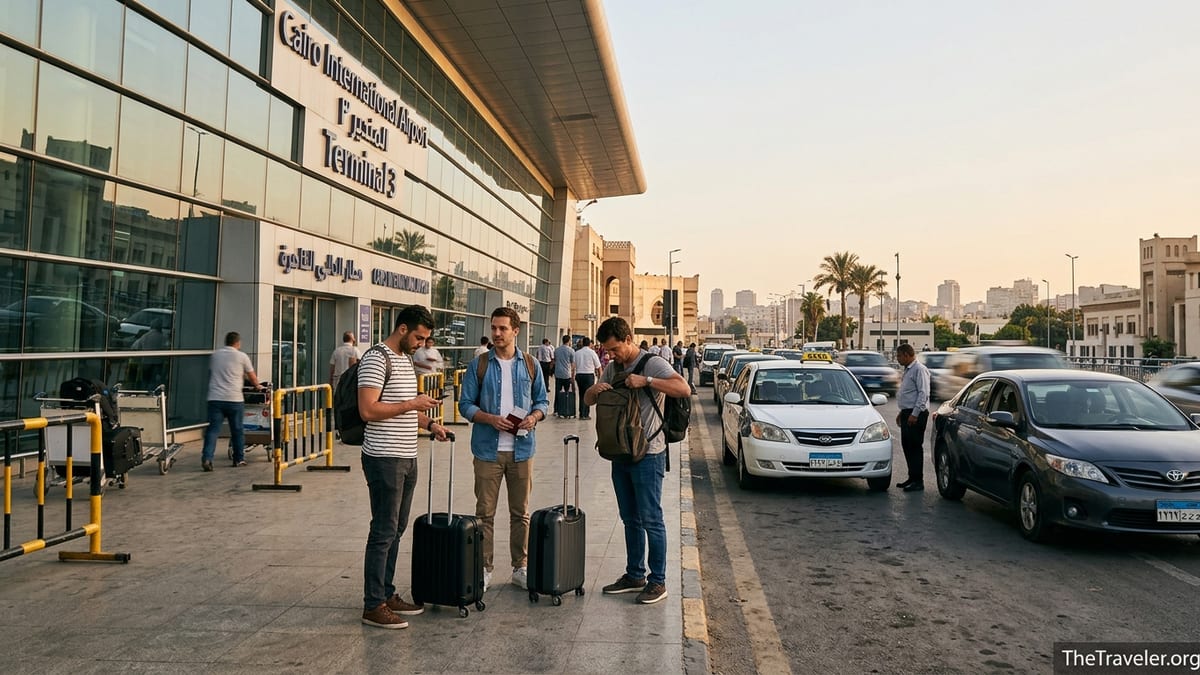
Understanding Cairo International Airport and Its Terminals
Cairo International Airport sits in the Heliopolis area about 18 to 20 kilometers from central Cairo. It is Egypt’s busiest airport, handling tens of millions of passengers a year and serving as the primary hub for EgyptAir. For a first visit, it helps to understand the layout before you land. The main passenger facilities today are Terminals 1, 2 and 3, all connected by a free internal shuttle bus that runs around the airport campus and to the separate Cairo Airport Bus Terminal for onward buses into the city.
Terminal 1 is the older complex, often used by some low cost and regional carriers, while the renovated Terminal 2 handles many international airlines from Europe, the Middle East and Asia. Terminal 3 is the largest and most modern building and serves as the main hub for EgyptAir and many of its Star Alliance partners. If you are flying EgyptAir from cities like New York, Chicago, London or Frankfurt, you will most likely arrive into Terminal 3. Travellers connecting onward within Egypt, for example from Cairo to Luxor or Sharm El Sheikh, may also find themselves using a mix of Terminal 2 and Terminal 3 depending on the airline.
On a practical level, the arrival process in all terminals follows the same pattern. You disembark, walk through immigration and visa control, collect your luggage at baggage claim, pass customs, and then reach the landside arrivals hall where you will find ATMs, bank exchange counters, official mobile operator kiosks and transport options. Signage is bilingual in Arabic and English and generally clear, but the halls can feel crowded at peak times, especially late evening and just after midnight when many long haul flights arrive.
Realistically, a first-time visitor who has done a bit of research can expect to be outside the terminal within 45 to 90 minutes of landing, depending on queues. For example, a US traveler arriving on a full evening flight into Terminal 3 in high season might spend 10 minutes at the visa counter, 20 to 30 minutes in the immigration line, and another 15 to 30 minutes waiting for bags. Arrivals earlier in the day or during shoulder season are often faster.
Visa on Arrival and Immigration: What to Expect
Many nationalities, including citizens of the United States, Canada, the United Kingdom, much of Western Europe and several Asia-Pacific countries, are eligible to obtain a tourist visa on arrival at Cairo International Airport. As of mid 2026, the standard fee mentioned for a single entry tourist visa is around 25 to 30 US dollars per person, paid in cash, with US dollars most commonly used. The price can change, so treat these figures as approximate and check shortly before you travel with an official consular or government source.
The process is straightforward but not always obvious when you step into the arrivals hall. Before you join any passport control queue, look for the bank or visa payment counters, usually located to one side of the hall and often marked with signs such as “Visa” or “Bank”. At these desks, you pay the fee and receive a visa sticker. You then step aside to place the sticker on a blank page in your passport, and only after that do you proceed to the immigration lines. Travellers who accidentally go straight to immigration without buying the sticker are often sent back, adding to delays.
A common real world example: an American couple landing in Terminal 3 at 8 pm walks directly from the jet bridge into the arrivals hall. On their left they see several small bank windows with staff calling out “Visa.” They pay 50 to 60 US dollars in cash for two visa stickers, attach them to their passports, complete a short arrival card if given one, and then queue at the immigration desks. The officer asks where they will stay in Cairo and how long they plan to stay, stamps the passport and waves them through. The entire process takes about 20 minutes when the hall is quiet, but can stretch to 45 minutes or more at peak hours.
It is worth carrying the visa fee in small denomination notes. While some travelers report being able to pay in euros or British pounds, the most seamless experiences are almost always with crisp US dollar notes. Card payment is not reliably available at every desk. If you already obtained an e-visa in advance, you can bypass the visa sticker windows and go straight to the passport control line, but keep a printed or at least saved copy of your approval email in case an officer asks to see it.
Arrivals Hall Essentials: Money, SIM Cards and Services
Once you have cleared immigration and collected your luggage, you pass through customs, which usually consists of walking through a channel unless you have goods to declare. Just beyond the customs exit you enter the arrivals landside hall. This is where many first-time visitors feel the initial sensory jolt of Egypt: bright lights, families waiting, private drivers holding signs, taxi agents, and vendors offering services. Take a breath and slow down. You do not need to accept any service before you have sorted your money, phone and transport calmly.
For money, most travellers combine airport ATMs with currency exchange. Several Egyptian banks operate ATMs in all terminals, usually near the exit doors and around the mobile operator kiosks. With a major debit card from networks such as Visa or Mastercard, you can normally withdraw Egyptian pounds directly. Using an ATM tends to give a more competitive rate than cash exchange, though your home bank may add its own fees. As a fallback, the 24 hour currency exchange counters are convenient for changing 50 to 100 US dollars or euros into Egyptian pounds to get you into the city.
For mobile data and calls, Cairo International Airport is one of the easiest places in Egypt to buy a local SIM card. The major Egyptian operators, typically Orange, Vodafone, Etisalat and WE, all maintain official kiosks in the arrivals halls. Travellers report that packages commonly sold at the airport include visitor bundles with several dozen gigabytes of data for a fixed price. For instance, in late 2024, a visitor arriving into Terminal 2 noted prices around 280 to 650 Egyptian pounds for data packages ranging from roughly 10 to 50 gigabytes, depending on the operator and promotion at the time. Prices and bundles shift with inflation and new offers, so it is best to treat current figures as ballpark guidance.
In practice, the experience is usually quick. A solo traveler arriving after midnight might approach the Orange kiosk, present their passport, choose a mid range data bundle, pay in Egyptian pounds or occasionally in foreign currency at a marked rate, and have the SIM inserted and activated in under 10 minutes. Staff will often help adjust phone settings on the spot. Buying at the airport has the advantage of clear, posted prices and staff used to tourists, which reduces the risk of miscommunication or unexpected add ons compared with navigating small neighborhood shops after a long flight.
Getting into Cairo: Taxis, Uber, Careem and Buses
Leaving Cairo International Airport smoothly often makes the difference between a stressful and a comfortable arrival. You effectively have four main options into the city: official or white taxis, ride hailing services such as Uber and Careem, pre arranged hotel or tour transfers, and public buses. The right choice depends on your budget, comfort with local transport and time of day.
Official airport taxis and the standard white meter taxis are widely available just outside the arrivals halls. Inside the terminal, you may encounter desks offering fixed price transfers into town. As a rough reference, travellers in 2025 often report paying in the region of 350 to 600 Egyptian pounds from the airport to central districts such as Downtown Cairo or Zamalek, depending on time of day, traffic and negotiation. Because inflation and fuel prices can change, do not treat these figures as exact. It is important to either agree a total fare in pounds before you get into the car or insist that the meter be used. If a driver quotes a price in US dollars that feels high for a short ride, politely decline and look for another taxi or use a ride hailing app.
Uber and Careem operate in Cairo and are popular with first time visitors who want clearer pricing and less haggling. To use them, you need mobile data or at least access to airport Wi Fi to request the car. The pick up points vary by terminal but are generally in the regular car parking areas just outside arrivals rather than at the closest curb, where airport security restricts waiting. A typical real world scenario might see a traveler stepping outside Terminal 3, walking to the parking area following the “Parking / Ride hailing” signs, and meeting an Uber sedan there. The app will show an estimated fare; in recent traveler reports, these app fares for a standard ride from CAI to central Cairo have often been somewhat lower than the price quoted by airport taxis, though dynamic pricing and exchange rates make exact comparisons difficult.
For budget conscious visitors, airport buses can be useful if you are arriving in daytime and are comfortable with basic local transport. Cairo’s airport shuttle buses link the terminals with central points such as Abdel Moneim Riad Square near Tahrir or transport hubs in Heliopolis, with tickets usually costing a small fraction of a taxi fare. Services can be slower and more crowded, and luggage space is limited, so they suit backpackers and light travelers better than those with multiple suitcases. Many first time visitors choose a taxi or Uber on arrival and experiment with buses or the metro later in their stay once they have rested and gained confidence.
Airport Hotels and Overnight Options
If you are arriving late at night or have an early morning departure, staying near Cairo International Airport can be practical. Within walking distance of Terminals 2 and 3 there is a major international hotel physically connected to the airport complex by a pedestrian bridge, making it convenient for a one night stopover or early flight. Travellers often choose this option when they land near midnight from Europe or North America and have a domestic flight to Luxor or Aswan early the next morning.
Other chain and mid range hotels cluster in the broader airport and Heliopolis area, typically 10 to 20 minutes’ drive away, offering free or modestly priced shuttles to and from the terminals. In a very common scenario, a family arriving with young children might pre book a room at a Heliopolis hotel with airport transfer. On arrival, they exit customs, look for a representative in the arrivals hall holding a hotel sign, and are directed to a shuttle waiting area outside. Twenty to thirty minutes after clearing immigration they are already on their way to the hotel, where they can sleep before starting sightseeing the following day.
For very long layovers, some airlines and tour companies provide hotel accommodation or lounge access under certain conditions. EgyptAir, for example, has historically offered transit hotel arrangements for passengers facing extended connection times, subject to fare class and ticket conditions. These policies change periodically, so if your itinerary involves a long transit in Cairo it is worth checking directly with your airline a few weeks before travel.
If you prefer to go straight into the city rather than stay by the airport, travel times to central Cairo usually range from 30 minutes late at night to well over an hour in heavy daytime traffic. It is sensible to plan your first night’s accommodation in advance and have the address written down in Arabic or saved on your phone to show the driver. Many Cairo hotels are used to late night arrivals from CAI and operate 24 hour receptions.
First-Time Arrival Tips: Staying Calm and Avoiding Common Pitfalls
The busiest moments at Cairo International Airport can feel intense, especially if you are tired and unused to bargaining. A few grounded strategies can make the difference between a rough arrival and a manageable one. First, move slowly in the arrivals hall and ignore unsolicited offers of help until you have oriented yourself. Polite but firm phrases such as “No thank you” and “I already have a taxi” go a long way. Airport staff in uniform are usually helpful and can point you toward visa desks, luggage belts or official taxi ranks.
Second, prepare small, practical details in advance. Carry the address and phone number of your Cairo hotel printed or saved offline in both English and, if possible, Arabic. Keep a pen handy for immigration cards. Pack a small amount of US dollars in cash and a debit or credit card that you know works internationally. For example, a solo traveler arriving from London might land with 60 US dollars in smaller bills, withdraw the equivalent of 150 to 200 US dollars in Egyptian pounds from an airport ATM, buy a local SIM with around 30 gigabytes of data for a week, and then call an Uber directly from the arrivals hall Wi Fi.
Third, stay alert to the difference between genuine assistance and paid services. Some individuals in the arrivals area may offer to “fast track” you through immigration, push your luggage trolley or guide you to a taxi in return for a tip or informal fee. There is nothing inherently unsafe about this, but it can create awkward situations if you did not realize payment was expected. If you do accept help with luggage, clarify that you will tip a small amount in Egyptian pounds at the end and keep control of your passport and valuables at all times.
Finally, give yourself time. If you are booking onward travel from Cairo, whether a domestic flight or a train from Ramses Station, avoid tight connections after an international arrival. Aim for at least three to four hours between landing and any onward departure, more if you are traveling with children or checked baggage. Many experienced visitors schedule a full overnight in Cairo before flying on to Luxor or the Red Sea, both to recover from jet lag and to provide a buffer against any delays at passport control or baggage claim.
Money, Safety and Cultural Practicalities on Arrival
Money and safety concerns are two of the most common worries for first time visitors to Cairo. At the airport, the main financial decisions involve how much to exchange, how to use ATMs safely and how to pay for transport. Egypt is still largely a cash focused society for small purchases, though card acceptance is growing in hotels, larger restaurants and some transport apps. A sensible arrival strategy is to withdraw or exchange the equivalent of 100 to 150 US dollars in Egyptian pounds at the airport, which is usually enough for your taxi, first meals and small tips for the first couple of days.
Use ATMs located in well lit, busy areas inside the terminals, cover your PIN and keep receipts. If a machine fails to dispense cash but shows a debit from your account, photograph the screen if possible and contact your bank as soon as you have Wi Fi. Carrying a backup card or some extra foreign currency can be a useful safety net. When using currency exchange counters, ask to see the final amount in Egyptian pounds written down before you hand over money and count the notes carefully at the counter.
From a personal safety perspective, Cairo International Airport is heavily policed and generally safe, but petty issues such as overcharging or persistent offers of service are not uncommon. Keep passports, phones and wallets in a secure, zipped bag worn in front of your body, and avoid leaving bags unattended while you exchange money or buy a SIM. It is normal and appreciated to tip small amounts, such as a few Egyptian pounds, to porters or toilet attendants, but do not feel obliged to give large sums. If a taxi driver or tout becomes too insistent, walking back toward the terminal entrance or a security checkpoint usually defuses the situation.
Culturally, modest clothing is appreciated but not strictly enforced at the airport. Shorts and T shirts are common among tourists, yet you may feel more comfortable and attract less attention in longer trousers or skirts and covered shoulders, especially if arriving late at night. Basic Arabic greetings such as “salaam alaikum” (peace be upon you) and “shukran” (thank you) can create goodwill, even if most airport staff dealing with international passengers speak at least some English.
FAQ
Q1. How long does it usually take to get through Cairo International Airport on arrival?
Most first time travelers should allow 45 to 90 minutes from landing to reaching the arrivals hall, including buying a visa on arrival, immigration, baggage claim and customs. During busy evening waves it can take longer, so avoid scheduling tight connections.
Q2. Do I need to arrange a visa before I fly to Cairo, or can I get one on arrival?
Citizens of many countries, including the United States, Canada, the United Kingdom and much of Western Europe, can usually obtain a tourist visa on arrival at Cairo International Airport for a fee paid in cash. Because rules and prices can change, check your nationality’s latest requirements with an official consulate or government website before travel.
Q3. What is the best way to get cash when I land at Cairo International Airport?
The most practical approach is to use an ATM from a major Egyptian bank inside the arrivals hall to withdraw Egyptian pounds with a debit card, then supplement this with a small currency exchange if needed. This typically gives a better rate than changing large amounts of cash, though you should consider any foreign transaction and ATM fees charged by your home bank.
Q4. Is it better to buy a local SIM card at the airport or in the city?
For most first time visitors, buying a SIM at the airport is easier and more transparent. Official kiosks for operators such as Orange, Vodafone, Etisalat and WE are located just after customs, with staff used to setting up tourist phones. Prices may be slightly higher than in the city but the convenience, clear signage and English speaking staff usually outweigh the small premium.
Q5. How much should I expect to pay for a taxi from the airport to central Cairo?
Fares vary with traffic, time of day and inflation, but recent traveler reports often mention a broad range from roughly 350 to 600 Egyptian pounds for rides from the airport to areas such as Downtown Cairo or Zamalek. To avoid misunderstandings, either agree a total fare in Egyptian pounds before entering the taxi or use ride hailing apps like Uber or Careem, which show an estimated price in advance.
Q6. Where do I meet an Uber or Careem driver at Cairo International Airport?
After exiting customs, use the app while still inside the terminal or on the curb to request a ride, then follow signs toward the parking areas where ride hailing cars are allowed to wait. Pick up points are usually in regular car parks slightly away from the busiest curbsides rather than directly outside the terminal doors, so allow a few extra minutes to walk to the designated location.
Q7. Are there hotels connected to Cairo International Airport for late night arrivals?
Yes, there is a major hotel connected by a pedestrian bridge to the terminals, which many travelers use for overnight layovers or early morning departures. Additional chain and mid range hotels are located a short drive away in the wider airport and Heliopolis area, often offering shuttle transfers. Booking in advance and confirming shuttle details with your hotel is recommended.
Q8. Is it safe to arrive alone at Cairo International Airport late at night?
The airport itself is generally safe and heavily monitored. Many travelers, including solo visitors, arrive on late flights without incident. Usual precautions apply: keep valuables secure, decline unsolicited offers of paid help if you are uncomfortable, use official taxis or ride hailing services, and have your hotel address and a basic plan for transport arranged in advance.
Q9. Can I rely on airport Wi Fi to order an Uber or message my hotel?
Cairo International Airport offers free Wi Fi in the terminals, but speeds and reliability can vary with crowding. It is often sufficient for messaging and ordering a ride, though some travelers report occasional disconnections. Buying a local SIM on arrival provides more dependable connectivity once you leave the terminal.
Q10. What is one key tip for a smooth first arrival at Cairo International Airport?
Have a simple sequence in mind before you land: buy the visa sticker at the bank counter, clear immigration, collect bags, use an ATM to get Egyptian pounds, buy a local SIM if needed, then arrange your taxi or ride hailing car. Moving through these steps calmly, without rushing or accepting unsolicited services, usually results in a much smoother start to your Egypt trip.