


More news on this day
The U.S. Interior Department’s newly released strategic plan for fiscal years 2026–2030 signals a more aggressive use of land sales and other disposal tools on Bureau of Land Management territory, a shift that is stirring concern among conservationists, tribal nations and outdoor tourism businesses across the Western states that rely heavily on federally managed landscapes.
Get the latest news straight to your inbox!
What the new Interior strategic plan actually proposes
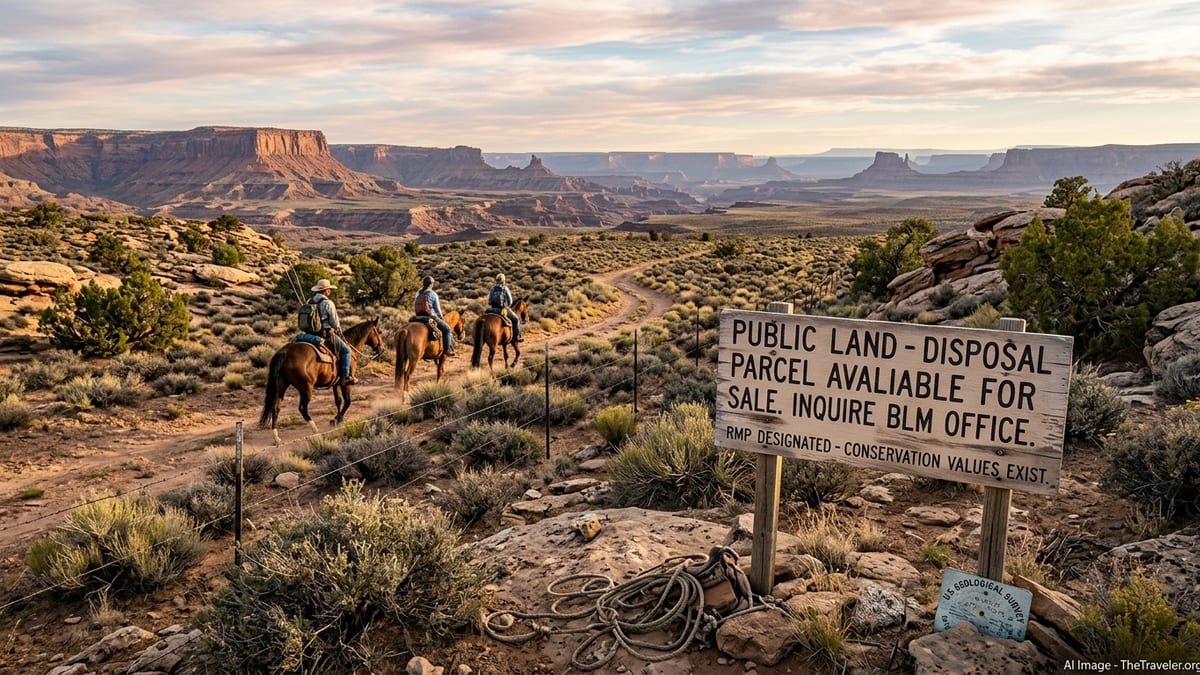
Interior’s fiscal 2026–2030 strategic plan, published in November, outlines department-wide goals for the next four years and directs agencies, including the Bureau of Land Management, to “work to decrease the size of the federal estate” by offering certain federal lands to states, local governments and tribes and by using land exchanges and transfers to simplify mixed-use management. The language does not itself identify specific parcels or authorize immediate sales, but it marks a clearer embrace of disposal tools than in the previous five-year plan.
Any BLM land sale would still have to comply with the Federal Land Policy and Management Act, which generally requires sales at not less than fair market value and limits disposal to parcels that have been designated as “available for disposal” in the agency’s resource management plans. Interior’s own guidance emphasizes that individual transactions must go through separate environmental review, public notice and comment processes before they can proceed.
The Department describes the strategy as a way to consolidate a fragmented federal land base, support energy and housing infrastructure and reduce what officials call the “taxpayer burden” of managing isolated tracts. However, the plan gives few specifics on scale, timelines or criteria for prioritizing sale or transfer areas, leaving gateway communities and tourism operators uncertain about which landscapes, if any, could be affected during the life of the plan.
Tourism, recreation and gateway towns wary of losing access
In the 11 Western states where BLM oversees the majority of public land, outdoor tourism economies are tightly bound to continued federal access. Guides, outfitters, ski areas, river companies and off‑highway tour operators depend on year‑to‑year permit renewals on BLM terrain, while gateway towns from Moab to Bishop market themselves around nearby trails, climbing areas and dispersed camping on surrounding public land.
Advocacy groups note that “lands available for disposal” in BLM planning documents are not limited to low‑value scraps. Mapping initiatives by organizations such as The Wilderness Society have found that disposal‑eligible tracts can include wildlife corridors, popular hunting grounds and high‑use recreation areas that currently function as key links in broader destination networks. If such parcels were sold and later closed or intensively developed, outfitters and visitor bureaus could see core itineraries and scenic driving routes disrupted.
For now, there is no confirmed list of specific recreation hotspots that Interior intends to sell under the new plan, and many disposal‑eligible parcels sit on the fringes of travel markets. Tourism businesses, however, are watching closely for any shift from theoretical planning language to concrete sale notices, particularly in counties where public land already anchors most visitor spending.
Conservation and tribal leaders challenge disposal push
The Center for Western Priorities, a Denver‑based public lands advocacy group, has sharply criticized the strategic plan’s directive to shrink the federal estate, calling it a departure from the long‑standing federal policy of retaining most remaining public lands. The group argues that the plan, combined with other administration priorities around energy and data center development on BLM lands, risks sidelining conservation and recreation in favor of short‑term revenue.
Tribal nations have also raised red flags. In a November 8 joint statement responding to recent public land bills and policy shifts, several tribal organizations warned that stepped‑up disposals and transfers could further fragment landscapes that contain sacred sites, burial grounds and cultural resources that have never been fully surveyed. They stressed that once lands leave federal ownership, tribal consultation requirements and cultural resource protections can become weaker or less predictable, particularly when private owners control access.
These worries are amplified by the fact that tribal communities increasingly participate in and benefit from outdoor tourism, from guiding services and cultural tours to tribally run campgrounds and gateway visitor facilities. Any loss of access to traditional territories that also serve as visitor draws could undercut both cultural preservation efforts and local economic diversification strategies built around sustainable tourism.
Pending congressional proposals could magnify impacts
The strategic plan’s disposal language lands in a broader policy debate on Capitol Hill, where separate Republican‑backed proposals in the House and Senate would require the BLM and Forest Service to sell a fixed percentage of their holdings in Western states for housing and “community needs.” Early summaries of these bills suggest targets on the order of 0.5 to 0.75 percent of agency lands, which outside analysts have translated into the potential for roughly a few million acres of disposals if fully implemented.
Those bills remain pending and contested, and none has been enacted into law. Even if Congress were to approve a sell‑off mandate, land managers would still have to identify individual parcels through established planning processes, apply existing legal limits and complete environmental reviews. Acreage figures cited by advocacy groups are therefore estimates of what might be possible under the legislation, not schedules of confirmed sales.
For tourism‑dependent counties, though, the combination of statutory pressure from Congress and strategic direction from Interior could increase the volume of disposal proposals moving through local field offices over time. That possibility is prompting county travel boards, chambers of commerce and guide associations to pay closer attention to BLM resource management plan updates, where disposal designations are made long before sale notices appear.
What travelers and local businesses should watch next
The new Interior strategic plan is a high‑level framework rather than an operational roadmap, and it does not itself change where travelers can camp, hike or book guided trips. Any large‑scale sell‑off of BLM lands would unfold parcel by parcel, over years, with multiple public input stages. Many proposed disposals would likely never advance beyond the planning screen if local governments, tribes or user groups objected.
Key next steps will be whether Interior issues follow‑up guidance or identifies priority landscapes for disposals under the plan, and how BLM incorporates the strategy into upcoming resource management plan revisions. Travel businesses and visitors concerned about access can monitor local BLM office announcements, comment periods and mapping updates for hints about which areas are under review.
Because implementation details are still emerging, travelers planning trips in the Western public lands system should continue to verify access rules and permit requirements directly with land managers and outfitters, particularly in fast‑growing counties where development pressures are high. Editors and readers alike should also recheck, at the time of writing or booking, whether Interior has released any implementing guidance or parcel‑specific proposals that could change how key recreation areas are managed under the 2026–2030 strategic plan.