


More news on this day
A short-term US budget deal signed on 2 September 2026 only funds most federal agencies through 11 December, raising a credible risk that a government shutdown beginning 12 December could strain air travel just as millions of passengers head to the airports for Christmas.
Get the latest news straight to your inbox!
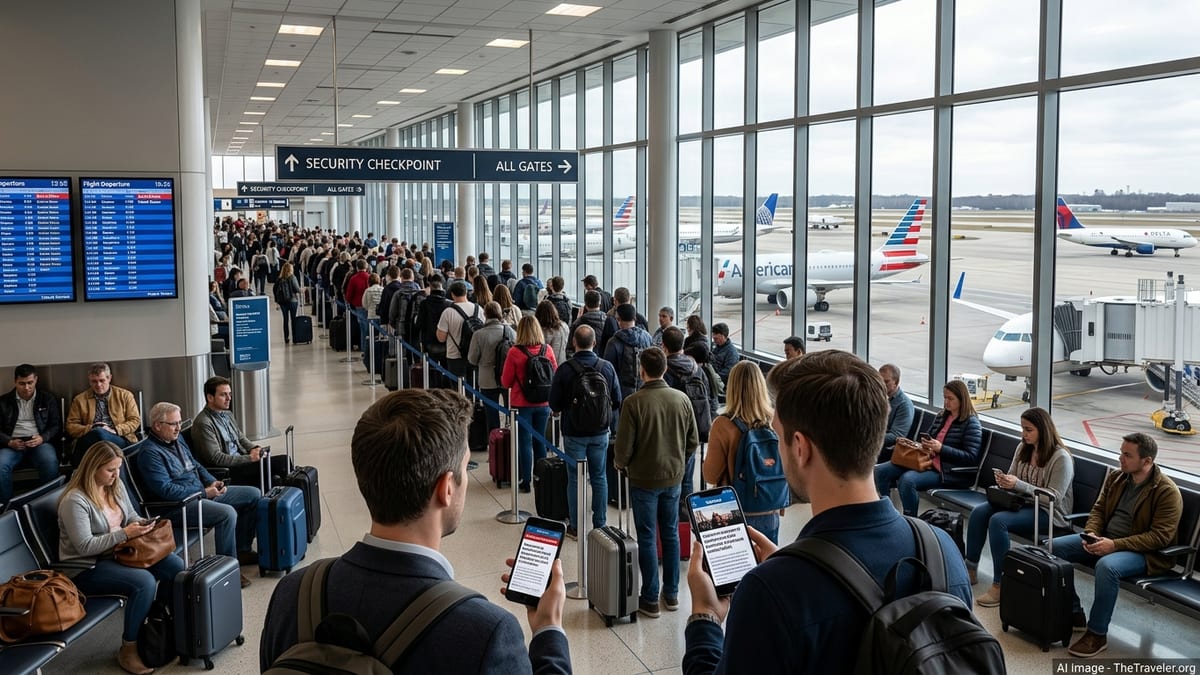
What the new funding deadline actually does
The Continuing Appropriations and Extensions Act, 2027 (H.R. 6500, Public Law 119-103) was signed on 2 September 2026 and keeps most federal agencies, including the Federal Aviation Administration (FAA) and Transportation Security Administration (TSA), funded only until 11 December 2026. Budget trackers and a September Congressional Research Service (CRS) brief note that, without another funding measure, a government funding gap would begin on 12 December.
As of 19 November, Congress has not completed the regular set of full-year appropriations bills for the 2027 fiscal year. Several bills are drafted and committee work has advanced, but both a further short-term extension and a shutdown are being discussed in public by senior lawmakers as realistic outcomes. Some members are also promoting the idea of a “full-year continuing resolution,” which would lock in current funding levels instead of passing new detailed spending bills.
For travellers, the key point is timing. The current law does not directly change airline schedules, ticket sales or airport operations. Its effect is to create a firm decision point on 11 December. If Congress passes either a new stopgap funding bill or full-year appropriations in time, federal aviation functions would continue as now. If it does not, the rules that apply during a shutdown would come into force just as Christmas travel ramps up.
How past shutdowns have affected flying
An October 22, 2026 CRS report on “Federal Government Shutdowns and the Impact on Civil Aviation” examines several recent episodes, including a government-wide shutdown in October–November 2025 and two partial shutdowns in early 2026. In those cases, essential FAA and TSA staff such as air traffic controllers and airport screeners continued working, but without timely pay, while many other aviation employees were furloughed.
CRS and contemporaneous aviation data link those shutdowns to cancelled or delayed flights, particularly where staffing pressure forced airlines and airports to trim schedules or temporarily reduce throughput. Airports and terminal vendors reported lost revenue as passenger volumes dipped and federal employees affected by missed paychecks cut back on discretionary spending inside terminals.
During a Department of Homeland Security only shutdown in early 2026, CRS and Senate materials describe higher rates of unscheduled absences among TSA staff, longer security queues at several large hubs and warnings that some airports could face temporary lane closures if staffing thinned further. In a separate four-day government-wide shutdown, roughly 10,000 FAA workers were initially furloughed, adding strain to remaining staff handling safety inspections and certification work.
What a December shutdown would likely mean for Christmas travel
If appropriations lapse after 11 December, current guidance and past practice indicate that core safety and security functions at airports would continue. Air traffic controllers, key FAA technical staff and TSA screeners are generally classified as essential and would be directed to keep working, albeit without pay until funding is restored or a specific pay-protection measure is enacted.
However, the CRS aviation shutdown report highlights risks that matter to passengers even when flights keep operating. These include higher levels of sick leave or attrition among unpaid staff, slower training and certification for new personnel, and the suspension or delay of some longer-term safety and modernization projects. In practical terms, that has previously translated into longer security lines at busy airports, occasional terminal or checkpoint closures when staffing runs short and, in some instances, airlines pruning frequencies at peak times to match airport and air traffic control capacity.
It is important to stress that previous shutdowns have not produced a nationwide halt to flying. Instead, impacts have been uneven, with some airports and days seeing relatively normal operations and others experiencing bottlenecks and schedule disruptions. For Christmas week 2026, any similar disruption would depend on how long a potential shutdown lasted, whether Congress moved quickly to restore funding or pay protections and how airlines and airport operators adjusted their staffing and schedules.
Efforts to shield aviation staff from future shutdowns
In response to the run of shutdowns since late 2025, lawmakers from both parties have introduced bills designed to insulate key aviation personnel from the immediate financial shock of a funding lapse. Proposals have included measures to guarantee pay during shutdowns for FAA air traffic controllers and other essential aviation employees, as well as TSA officers working in passenger and baggage screening.
One example is the Pay TSA Act (H.R. 7941) and similar Senate proposals, which aim to ensure that frontline security staff continue to receive pay even if broader DHS funding expires. CRS notes that, as of October 2026, most of these targeted protections for aviation staff remained unpassed, leaving the default shutdown rules still in place. That means any December funding gap would again rely on existing emergency authorities or ad hoc executive actions if policymakers wanted to address pay delays for specific groups.
Industry bodies representing airlines, airports and aviation workers have used recent hearings on FAA funding and modernization to argue for more predictable, multi-year financing and for avoiding shutdown scenarios altogether. While there is broad rhetorical agreement on the need for stability, there is not yet a binding mechanism that would automatically keep FAA and TSA fully funded if Congress misses a deadline.
What travellers should do as December 11 approaches
As of 19 November 2026, US airlines are selling Christmas and New Year flights as normal, and airports and the national air traffic system are operating under regular funding provided by H.R. 6500. Tickets bought for late December are valid, and no carrier has announced schedule changes that specifically cite the December 12 funding risk.
Travellers planning domestic or international trips through US airports over the Christmas period should be aware of the political calendar alongside usual holiday congestion. If Congress agrees on either a new continuing resolution or a full-year appropriations package before 11 December, the immediate shutdown risk would recede and attention would shift to any longer-term funding debates. If talks stall, passengers starting their journeys from mid-December onward should be prepared for the possibility of longer security lines and localised delays, similar to previous shutdown periods.
Because negotiations are fluid, anyone flying in the second half of December should recheck conditions in the days before travel. That includes monitoring airline travel alerts, checking airport guidance on recommended arrival times for security and looking for any last-minute congressional action on funding or targeted pay protections for FAA and TSA staff that could influence how a potential shutdown plays out at the terminals.