


More news on this day
A new long-range Thanksgiving 2026 travel forecast from AccuWeather, published November 17, is flagging Houston, Dallas, Atlanta and Charlotte for possible rain and thunderstorm disruptions during the peak U.S. holiday travel period, even as federal meteorologists stress that details on timing and intensity remain uncertain and will need to be rechecked closer to departure.
Get the latest news straight to your inbox!
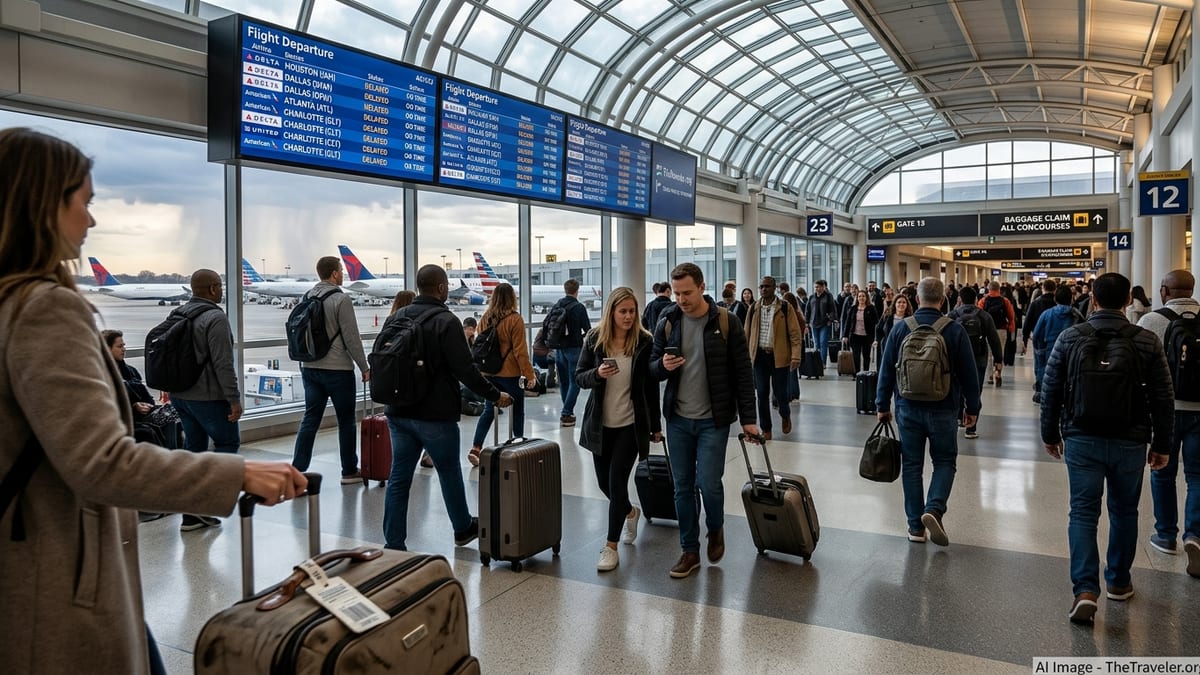
Why these four airports matter for Thanksgiving travel
Houston, Dallas, Atlanta and Charlotte sit at the center of the U.S. holiday air network, so any weather problems there can quickly ripple nationwide. In Houston, George Bush Intercontinental Airport and the smaller William P. Hobby Airport form a major south–central hub for domestic and Latin American routes, with heavy connecting flows between the coasts. Dallas–Fort Worth International and Dallas Love Field link the central U.S. to both coasts and handle a large share of cross-country connections during Thanksgiving week.
Atlanta’s Hartsfield–Jackson is routinely among the world’s busiest passenger airports and a primary connecting point for travelers across the eastern half of the country. Charlotte Douglas International, while smaller, is a key east coast hub that concentrates connecting traffic up and down the Atlantic seaboard. Together, these four metro areas channel a significant portion of the 81.5 million Americans that AAA projects will travel at least 50 miles from home between Tuesday, November 24 and Monday, November 30, 2026.
Because so many itineraries rely on tight connections through at least one of these hubs, even localized rounds of heavier rain, low clouds or thunderstorms could translate into broader knock-on delays as aircraft and crews fall behind schedule. That sensitivity is shaping how meteorologists and airlines are watching the late-November storm pattern develop over the South and East.
What the November 17 AccuWeather outlook is signaling
AccuWeather’s updated Thanksgiving travel outlook, published November 17 and revised November 18, points to a storm track tied to a series of El Niño influenced Pacific systems sweeping across the southern United States. In that long-range discussion, AccuWeather notes that road and airport delays are possible in Houston, Dallas, Atlanta and Charlotte during the broader Tuesday–Sunday Thanksgiving travel window, rather than focusing only on Thanksgiving Day itself.
The outlook highlights the potential for periods of rain and thunderstorms across the Gulf Coast and Southeast, with particular mention of travel along corridors such as Interstate 10, Interstate 45 and Interstate 85. AccuWeather’s meteorologists emphasize that most of the country could see relatively good conditions on the day before Thanksgiving, but that regional storms may emerge before and after the holiday as individual low-pressure systems track eastward.
AccuWeather places this emerging pattern in the context of the strong 2026–27 El Niño, which is already associated with an active southern storm track. The company’s seasonal guidance has called for more frequent storm systems from late November into winter across the southern tier of the United States, which would include Texas and the lower Mississippi Valley through the Carolinas.
How NWS and NOAA language differs from private forecasts
National Weather Service and NOAA outlooks published in mid November are generally more cautious about specific airport impacts during Thanksgiving week. Extended-range products from NOAA’s Climate Prediction Center and the Weather Prediction Center highlight an increased chance of unsettled, wetter weather along portions of the Gulf Coast and Southeast around November 23 to 29, but they frame these as probabilities over broad regions rather than precise storm forecasts for given cities or airports.
For example, CPC hazard discussions point to periods of enhanced precipitation risk from the southern Plains toward the Gulf Coast and Tennessee Valley during the run-up to Thanksgiving. Local forecast offices, including those serving Houston, Dallas–Fort Worth, Atlanta and Charlotte, have noted signals for possible rain or thunderstorms early in the week in their technical discussions, while also stressing that confidence in exact timing, coverage and intensity remains limited this far out.
In several of the most recent local area forecasts, day-of Thanksgiving weather is still shown as relatively benign or only modestly unsettled, with more significant systems potentially arriving either earlier in the week or over the return-travel weekend. NOAA forecasters also reiterate that long-range guidance should be treated as trend information rather than a locked-in prediction for a particular travel day or airport.
Practical implications for travelers using Southern hubs
For travelers booked through Houston, Dallas, Atlanta or Charlotte between November 24 and November 30, the emerging pattern points to heightened, but not guaranteed, disruption risk. The most practical step for passengers who must connect through these hubs is to build in extra time where possible. Choosing longer connection windows, especially for evening flights when cumulative delays are more likely, can reduce the chance of missed onward flights if storms temporarily slow arrivals or departures.
Flexible tickets or itineraries that allow same-day changes may also prove useful if forecast confidence increases on particular days. Many major U.S. airlines have a track record of issuing weather-related travel waivers for affected regions once confidence in disruptive conditions rises, typically within a few days of the event. Those waivers can allow customers to move their trips earlier or later within a defined window without change fees, although fare differences and specific rules vary by carrier and fare type.
Travelers who are still booking may want to consider early-morning departures, when schedules are less likely to be affected by upstream delays, and to avoid scheduling time-critical events immediately after arrival in these hubs. Those planning long drives into or out of Houston, Dallas, Atlanta or Charlotte should monitor highway forecasts for heavy rain, poor visibility or thunderstorms along the main approaches, which could slow road journeys even if airports continue operating.
What to watch as Thanksgiving week approaches
Because the current guidance is in the medium-range, it is subject to significant refinement in the coming days. The key for travelers will be to track how individual forecast systems evolve for specific dates between Tuesday, November 24 and Monday, November 30. NWS local office forecasts typically gain clarity within three to five days of an event, and terminal aerodrome forecasts for airports such as IAH, HOU, DFW, DAL, ATL and CLT provide more precise information on expected ceilings, visibility and thunderstorm chances as departure time nears.
Before finalizing plans, travelers should review updated NWS forecasts for both origin and connecting airports, check airline apps or websites for any newly issued travel waivers targeting the South and East, and be prepared for itinerary adjustments if a particular storm system becomes better defined. Given current information, a series of disturbances is more likely than a single nationwide shutdown event, so impacts could vary considerably from one city and travel day to another.
As of November 19, meteorologists agree that a stormier pattern is increasingly probable across parts of the southern United States and Southeast during the Thanksgiving 2026 travel window, but the exact timing, intensity and airport-level effects in Houston, Dallas, Atlanta and Charlotte remain uncertain. Any final travel decisions should therefore be based on the most recent official forecasts and airline advisories available just before departure, rather than solely on early long-range outlooks.