


More news on this day
Canada has elevated its travel advisories to Level 3 for the United Arab Emirates, Qatar, Saudi Arabia, Jordan and Oman, urging travellers to reconsider non essential trips as regional tensions, missile incidents and aviation warnings reshape risk assessments across the Gulf and wider Middle East.
Get the latest news straight to your inbox!
Collective Shift to Level 3 Reflects Volatile Security Picture
The latest update from Canada’s travel advisory framework places the five Gulf and Near East destinations under a unified Level 3 classification, signalling a broad reassessment of regional security rather than isolated country specific concerns. According to published coverage, Global Affairs Canada has moved the United Arab Emirates, Qatar, Saudi Arabia, Jordan and Oman into the higher risk category in response to what is described as a volatile and unpredictable situation affecting civilian infrastructure and transport links.
Previously, the advisory picture across these states was more mixed, with some destinations already subject to heightened warnings while others retained lower level guidance focused on terrorism threats or local regulations. The new alignment means Canadians are now formally asked to reconsider non essential travel to all five, bringing Canada’s stance closer to that of several other Western governments that already advise against leisure trips to much of the region.
The escalation follows months of sporadic missile and drone activity tied to the broader conflict environment, with strikes and attempted strikes reported against targets in and around the Gulf. Publicly available reporting indicates that debris from intercepted projectiles, as well as concerns over potential miscalculation, have become central factors in official risk modelling for both overflight and on the ground movements.
For Canadian travellers, the Level 3 designation does not legally prohibit travel but serves as a clear signal that security conditions are considered unstable and could deteriorate further with limited warning. It also has practical consequences for insurance coverage, consular support planning and corporate duty of care policies for staff posted or transiting through the region.
Aviation and Airspace Warnings Add to Travel Uncertainty
The advisory upgrade comes against a backdrop of mounting concern over the safety of regional airspace. In recent days, European aviation regulators have urged carriers to avoid overflying parts of the Gulf, including the skies above the United Arab Emirates and Qatar, after a reassessment of the threat to civilian aircraft. Industry focused reports describe the guidance as a sharp reversal from earlier relaxations granted when hostilities appeared to ease.
Gulf based media and airline statements show that major regional and international carriers have been adjusting flight paths, cancelling selected routes or extending existing suspensions. Air Canada, for example, has prolonged the halt on its Dubai operations into late October, citing the uncertain environment and operational constraints on Middle East routes. Other airlines are routing around affected airspace, lengthening flight times between Europe, Asia and Africa.
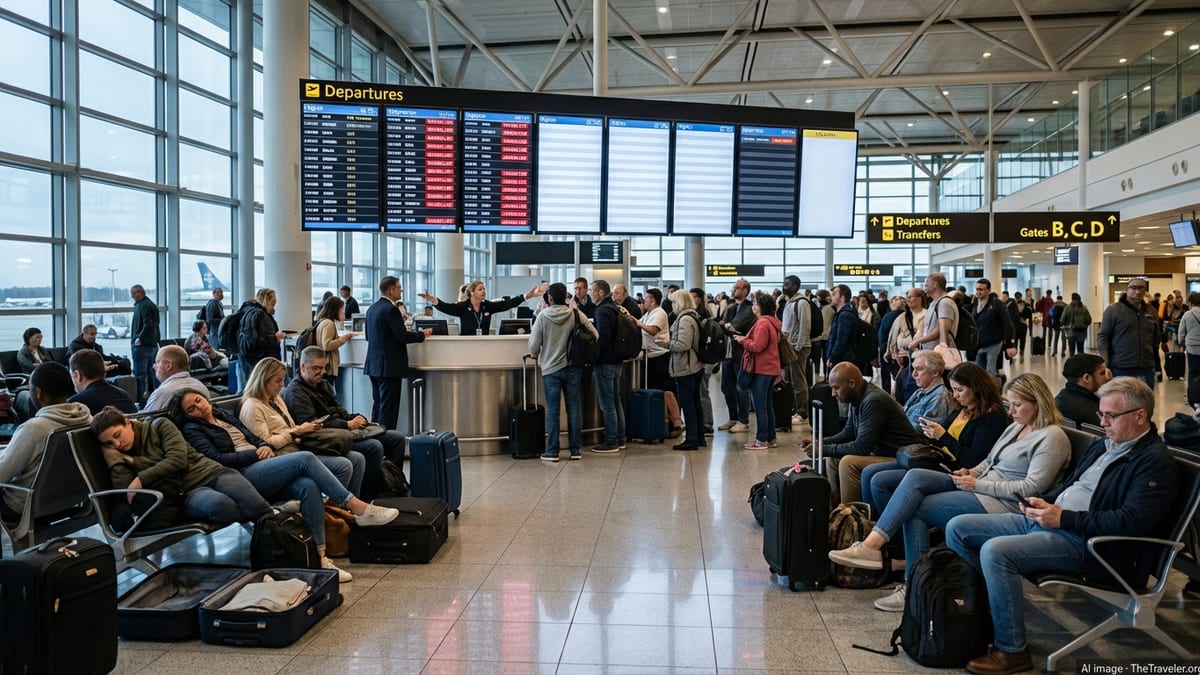
For passengers, the combination of national travel advisories and aviation warnings translates into a more fragile travel experience, with greater risk of last minute schedule changes, missed connections and longer itineraries. Airport operations in hubs such as Dubai, Doha, Riyadh and Muscat remain largely functional according to port and airport bulletins, but multiple sources note that disruption can occur with short notice as carriers react to fresh security information.
Travel risk analysts point out that even when airports are open, elevated regional tensions increase the likelihood of cascading disruptions, as a single airspace restriction can ripple across multiple carriers and hubs. The raised Canadian advisory level therefore dovetails with a wider pattern of caution within the global aviation system.
Geopolitical Escalation and Regional Spillover Risks
The Canadian move is rooted in a wider geopolitical escalation that has drawn the Gulf states closer to the centre of a multi sided confrontation. International coverage traces the current phase of tension to renewed exchanges between Iran and Western aligned forces, alongside attacks and attempted attacks on infrastructure in Kuwait, Bahrain, Qatar and Jordan. These incidents have heightened fears that the Gulf and its neighbours could be exposed to further strikes, proxy actions or misdirected fire.
Regional governments, including the United Arab Emirates and Saudi Arabia, have publicly condemned recent attacks and warned against threats to civilian infrastructure and maritime traffic. Statements from defence and foreign ministries across the Gulf highlight concerns about the safety of shipping lanes, energy facilities and aviation corridors that underpin global trade and travel. Joint communiqués by several Arab states emphasise both solidarity against cross border attacks and continued coordination with international partners.
At the same time, diplomatic activity continues. Canada’s foreign minister has visited Oman and Qatar in recent months to discuss regional stability, while the Canadian prime minister held talks with the president of the United Arab Emirates on the margins of the G7 summit. These engagements signal Ottawa’s interest in maintaining political and economic ties even as formal travel advice becomes more restrictive for ordinary travellers.
Analysts note that such parallel tracks, combining heightened risk messaging with ongoing dialogue, are now common in Western policy toward the Gulf. Governments seek to protect their citizens and limit exposure to fast moving security threats without severing long term partnerships in energy, trade and investment.
Impact on Canadian Travellers, Airlines and the Tourism Sector
The shift to Level 3 advisories has immediate implications for Canadian tourists, business travellers and airlines that rely on Gulf hubs for long haul connectivity. Insurance industry documents show that many policies either exclude or tightly limit coverage for destinations under high level government warnings, particularly when those warnings explicitly urge travellers to reconsider non essential trips.
Travel companies serving the Canadian market are therefore reassessing itineraries that route clients through Dubai, Abu Dhabi, Doha, Riyadh or Muscat, even when the final destination lies elsewhere in Africa or Asia. Advisory changes can trigger rebooking to alternative hubs in Europe or South Asia, often at higher cost and with longer flight times. For leisure travellers who had planned winter trips combining Gulf city stays with beach or desert tourism, the new guidance may prompt postponements or shifts to other warm weather destinations.
Regional tourism boards and hospitality operators, which have spent years cultivating Canadian visitors, now face renewed headwinds. While past experience suggests that Gulf destinations can recover quickly once tensions ease, industry observers remark that repeated cycles of escalation and de escalation make long term planning difficult. Travel demand may become more last minute and price sensitive, with travellers waiting for clear signs of stabilisation before committing.
Canadian carriers and code share partners also stand to be affected. Extended suspensions and rerouting can alter aircraft utilisation and crew planning, with knock on consequences for schedules across the Atlantic and Pacific networks. Some airlines continue to operate to the region with adjusted routings, but the higher advisory level underscores the operational and reputational risks of maintaining a strong presence in contested airspace.
Guidance for Canadians Considering Travel to the Region
With the advisory framework now aligned at Level 3 for the United Arab Emirates, Qatar, Saudi Arabia, Jordan and Oman, Canadian travellers are being urged through public information channels to carefully question the necessity of any trip to these destinations. Government guidance emphasises that those who decide to go despite the warning should be prepared for sudden changes in security conditions, transportation disruptions and limited consular reach, particularly outside major urban centres.
Travel risk specialists recommend that prospective visitors monitor official travel advice updates closely, as advisories for specific cities or border regions can shift separately from the national level. They also advise registering with consular services before departure, maintaining flexible itineraries that allow for rapid exit, and avoiding concentrations of military or government facilities that may be viewed as potential targets.
For Canadians already resident in the Gulf or on long term assignments, corporate security departments are reviewing evacuation and shelter in place plans in light of the new advisory status. Some firms have begun to limit non essential staff movements within and between Gulf states, while maintaining core operations with enhanced security protocols.
Despite the elevated risk rating, observers stress that daily life in many Gulf cities continues with a degree of normality, and that authorities in host countries retain a strong interest in ensuring the safety of expatriate communities and visitors. The Canadian advisory does not predict inevitable deterioration but reflects an assessment that the margin for error has narrowed, and that travellers should treat the current environment with heightened caution and preparedness.