


More news on this day
A Delta Air Lines Boeing 717-200 operating as Flight DL2939 from Atlanta to Memphis diverted to Nashville for a precautionary landing, according to early flight-tracking data and media reports, raising fresh questions for passengers about what happens when a routine domestic hop is interrupted midair.
Get the latest news straight to your inbox!
What Is Known So Far About Flight DL2939
Publicly available flight-tracking information indicates that Delta Flight DL2939, using a Boeing 717-200, departed Atlanta bound for Memphis when the crew diverted the aircraft to Nashville. The jet landed safely and taxied to the gate, where passengers reportedly disembarked for further arrangements. As of the latest updates, there are no reports of injuries among those on board.
Early accounts circulating in aviation forums and flight-status services point to a possible technical or precautionary issue rather than a severe in-flight emergency. Diversions of this kind are generally undertaken out of an abundance of caution when crews detect a potential problem or when operational conditions such as weather, air traffic or minor maintenance concerns make continuing to the original destination less advisable.
Delta has not released a detailed public description of the specific trigger for the diversion. In similar recent cases across the industry, potential causes have ranged from cockpit warning indications and minor mechanical anomalies to non-life-threatening medical events or airspace constraints. Until more formal information is published, the circumstances around DL2939 are best described as a precautionary diversion that concluded with a routine landing.
For travelers, the key fact is that the Boeing 717 reached Nashville under control, with no confirmed reports of serious onboard incident. That outcome aligns with standard airline practice, where erring on the side of caution is a core principle of flight operations.
Understanding Why Flights Divert Midjourney
Although it can be unsettling to experience in real time, a diversion is not unusual in modern air travel. Commercial pilots are trained to reroute when any parameter affecting safety, aircraft performance or passenger wellbeing drifts outside prescribed limits. This can include warning lights in the cockpit, irregular engine readings, suspected smoke or fumes, medical concerns or deteriorating weather along the route.
In the United States, aircrews operate under strict federal regulations that require them to maintain multiple layers of safety and redundancy. If a system fault or other concern arises, the safest course may be to land at the nearest suitable airport, even if the aircraft remains flyable. Nashville International Airport sits roughly along the Atlanta to Memphis corridor and is a frequent alternate for flights in this region, with runways and services capable of handling mainline jets such as the Boeing 717.
For passengers, the experience often involves an unexpected announcement, a change in flight path and a landing at an unfamiliar airport, followed by a wait while the airline organizes a new aircraft, rebooks itineraries or arranges ground transportation. Although frustrating, the practice reflects a conservative safety culture that prioritizes resolving potential issues on the ground rather than continuing into more remote airspace.
Statistically, diversions remain rare compared with the total number of daily departures, and the overwhelming majority conclude with uneventful landings similar to what has been reported for DL2939 in Nashville.
The Boeing 717-200: A Short-Haul Workhorse
The aircraft involved, the Boeing 717-200, is a twin-engine, single-aisle jet widely used by Delta on short to medium routes across the eastern United States. Originally developed as the MD-95, the type is known for its rear-mounted engines, five-abreast seating and relatively quiet cabin. Aviation reference materials describe the 717 as a mature design with a long service history and a strong overall safety record in commercial use.
Incidents involving the 717 are infrequent when measured against the thousands of cycles flown each year. When events do occur, such as smoke indications or landing-gear issues described in past publicly documented cases, investigators typically point to specific, isolated technical factors, maintenance items or component wear rather than systemic flaws with the aircraft type.
For Delta passengers, the use of the 717 on routes like Atlanta to Memphis reflects the airline’s focus on frequent, shorter connections between southeastern cities. These flights involve numerous takeoffs and landings, meaning the aircraft are subject to rigorous inspection schedules and maintenance cycles aimed at catching developing issues before they become critical.
In the context of Flight DL2939, the diversion to Nashville fits a broader pattern in which crews and maintenance teams respond conservatively to any anomaly, using the capabilities of a familiar, well-understood airframe to manage the situation safely.
What Impact Passengers Can Expect After a Diversion
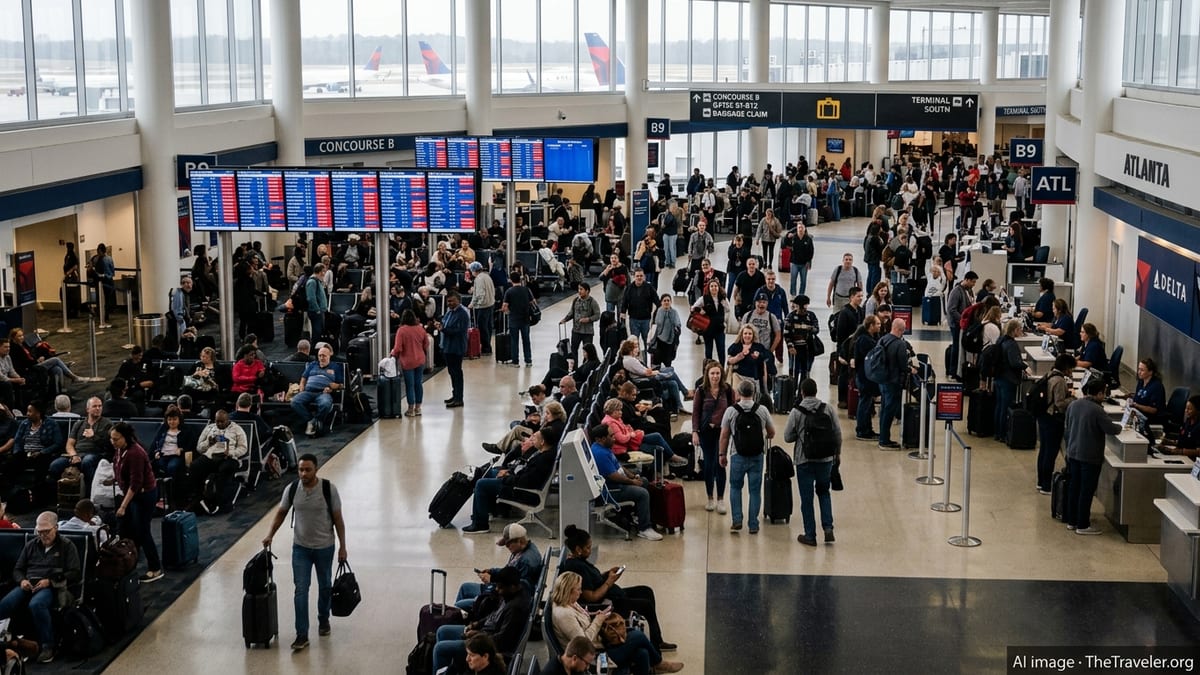
When a flight like DL2939 diverts, the immediate consequences for passengers are usually logistical rather than safety-related. Travelers may face missed connections in Memphis, delays reaching final destinations and the need to reorganize ground transportation or hotel bookings. Airlines generally work to rebook affected customers on later flights, sometimes adding extra sections or repositioning aircraft to clear backlogs.
Compensation or expense coverage often depends on the underlying reason for the diversion. If the cause is classified as a mechanical or controllable operational issue, some carriers may offer travel credits, rebooking flexibility or limited reimbursement for reasonable out-of-pocket costs. If weather or broader air-traffic restrictions are involved, financial assistance may be more limited, although staff may still help with logistics.
Passengers who were on DL2939 and who incur additional expenses in Nashville or at downstream points on their trip are generally advised, based on standard industry practice, to retain receipts and documentation. This can include hotel invoices, ground transport charges and records of missed prepaid services. Such information can support any subsequent request submitted through customer-care channels.
In many cases, airlines also monitor social media and official feedback forms after a high-profile diversion, adjusting their response as more information emerges about the disruption faced by travelers.
Practical Tips for Travelers Facing an In-Flight Diversion
For readers who may someday find themselves in a situation similar to that of passengers on Flight DL2939, there are several practical steps that can ease the disruption. Once it becomes clear that the flight is diverting, securing updated information is critical. Flight-status apps, the airline’s official channels and airport display boards typically provide the earliest indications of new departure times or aircraft assignments.
At the same time, staying seated, following crew instructions and keeping carry-on items stowed remains essential. Cabin crews prioritize safety and coordination during an unscheduled landing, and early movement in the aisle can slow that process. When the aircraft is at the gate and the situation stabilizes, there is more opportunity to seek assistance from gate agents or customer-service desks.
Travelers with onward connections should consider proactively contacting the airline through mobile apps or call centers, which sometimes offer self-service rebooking options faster than waiting in line at a busy counter. Those with flexible schedules may also gain an advantage by accepting alternative routings, nearby airports or later same-day departures.
Finally, while diversions like that of Delta’s Atlanta to Memphis service into Nashville can be stressful in the moment, they represent a safety system functioning as designed. Multiple layers of regulation, training and technical oversight are structured around ensuring that when crews are uncertain, they choose the closest safe runway over pressing ahead, even if that decision complicates everyone’s travel plans.