


More news on this day
United Airlines is set to deploy its premium-heavy Boeing 767-300ER on the Newark to Palermo route through the winter season, positioning the aircraft as a higher-comfort, lower-capacity alternative for travelers trying to sidestep Europe’s increasingly chronic mix of strikes, weather disruptions and air traffic control delays.
Get the latest news straight to your inbox!
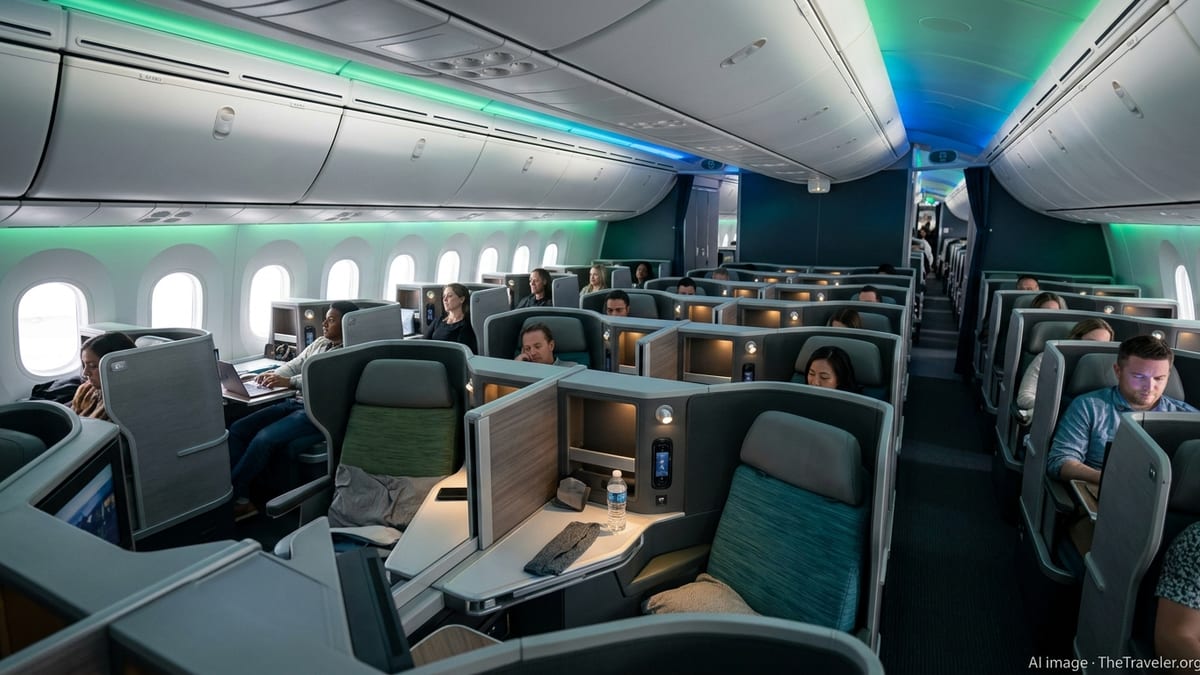
Premium-Heavy Widebody Heads to a Leisure-Hotspot Route
The Boeing 767-300ER configuration United is assigning to Palermo is one of the most premium-dense aircraft in the carrier’s transatlantic fleet, with just 167 seats compared to well over 200 on many competing widebodies. Publicly available fleet data shows that these jets carry a relatively large proportion of Polaris business-class seats and extra-legroom economy, trading overall capacity for higher-yield cabins.
United has already framed the Newark to Palermo market as a carefully calibrated leisure route, with summer-season schedules designed around Sicily’s surging tourism and strong demand from the Italian-American diaspora. Industry analyses of booking and load-factor trends indicate that the airline’s low-density 767s allow it to keep frequencies while avoiding the risk of flying large numbers of empty winter seats on a highly seasonal route.
By extending that strategy into the colder months, United is signaling that Sicily is no longer just a summer experiment. The decision to keep a premium-heavy aircraft on the route rather than switching to a smaller narrowbody suggests confidence that a core of higher-spend travelers, including long-stay leisure guests and second-home owners, will continue to fill the most lucrative cabins even when beach tourism tapers off.
The move also strengthens Newark’s positioning as a gateway for niche, point-to-point transatlantic links. Recent schedule filings show the hub gaining a mix of secondary European destinations, many of them served with the same 167-seat 767s, as the airline leans into a strategy of offering nonstop access to places previously reached only via connections in major European hubs.
Using Capacity Discipline to Navigate European Travel Disruption
United’s winter deployment to Sicily is unfolding against a turbulent European backdrop. Data published by Eurocontrol and the International Air Transport Association shows that air traffic flow management delays on the continent have climbed sharply over the past decade, with strikes and structural staffing issues in key control centers contributing to persistent bottlenecks.
Over recent winters, passengers have faced rolling waves of industrial action spanning air traffic control units, airport ground handlers and public transport operators across multiple European countries. Reports from outlets including Euronews and specialist travel publications have chronicled walkouts in Italy, France and Portugal, along with strike calendars stretching deep into peak holiday periods and forcing large-scale schedule adjustments.
United has limited ability to influence those systemic issues, but it can control how much capacity it exposes to the most vulnerable routings. By pairing a relatively small widebody with a nonstop itinerary that connects Sicily directly to the United States, the airline is effectively ring-fencing a slice of demand that might otherwise rely on multi-leg itineraries through congested European hubs with higher disruption risk.
The lower seat count also makes it easier to protect passengers when things do go wrong. In a disruption scenario, an airline operating a dense widebody into a constrained airport can struggle to rebook stranded travelers onto alternative departures. A premium-heavy 767, with fewer total passengers but a higher share of revenue-generating seats, offers more flexibility to consolidate or retime flights without creating unmanageable backlogs.
Sicily’s Tourism Momentum Meets a More Volatile Winter
Sicily’s appeal as a leisure destination has been building steadily, with regional authorities and airport operators highlighting record visitor numbers and expanded international air links over recent seasons. The launch of nonstops between Palermo and New York/Newark in 2025 marked a milestone for the island, adding a direct long-haul link to one of North America’s busiest transatlantic gateways.
While peak demand remains concentrated in late spring and summer, off-season tourism is gaining ground. Cultural events, food and wine travel and milder Mediterranean winters are drawing visitors who are less constrained by school holidays and more willing to travel in shoulder and low seasons. Airport announcements and tourism-board updates point to extended operating windows for several seasonal routes serving southern Italy, including services that now run deeper into December than in prior years.
At the same time, European winters have grown more unpredictable. Recent seasons have brought a combination of severe storms, heavy snowfall and flooding that have periodically shut down airports, snarled rail networks and forced airlines across the continent to scrap or divert flights. Public weather briefings and post-season analyses describe repeated episodes in which airports from the United Kingdom to central Europe operated with reduced runway capacity or temporary suspensions.
United’s decision to stick with a widebody on a relatively long overwater hop between Newark and Palermo appears tailored to that climate. The 767-300ER’s range performance and diversion flexibility, combined with a focused schedule and higher share of premium seats, are well suited to a market where passengers may prioritize reliability and comfort over rock-bottom fares.
Strategic Hedge Against Hub Congestion and Strike-Prone Corridors
The new Palermo service forms part of a broader pattern in which United is reshaping its Newark network to emphasize nonstop access to secondary European destinations. Schedule announcements over the last two years have included new links from Newark to cities in Portugal, Spain and North Africa, many of them markets that historically funneled U.S. traffic through large European hubs such as Frankfurt, Paris or London.
This strategy directly addresses a chronic vulnerability for transatlantic travelers: the dependency on connecting through airports where local strikes or congestion can cascade across the network. European industry reports have repeatedly identified French and Italian airspace, in particular, as focal points for air traffic control disruption, with ripple effects that extend to flights that merely overfly those countries.
By enabling U.S. travelers to fly nonstop to Sicily, United reduces the number of individual infrastructure nodes involved in a typical itinerary. There is still exposure to European airspace constraints, but the absence of an intermediate connection point removes one of the most common failure points documented in winter disruption case studies, namely missed or misaligned connections caused by short-notice delays.
The premium tilt of the 767 layout also dovetails with broader trends in corporate and high-end leisure travel. While the Palermo route is heavily leisure-oriented, travel industry data shows sustained appetite for lie-flat business-class products on long overnight sectors, even outside typical corporate corridors. By offering that experience to a destination traditionally dominated by narrowbody and charter operators, United positions itself to capture travelers willing to pay more for both comfort and a reduced risk of multi-leg disruption.
What This Means for Winter Travelers Eyeing Sicily
For travelers weighing a winter trip to Sicily, the deployment of United’s premium-heavy 767 changes the calculus in several ways. First, it introduces a direct long-haul option that is not primarily geared around peak beach season, making it easier to plan shoulder-season or holiday travel without stitching together complex connections through multiple European hubs.
Second, it offers more resilience in the face of Europe’s increasingly intricate disruption landscape. Publicly available performance data indicates that nonstop flights tend to recover more quickly after weather or air traffic control interruptions than itineraries built on tight, multi-connection schedules. Fewer segments and fewer airports involved translate to fewer opportunities for luggage mishandling, missed connections or cascading rebookings.
Third, the product itself is designed to appeal to travelers who value comfort and predictability over the absolute lowest fare. With an outsized share of business-class and extra-legroom seats, the 767 configuration United is sending to Palermo aligns with the preferences of older travelers, families on once-in-a-year holidays and remote workers combining longer stays with transatlantic trips.
Finally, the move underscores how airlines are rethinking seasonal flying in an era of chronic European travel volatility. Rather than simply cutting capacity during the off-peak months, carriers like United are experimenting with more targeted, premium-heavy deployments that can sustain service to high-potential leisure markets while offering passengers a perceived safe harbor from the region’s recurring winter chaos.