


More news on this day
Canada is preparing to launch a headline‑grabbing rail experience on June 10, 2026, when a new luxury train route will link the alpine resort towns of Banff and Jasper in the heart of the Canadian Rockies.
Get the latest news straight to your inbox!
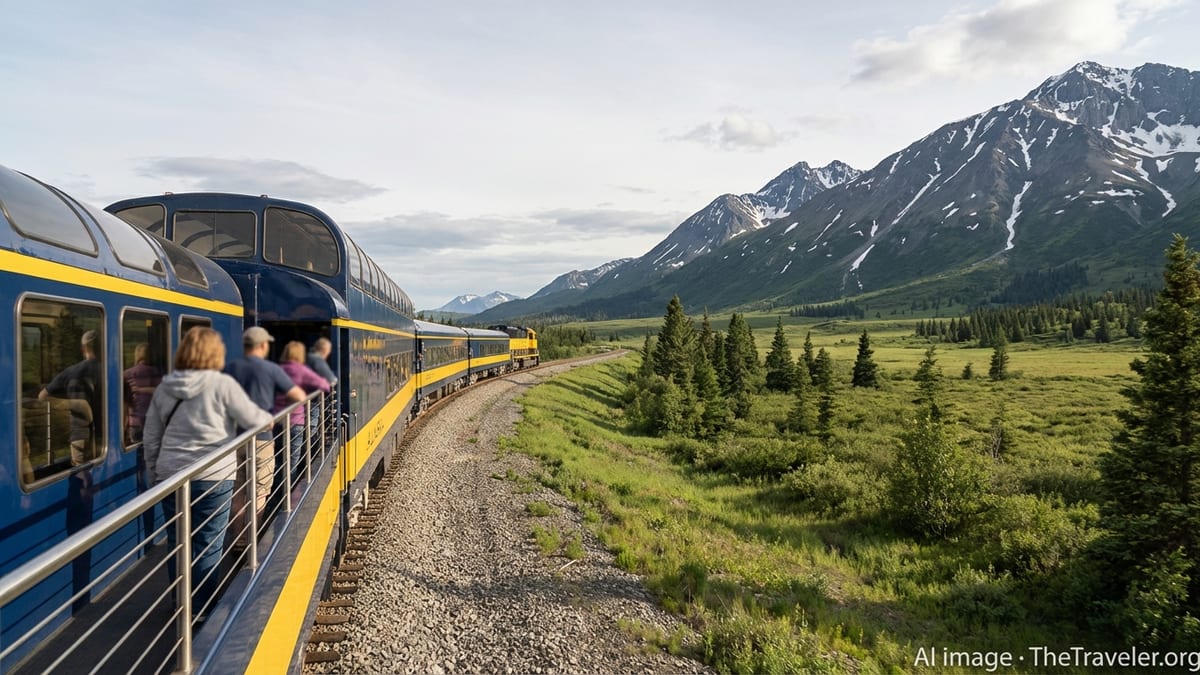
A Limited-Time Route Between Two Iconic Mountain Resorts
The new Passage to the Peaks service, operated by Rocky Mountaineer, will connect Banff and Jasper, two of Canada’s most celebrated resort towns, on a tightly limited schedule in June and July 2026. Publicly available information shows that the inaugural departure from Banff to Jasper is scheduled for June 10, with a small number of additional dates spread over a four‑week window.
Reports indicate that the journey is designed as a daylight rail experience, giving travelers uninterrupted views of the snow‑capped peaks, glacial lakes, and dense forests that define Banff and Jasper national parks. The two towns have long been linked by a scenic highway, but until now there has been no comparable direct tourist rail option between them.
Travel industry coverage describes the route as a two‑day itinerary featuring an overnight hotel stay in Kamloops, a smaller interior city that has become a familiar stop on many Western Canada rail programs. By structuring the trip with a mid‑journey stop, the operator aims to keep the focus on relaxed sightseeing rather than overnight train travel.
Packages built around the new route are being promoted as once‑only offerings, reflecting the limited operating window and the intention to coincide with heightened global attention on Canada in 2026.
Scenic Highlights Through the Heart of the Canadian Rockies
According to published coverage from rail and travel outlets, the Passage to the Peaks itinerary threads some of the most dramatic sections of the Canadian Rockies, with views of landmarks such as Castle Mountain, Mount Robson, and the turquoise waters around Lake Louise. The train is expected to trace corridors already renowned among rail enthusiasts for engineering features like tunnels, canyons, and steep river valleys.
The route positions passengers for close‑up views of classic Rockies scenery, including glacier‑fed rivers, evergreen forests, and high mountain passes that are often subject to snow well into early summer. Daylight operation is a central part of the concept, with the schedule arranged so that travelers spend nights in hotels rather than sleeping onboard, preserving daytime hours for sightseeing.
Travel planners point out that Banff and Jasper serve as gateways to two separate national parks, making the rail line a natural spine for longer itineraries. Many early package concepts pair the train journey with extra nights in each town, opening time for hiking, gondola rides, lake excursions, and wildlife watching on either side of the rail segment.
The train is expected to appeal both to first‑time visitors who want a structured introduction to the Rockies and to repeat travelers looking for a new angle on a familiar landscape. With capacity constrained by the short operating period, interest from international markets is anticipated to be strong.
Luxury Onboard Experience and Curated Land Stays
Information published by the operator and its travel partners highlights a premium onboard experience, with glass‑domed coaches, assigned seating, and multi‑course meals served at travelers’ seats. The train is marketed as a daylight sightseeing product rather than a means of simple point‑to‑point transport, emphasizing comfort, storytelling, and photography opportunities.
Service levels are expected to mirror Rocky Mountaineer’s existing Canadian routes, which typically include at‑seat drink service, regional menus, and hosts providing commentary on history, geology, and local culture. The emphasis is on slow travel, allowing passengers to focus on the landscape while logistics and luggage are managed behind the scenes.
On land, itineraries built around the Passage to the Peaks route are being sold with pre‑arranged hotel stays in Banff, Jasper, and Kamloops. Many packages extend beyond the core rail segment to include time in Lake Louise and Calgary, positioning the train as the centerpiece of a broader Rockies circuit.
Travel companies promoting the new journey are packaging add‑ons such as national park touring, lake cruises, and guided excursions, reflecting a wider trend toward highly curated, multi‑day experiences rather than standalone rail tickets.
Timed With a Big Year for Tourism in Western Canada
Industry reports note that the launch of Passage to the Peaks in June 2026 has been scheduled to coincide with a major year for tourism in Western Canada, including global sporting events centered in the region. The limited June and July operating period is framed as an opportunity for visitors to step away from busier hubs and explore the mountains at a more relaxed pace.
Tourism commentators suggest that the new route could help disperse visitor traffic across a wider geography, encouraging longer stays that combine urban gateways, mountain parks, and interior communities. By creating a direct premium rail link between Banff and Jasper, the service offers a new alternative to self‑drive itineraries along the Icefields Parkway.
The focused window from June 10 into mid‑July also aligns with peak conditions in the high country, when snow has retreated from many trails but mountain summits remain capped in white. That timing is expected to appeal to international travelers seeking classic summer Rockies scenery within a defined travel period.
Regional tourism organizations are already highlighting the train as a showcase for Canadian landscapes, positioning it alongside established routes that connect Vancouver with the interior and the Rockies.
Booking Demand and What Travelers Should Expect
Because the route is operating for only a few weeks in 2026, tour operators are signaling that space will be limited and that departures around the June 10 launch date may attract significant attention. Early marketing materials emphasize advance planning, particularly for travelers wishing to combine the train with busy summer dates in Banff and Jasper.
Travelers booking Passage to the Peaks can expect a structured, all‑inclusive format for the rail portion of their trip, with meals onboard, ground transfers between stations and hotels, and baggage handling typically bundled into the overall package price. Optional pre‑ and post‑rail extensions vary, but many programs add additional nights and activities to encourage guests to linger in the region.
Given the daylight‑only design and hotel overnights, the experience is being framed more as a rolling viewpoint than a conventional passenger service. For visitors who might otherwise be nervous about driving mountain highways, that concept offers a way to see the full breadth of the Rockies between Banff and Jasper while leaving navigation and weather considerations to the operator.
As June 10, 2026 approaches, publicly available information suggests that the new rail line is poised to become one of the year’s most talked‑about Canadian travel experiences, placing two of the world’s most photogenic resort towns on a single, scenic track for a limited time.