


More news on this day
Egypt is preparing to launch a new digital visa-on-arrival system that issues QR code entry permits at Cairo International Airport from August 2026, a move expected to streamline arrivals and accelerate a broader tourism shift across Africa.
Get the latest news straight to your inbox!
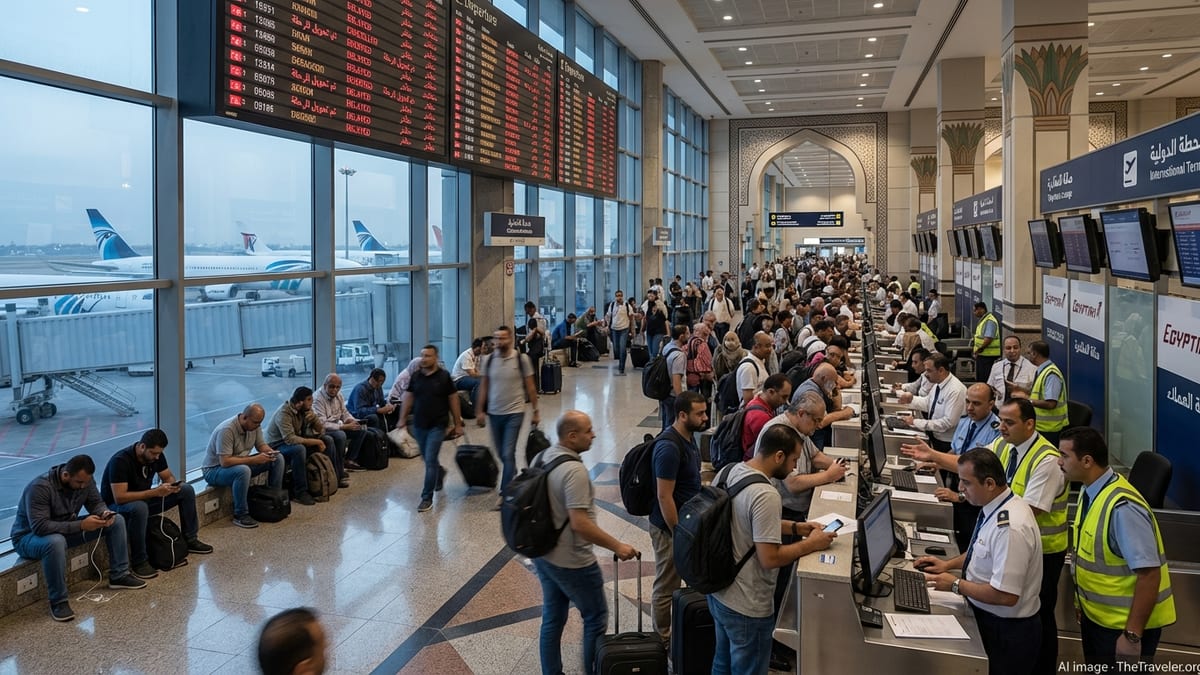
How Egypt’s New QR Visa-on-Arrival Will Work
According to recent government communications and local media coverage, the new platform will initially operate at Cairo International Airport before being expanded to other Egyptian airports in phases. The system replaces the familiar paper visa sticker with a fully digital process that generates an electronic visa stamp in the form of a QR code.
Travelers eligible for visa on arrival will be able to enter their details through self-service kiosks in airport arrival halls, a dedicated mobile application or an official online portal linked to the system. After submitting personal and passport data, visitors will pay the visa and service fees electronically through integrated payment channels instead of queuing at cash-only bank counters.
Once payment is confirmed, the system issues a QR code that functions as the visa-on-arrival stamp. Passport control officers will scan the code to verify its authenticity and match it with the traveler’s passport data, eliminating the need for paper stickers and manual handwriting on documents. Public information indicates that the platform is designed to cut congestion at peak times and speed up the flow of passengers through Cairo’s terminals.
Reports also indicate that visitors will be able to complete the process before departure, with applications processed within roughly 48 hours in advance of arrival or managed directly by tour operators and travel agencies. This hybrid model aims to preserve the flexibility of visa on arrival while shifting the administrative burden into a digital environment.
What Tourists Need to Know Before Arrival
For now, Egypt’s existing options remain in place alongside the planned QR system. Many nationalities can still obtain a traditional visa on arrival at major airports by paying a fixed fee, while the separate e-visa portal continues to serve visitors who prefer to arrange documentation in advance. The upcoming QR-based platform will sit on top of these frameworks rather than replace them overnight.
Travel industry advisories emphasize that travelers should first confirm whether they are eligible for visa on arrival or require an e-visa or consular visa before booking flights. Eligibility lists are expected to mirror those of the current e-visa and visa-on-arrival schemes, covering dozens of countries across Europe, North America, Asia and the Gulf, with African and regional travelers often following different rules depending on bilateral agreements.
Passengers are also being advised to travel with a passport valid for at least six months beyond entry, a common condition that is not expected to change under the digital system. Proof of onward or return travel, accommodation details and basic itinerary information may still be requested verbally at border control, even as the formal paperwork shifts onto screens and QR codes.
Because the new system relies on electronic payments, the arrival experience for many tourists is likely to change. Instead of searching for cash to pay visa fees in crowded airport halls, visitors will be able to use cards or digital channels integrated into the platform. However, travel agents recommend carrying a backup means of payment and allowing extra time during the first months of rollout, when technical fine-tuning and passenger learning curves can slow early adopters.
Impact on Egypt’s Tourism Strategy and Airport Experience
The QR visa-on-arrival launch is part of a broader effort by Egypt to position itself as a high-capacity, digitally enabled hub for leisure and business travel. In recent years, Egyptian authorities have expanded the national e-visa system, piloted digital arrival processes and moved toward paperless passport control at Cairo International Airport. The new platform, developed in partnership with domestic financial institutions and technology firms, is presented as another pillar of that strategy.
By reducing queues at bank counters and immigration desks, the system is expected to alleviate pressure at Cairo’s busiest terminals, especially during high season for Red Sea resorts and cultural tourism to Luxor and Aswan. Faster processing could translate into more predictable transfer times for connecting flights and organized tour departures, an important factor for tour operators that move large groups through Egypt’s main gateway.
Tourism analysts note that digital entry systems can also improve security screening and data accuracy, since passenger information is captured electronically and shared across relevant platforms in real time. This allows authorities to reconcile data from embassies, airlines and airports more easily than under fragmented paper-based processes.
The roll-out timetable, beginning at Cairo International Airport in August 2026 and then extending to other airports, gives Egypt a window to test the technology with large passenger volumes and refine user interfaces before pushing it nationwide. Observers in the travel trade expect initial adjustments, but many see the move as necessary to keep pace with other leading destinations adopting biometrics, e-gates and digital travel credentials.
Regional Significance for Africa’s Travel Industry
Beyond Egypt’s borders, the QR visa-on-arrival system is being watched closely by tourism boards, airlines and airport operators across Africa. Regional policy studies show that visa openness and simplified entry procedures have become central themes in African travel strategies, with more countries experimenting with e-visa portals and visa-on-arrival policies to attract visitors and investment.
Egypt sits at the crossroads of Africa, the Middle East and Europe, handling millions of international passengers each year through Cairo and coastal airports. By shifting its main visa-on-arrival gateway onto a digital platform, the country effectively signals a new benchmark for large African hubs competing for long-haul carriers, conference business and high-spend tourists.
Industry commentators point out that the move could encourage neighboring destinations to accelerate their own digital upgrades. North and East African countries have already deployed or expanded e-visa systems in the past few years, and some are testing biometric border gates and QR-based travel credentials at select airports. Egypt’s high-profile rollout at Cairo International Airport adds further momentum to this continental trend.
For pan-African carriers and tour operators, smoother entry procedures in one of the region’s biggest markets could also support the development of multi-country itineraries that route through Cairo. Easier transit and more predictable processing may make it simpler to package combined trips linking Egypt with other North African, Red Sea or sub-Saharan destinations targeting the same long-haul source markets.
Practical Tips for Travelers Planning Egypt Trips in 2026
With the system scheduled to come online at Cairo International Airport from August 2026, travelers planning autumn and winter trips are being encouraged by travel advisors to monitor official guidance in the months leading up to departure. Airlines, tour operators and embassy travel advisories are expected to share updated instructions on how to use the kiosks, mobile app and online portal as public information becomes available.
Holidaymakers arriving shortly after launch may encounter mixed processes as airports transition from paper stickers to QR codes. At check-in, airline staff may ask to see either advance e-visa confirmations or confirmation that the passenger is eligible to obtain a visa on arrival under the new digital regime. At the airport, clear signage and ground staff are likely to direct travelers toward the correct kiosks or service counters.
Travel planners suggest building extra time into arrival schedules, particularly for those with immediate domestic connections or pre-booked tours. While the QR system aims to shorten queues in the medium term, any newly introduced border technology can experience initial slowdowns as both staff and passengers adapt to new steps and screens.
For frequent visitors to Egypt and regional business travelers, the digital shift may eventually make trips more predictable and less dependent on cash or paper forms. As more African destinations modernize their own visa and border processes, Egypt’s adoption of QR code visas on arrival signals a future in which digital entry systems become a standard part of the continent’s tourism infrastructure rather than a novelty.