


More news on this day
Hundreds of passengers were left stranded at Erbil International Airport on July 18 after a wave of at least 15 cancellations and several delays disrupted connections across Iraq, Turkey, Jordan, Gulf hubs and major European cities, according to live flight-tracking boards and regional media coverage.
Get the latest news straight to your inbox!
Wave of Cancellations Hits Key Regional Gateways
Live departure information for Erbil International Airport on July 18 showed an unusually high number of grounded services, with at least 15 flights canceled through the day and several more subject to rolling delays. The disruption affected both early morning departures and later services, impacting travelers with onward connections across the Middle East and Europe.
Services to major hubs in Turkey, including Istanbul and other connection points for Europe and North America, were among the hardest hit. Several departures marketed by low cost and full service carriers were removed from schedules or flagged as canceled, significantly reducing capacity on one of Erbil’s busiest corridors. Delays were also reported on remaining Istanbul services, increasing uncertainty for connecting passengers.
Flights linking Erbil to Amman in Jordan, as well as to key Gulf gateways such as Doha, Dubai and Abu Dhabi, experienced a mix of outright cancellations and extended delays. These routes are vital for both business and diaspora travel, and for many passengers they provide the only practical way to reach longer haul services bound for Europe, Asia and North America.
European-bound passengers faced added complications as cancellations affected direct and one stop itineraries to cities in Germany and other Schengen destinations. With many airlines already operating reduced schedules to northern Iraq, the loss of a single rotation can leave travelers with limited same day alternatives, resulting in overnight stays or rebookings several days later.
Recent Security Tensions Add to Fragile Airspace Picture
The latest disruption comes against a backdrop of heightened regional tension and intermittent restrictions on Iraqi airspace. Publicly available notam data and recent security reporting highlight that Erbil’s airspace has been subject to periodic closures and route adjustments this year, often at short notice, in response to missile and drone incidents in northern Iraq.
Analysts note that any new security scare or nearby incident can quickly ripple through airline operations, even if the runway and terminal remain technically open. Carriers must reroute aircraft, obtain updated overflight clearances and assess risk thresholds on a flight by flight basis. When those conditions are not met, airlines tend to cancel or consolidate flights, concentrating passengers on a smaller number of rotations.
Recent conflict-related airspace constraints across Iraq and neighboring countries have also lengthened some routings between Europe, the Gulf and South Asia. For schedule planners, this reduces operational flexibility and leaves fewer spare aircraft available to recover from disruptions, meaning that a localized problem at Erbil can translate into cancellations that spread across an airline’s broader network.
Insurance and regulatory considerations add further pressure. Industry observers point out that some carriers have delayed or limited their return to Erbil after previous airspace closures, preferring to wait for a sustained period of stability before restoring full capacity. The result is a thinner schedule where each lost flight has a disproportionate impact on travelers.
Passengers Face Long Queues, Missed Connections and Limited Options
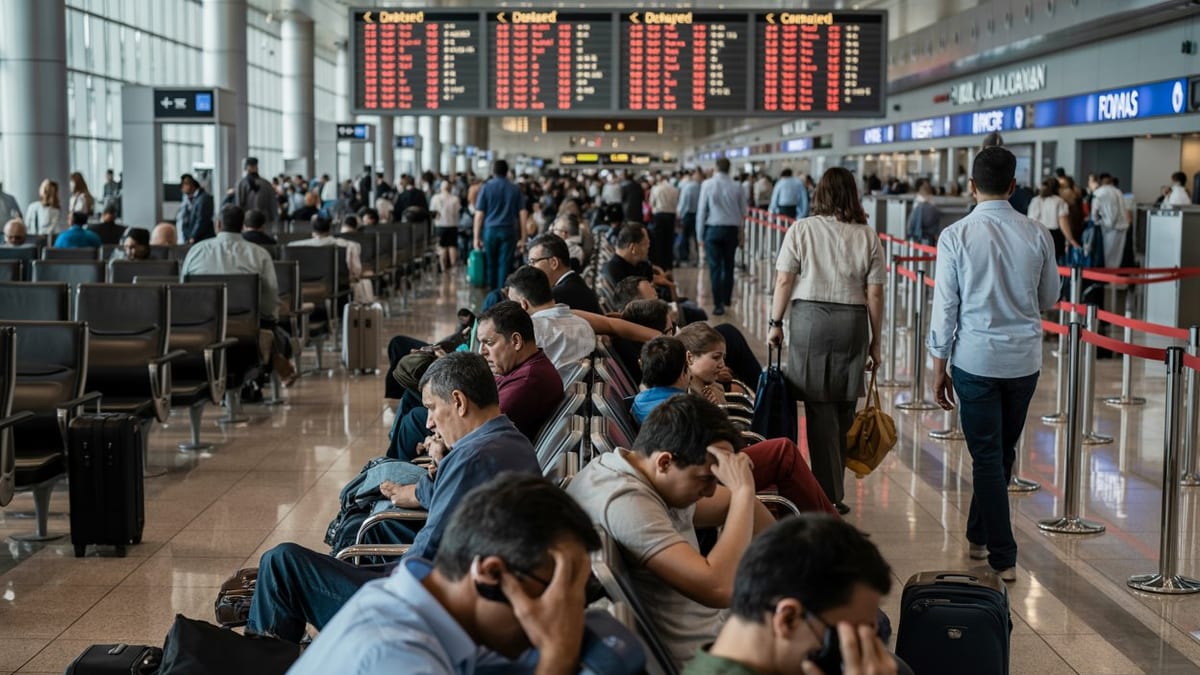
Video and images shared on regional news outlets and social media from inside Erbil International Airport on July 18 showed crowded check in areas, long queues at ticket desks and passengers sitting on floors near departure gates as they waited for updates. Many travelers had already completed outbound segments from local Iraqi cities or from the Kurdistan Region and found themselves stuck in Erbil without confirmed onward flights.
Those bound for Istanbul, Amman and Gulf hubs were particularly affected, as canceled morning departures eliminated same day connections to Europe and long haul destinations. With spare seats scarce on later flights, families and groups reported being split across different services or rebooked on itineraries involving lengthy backtracking through other regional airports.
Hotel availability in Erbil and nearby districts also came under strain as carriers and travel agents sought overnight accommodation for stranded passengers. For travelers without confirmed rebooking or with limited financial resources, remaining in the terminal became the only short term option, contributing to congestion in public areas.
Travel industry observers note that many passengers caught up in the disruption had already faced months of uncertainty planning trips through Iraqi airspace. The sudden loss of multiple flights in a single day reinforces a perception that itineraries involving Erbil carry a higher risk of last minute schedule changes than comparable routes elsewhere in the region.
Airlines Announce Rebooking, But Recovery Likely to Be Slow
Information published by several regional airlines and shared through their customer channels on July 18 indicated that standard reaccommodation policies were in effect for affected Erbil passengers. These measures typically include free date changes within a limited window, rerouting via alternative hubs where space permits and refunds for unused portions of tickets on canceled flights.
However, reduced capacity into and out of northern Iraq means there are relatively few open seats on subsequent days, especially on high demand routes to Turkey, Jordan and Gulf hubs. Passengers with time sensitive travel, including medical appointments, business commitments or visa-related deadlines in Europe, may struggle to find alternatives that meet their original plans.
Travel agents in Erbil and other Iraqi cities have reported a spike in requests to reroute journeys through Baghdad or regional airports in neighboring countries. While these options can restore connectivity in some cases, they often involve added cost, additional visas or long overland transfers, creating further barriers for travelers already facing disruption.
Observers expect it could take several days for airline schedules at Erbil to return to a more normal pattern, as carriers reposition aircraft, clear passenger backlogs and adjust crew rosters. For some itineraries, particularly those tied to already limited European services, full recovery may take even longer.
What Travelers Transiting Erbil Should Do Next
Travel specialists recommend that anyone scheduled to depart Erbil over the coming days monitor their flights closely on airline channels and independent flight tracking services, rather than relying solely on original booking confirmations. Same day schedule changes have become more common in the region, and early awareness can provide extra time to seek alternatives.
Passengers whose flights are canceled are generally advised to first explore free rebooking or refund options directly with the airline or booking platform, and to keep records of all notifications and receipts. For those with onward nonrefundable tickets from connecting hubs such as Istanbul, Doha or Amman, travel protection policies may offer some coverage, although terms vary widely.
Travel advisors also suggest building longer layovers into itineraries that route through Erbil or other Iraqi airports during the current period of elevated airspace risk. While this approach can lengthen total travel time, it may reduce the chance of missed long haul connections if upstream flights are delayed or retimed.
For now, the events of July 18 underline both the importance of Erbil International Airport as a regional gateway and the vulnerability of its traffic flows to sudden shocks. Until regional tensions ease and airlines restore more robust schedules, travelers using Erbil as a departure point or transit hub are likely to face a higher than usual risk of disruption.