


More news on this day
The United States has expanded and sharpened its travel warnings for countries across the Middle East as armed conflict, missile attacks and political volatility raise the risks for American travelers and expatriates throughout the region.
Get the latest news straight to your inbox!
Security Alerts Reflect Rapidly Changing Risk Landscape
Publicly available State Department material shows a dense web of country-specific advisories now in effect across the Middle East, ranging from “reconsider travel” to “do not travel.” A recent worldwide caution notice, updated in March 2026, specifically highlights the Middle East as an area where security conditions are complex and can deteriorate quickly. The advisory urges Americans to maintain a high level of awareness, have contingency plans and follow local news and official alerts when moving around the region.
Information on the State Department’s Middle East advisory hub indicates that many destinations popular with business travelers and transit passengers have been elevated to more restrictive levels since the onset of the current conflict cycle. These changes follow months of cross-border strikes, drone and missile incidents, and sporadic unrest that have increased the potential for spillover violence even in locations far from front-line fighting.
Security analysts note that such alerts do not prohibit travel, but they signal a higher baseline of risk, including the possibility of sudden airport closures, disrupted commercial flights, communications outages and limited access to consular services. For travelers, the practical impact is a greater need to plan conservatively, build flexibility into itineraries and be prepared to alter or cancel trips at short notice.
Evacuations and Drawdowns Underscore Severity of Threats
In several cases, the US government has moved beyond issuing advisories and has ordered the departure of non-emergency personnel from certain posts in the region. Public statements and advisory updates in early March 2026 show drawdowns in countries where officials assess a direct threat from ongoing hostilities. These steps are typically reserved for situations where the operating environment becomes too dangerous or unpredictable for normal diplomatic work and family life.
Country pages for Iraq and the United Arab Emirates, for example, reflect decisions to remove non-essential US government staff and dependents because of security concerns and the threat of armed conflict. Such measures are intended primarily to protect official personnel, but they also serve as a strong signal to private citizens that the local risk profile has shifted abruptly and may continue to worsen.
Travel risk consultants say that when a drawdown or ordered departure appears alongside a Level 3 or Level 4 advisory, it often coincides with heightened threats to infrastructure, including airports, ports and major highways. For Americans abroad, that can translate into fewer means of exit, higher costs for last-minute travel and a greater reliance on personal preparedness rather than on-the-ground government support.
Air Travel and Tourism Plans Face Mounting Disruptions
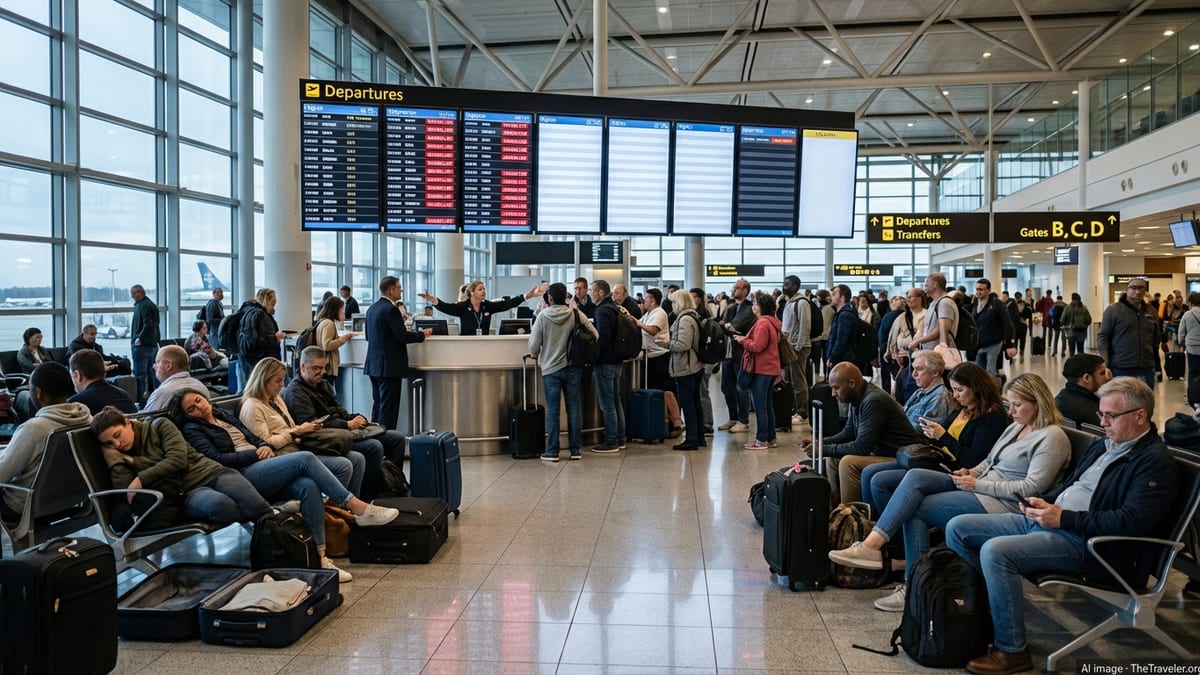
The ripple effects of the State Department’s warnings extend well beyond those currently living in the Middle East. Airlines, tour operators and corporate travel managers are reassessing routing and scheduling throughout the region as risks to aviation and key transit hubs mount. Public summaries of government notices to air missions describe calls for added caution for flights operating in or near multiple Middle Eastern airspaces, reflecting concerns about potential missile or drone activity, miscalculation or spillover from nearby clashes.
Leisure and religious travel is also under strain. Americans considering pilgrimages, cruise extensions or stopover city breaks in Gulf and Levant destinations are encountering stricter company policies, higher insurance premiums or outright cancellations. Industry bulletins compiled this spring for the travel and hospitality sector point to a downturn in forward bookings to higher-risk markets and a shift toward destinations perceived as safer or more stable.
Travel planners note that while some countries in the region maintain functioning tourism sectors and continue to welcome visitors, the overall environment is more fragile than in previous years. Even where day-to-day life appears relatively normal, the prospect of sudden regional escalation remains a central concern, and travelers are being urged to keep contingency funds, flexible tickets and backup accommodation options.
Advisory Levels Vary Sharply by Country
The latest advisory matrix published on official US platforms shows a stark contrast between Middle Eastern countries that are considered extremely high risk and those where authorities recommend heightened vigilance but still deem some travel feasible. Places such as Iran, Iraq, Syria, Lebanon, Gaza and Yemen are listed at the most severe “do not travel” level because of war, terrorism, kidnapping and the possibility of wrongful detention.
By comparison, countries including Bahrain, Israel, the West Bank, Jordan, Kuwait, Oman, Qatar, Saudi Arabia and the United Arab Emirates are predominantly flagged at the “reconsider travel” tier. That designation reflects serious concerns ranging from missile or drone attacks to sporadic civil unrest and limited ability of local authorities to ensure the safety of foreign nationals in all circumstances.
Within individual countries, risk can vary widely by region. Advisories for Israel, the West Bank and Gaza, for instance, distinguish between front-line conflict areas, border regions and major urban centers, while still emphasizing the potential for rocket fire, terror attacks and sudden closures. Similar distinctions appear in guidance for parts of Iraq and neighboring states, where specific provinces are subject to stricter cautions.
What Travelers Should Weigh Before Heading to the Region
For Americans still considering travel to the Middle East, current guidance stresses careful preparation and sober risk assessment. The State Department encourages US citizens to review the full advisory text for each destination, monitor security alerts from nearby embassies or consulates and enroll in traveler enrollment programs that provide direct notification of changes in local conditions.
Travel specialists recommend that visitors ensure they have comprehensive travel insurance that covers war and civil unrest, verify that airlines and tour operators retain the right to reroute or cancel without penalty in case of new hostilities, and keep digital copies of passports and essential documents. They also advise building extra time into connections, especially when transiting regional hubs that could face temporary shutdowns.
With the outlook influenced by the trajectory of the wider regional conflict and diplomatic efforts to contain it, the advisory picture is likely to keep evolving through the northern summer. For now, publicly available information from the US government and international partners points to an environment where caution, flexibility and close attention to official updates are crucial for anyone planning to travel in or through the Middle East.