


More news on this day
A pregnant cruise passenger was medically evacuated from Carnival Sunrise off the Miami coast on Thursday after experiencing complications, prompting a rapid response from a Coast Guard crew and raising fresh questions about medical preparedness and pregnancy policies at sea.
Get the latest news straight to your inbox!
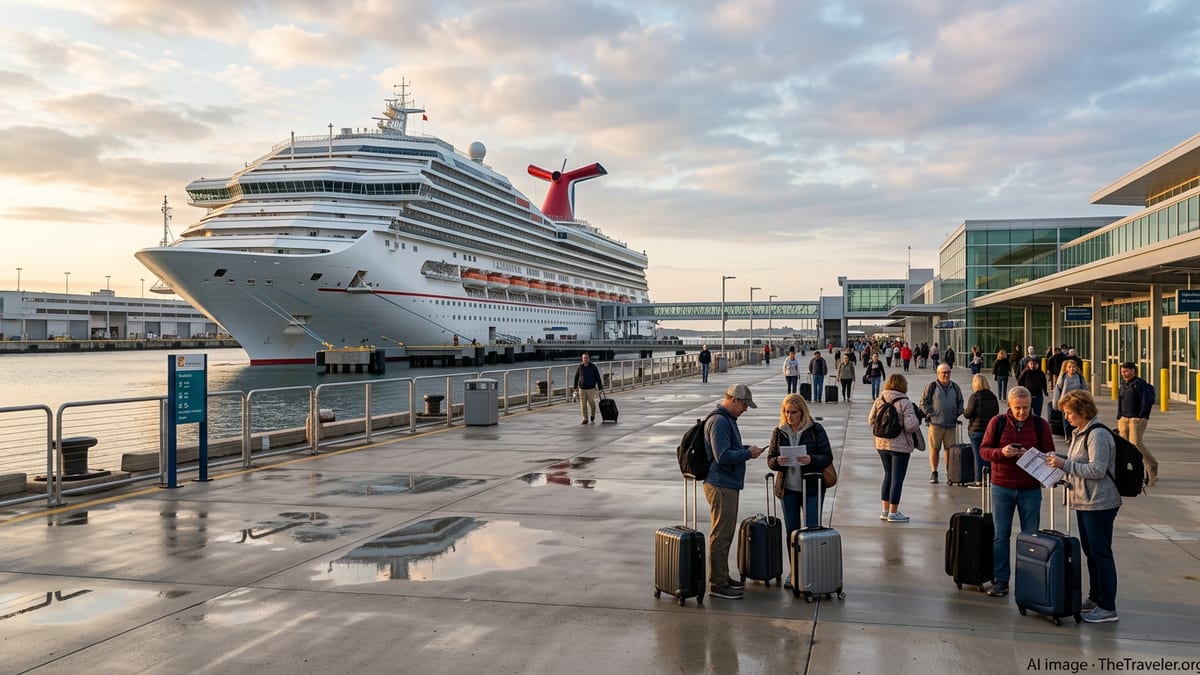
Medical Emergency Shortly After Departure From Miami
According to published coverage, the medical incident unfolded on Thursday, July 16, shortly after Carnival Sunrise departed PortMiami on a scheduled four day round trip voyage to the Bahamas. The ship had only recently cleared the channel when reports indicated that a female passenger began experiencing sudden pregnancy related complications.
Publicly available information shows that the vessel was sailing roughly four miles northeast of Government Cut when the situation escalated enough to require outside assistance. Carnival Sunrise, homeported in Miami, was operating on its regular itinerary, and there are no indications that weather or sea conditions contributed to the emergency.
Reports indicate that crew members on board the ship initiated onboard medical protocols before contacting the Coast Guard for additional help. Cruise ships typically carry a small medical team and an infirmary, but serious or time sensitive cases often require evacuation to shore based facilities where more comprehensive treatment is available.
The incident did not appear to significantly alter the ship’s overall itinerary, although routine operations such as entertainment and deck activities were temporarily overshadowed by the medical response unfolding off the South Florida coast.
Coast Guard Response and At Sea Evacuation
Coverage from regional outlets indicates that personnel at Coast Guard Station Miami Beach launched a rescue vessel after receiving word of the passenger’s condition. A response boat met Carnival Sunrise off the coast, where the passenger was transferred from the cruise ship to the smaller craft for transport back to Miami.
Medical evacuations at sea are complex operations that require coordination between the cruise ship’s bridge, onboard medical staff, and government responders. In this case, the proximity to PortMiami allowed the Coast Guard to send a boat crew rather than a helicopter, creating what reports describe as a relatively swift transfer to waiting medical services ashore.
Images and descriptions shared through official information channels show a standard underway rendezvous, with the larger cruise ship slowing to facilitate the safe movement of the passenger onto the Coast Guard vessel. These types of transfers are carefully timed to account for vessel motion, passenger stability, and the need to minimize delays in getting the patient to advanced care.
While detailed updates on the woman’s condition have not been widely released, coverage emphasizes that she was transported to shore for further evaluation, underscoring the Coast Guard’s continuing role as a critical medical safety net for cruise traffic in and out of Miami.
Pregnancy Policies in Focus for Cruise Travelers
The incident has drawn renewed attention to how cruise lines handle pregnancy among guests. Publicly available policy information for major operators, including Carnival, generally limits sailing for travelers who will reach their twenty fourth week of pregnancy at any point during the voyage. These guidelines are intended to reduce the risk of late term complications far from land based medical facilities.
Published explanations from cruise and medical sources note that ships, while equipped for many health scenarios, are not designed to function as full obstetric or neonatal units. When complications arise, particularly in the second or third trimester, quick access to specialized care can be critical, which is not always possible when vessels are days from the nearest port.
Travel industry coverage often advises pregnant guests to obtain written clearance from a health care provider before cruising and to review the fine print of each line’s pregnancy policy, including requirements for documentation at embarkation. Travelers are also encouraged to confirm the scope of their travel insurance, since some policies apply different rules to pregnancy related care, medical evacuation, or trip interruption.
For itineraries leaving from ports like Miami, where high traffic brings ships relatively close to shore during the early and final hours of a voyage, help from the Coast Guard or local marine rescue services can often be summoned quickly. On longer open ocean segments, however, helicopter evacuations may be required, adding cost, complexity, and risk.
Growing Spotlight on Cruise Ship Medical Preparedness
This latest evacuation near Miami fits into a broader pattern of highly visible medical incidents at sea, many of which are documented through Coast Guard summaries, local news coverage, and passenger accounts. While the vast majority of sailings proceed without major health emergencies, cruise lines regularly coordinate with maritime rescue agencies to assist guests experiencing heart attacks, strokes, traumatic injuries, and pregnancy related complications.
Industry observers point out that modern cruise vessels function like small floating cities, often carrying several thousand passengers and crew. Given that scale, medical events are statistically likely, particularly on itineraries popular with multigenerational families and older travelers. When emergencies occur, the speed and quality of the response can influence public perception of both the cruise operator and regional maritime services.
In recent years, safety advocates have pushed for clearer standards around shipboard medical staffing, equipment, and reporting practices. Publicly available policy documents indicate that many lines have expanded training for crew members in basic life support and improved communication procedures with maritime rescue coordination centers.
The Carnival Sunrise case near Miami reinforces how critical these systems can be when minutes matter. For travelers considering a cruise, the episode serves as a reminder to disclose relevant health information before sailing, understand the limitations of onboard care, and recognize the role that the Coast Guard and port based hospitals play in supporting passenger safety throughout a voyage.
What This Means for Future Cruise Passengers
For those planning upcoming sailings from South Florida and other major cruise hubs, Thursday’s evacuation highlights several practical considerations. Travelers who are pregnant or have complex medical histories may wish to consult their health care providers about whether a cruise itinerary is appropriate and what additional precautions to take.
Public travel guidance frequently recommends carrying copies of medical records, prescription lists, and emergency contact details, along with verifying what types of medical scenarios are covered by a specific cruise ticket contract. Some passengers also choose supplemental insurance that explicitly includes medical evacuation benefits, particularly for longer or more remote routes where outside assistance might require aerial support.
Miami’s dense cruise schedule, with multiple ships departing and arriving daily, ensures that the region will remain a focal point for both routine departures and the occasional high profile rescue. As more travelers return to sea, incidents like the Carnival Sunrise evacuation are likely to keep medical readiness and clear communication at the center of conversations about cruise safety.
For now, publicly available information indicates that operations aboard Carnival Sunrise have continued as scheduled, even as the brief but urgent episode off the Miami coast reminds passengers and the wider travel community how quickly a relaxing vacation can intersect with the realities of emergency medicine at sea.