


More news on this day
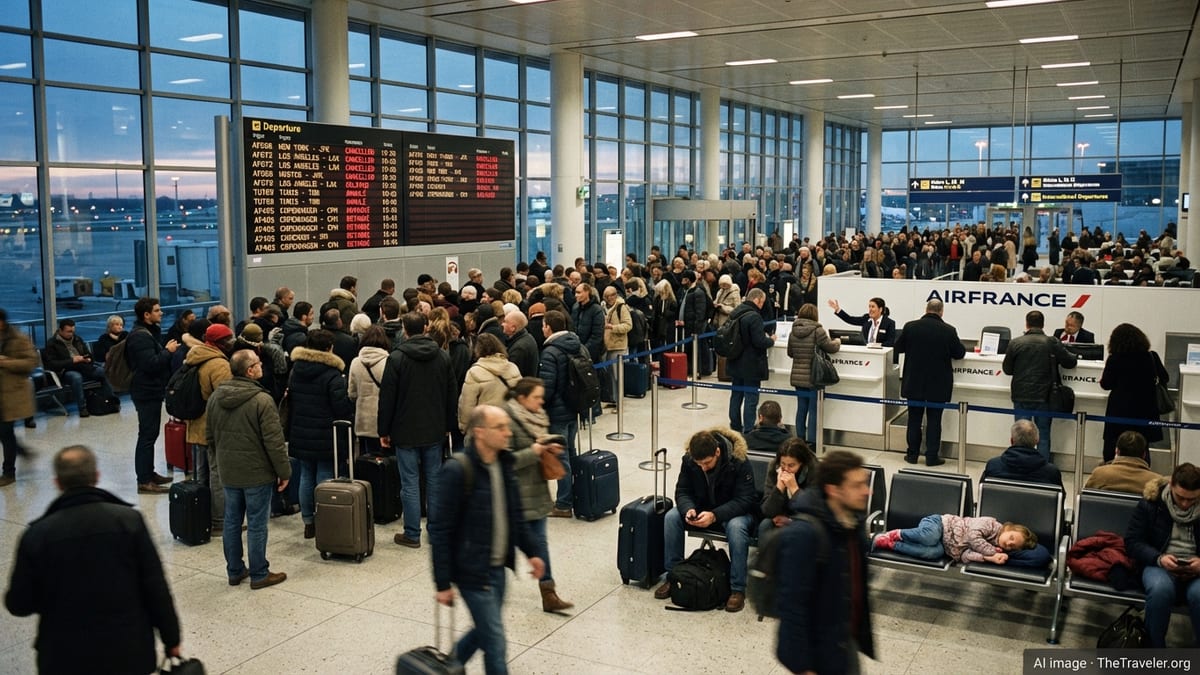
Hundreds of travelers were left stranded at Paris Charles de Gaulle and Geneva Cointrin airports in recent days after a wave of flight cancellations and knock-on delays rippled across key European routes, according to live departure boards, airline status pages and local media coverage.
Get the latest news straight to your inbox!
What Happened at Charles de Gaulle and Geneva
Publicly available flight-tracking data and airport departure boards for early June 2026 show clusters of cancellations affecting services into and out of both Paris Charles de Gaulle (CDG) and Geneva Cointrin (GVA). The disruptions built on an already fragile operating environment in France and Switzerland, where air traffic control issues, staffing constraints and tight summer schedules have been creating limited buffer for irregular operations.
At Geneva, recent monitoring of live departure and arrival screens for June 7 and June 8 indicated several flights marked as canceled alongside large numbers of delayed services. Coverage from European travel outlets described more than two hundred flights across Geneva and Zurich disrupted over those two days, with some passengers stuck for hours in the departure halls as aircraft and crews fell out of position.
In Paris, flight status pages for several European and long haul routes from Charles de Gaulle in the same period showed cancellations scattered through the daily schedule. These were layered on top of rolling delays that have been attributed in earlier weeks to air traffic control congestion over France, weather-related ground holds and the gradual roll out of new border control systems that can slow passenger flows.
The pattern has been uneven rather than a total shutdown. Many flights have continued to operate on time, but the concentration of cancellations on specific rotations and time bands has been enough to strand connecting travelers and overwhelm rebooking options on some high demand days.
Main Causes Behind the Wave of Cancellations
Reports from aviation analysts and travel media point to a combination of factors rather than a single trigger for the current disruption. In French airspace, a dense schedule of overflights combined with intermittent air traffic control constraints has been causing reroutings and reduced capacity windows since March 2026. When traffic has to be spaced out more than planned, airlines often respond by canceling selected services to keep the remainder of the schedule manageable.
At Charles de Gaulle itself, operational resilience has been under pressure ahead of the busy summer peak. The airport is one of Europe’s largest hubs and serves as the core connecting point for Air France and its partners. When inbound flights arrive late because of weather or airspace restrictions, outbound waves are affected in turn, creating rolling delays that can tip marginal flights into cancellation, especially in the late afternoon and evening.
In Switzerland, Geneva has been preparing for an atypical June due to extensive security and protocol arrangements around the forthcoming G7 events, which are expected to affect airspace structure and ground transport links in the region. While the airport has stated that commercial operations are intended to continue, changes to traffic flows and resource allocation can leave less margin to absorb unexpected disruptions, which may help explain the spikes in delays and cancellations reported in early June.
Across both airports, tight aircraft utilization, continued shortages in some ground handling roles and high seasonal demand have all limited the ability of airlines to recover quickly once irregularities begin. With many flights running close to full, a single cancellation can displace hundreds of travelers and exhaust immediate rebooking options.
How Passengers Have Been Affected on the Ground
According to published coverage and social media accounts from travelers, the most visible impact has been crowded departure halls and extended waits at customer service desks as passengers seek rerouting or overnight accommodation. In Geneva, images shared from June 7 and June 8 showed lengthy lines for information counters and security, with some travelers reporting missed connections onward to European and North African destinations.
At Charles de Gaulle, travelers connecting from long haul arrivals to short haul European flights have been particularly exposed. When early morning services from North America or Asia land behind schedule, passengers may miss tightly timed onward flights that themselves are operating on a constrained schedule. If one or two of those onward flights are subsequently canceled, rebooking can quickly spill into the next day, leaving people to wait in hotels or at the airport.
For some, the disruption has not been limited to a single airport. Travelers connecting between Geneva and Paris for intercontinental services have reported facing a double layer of uncertainty, with delays at one end compounding cancellations at the other. This has been especially challenging for those with nonrefundable accommodation or tour bookings at their destination, or those traveling for time-sensitive events.
Families and travelers with reduced mobility have been among the most affected, as last-minute gate changes and terminal switches at large hubs like CDG can require long walking distances or additional assistance. Consumer advocates emphasize that passengers in these categories should proactively request support from airlines as soon as a disruption becomes apparent.
What Travelers Must Do If Their Flight Is Canceled
Passenger-rights organizations and aviation consumer platforms recommend that travelers caught up in cancellations at Charles de Gaulle or Geneva take several immediate steps. First, they advise confirming the flight status directly on the airline’s website or mobile app, which typically updates faster than airport screens. Screenshots or emails documenting the cancellation time and reason can be useful later if a compensation or reimbursement claim is pursued.
Second, travelers are encouraged to make contact through multiple channels simultaneously. Airline call centers and airport ticket desks can be overwhelmed when dozens of flights are disrupted at once. Using chat functions in airline apps, social media messaging channels and online rebooking tools may yield faster results than waiting in a single long line at the airport.
Under European air passenger regulations, many travelers departing from or arriving into the European Union and Switzerland may be entitled to meals, refreshments, hotel accommodation where necessary and, in some circumstances, financial compensation, depending on the cause and length of the disruption. Specialized consumer services provide step by step guidance on documenting expenses, gathering boarding passes and confirming eligibility based on route, distance and delay length.
Finally, passengers whose trips are time critical are often advised to explore alternative routings on other carriers, including departures from nearby airports such as Zurich, Lyon or Milan, especially during peak disruption periods. While this can involve additional upfront cost, some travel insurance policies and corporate travel programs will reimburse reasonable alternative arrangements when original flights are canceled.
Planning Ahead for Upcoming Trips Through CDG or Geneva
With the busy European summer season ramping up, and further operational challenges expected around large international events in France and Switzerland, travelers scheduled to pass through Charles de Gaulle or Geneva in the coming weeks are being urged by travel advisors to build more contingency into their plans.
For connecting itineraries, many experts now recommend longer layovers than in previous years, particularly for non-European passport holders who may face extra time at border control because of new entry and exit systems. Choosing a three hour connection rather than ninety minutes at CDG or GVA can significantly increase the chances of making an onward flight if inbound services are delayed.
Direct bookings with airlines rather than multi-carrier tickets assembled through third parties can also simplify rebooking when schedules unravel. When a single airline or alliance controls the entire itinerary, it is generally easier to obtain rerouting or accommodation than when multiple unrelated carriers are involved.
Travelers are further advised to sign up for flight status alerts, keep airline apps installed and logged in on their phones and travel with essential items and at least one change of clothes in carry-on baggage. In the current environment, where clusters of cancellations at major hubs like Paris Charles de Gaulle and Geneva Cointrin can emerge quickly, being ready to adapt plans and move quickly to secure new seats can make a significant difference in how disruptive an irregular travel day becomes.